


On August 27, the federal Interagency Autism Coordinating Committee (IACC), a federal advisory committee in charge of coordinating the government’s response to Autism Spectrum Disorder (ASD), adopted a new Strategic Plan to study autism that shifts the focus from genetics to the phenomena of regression and a broad swath of environmental factors.
Previous IACC proposals funneled most federal research dollars to genetic research, which yielded little. According to Biology Insights, over 1,000 genes are associated with autism. If all of those caused autism, everyone would have the disorder.
The new plan acknowledges the failure of focusing on genes, writing, “Even using today’s most advanced tools, no specific genetic cause is identified in 75-85% percent of people with ASD, underscoring how much of ASD remains unexplained by identifiable genetic findings, the committee wrote.”
But even as the new plan takes shape, there’s a movement afoot to derail it. Why and by whom?
The new plan calls for defining and studying regression in autism, noting that a significant number of children with Autism Spectrum Disorder regressed in their development, losing acquired skills like the ability to walk and talk. For years, parents of children with autism have reported that their children regressed suddenly, often following vaccination, as comedian and actress Jenny McCarthy explains.

Why children with autism regress needs greater study. The IACC plan views autism as a biologically-based disability marked by a wide range of health and functional issues. It supports the current ongoing efforts while providing blueprints to fill the many gaps in crucially needed investments and calls for scaling research to meet the growing demand created by the autism epidemic.
The plan establishes timelines for research into the underlying biology of autism and developing effective treatments for the many co-morbid conditions people with autism frequently suffer, such as seizures, apraxia, mitochondrial dysfunction, gastrointestinal issues, immune dysfunction and chronic inflammation, and others.
The goal is to develop effective treatments, prevention strategies, and possible cures for autism. The plan calls for increasing communication support and assistive technology, caregiver support, and caring for aging people with autism, among other unmet needs.
And yet entrenched interests aligned with Big Pharma and old-guard public health devotees are attempting to derail the new plan, pushing to replace it with a plan that the Biden administration proposed three years ago which maintains the status quo of autism research and does little to improve the lives of people with autism.
Many of the plan’s critics are past IACC members who were not re-appointed to the IACC by Secretary of Health and Human Services, Robert F. Kennedy Jr. [The IACC is composed of 23 representatives from federal agencies and 20 public members appointed by Secretary Kennedy. IACC members voted in the plan with 26 yeas, 1 nay, and 13 abstentions.]
These critics believe that the plan has a veiled anti-vaccine focus even though vaccines are not its focus, which is decidedly on studying regression and environmental causes of autism.
There is ample evidence to warrant further inquiry into autism’s environmental causes, as Dr. James Lyons-Weiler, PhD, addresses in The Environmental and Genetic Causes of Autism.
However, one organization, the Autism Science Foundation, criticized the plan for not reflecting “scientific consensus” and called for even more dollars to be devoted to genetic research. [The director of the ASF is Alison Singer, a former IACC member.]
Secretary Kennedy has long called for a balanced approach in the search for understanding what causes autism. “This is a preventable disease,” Kennedy said at an April 2025 press conference on the autism epidemic. “We know it’s an environmental exposure; it has to be – genes do not cause epidemics . . . You need an environmental toxin.”

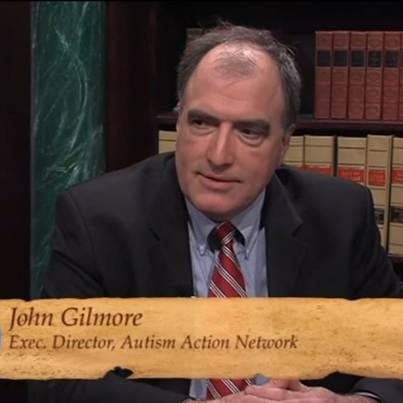
John Gilmore, an IACC public member and director of the Autism Action Network, praised the new plan.
“For the first time in twenty-five years we have a plan that embraces the full scope of autism with the goal of providing real help,” he said. “It’s a huge step forward and a departure from the status quo.”
Gilmore has called for the autism community and the MAHA movement to push back against the movement to derail the IACC’s plan, asking people to message their support here and politely call the White House [@212-456-1111].
Added Gilmore, “We finally have a plan that calls for rigorous analysis of what triggers autistic regression and developing treatments.”
It has been 20 years since Congress passed The Combating Autism Act. It is time to really do what Congress called for - end the autism epidemic and bring meaningful help to the autism community.
Please make those calls!
Related Reading
In Bold Move, Kennedy Appoints 21 New Members to the Interagency Autism Coordinating Committee

By Louis Conte, Health Freedom Editor, The MAHA Report
Why I Don’t Appreciate 'Autism Awareness Month'

As we leave April, which Autism Speaks promotes as World Autism Month, and other organizations have labeled Autism Awareness Month, I want you to know that I do not appreciate the annual celebration.
Cures exist..People have had to find them on their own, because the Medical Industry has products to sell. It is too simple..don't create the problem called Autism by putting the wrong matter into the the human bloodstream. Our Creator designed the bloodstream to carry nutrients from natural unprocessed food. This nourished the glands, organs and every cell throughout the body. Any other matter would wipe out the Immune System and would create body and brain-damage. iMankind lived on natural food for thousands of years, before the Medical Industry came along.
Describing lack of confirmation of your fixed, unalterable belief as a failure of science and of genetic research is classic you.
Have a look at https://www.sfari.org/resource/sfari-gene/