


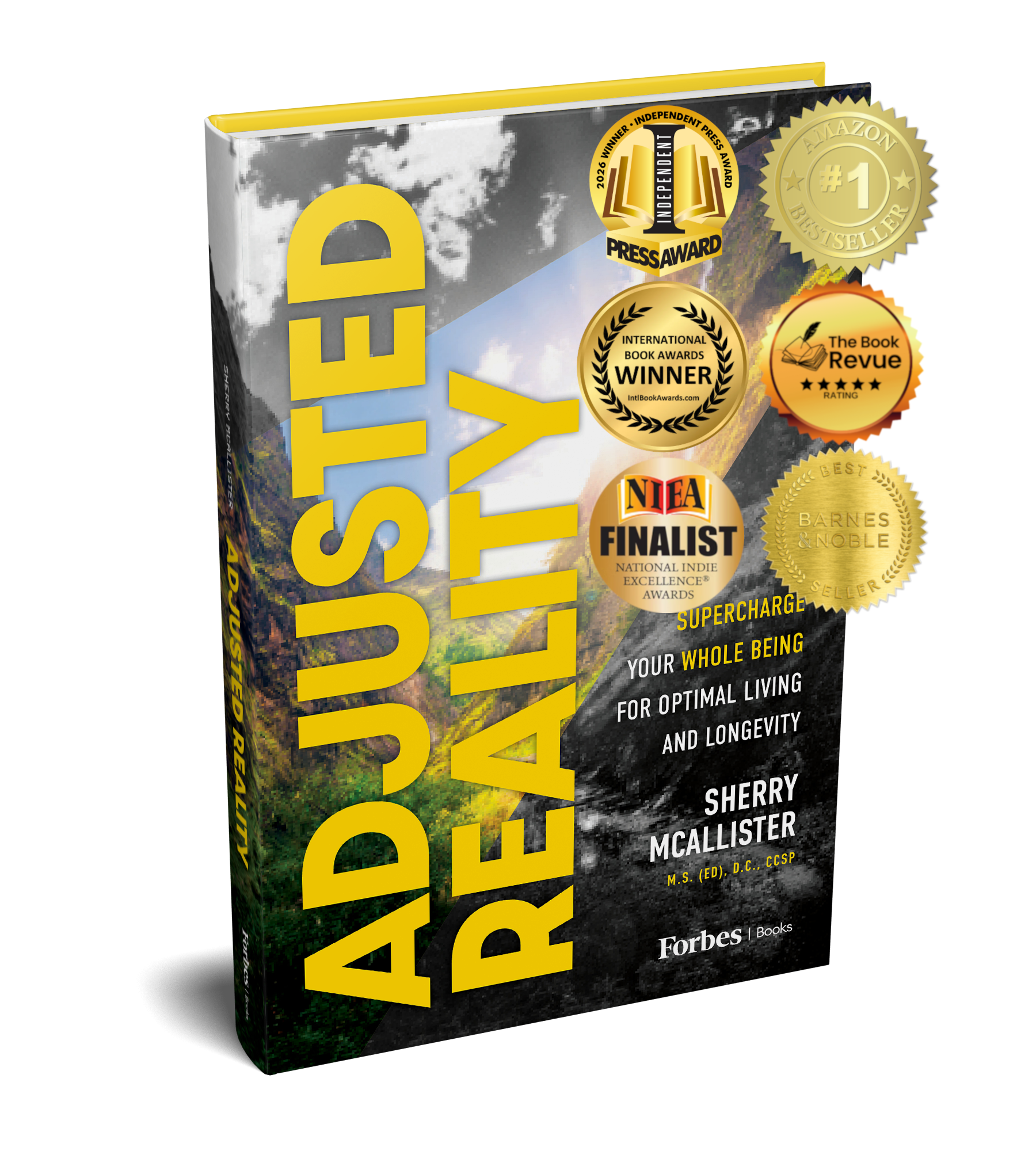
When I sat down with Dr. Sherry McAllister to discuss her new book, Adjusted Reality: Supercharge Your Whole-Being for Optimal Living and Longevity, I expected a conversation centered on chiropractic care. Instead, I found myself drawn into something much larger: a lively, deeply hopeful vision of health that asks us to move beyond symptom management and reconsider what it means to truly live well.
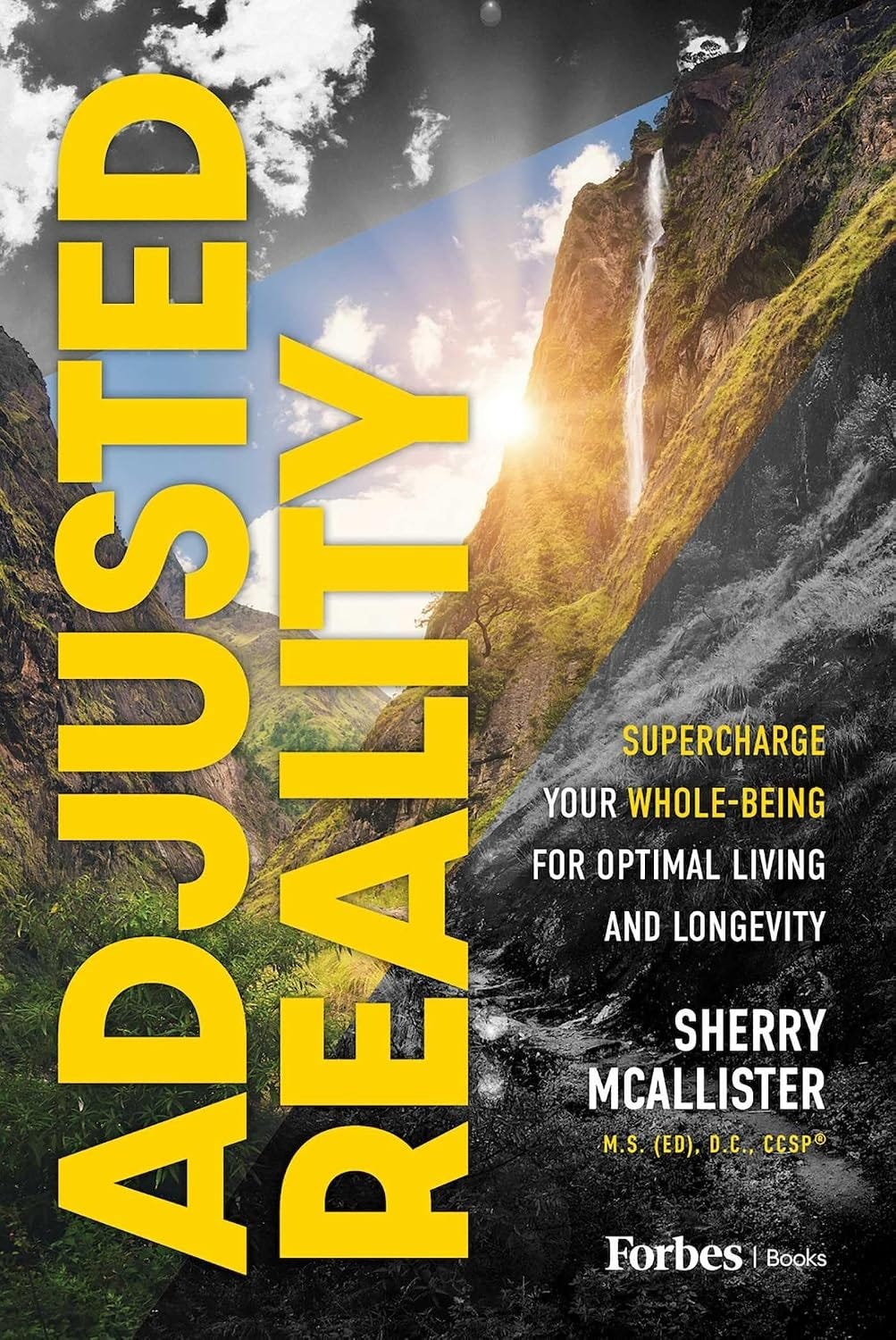
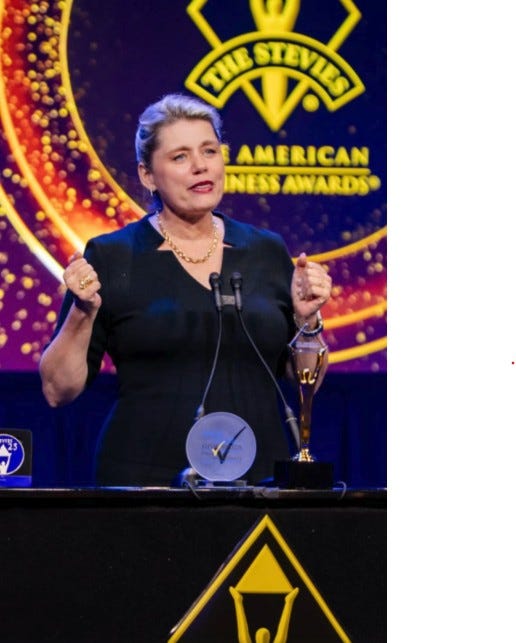
Dr. McAllister is a widely respected thought leader, author, podcast host, and endurance athlete whose work centers on whole-being care. She has completed the Escape from Alcatraz Triathlon and twice swum the waters surrounding Alcatraz, accomplishments that reflect the courage and strength to exceed perceived limits.
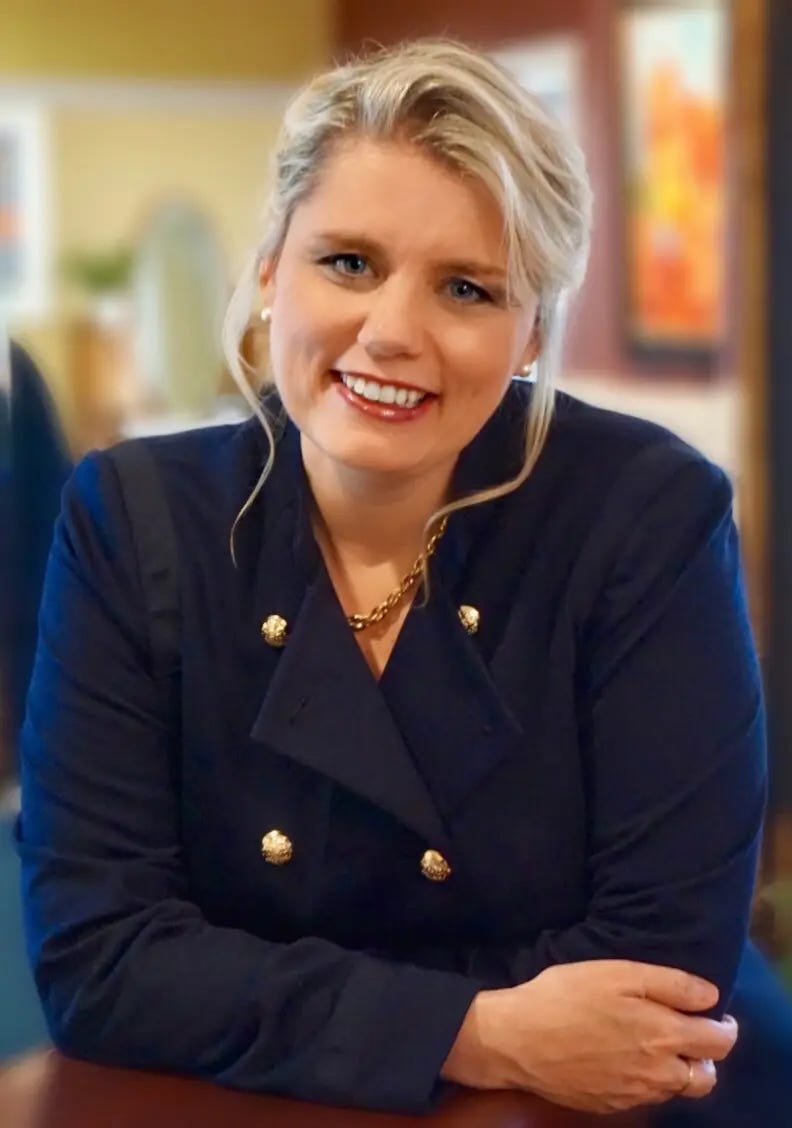
In conversation, she is magnetic and deeply engaging, pairing that vibrant energy with a reflective wisdom that moves beyond symptoms into larger questions of identity, purpose, and how we choose to live. Shaped by her own health journey and decades of experience across healthcare settings, Adjusted Reality distills that vision into seven pillars: investment, replenishment, nourishment, movement, adjustment, contentment, and revitalizement, which became the foundation of our conversation.
McAllister’s health journey begins at 19, when she was injured in a serious car accident. Months of pain, medications, referrals, and uncertainty followed.
“I did not know I was even taking an opiate,” she told me.
The medication made her sick, so she stopped it, but not everyone is that fortunate. Studies suggest that roughly 5% to 6% of previously opioid-naïve patients – in other words, people with little to no experience taking opioids – continue using opioid pain medications for months after an initial prescription or surgery. In a study of more than 1 million opioid-naïve surgical patients, both repeated refills and longer treatment were independently associated with higher rates of documented opioid misuse: 44% for each additional refill and about 20% for each additional week of prescribed use.
Persistent use is not the same as addiction, but longer use creates more opportunity for dependence, misuse, and opioid use disorder – a clinical term which refers to compulsive opioid use and also the inability to stop using despite negative impacts.
What stayed with McAllister most, however, was the loss of hope: no one could explain what was wrong until a classmate handed her a chiropractor’s card.
That experience redirected her life and inspired a question she returns to throughout her book, Adjusted Reality: Why are conservative options so often treated as a last resort instead of a first consideration? McAllister calls for a shift from “last hope” to “first hope,” offering patients conservative, whole-being options earlier, rather than waiting until medications, referrals, and fragmented care have left them discouraged and out of answers.
“I don’t want anyone else to spend their life wondering why the last option isn’t the first,” she writes.
From “Nowhere” to “Now Here”

McAllister calls her approach “whole-being” care. During our conversation, she explained that the phrase describes both who we are – body, mind, purpose, and spirit – and what we do each day.
“Health is not merely something we possess,” she said. “It’s something we practice.”
That distinction stayed with me. In functional medicine, we often talk about root causes and the whole person. McAllister adds another layer: being fully present in one’s own health.
She uses the phrase “from nowhere to now here” to describe the shift from feeling lost and disempowered to actively participating in one’s own care.
Seven Pillars, One Connected Life
‘Investment,’ McAllister said, is really about intention.
“The deposits we put in today are going to show up later.”
This is not about finances but whether daily choices are building the future we want or quietly depleting it.

‘Replenishment’ begins with sleep, when the body’s “internal pharmacy” carries out essential repair and restoration. McAllister put it memorably: “You do better for your cell phone than you do for yourself.” We faithfully plug in our devices each night to charge, yet often treat getting 7-9 hours of sleep as a “luxury.” The resulting sleep debt leaves the brain, hormones, immune system, and nervous system without the time needed to recover.
During our conversation, McAllister referenced Socrates—“Contentment is natural wealth; luxury is artificial poverty”—which captures the point beautifully: without adequate sleep, the body becomes biologically depleted, no matter how full life may appear.

‘Nourishment’ begins even farther upstream: in the soil. McAllister shared the story of tasting freshly harvested organic mountain spinach for the first time. “My mouth sparkled,” she said. The moment captured more than the pleasure of eating something fresh and flavorful; it illustrated how different food can taste when it is grown in healthy soil and reaches our plates close to its natural state. Her larger point was that food is not simply fuel; it is information, and its quality matters. What we eat sends signals that can influence metabolism, inflammation, energy and overall health. Nourishment therefore begins long before food reaches the plate, and farmers, manufacturers, policymakers and consumers all share responsibility for moving the food system away from ultra-processed products, excess sugar and artificial ingredients and toward food that genuinely supports health.
‘Movement’ is built on stability, flexibility, mobility and capability, or strength.
“This is a four-leg stool, not a three-leg stool,” she said.
Strength matters, but strength without balance, mobility or flexibility can still leave a person vulnerable to injury, falls and loss of independence.
‘Adjustment’ is the pillar most closely associated with chiropractic care, but McAllister sees it as more than pain relief or the familiar “crack.” She connects joint function with proprioception or knowing where the body is in space; sensory-motor integration or the brain’s ability to use sensory information to coordinate movement; balance and posture; and neuroplasticity or the brain’s ability to adapt and reorganize itself over time.

‘Contentment’ may be the most unexpected pillar.
She sees grief, anxiety, loneliness, purpose and community as inseparable from physical health.
“Contentment is why we’re on Earth,” she told me.
McAllister emphasized that emotions are not separate from physical health; they can be a powerful part of both illness and healing. Yet our current health care system often focuses on the symptom, such as pain, poor sleep or delayed recovery, without asking what may be driving it, particularly when the underlying factors are emotional. The connection is substantial: a 2025 meta-analysis of 376 studies involving more than 347,000 adults with chronic pain found clinically significant symptoms of depression in 39.3% and anxiety in 40.2% of participants. Chiropractors can help recognize when emotional distress may be contributing to a patient’s symptoms and, as part of an interdisciplinary care team, communicate those concerns and refer patients to appropriately trained mental-health professionals.
‘Revitalizement’ brings everything together.
The goal, McAllister explained, is not to recharge just enough to return to the same depleted way of living. It is to become “supercharged,” restored enough to show up with greater energy, clarity and purpose in the places that matter most. In that state, health becomes more than the absence of symptoms; it becomes the capacity to be fully present with family, contribute meaningfully at work, pursue a sense of purpose and participate in community.
The Policy Question

By the end of our conversation, the subject had moved naturally from personal health to public policy.
“Collaborative care is not a trend, and it’s not a buzzword,” McAllister said. “It literally has to be the evolution of healthcare.”
A bipartisan bill introduced last year in the House and Senate would expand the services Medicare can reimburse chiropractors for providing. Medicare currently pays chiropractors only for spinal manipulation, even though it may cover services such as examinations or therapeutic exercise when they are provided by other qualified professionals. The bill would allow chiropractors to receive payment for those same Medicare-covered services when they are licensed to provide them under state law. Supporters say the change could give older adults broader access to non-drug care for back, neck and other musculoskeletal conditions.
McAllister envisions chiropractors working alongside physicians, pharmacists, physical therapists, nutrition professionals and mental-health clinicians, each contributing distinct expertise while keeping the patient—not the profession—at the center.
“The patient has choices,” she said.
A better system would make those choices easier to understand, coordinate care across disciplines and offer conservative, non-drug options earlier when clinically appropriate. In that model, chiropractic care is not a last stop after patients have exhausted every other avenue, but an integrated part of a collaborative care team that helps patients move toward healing with greater clarity, support and hope.
Shop our merch store to support the MAHA Report and the MAHA movement.
All proceeds go to supporting the cause.
Related Reading
MAHA Center Launches National Chiropractic Hub

On Wednesday, MAHA Center Inc. and MAHA Action Inc. launched the MAHA™ Chiropractic Hub, a coordinated national partnership uniting MAHA Center, MAHA Action, and the chiropractic profession, including national associations, state organizations, practitioners, educators, researchers, and patient advocates.

She was cooking with investment, replenishment, and movement....until she added silly little adjustments in.
https://thescamdoctor.substack.com/p/a-grocery-store-owner-invented-your?r=6hgshq
No Fauci or Bobbi thumbnail for engagement?