


“My hope is that they’re going to get moved to a place where people have access from ethical suppliers.”
So said HHS Secretary Robert F. Kennedy Jr. regarding the seven peptides millions of Americans are already using for healing, recovery, and aging – therapies the Biden administration pushed into a regulatory dead zone.
But the battle over peptides is not over. On July 23, a federal advisory committee, in Washington, D.C., will begin debating whether Kennedy and supporters will get their wish.

The Food and Drug Administration’s Pharmacy Compounding Advisory Committee (PCAC) will weigh whether seven peptides can be added to the list of products that compounding pharmacies are allowed to prepare for customers.
Peptides are short chains of amino acids, often referred to as microproteins. According to WebMD, “peptides act as critical signaling messengers in the body, directing cells to perform specific tasks such as regulating blood sugar, building muscle, and healing tissue.”

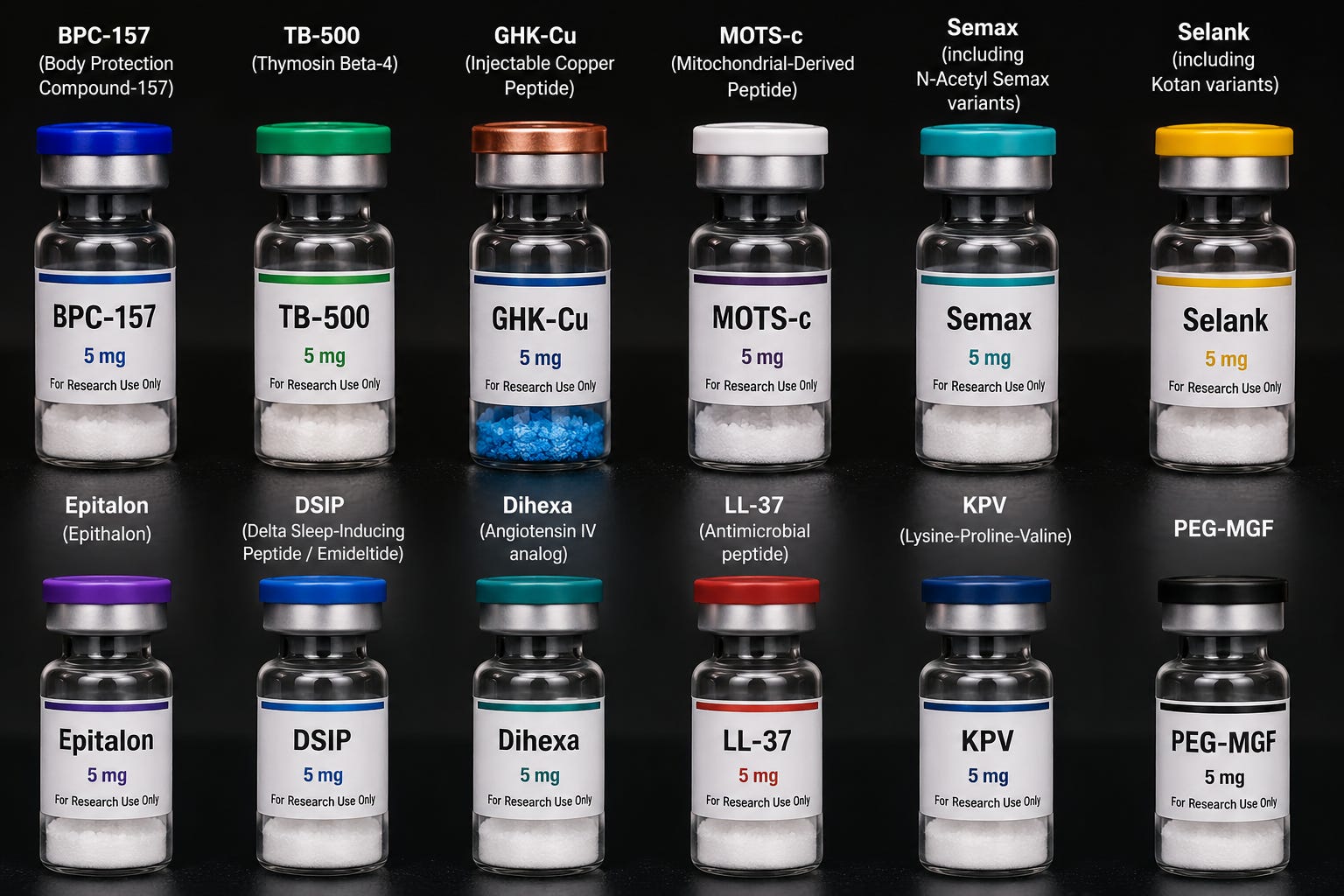
On the first day of its two-day meeting, the committee will discuss BPC-157, KPV, TB-500, and MOTS-c, tissue-repair and recovery compounds. The second day will cover Emideltide, known as DSIP, along with Semax and Epitalon, used for sleep, focus, and longevity. A favorable vote would open a legal, prescription-based pathway through regulated pharmacies for the first time since 2023.
How Americans lost access
In 2023, the FDA moved 19 widely used peptides into a restricted category that barred compounding pharmacies from making them, citing concerns about impurities, immune reactions, and thin human safety data. Therapies that patients and physicians had relied on for years suddenly became difficult to obtain through legitimate channels.
However, the restriction did not end demand for peptides; it just rerouted it. Cut off from regulated pharmacies, Americans turned to a growing gray market, ranging from credible U.S. suppliers with certificates of analysis and third-party testing, to overseas sellers, many from China, shipping vials with no purity testing, sterility guarantees, or oversight of what was inside.
The 2023 decision did not make peptides safer. It left Americans taking their health into their own hands, sorting through good suppliers and bad, some making careful, informed choices, and some simply gambling on the cheapest vial they could find.
Kennedy has called the reclassification “illegal,” describing himself as a “big fan” of peptides, and said he has used peptides himself. In his framing, the government did not protect patients in 2023. It caused them to turn to the gray or black market.
The reversal underway
On February 27, in an appearance on Joe Rogan’s podcast, Kennedy signaled a change, promising action within weeks. In April, the FDA removed 12 peptides from the restricted Category 2 list, the first concrete reversal of the 2023 policy. The July vote goes further, deciding whether these compounds get a legal home in compounding pharmacies, rather than a temporary reprieve.
The April removal from the restricted list is not the same as clearance for compounding, which is what the July vote will also address. Nor does removal from the restricted list amount to full FDA drug approval, which none of these peptides has. The committee only recommends. The binding decision rests with the FDA, which answers to Kennedy.
The objection from inside the agency
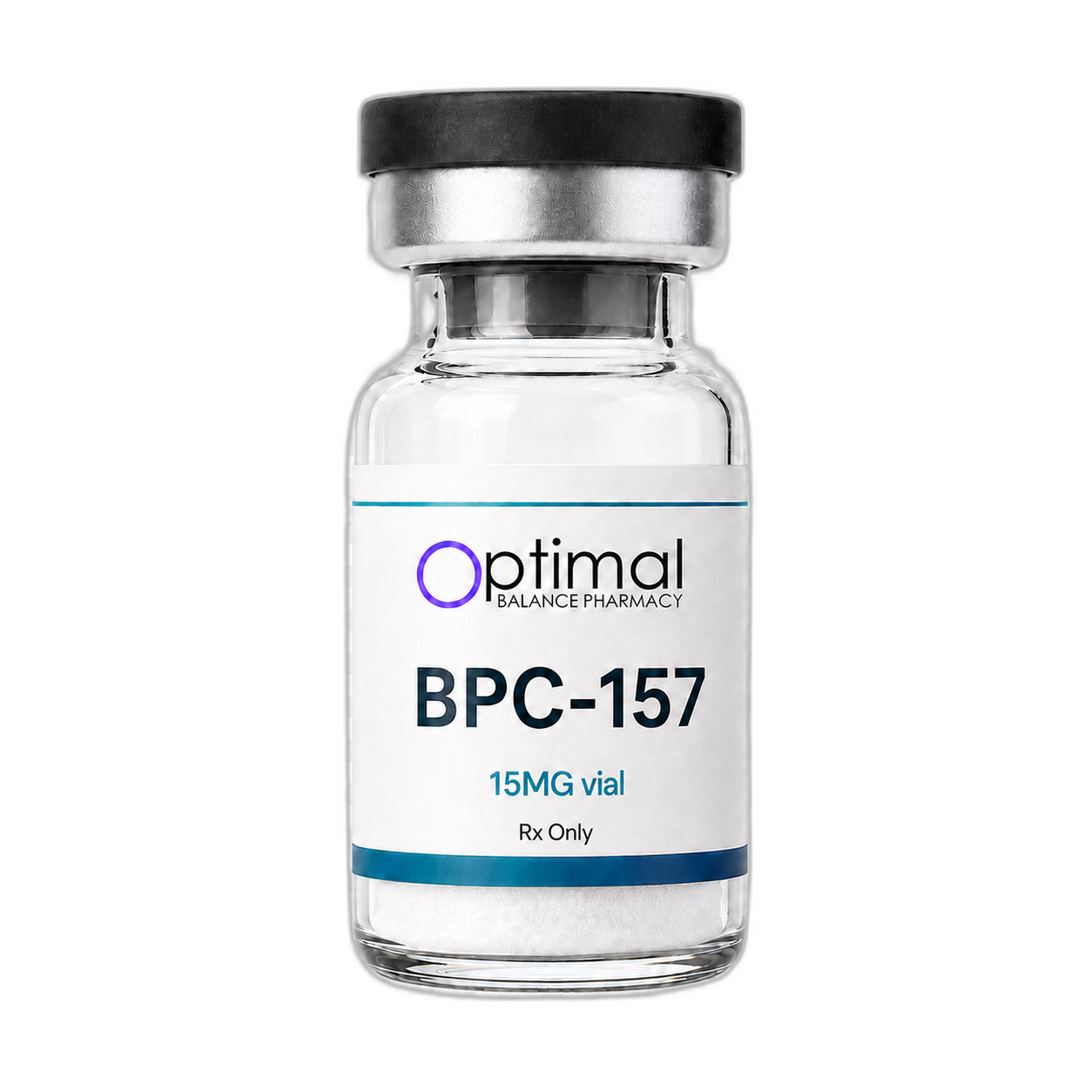
On June 30, the FDA’s own scientists concluded that there is insufficient evidence to support allowing compounding pharmacies to make any of the seven contested peptides, citing a lack of rigorous human trials proving they work or are safe at the doses people use. BPC-157, a peptide used for over 10 years by serious athletes, has only three published human studies, none with proper control groups.
But that objection, like the committee’s vote, is only advice. The decision belongs to the FDA’s leadership, appointed by Kennedy, who can accept that advice or overrule it. The secretary RFK Jr. has made expanding access a priority, which would appear to bode well for peptides and those supporting them.
Critics of peptides note that several members of the advisory panel have ties to the peptide industry. Supporters counter that the demand for full clinical-trial data misses the real-world picture. These compounds have been safely prepared by pharmacies for decades, and millions of people have been using them, as they have been using vitamins and supplements the FDA never approved through drug trials either.
What the public wants
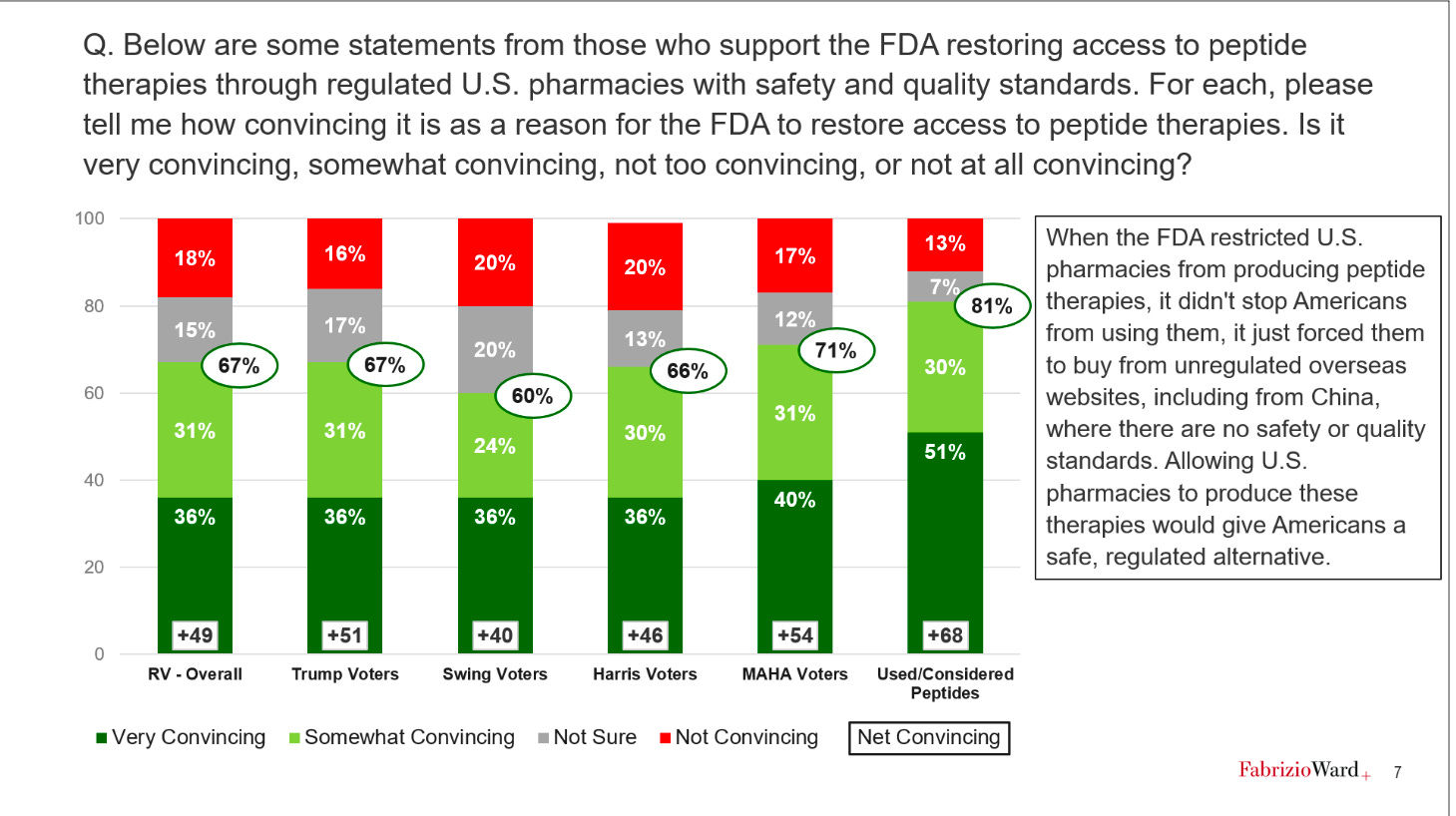
A national survey taken in June found broad support for restoring access to peptides. Americans favor it 65% to 9%, with the remaining 26% undecided. The poll of 1,000 registered voters, conducted by Fabrizio Ward for the American Academy of Peptide Medicine, found support even higher – at 80% – among the one in four voters who have used or considered using peptides. Backing peptides crosses party lines and runs strongest among MAHA voters, at 72%.
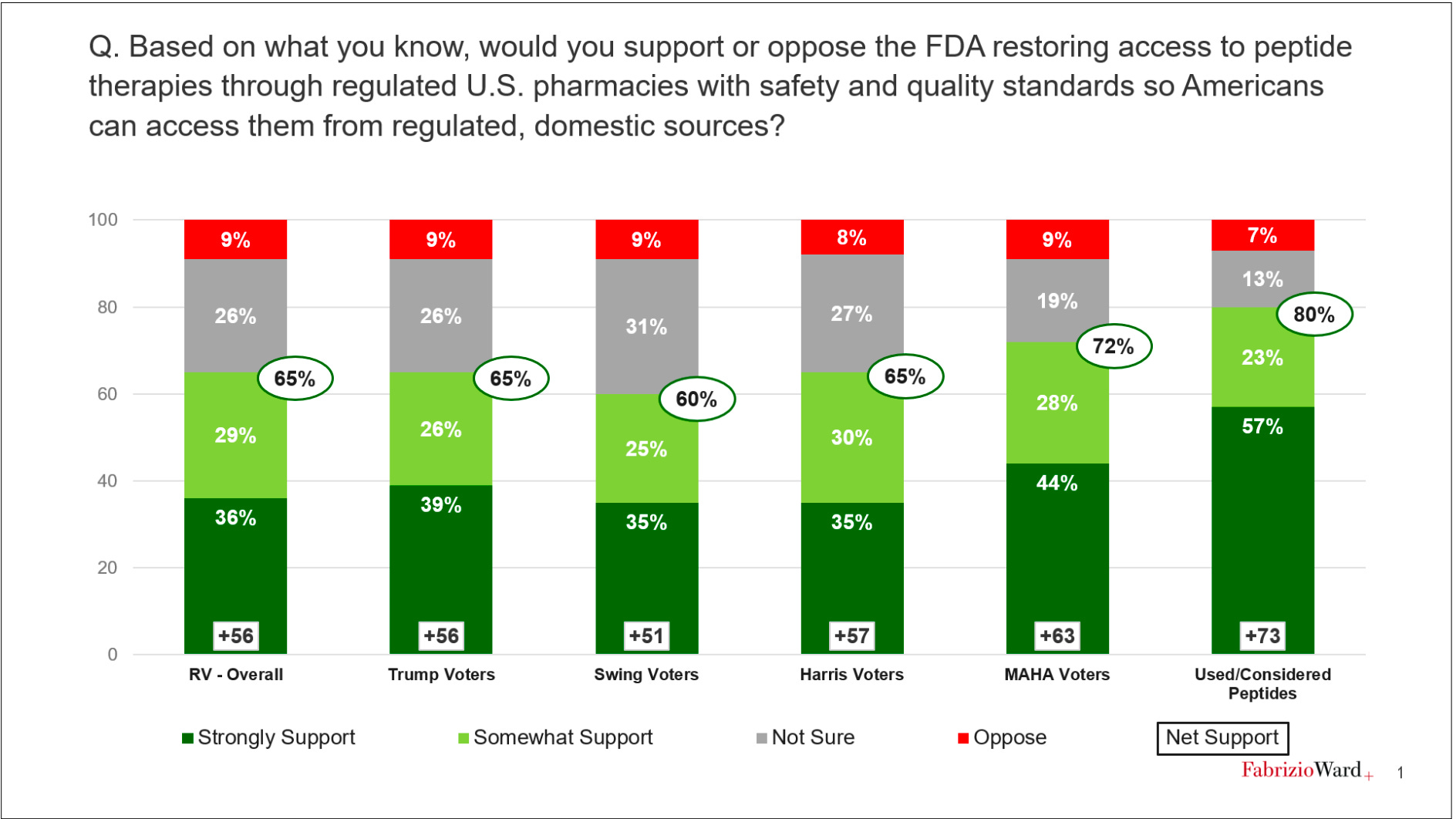
The same survey showed 70% of respondents believe public health officials should be concerned that the 2023 restrictions caused Americans to buy from unregulated foreign and domestic suppliers. The poll was industry-funded and framed to favor access, but regardless, the results clearly show that Americans see the unregulated market as the danger and regulated access as the fix.
The July vote won’t be the final word, but it will show which way the government is leaning: toward the caution of FDA scientists, or toward the access Kennedy has promised, and voters on both sides say they want.
For the millions of Americans already using peptides, the debate was never whether they should be allowed at all. It is how people will have access to them, through a regulated pharmacy with a doctor and tested product, or through the open gray or black market that lets them decide for themselves.
Shop our merch store to support the MAHA Report and the MAHA movement.
All proceeds go to supporting the cause.
Related Reading:
HHS Secretary Kennedy Promises Scientific Review of Peptides. Why That's a MAHA 'Win.'

On April 15, Health and Human Services Secretary Robert F. Kennedy Jr. took a giant step in the direction of legalizing peptides, promising on X to rigorously review a dozen peptides that former president Biden had classified as Category 2 – “Bulk Drug Substances that Raise Significant Health Risks - driving a dangerous black market.”

I find it interesting (to put it nicely) that with regard to vaccines, the FDA, CDC and their respective advisory committees have no problem with the lack of proper safety/efficacy studies, basically rubber-stamping almost all new vaccines. AND that 'critics' are suddenly concerned about advisory panel ties to the peptide industry, while they turn a blind eye (or even support) VRBPAC's and ACIP's actual ties to vaccine makers. Yet, for products that actually support and/or improve health (i.e. peptides), these "regulatory" agencies suddenly grow a "conscience" and apply strict scrutiny. Hypocrites, all.
No randomized double-blind placebo controlled trials for these. Saline placebo, or any placebo. No double blind trials. No human trials at all for some of these. "Voters support the change." What voters?