

On the Bookshelf: 'Cancer Is a Parasite' Challenges Medical Orthodoxy and Offers Hope to Millions of Cancer Patients
A groundbreaking investigation suggests a brazen medical conspiracy, and a new way to treat and even stop cancer in its tracks.

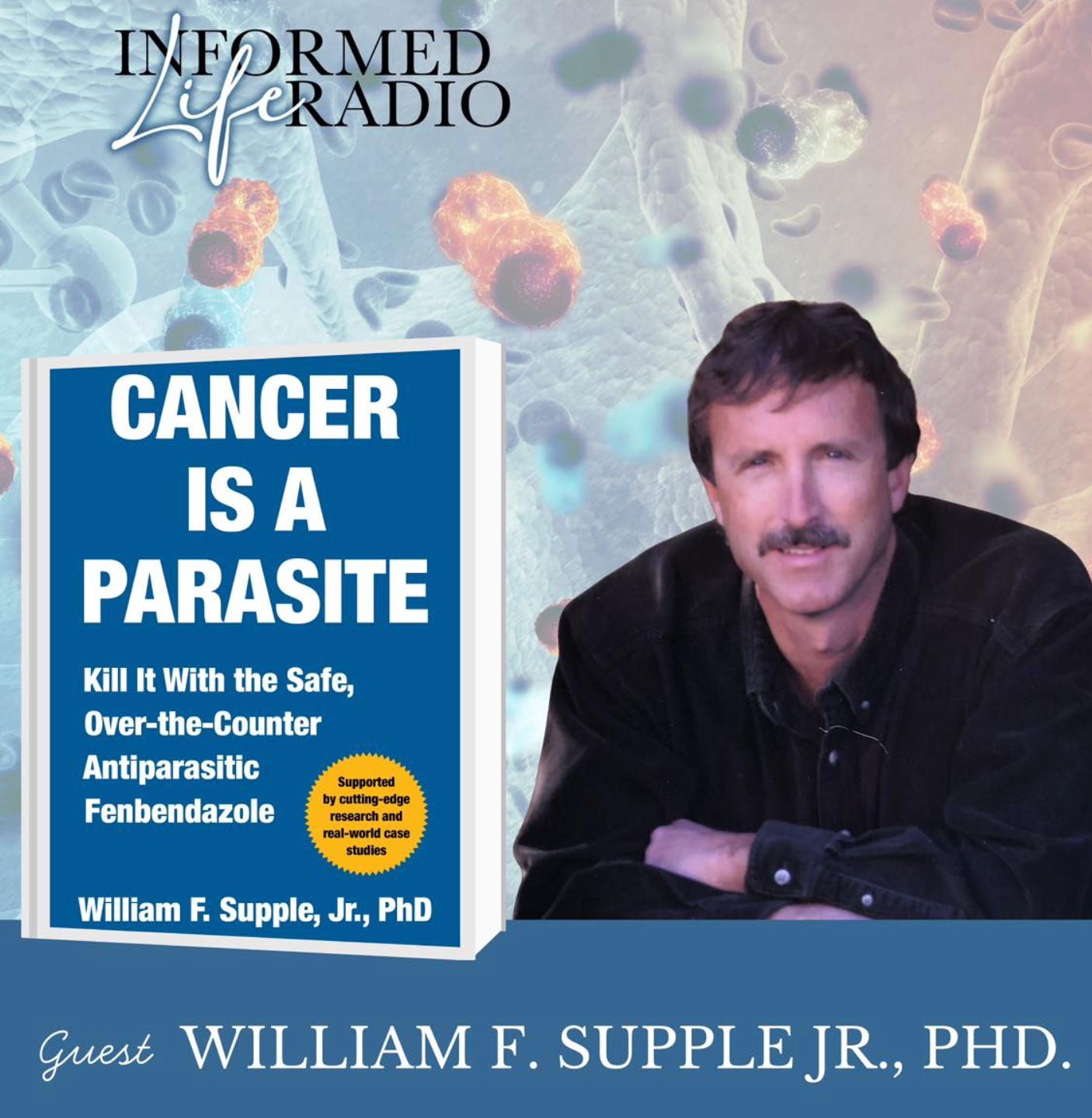
In the annals of medical history, few stories are as heartbreaking and hopeful as the one William F. Supple Jr. presents in his new book, Cancer Is a Parasite: Kill It With a Safe, Over-the-Counter Antiparasitic Fenbendazole (MAHA Books/ Skyhorse, 2026).
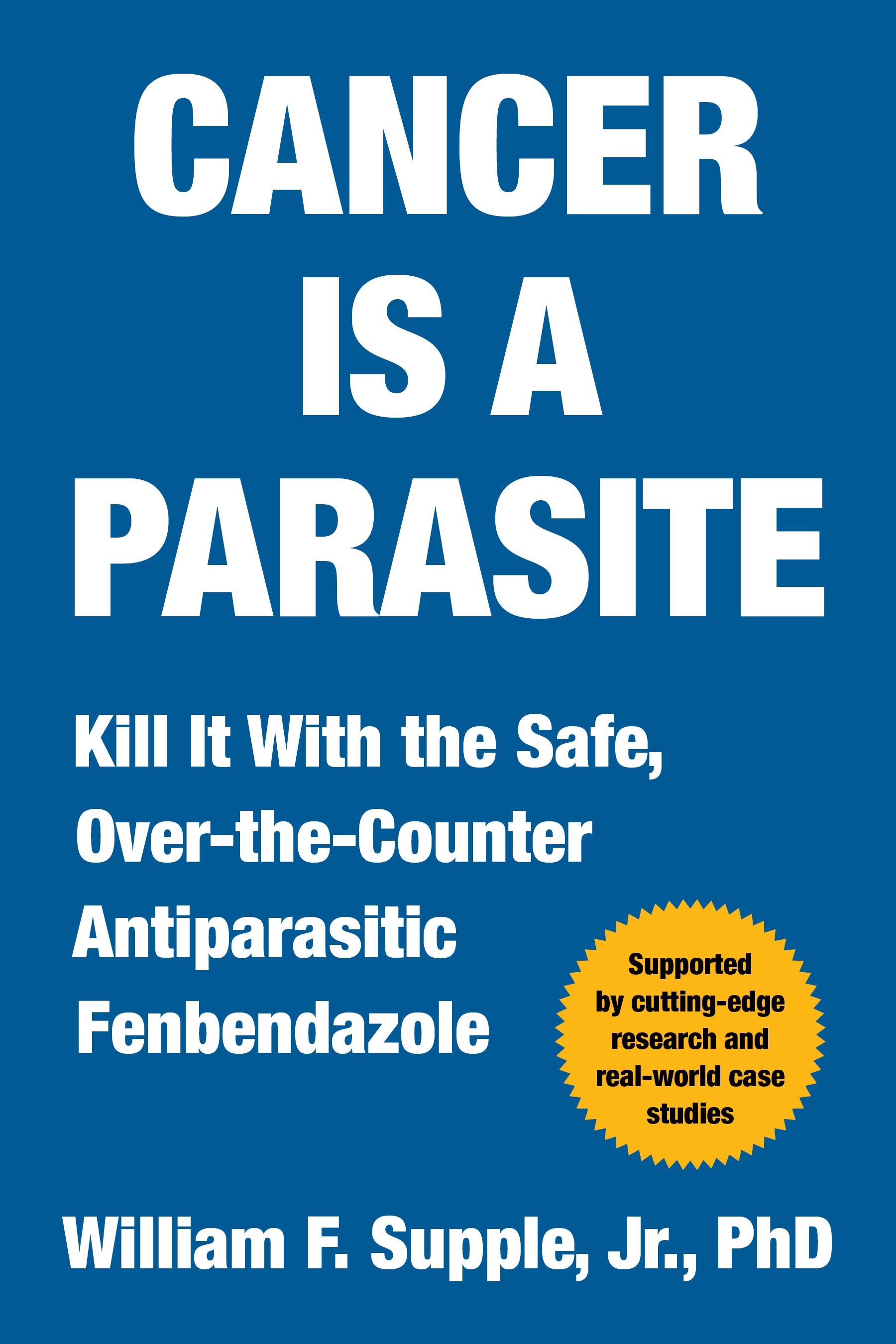
What began as a desperate attempt to save his 83-year-old mother-in-law from terminal metastatic breast cancer has evolved into a meticulously researched exposé that challenges everything we think we know about cancer treatment—and reveals what may be one of the most effective therapies hiding in plain sight.
The premise sounds almost absurd: an over-the-counter veterinary deworming medicine called fenbendazole, commonly used to treat parasites in dogs and farm animals, is a remarkably effective cancer treatment. Yet Supple, a neuroscientist by training, who earned his doctorate from Dartmouth, builds his case with the methodical precision of both a researcher and someone who has witnessed the seemingly impossible.
Supple’s mother-in-law, given weeks to live with cancer that had spread throughout her body, experienced complete remission after taking fenbendazole mixed into her morning yogurt. She remains cancer-free, four years later.
What makes Cancer Is a Parasite extraordinary is not just its central claim, but also the depth of evidence Supple marshals to support it. Drawing on decades of peer-reviewed research from institutions like Johns Hopkins and MD Anderson Cancer Center, he demonstrates that fenbendazole’s cancer-fighting properties have been documented in scientific literature for years, yet somehow remained outside mainstream oncology. The drug works through multiple mechanisms simultaneously—disrupting cancer cells’ internal structure, starving them of glucose, cutting off their blood supply, and reactivating the body’s own tumor-suppression systems—while leaving healthy cells entirely unharmed.
Perhaps most disturbing is Supple’s revelation that this knowledge isn’t new. Through painstaking detective work, he uncovers evidence that a fenbendazole-based cancer drug was actually discovered and named “oncodazole” in 1976, only to be mysteriously suppressed and have its name changed to obscure its cancer-fighting purpose.
The implications are staggering: if accurate, this represents a cover-up that may have cost millions of lives over the past five decades.
The book’s most compelling section presents over twenty detailed case reports of individuals who, after exhausting conventional treatments, took matters into their own hands and achieved remarkable recoveries using fenbendazole. These aren’t vague testimonials but detailed accounts of people with advanced brain tumors, aggressive breast cancers, and metastatic melanomas who achieved complete remission—many of whom had been sent home to die after standard treatments failed. The consistency of these outcomes across diverse cancer types is striking.
Supple’s analysis extends beyond individual cases to reveal global patterns that are difficult to dismiss. He demonstrates that countries implementing mass deworming programs, using drugs similar to fenbendazole, have cancer rates approximately half those of wealthy nations that don’t use such programs. The United States, with its advanced healthcare system and high costs, has triple the incidence of cancer found in countries such as India and Mexico – countries that routinely deworm their populations as part of public health policy.
The author’s background as a neuroscientist lends credibility to his ability to synthesize complex biochemical research, while his personal stake in the outcome—having lost both parents to cancer—infuses the work with passion and urgency. His writing is clear and accessible, making sophisticated scientific concepts understandable to general readers without dumbing down the material.
But the book’s greatest strength lies in its synthesis of existing scientific evidence into a coherent, actionable framework. Supple doesn’t ask readers to take his word for anything; instead, he meticulously cites hundreds of peer-reviewed studies and provides clear reasoning for every conclusion. The biological mechanisms he describes are well-established in scientific literature. Supple’s contribution is connecting the dots between parasitology and oncology in a way that reveals previously hidden patterns.
The implications are profound.
If fenbendazole proves as effective as Supple’s evidence suggests, it could transform cancer from a terrifying death sentence into a manageable condition—safely, inexpensively, and without the devastating side effects of current treatments. The drug costs pennies per dose and is available over-the-counter at farm supply stores, potentially democratizing cancer treatment in a way that pharmaceutical patents never could – or would.
Whether Supple’s most provocative claims about suppressed knowledge prove accurate or not, his central message is impossible to ignore—we may already have a safe, effective cancer treatment that deserves immediate, serious investigation by the medical establishment.
For the millions of people facing a cancer diagnosis, this book offers something precious and increasingly rare in oncology: hope backed by solid science. It deserves to be read by patients, caregivers, and physicians alike.
Cancer Is a Parasite is that rarest of books: one that could fundamentally alter how we approach one of humanity’s greatest scourges.
Please note: A portion of the proceeds from MAHA Books helps fund the work of MAHA Action, Inc.