


By John Klar, Contributor, The MAHA Report
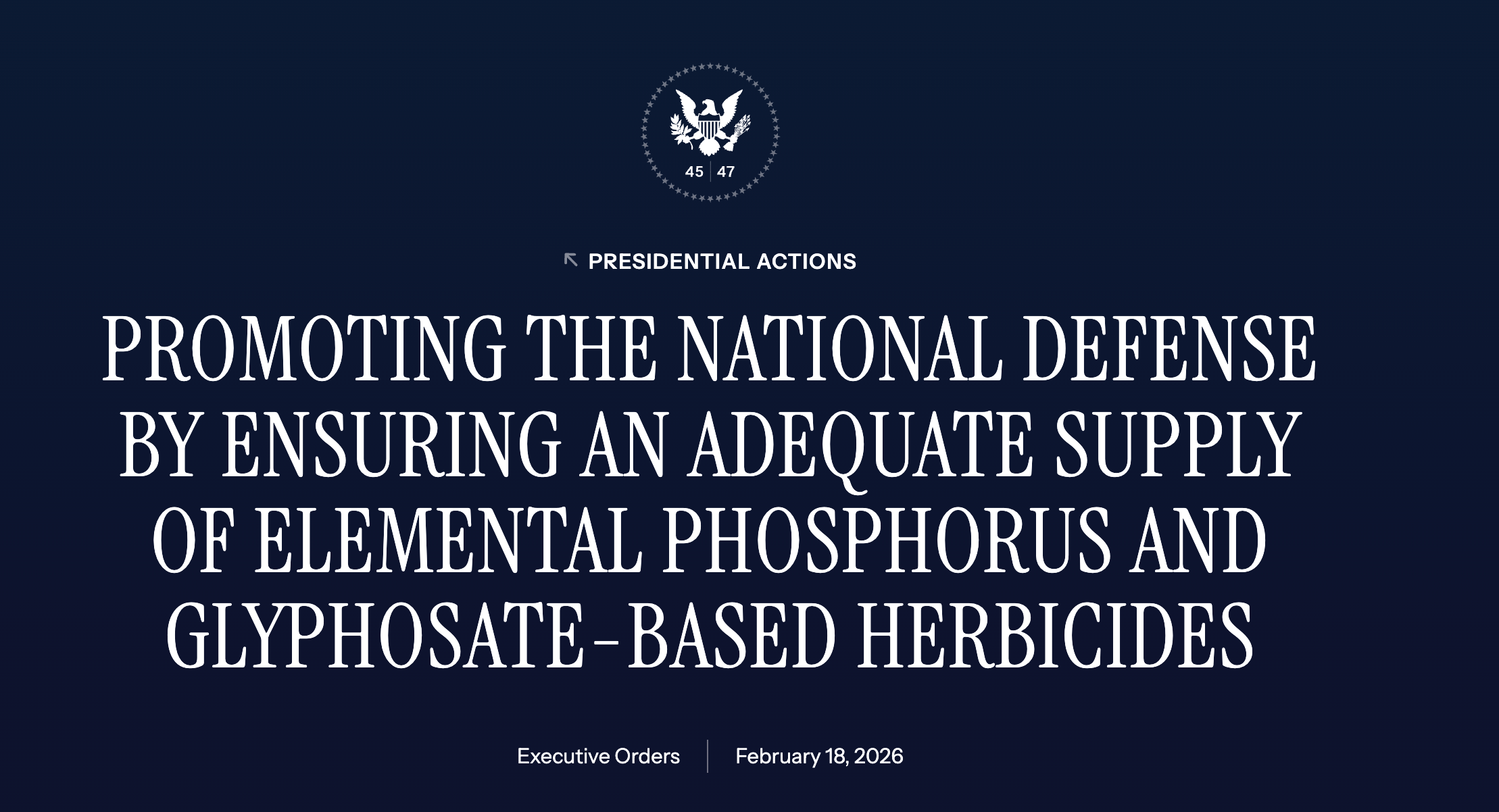
Donald Trump’s executive order (EO) promoting and protecting domestic glyphosate production spurred widespread backlash, but HHS Secretary Robert F. Kennedy Jr.’s support of the measure created far more. As an organic beef farmer and MAHA supporter, here’s why I support Secretary Kennedy’s position.
I’ve never used a drop of glyphosate (aka Roundup) in my twenty-five years of farming, nor have I ever used it for residential uses. I’m sure I’ve eaten it, though – it saturates much of our commercial food supplies.
I don’t want to eat glyphosate, which likely kills my gut microbes and clearly causes Non-Hodgkin lymphoma. But glyphosate is ubiquitous, and it won’t be eliminated overnight. Secretary Kennedy understands these economic and political realities and is laying the ground to reduce glyphosate over the long term.
If glyphosate were removed from America’s agricultural infrastructure overnight, the consequences would be profound. Many, if not most, commodity crop farmers would face logistical and economic challenges that would be fiscally devastating. They have invested enormous sums in the equipment and systems that depend on glyphosate to operate, and have few tools to combat weeds in its absence, unless they apply even more toxic herbicides. Yields would plummet; grocery prices would rise; exports would suffer; the political backlash by consumers and commodity croppers would be profound.
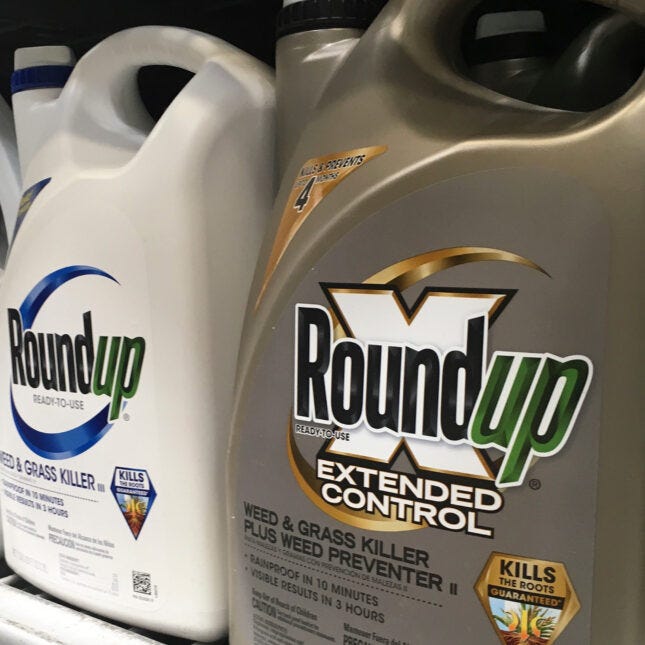
Roundup is not likely to disappear quickly, though. As Angela Huffman from Farm Action has correctly observed, Roundup manufacturer, Bayer, has hinted it might yank the product from the U.S. if it does not secure immunity from legal liability for the tens of thousands of farmers and residential users who have been severely debilitated or killed by its vaunted product. If that sounds like blackmail, it is. But Bayer wouldn’t profit by such a move and the problem is bigger than just Bayer.
America has become dependent on glyphosate for much of its crop production. This has unfolded over decades and cannot be reversed overnight. But it can be reversed, and Secretary Kennedy is planting seeds that ensure its demise.
True, the lion’s share of the nasty herbicide is used in crops devoted to export and livestock, as well as a boondoggle ethanol industry that does far more harm than good to the environment. Yet the federal government has paid farmers and ethanol manufacturers to create industries dependent on the chemical – those groups are extremely powerful political and economic forces. The current battle proves just how influential they are: they are being dragged into the light instead of hiding in their habitual lobbying shadows.
America imports more food than it exports, much of it highly processed, tainted with chemicals, and shipped over long distances. Only 1% of the nation’s current food production is organic, largely because of government subsidies rewarding farms that rely on chemicals at the expense of organic producers. Pummelling commodity farmers with economic ruin (even if they are producing for export markets or ethanol folly) is unfair, and it is political suicide for either a Republican or Democratic administration. Secretary Kennedy is aware of this reality, just as he is fully aware of the health threats posed by glyphosate to soil, animals, and humans.
The silver lining of the glyphosate wars is that more Americans than ever are becoming educated about what glyphosate is and how it ends up in their children’s Cheerios. The more that people learn about it, the more they seek to avoid it and scrutinize their food labels. The more they avoid it, the more they purchase trustworthy organic alternatives, thereby increasing demand for those safer offerings. No one is eating glyphosate in the name of defending national security.
The United States resembles a massive Titanic, run aground on the glyphosate iceberg. Turning that ship around and avoiding a plummet to the bottom of the ocean requires a very able captain. We have one, and he is a Kennedy.
In essence, modern U.S. agriculture has secretly indentured most large farms to servitude to chemical companies. Currently, soy and corn prices remain so low, and input costs are so high, that without crop insurance and other subsidies, most of these large farms would sink into bankruptcy – many already have. They serve as flow-through entities for federal subsidies that ultimately pour into the coffers of chemical manufacturers.
Instead of villainizing farmers, they must be recruited as allies. The more that Americans buy organic or glyphosate-free foods, the more the market will shift to meet that demand – that Titanic will slide off the iceberg. The higher the profit margins that farmers can earn by shifting operations over time to meet that demand, the wider berth our national ship can provide to go around the chemical-tainted floe.
Imagine if an improved food pyramid led to a dietary shift in which parents began buying grass-fed U.S. beef for their children, organic milk and cheese, and fewer ultra-processed concoctions made from glyphosate-tainted corn, wheat, and soy. Imagine if the president signed an executive order directing that all food procurement for public schools, SNAP beneficiaries, and military personnel were sourced, where possible, from organic domestic farms. This is the pathway to permanently melting the glyphosate glacier.
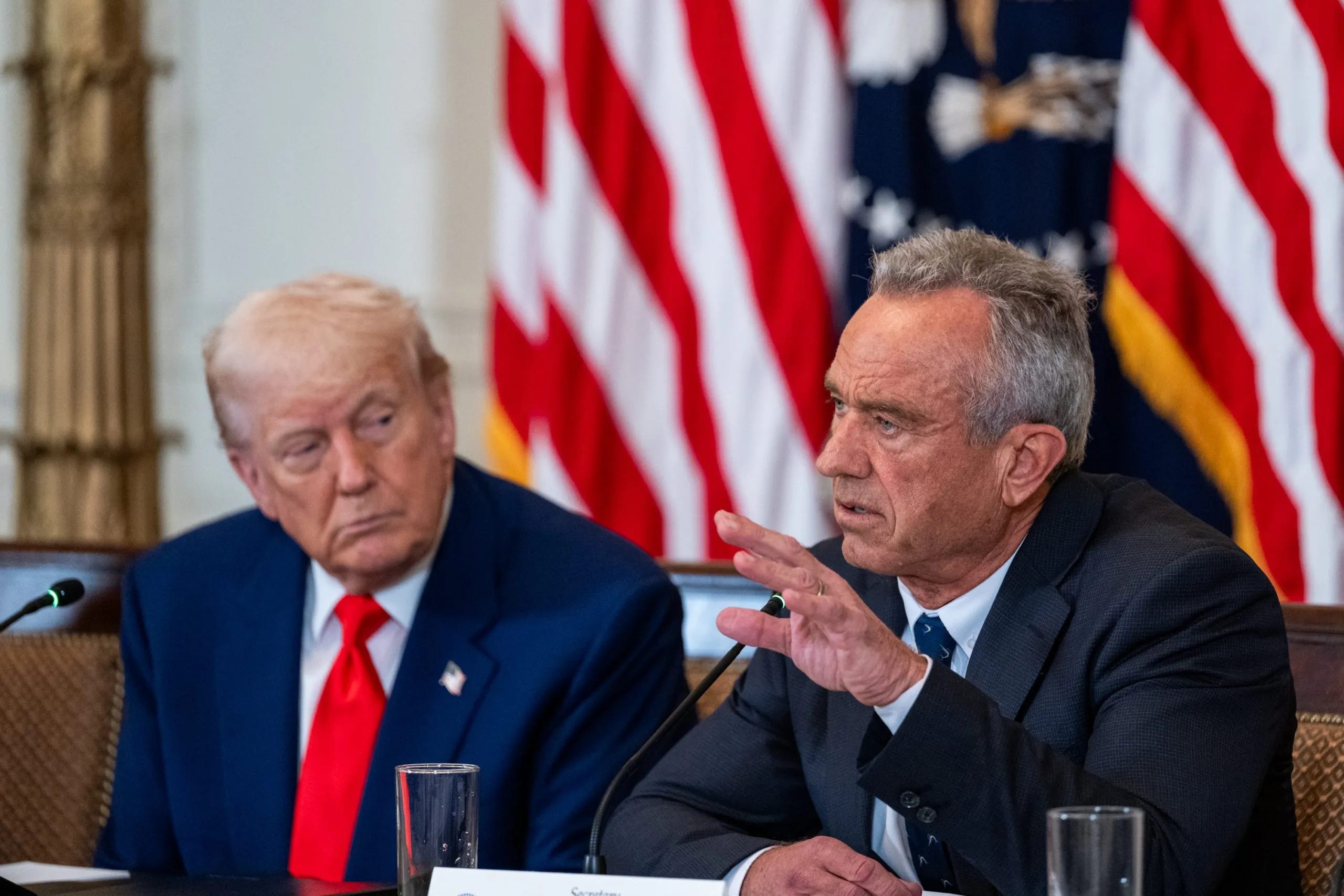
HHS Secretary Kennedy envisions this future, I’m certain. Some Americans will always want cheap, unhealthy food that tastes good, much like some keep puffing on cigarettes long after their lung cancer confines them to an oxygen tank in hospice. Food is addictive (even without the factory-created additives to make it so). But more “consumers” (itself a debasing term) are choosing to end their addiction to poisonous foods. Kennedy has done more to make that possible than any person in world history, and that genie is not going back into the glyphosate bottle.
Consider how much more influence people like Zen Honeycutt (Moms Across America), Vani Hari (the “Food Babe”), and Kelly Ryerson (“Glyphosate Girl”) now enjoy thanks to the MAHA movement. Members of Congress may be listening to corporate donors like Bayer; their constituents are tuning in to these health voices instead. Over time, the worm is turning: MAHA is an unstoppable zeitgeist.
Those with Trump Derangement Syndrome declaim the president for his glyphosate EO, and howl that not all food dyes have been banned. But how many petroleum-based food dyes did Barack Obama and Joe Biden eliminate? How much did those administrations awaken Americans to the devilish chemicals in their children’s lunches and baby foods? How much did they stymie or curtail glyphosate production? Did either of them even talk about a chronic disease epidemic driven by poor diets?
Many will remember Barack Obama’s USDA appointee Tom Vilsack, aka “Mr. Monsanto.” Donald Trump ejected Vilsack in his first term – Joe Biden then reappointed him throughout his. Secretary Brooke Rollins, whose background in agriculture and business management converges perfectly to serve both large and small farm operations, is a dramatic improvement.
President Obama’s White House also infamously supported Monsanto in a seminal battle against farmers for the right to grow their own seed from its “Roundup Ready” products. (Seeds genetically engineered to withstand Roundup, which then kills everything else around them, including vital soil microbes).
There was nowhere near the furor over those actions as has spread across the nation in recent days. Let us thank Secretary Kennedy for enduring a vicious, hateful, slander-ridden campaign across three parties without quitting, always preaching the same message about the need to end the chronic disease inflicted by untrustworthy food production.
This battle is hardly over; it has only just begun. Candidate Kennedy was the shot across the bow of our unwieldy, unhealthy Titanic food supply. As HHS Secretary, he now co-captains the ship – Donald Trump put him there, fully knowing he would target industrial food. Bernie Sanders, Elizabeth Warren, and the Democratic establishment fought tooth-and-nail (and onesies) to prevent Kennedy from being confirmed, but President Trump stood loyally behind our clean food champion.
Let us not be so fickle in abandoning our leader, like Christ’s followers who demanded a worldly deliverer and promptly turned on Him when He failed to raise a mighty army of swords to conquer Rome. Christ won in the end, slowly but permanently transforming a corrupt society.
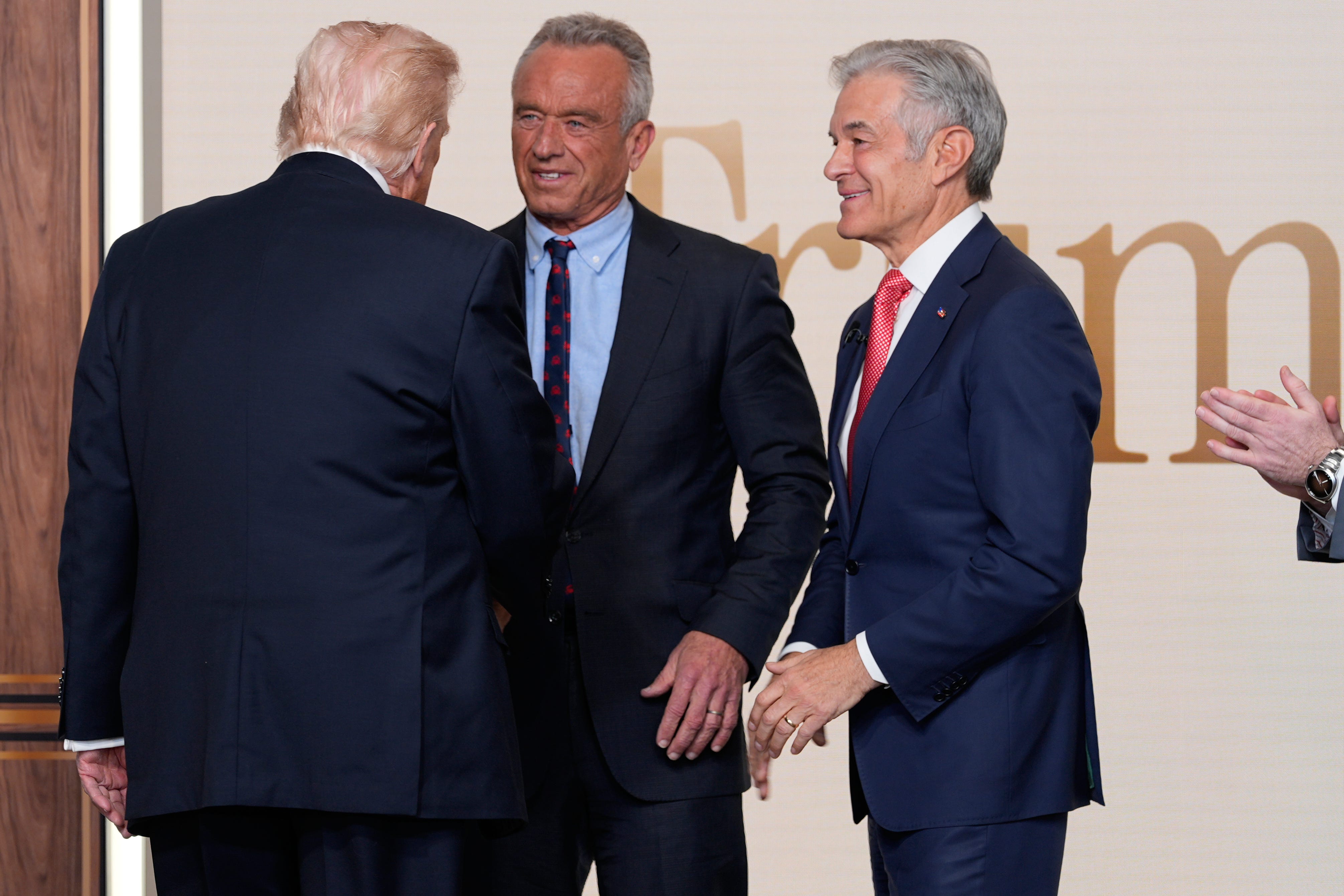
For those who choose to read between the lines, Kennedy has signaled that he is changing course to a healthier America. He posted on X: “President Trump did not build our current system — he inherited it. For decades, Washington designed modern agriculture. Policymakers wrote farm policy, directed research dollars, structured subsidies and crop insurance, and shaped commodity markets to reward monocultures and maximum yield. Those deliberate choices locked farmers into chemical dependence and prioritized short-term output over long-term soil vitality and human health. We are now changing course — without destabilizing the food supply.”
Continued Kennedy, “The Make America Healthy Again agenda forces us to challenge long-standing assumptions about how we grow food, structure markets, and measure success in this country. Reform at this scale will test entrenched interests, and it will not move in a straight line.”
And, finally, Kennedy gives credit where credit is due: “President Trump has opened the door to this debate and backed meaningful change — not only in policy, but in the national conversation about health and agriculture. American farmers stand at the center of this movement.”
I encourage readers to carefully read Secretary Kennedy’s full missive. As grassroots demand for healthier foods increases, conventional farmers who are already experimenting with regenerative practices will flock to supply those markets. The nation must be weaned off cheap foreign markets for its foods, and reclaim the American heritage of agri-culture that was systematically dismantled by captured regulatory agencies and corporate consolidation before Kennedy was even born.
We in the MAHA movement have work to do to support our farmers as they transition away from the industrial iceberg upon which our nation has run aground. We must trust Kennedy, who for years has battled Goliaths like Bayer and demonstrated that he is as wise as a serpent (Matthew 10:16). We must also remember that we have many more chemicals than glyphosate yet to slay, using free markets and an informed population.
Big Chem, Big Ag, and Big Pharma want to splinter the MAHA movement. They are now enlisting the same media and political forces behind the all-out assault against Kennedy during his Senate confirmation hearings last year. That didn’t work. And today, again and for always, MAHA will not be easily derailed. We’re just warming up.
Key Takeaways:
– Robert F. Kennedy Jr. has taken a savvy approach to President Trump’s executive order promoting Roundup.
– The path forward is to nurture regenerative farming and grow grassroots MAHA support for healthier food supplies that overpower Bayer-Monsanto and other multinational food and chemical companies seeking to preserve their market share and regulatory influence.
– The MAHA movement is here to stay and will only grow stronger as it increases consumers’ rebellious awareness of glyphosate’s manufacture and ubiquitous contamination of our food supply.

So they extorted the American public. Good to know. I for one will do everything in my power to continue eating organic, supporting regenerative farms and never, ever buying another Bayer product, or whatever new iteration they hide behind, for as long as I live. B@stards.
Maybe you should have a chat with Stephanie Seneff, Phd, Senior Research Scientist at MIT, who has been researching glyphosate for over 20 years. Also I would suggest reading her book Toxic Legacy https://stephanieseneff.net/ "How the Weedkiller Glyphosate Is Destroying Our Health and the Environment - The Silent Spring of our time - From an MIT scientist, mounting evidence that the active ingredient in the world’s most commonly used weedkiller is responsible for debilitating chronic diseases, including autism, liver disease, and more."