


Why Are Food Dyes Still in Halloween Candy?
A year and a half after Health and Human Services Secretary Robert F. Kennedy Jr. asked the food industry to pull petroleum-based dyes out of the food supply, the candy aisle at most supermarkets across America looks almost the same as it did before the industry agreed to comply with HHS voluntary recommendations.
That means this Halloween American children will carry home the same candy they always have, tinted with the same Red No. 40, Yellow No. 5, and Blue No. 1.
What happened?
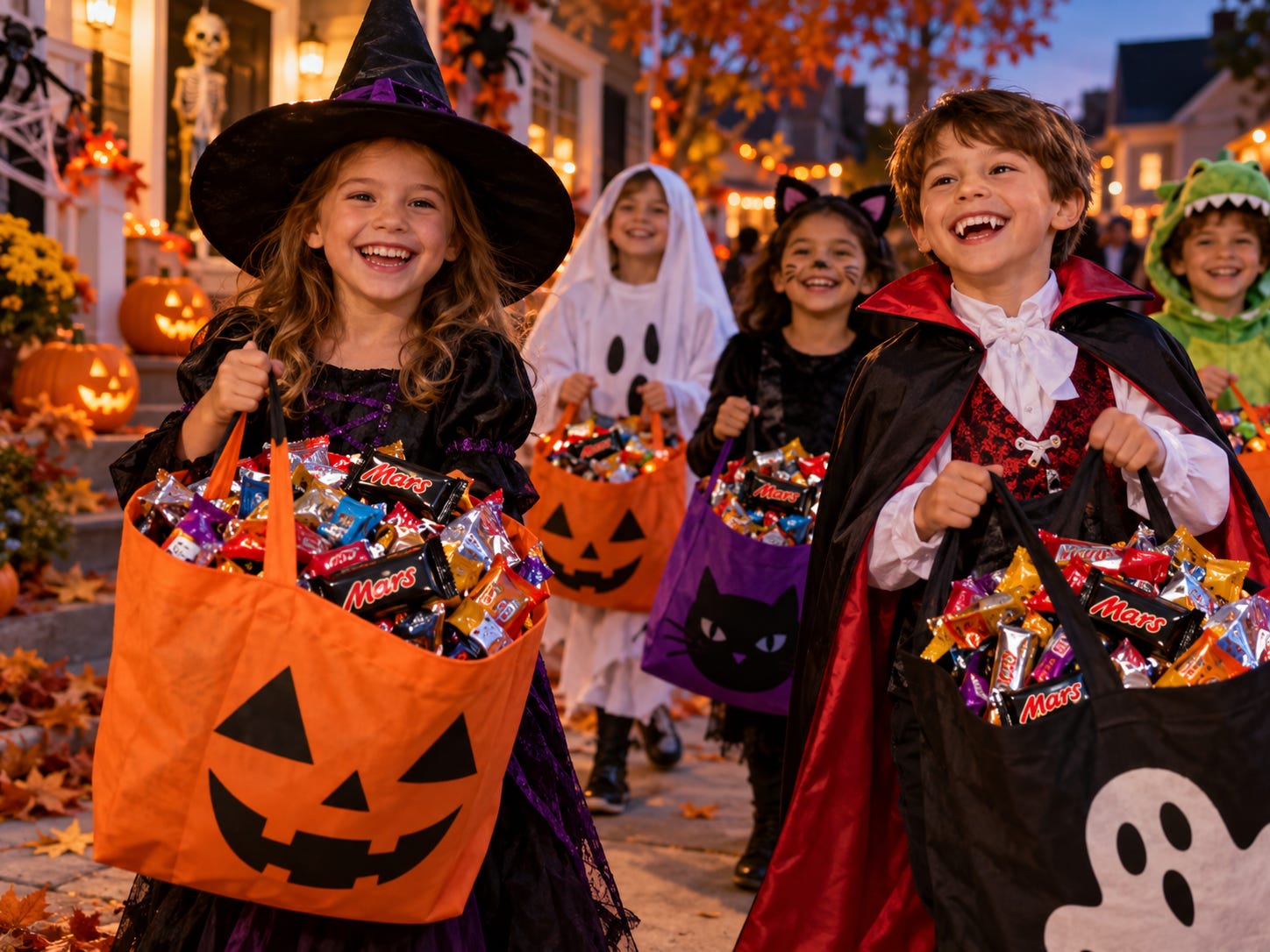
Dye-free versions of some of the biggest candy brands do exist now, although they have to be ordered from Amazon because many candy makers are still moving slowly, long after the rest of the food industry has begun to clear synthetic dyes out.
A request, not a rule
On April 22, 2025, HHS and the Food and Drug Administration announced a plan to phase out six petroleum dyes: Red No. 40, Yellow No. 5, Yellow No. 6, Blue No. 1, Blue No. 2, and Green No. 3. Kennedy has said the dyes are “clearly associated with a variety…of diseases, including cancers and behavioral disease and neurological diseases like ADHD.”
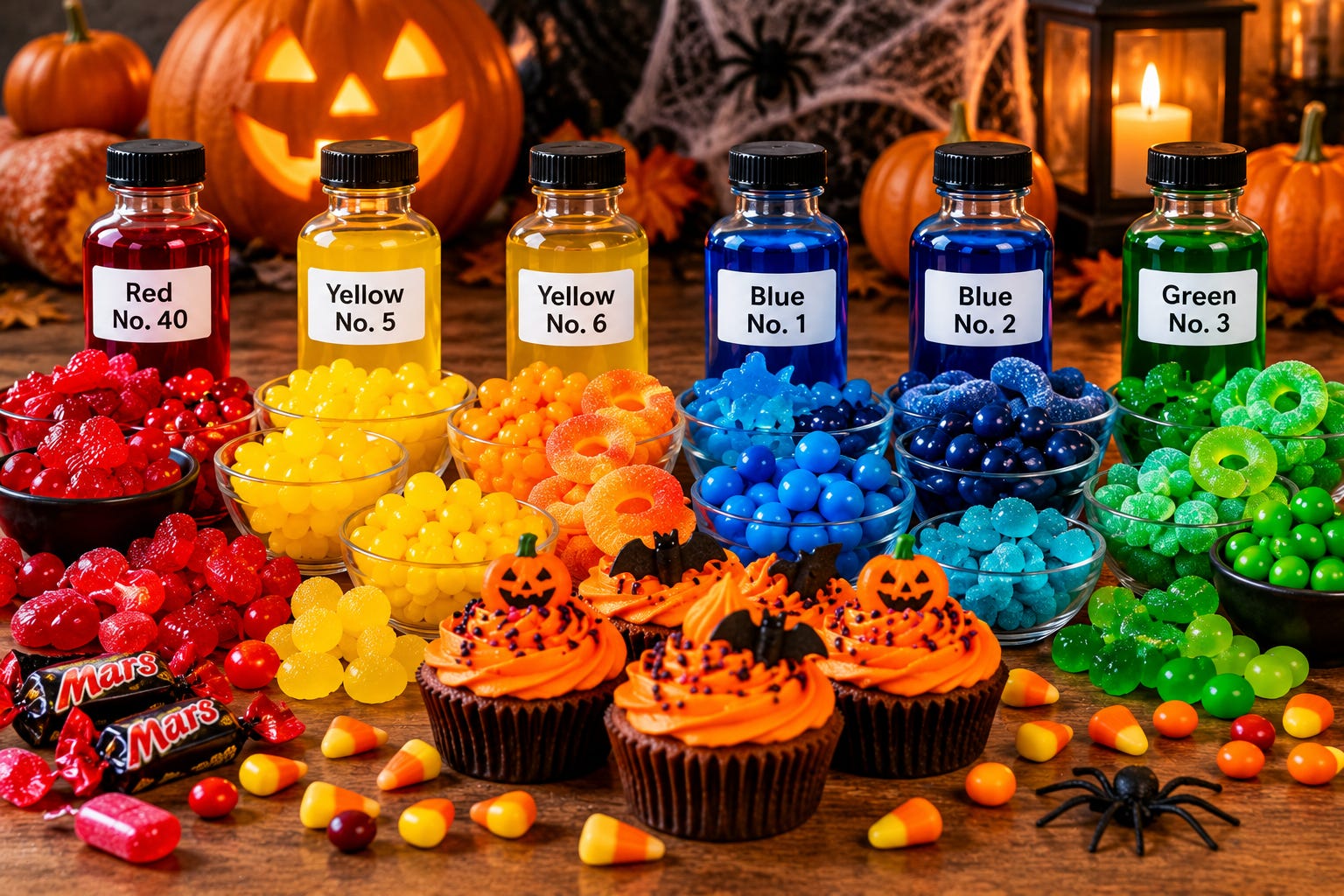
Under the plan, food and candy companies voluntarily set their own deadlines, which run from the end of 2026 to the end of 2027. However, if a company misses their own target, there are no legal consequences and the government is not enforcing it – yet.
The FDA did issue a ban on Red No. 3 in January 2025, and by law, food and candy sold in the United States cannot contain it after January 15, 2027. After that date, the FDA can pull any products containing Red No. 3 from shelves.
The food industry took action, but candy makers are dragging their feet
Of the 24 largest food manufacturers tracked by the Center for Science in the Public Interest (CSPI), an independent consumer watchdog that has campaigned to get synthetic dyes out of food since the 1970s, about half pledged to remove synthetic dyes from everything they sell, and several have already taken action. Nestlé USA, Tyson Foods, and Campbell’s have cleared the dyes from their American lineups. General Mills has pulled them from every food product it sells to schools, and Welch’s reformulated its fruit snacks to omit dyes. For a voluntary program, that is real change.
The candy aisle is where progress stalls: Hershey pledged in July 2025 to remove synthetic dyes from all its U.S. products, including Reese’s, Kit Kat, Jolly Rancher, and Twizzlers, by the end of 2027, and it is the only major American candymaker with a full, dated commitment. But the end of 2027 is more than a year away, so this Halloween, Hershey’s Jolly Rancher, Twizzlers, and Reese’s Pieces are still colored with petroleum dye.
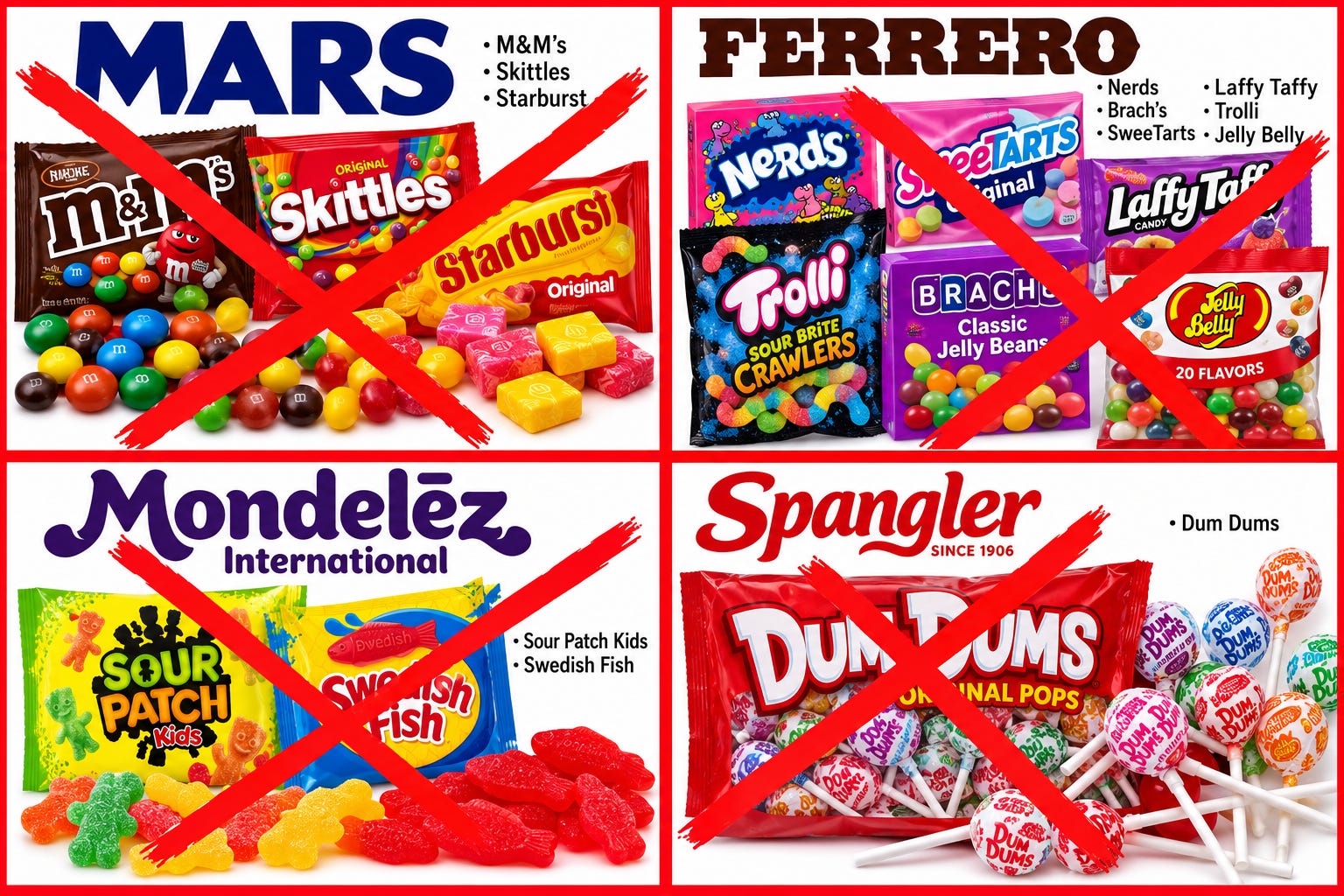
The candy company scorecard
Mars (M&M’s, Skittles, Starburst) refused Kennedy’s call in July 2025, calling it “premature to make commitments,” then reversed under pressure, including a deceptive-practices investigation by the Texas attorney general. It now sells its naturally colored versions on Amazon.
Ferrero owns Ferrara Candy and Nerds, Brach’s, SweeTarts, Laffy Taffy, Trolli, and Jelly Belly. It carries the highest share of dyed products of any company CSPI tracked – 60 percent in 2020 – and has said it will do only what the law forces, dropping Red No. 3 by 2027 and following any state bans where they apply.
Mondelēz (Sour Patch Kids, Swedish Fish) says it is “actively working” on natural dyes but has set no deadline, after missing its own 2015 promise to drop artificial colors by 2020.
Spangler (Dum Dums) kept its dyes, and its chief executive complained that beet juice makes a “nice red” but “tastes like beets.”
Because the phase-out is voluntary, every one of these companies can stall and wait it out, and many are doing just that. But this MAHA fight is moving to the states. California, West Virginia, and Texas have passed their own dye laws to enforce what the federal government requested, and the candy and dye industries are suing to block them.
Clean candy is available on Amazon but not in stores
Mars is the sharpest example of how a little progress can look like a lot. Its naturally colored M&M’s, Skittles, and Starburst, tinted with beet juice, turmeric, and spirulina, are real, but you can only buy them online, and the M&M’s are still missing blue and brown until Mars solves the color problem by 2028. Selling them online lets Mars test how many shoppers will hunt for the clean version without giving up grocery shelf space, which stays stocked with the dyed candy Mars says “consumers already know and love.”
Synthetic dyes cause real health issues
CSPI places every synthetic dye in its worst category – “Avoid” – and tells shoppers plainly to “avoid all synthetic dyed foods.” The specific concerns include Red No. 3 causing thyroid tumors, Yellow No. 5 contaminated with a carcinogenic ingredient, benzidine, and Blue 1, Red 40, Yellow 5, and Yellow 6 are known to trigger hypersensitivity reactions.

While the cancer and allergy concerns are serious, it was the evidence that these dyes affect children’s behavior that pushed Europe to act. A 2007 randomized, double-blind study at the University of Southampton, in the United Kingdom, found that the dyes increased hyperactivity in normal children, not just those with attention problems.
Since 2010, the European Union has required a warning label on foods made with six of the problematic dyes, and California reached the same conclusion in 2021. After reviewing the research, the state’s Office of Environmental Health Hazard Assessment found that “synthetic food dyes are associated with adverse neurobehavioral outcomes in some children,” according to its director, Dr. Lauren Zeise.
Asa Bradman, the UC Berkeley scientist who led the review, noted that “children tended to have higher exposures than adults,” and higher still in lower-income families.
Better candy options for Halloween
There are dye-free candy options available at the stores, and some that were never dyed to begin with. Those include Tootsie Rolls, Twix, 100 Grand, Werther’s, Bit-O-Honey, mini Hershey bars and Kisses that do not contain any synthetic dyes. Health-food stores like Whole Foods, Sprouts, and Natural Grocers carry brands that leave synthetic dyes and artificial flavorings out of everything they make, among them YumEarth, SmartSweets, Surf Sweets, Unreal, Black Forest, and ChocZero. Many Target and Kroger stores now stock these cleaner candy versions also.
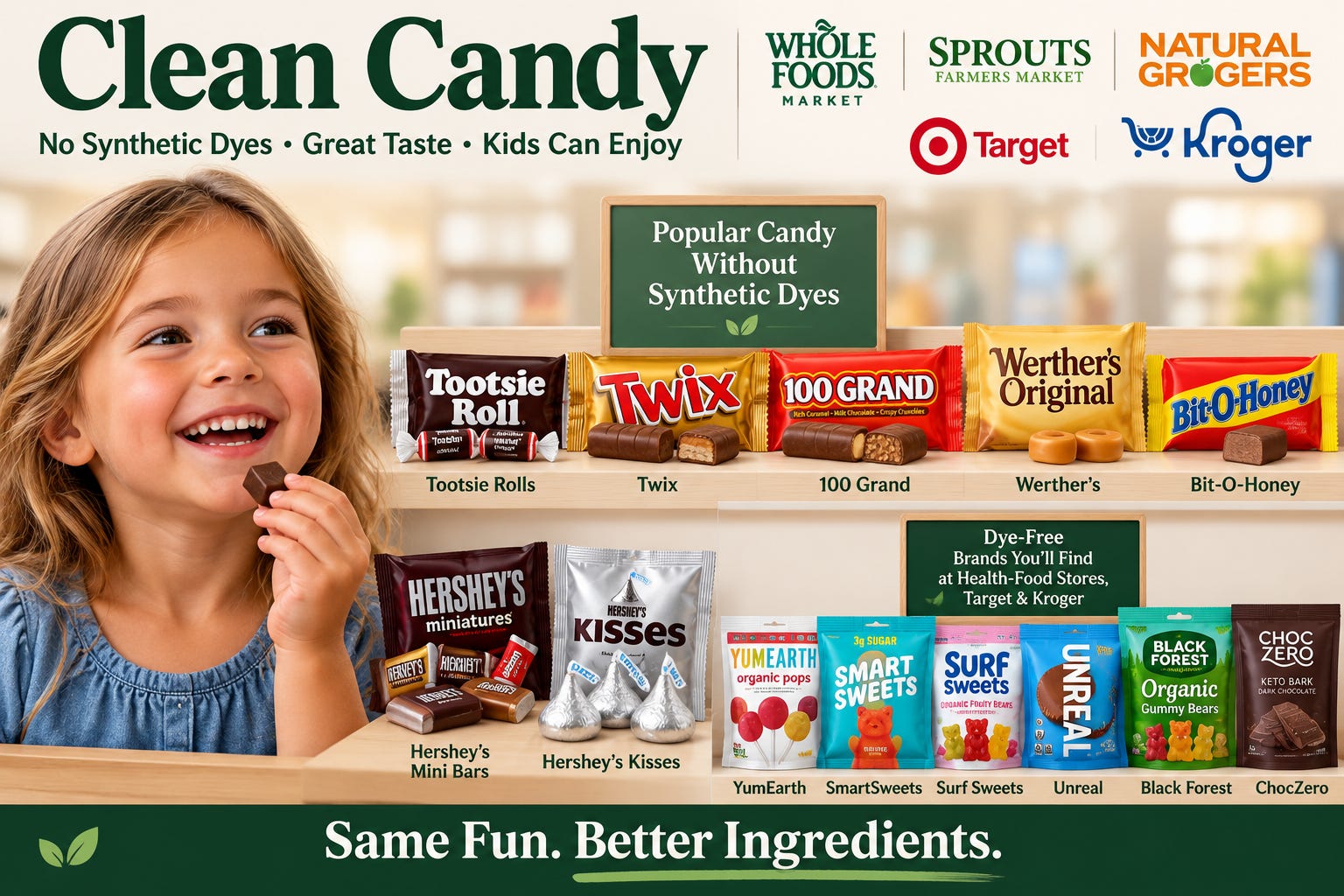
A year and a half after Kennedy and HHS called for their removal, petroleum dyes are finally disappearing from much of America’s food. MAHA families can make the dye-free choice themselves, filling the Halloween bowl with candy that was never dyed and skipping the hold-out candy brands.
Shop our merch store to support the MAHA Report and the MAHA movement.
All proceeds go to supporting the cause.

I LOVE this effort, BUT IF I HAD HAD THIS INFO **BEFORE** BUYING MY HALLOWEEN CANDY I WOULD HAVE PUT IT TO USE! Sheesh!
The fact that these companies couldn’t care less about our children’s health, should make parents ban them completely. It infuriates me, especially because I’ve had a lifetime of experience with sick and disabled children (from birth to palliative care and everything in between) and the pain and cost their families go through. Support the healthier choices or teach your children about real food. They will someday be grateful for your wisdom.