


[Wednesday’s hearing with Dr. Fauci will be streamed live at 8:30 a.m. Eastern on numerous networks]
The diary of Anthony Fauci that was released to the public over the weekend shows a man thrilled to be in the epicenter of the action, with President Trump showering him with praise and White House staff swarming to take selfies with him.
The diary entries show his glee as the virus spreads from its apparent starting point in Wuhan, China, and begins infecting people around the globe.
Sen. Rand Paul, chairman of the Senate Committee on Homeland Security and Governmental Affairs, obtained Fauci’s diary and released it online on Saturday on a section of Paul’s official webpage called the Reading Room. It’s a fascinating glimpse into a man at the very center of the nation’s response to the Covid pandemic.
Fauci headed the National Institute of Allergy and Infectious Diseases (NIAID) for 38-years and was the highest-paid employee in the federal government at the time of the Covid-19 pandemic, earning even more than the president of the United States.
It could be said that he had more power than a Cabinet member, given that he was burrowed into the federal government and controlled more than $7 billion in grants each year. At a 2021 hearing, Fauci said that attacks on him were attacks on science itself. It was a ridiculous statement. But through NIAID grants that funded the work of thousands of scientists, as well as almost all major universities in the country, Fauci did largely control which scientists got funded, and which did not.
That power created a vain monster.
“Amazing day today!” Fauci wrote on January 29, 2020. Lou Dobbs, then host of the top-rated show on the Fox Business network, had called that morning, telling him he told President Trump that Fauci was the “smartest person” around and he should speak to him.
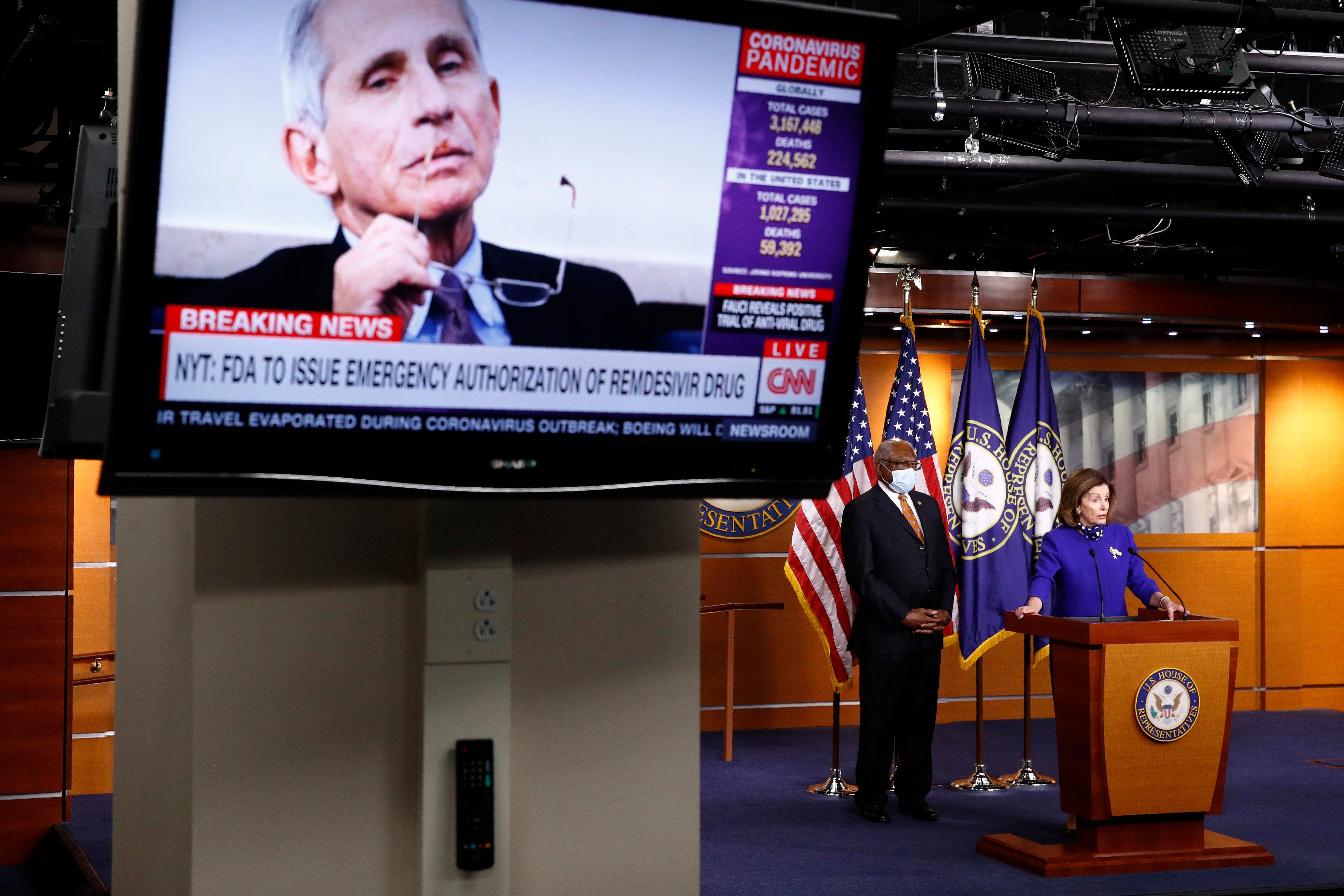
Fauci further records going to Capitol Hill to brief members of Congress and Speaker of the House Nancy Pelosi, who lavished him with attention “(big hug, kiss and telling everyone how great I am – a little embarrassing),” his diary entry reads.
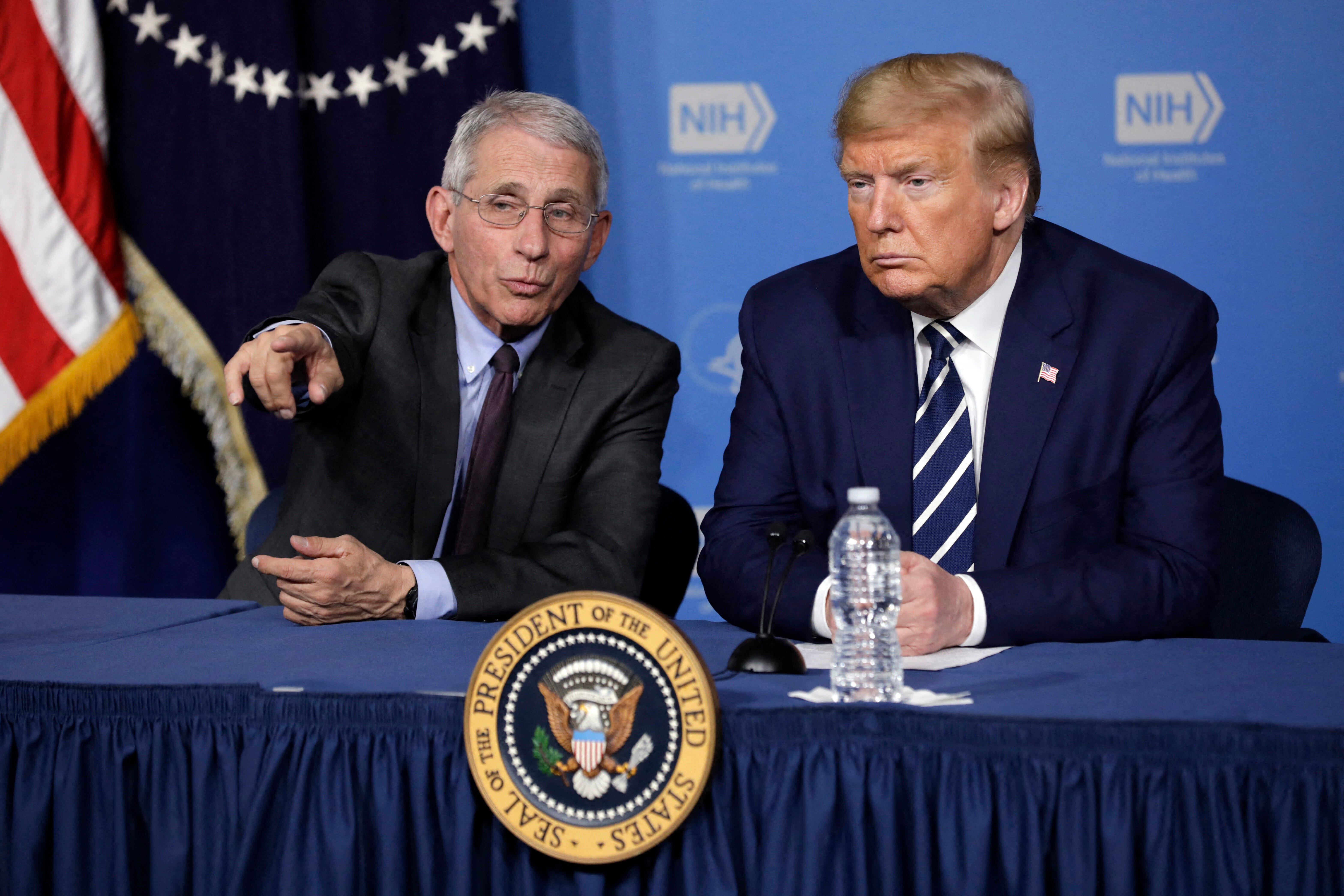
Later on January 29, he went to the White House for a meeting led by Mick Mulvaney, Trump’s chief of staff, and after about an hour President Trump came in “…and the first thing he said as he looked at me was: ‘Anthony, you are really a famous guy’…He then stayed for 20 minutes and asked most of his questions of me.” When Trump was leaving the meeting, Fauci writes, the President smiled at him and said: “Thanks, again, Anthony. We are counting on you.”
January 30, the day that he briefed the members of the House Energy and Commerce Committee, was “another amazing and difficult day,” Fauci records in his diary, noting that Rep. Ana Eschoo, a Democrat from California, said in the meeting that she “…felt safe in my arms.”
He notes as an afterthought: “Cases 7700 with 170 deaths,” making a record of the death toll of the new virus, not yet considered a pandemic at that point.
January 31, 2020, was “Another truly amazing day,” Fauci wrote. He says that he was sequestered in the White House all day, that he briefed President Trump, and that they then went into the White House Briefing Room and did a press conference.
“[HHS Secretary Alex] Azar led the presentation, but many questions were answered by me,” he writes.
Fauci’s diary may be difficult reading for anyone who lost a family member to Covid or who was shut out of a hospital while their father, mother, husband or wife died in isolation. It may be hard decades from now for people studying the Covid-19 pandemic to understand why a man in Fauci’s position would have spent so much time journaling about the attention he was getting from the media and politicians and celebrities.
In 2020, Fauci seemed to be having the best year of his life. Nowhere in his diary does he reveal distress or the sense of the terrible tragedy unfolding as the virus escaped China and spread rapidly across Europe, and as cases were first identified in the United States. There is also no curiosity or concern about how best to treat people infected with the new virus, or reflection on where it could have come from.
The tone of the Fauci diary entries is upbeat, presenting a man near ecstatic that the events of early 2020 have catapulted him to a level of fame few people have experienced – the leader of the free world lavishing him with praise, movie stars sending him flowers, and governors begging for his advice.
As we read deeper into the Fauci diaries we see the man’s growing obsession with the attention he’s getting.
On March 1, 2020, then New York Governor Andrew Cuomo called him at his home asking for advice on how to handle Covid and telling him how much his father, former Governor Mario Cuomo, and his mother, had respected Fauci and how proud they were that he was an Italian-American.
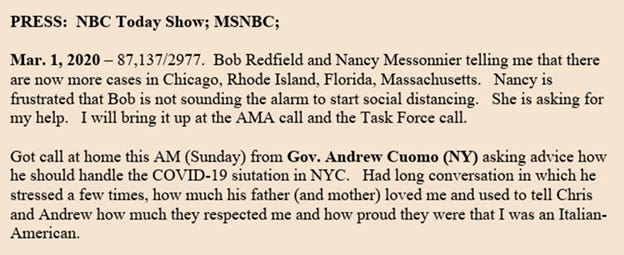
On March 9, Gov. Cuomo called him again to get his advice on whether to close schools in the Orthodox Jewish area in Westchester County, New York.
Fauci tells him ‘yes.’ Close the schools.

But it’s the things that are missing from Fauci’s diary that are most interesting, and it’s important to note what these are, because of what it means for the continued search for answers about the origin of the pandemic.
You won’t find the name “Ralph Baric” or even the last name, Baric, in the diaries. Except in the text of articles that Fauci was posting in full, in the pages of the diary. This despite the fact that Fauci was talking to Baric, the coronavirus researcher at the University of North Carolina in early 2020, when the virus first emerged.
Fauci is believed to have invited Baric to join the very important February 1 conference call with top scientists, organized by Fauci and his counterpart in Britain, Jeremy Farrar of the Wellcome Trust.
In his diary, Fauci includes a detailed list of the participants on that call and their affiliations. The only American listed, other than Fauci and NIH Director Francis Collins, is Robert Garry, professor of virology at Tulane University School of Medicine.
Fauci left off the name of Ralph Baric. Why?
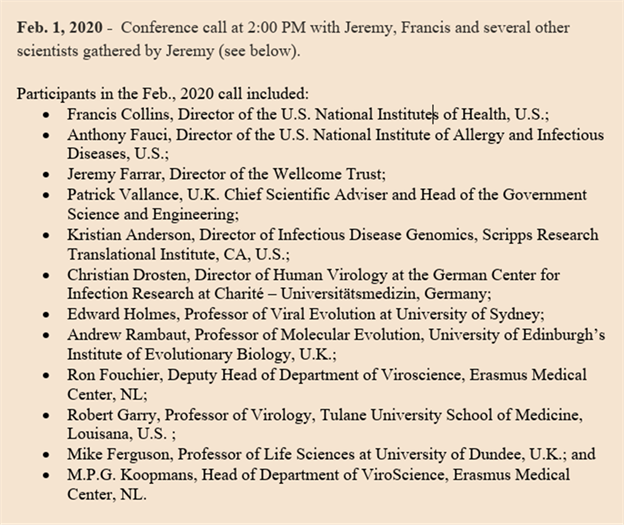
The call was organized after Kristian Andersen, Eddie Holmes, Robert Garry and Andrew Rambaut all began talking to each other about the new virus, with all four agreeing that it appeared as though it had come out of a lab.
After hearing this, Farrar and Fauci quickly organized the February 1 call with a larger group, including Marion Koopmans, the head of the Department of Viroscience at Erasmus Medical Center in The Netherlands, who did her PhD on coronaviruses and also serves as an advisor to the World Health Organization; her deputy, Ron Fouchier; and Christian Drosten of Germany.
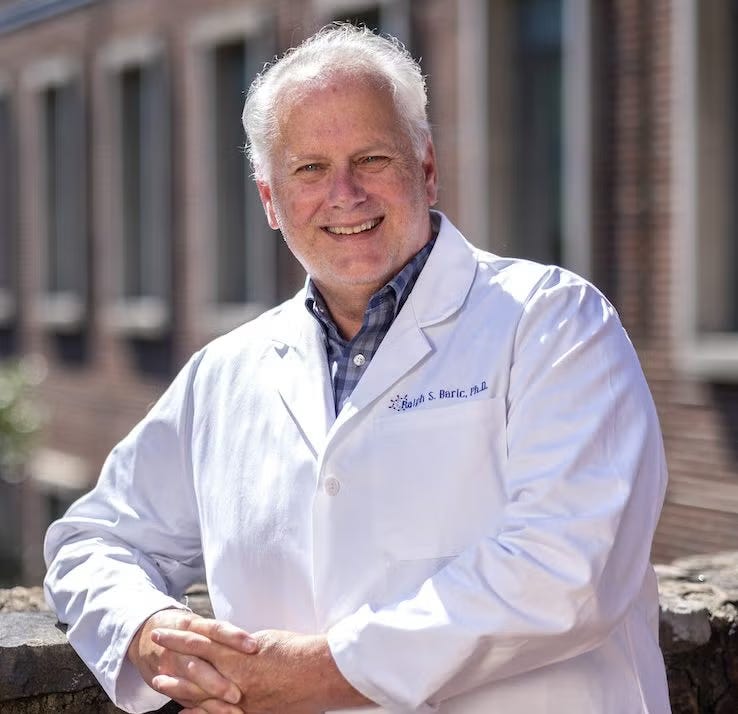
The original group of four – Andersen, Holmes, Garry and Rambaut – weren’t told that Baric was also on the call. Baric was a silent participant and did not introduce himself.
The original four all argued for lab origin, while the three Europeans added by Farrar all said it had to be of natural origin.
Baric is a key figure in the investigations into the origin of Covid-19 as he was the author of a 2015 paper on gain-of-function experiments on coronaviruses, to make them more easily transmissible and more pathogenic. One of his listed co-authors was Shi Zhengli of the Wuhan Institute of Virology.
And in 2021 Baric was discovered to have been the lead scientist on a 2018 proposal to the Defense Advanced Research Projects Agency (DARPA), to perform gain-of-function on a coronavirus by inserting a furin cleavage site in a certain place on the molecule. The proposal was called DEFUSE. It was submitted under DARPA’s PREEMPT program. And while the proposal did not win approval, there are suspicions that the work had already been performed, or was performed afterward, either by Baric or by others – thus creating what became known as SARS-CoV-2.
Two days after the big Feb.1 call, Baric called Kristian Andersen. According to Andersen, Baric “attacked” him and his argument that the virus had been engineered in a lab.
Did Fauci invite Baric to join the call for the purpose of gathering ammunition to use against Andersen, to bully him into dropping any idea that the virus may have come out of a lab?
What did Fauci really know or suspect about the origin of the virus? It’s not in the diary entries. But leaving Baric’s name off the list is a sign that he was hiding something, and an indication he suspected that the diary entries would one day be made public.
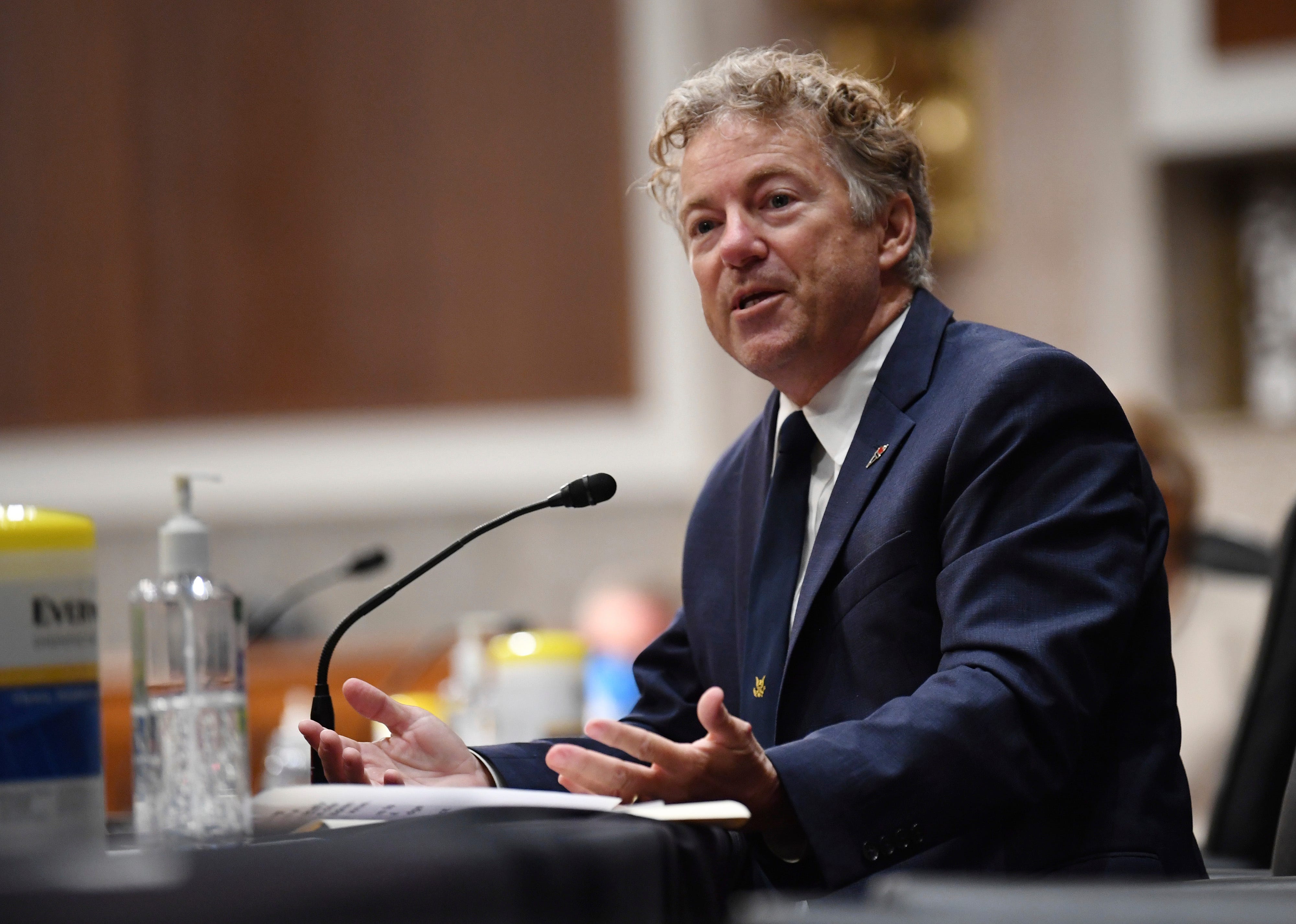
Congressional investigators have focused on the Feb. 1 call and on Fauci’s actions that followed it, guiding what became the “Proximal Origins” paper in Nature Medicine, the purpose of which was to kill any speculation that the virus could have been manipulated in a lab.
That paper, published as a ‘correspondence’ on March 17, 2020, was authored by Andersen, Holmes, Rambaut and Garry, along with Ian Lipkin of Columbia University.
“Our analyses clearly show that SARS-CoV-2 is not a laboratory construct or a purposefully manipulated virus,” the authors wrote in the summary.
However, Slack messages from June of 2020 recently released by Sen. Paul showed that Andersen and Holmes did not actually believe the anti-lab origin narrative. They still believed the virus could have come from a lab – with Andersen saying he thought there was a 30 percent chance of a lab origin, and Holmes saying he thought there was first a 20 percent and then a 10 percent chance. Also missing from Fauci’s diaries is any talk of the possibility that the virus was a bioweapon, except in one instance where he notes on August 28, 2021 that the intelligence community’s report on the origins of the virus was released.

“The intelligence community report on the origins came out and in some respects it was good news in that they felt fairly confident that it was not a bioweapon nor that it was bioengineered,” he wrote. He then knocked the FBI, the one intelligence agency that believed the virus was the result of a lab leak, commenting that this was “based on no data at all.”
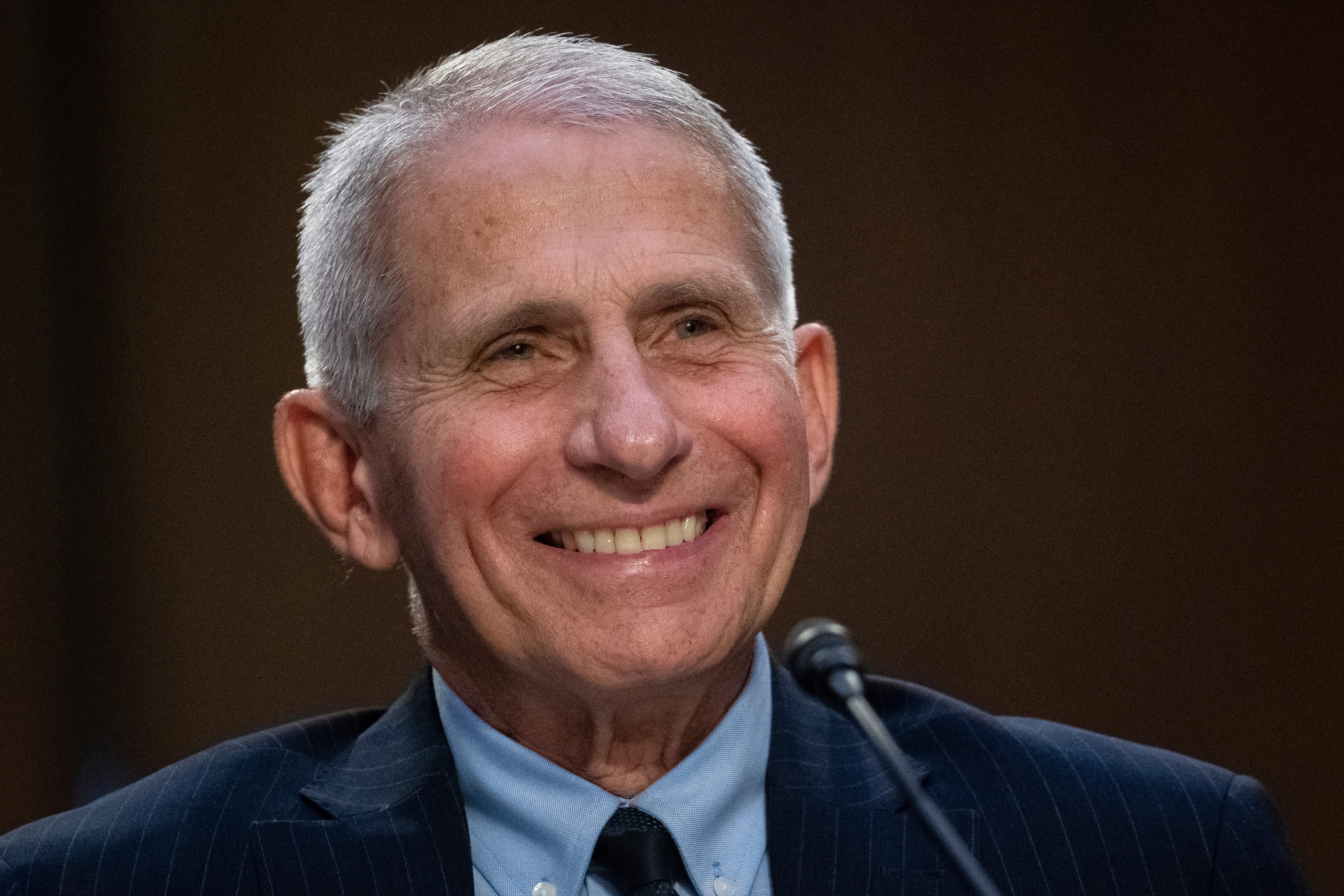
Fauci also bristles at Stanford University microbiologist David Relman, saying in an article in Nature that he would like to see all the records of the NIH “in their dealing with Chinese scientists. Truly amazing! There is no doubt that he has an agenda here and that is unfortunate.”
But what was Fauci’s agenda early on when some of the top evolutionary biologists in the world were developing strong suspicions that the virus was manmade? It was to head them off, to end the debate, to prevent any media from exploring the possibility that the virus was a bioweapon, and that it was either leaked, or was intentionally deployed.
Anthony Fauci’s diary only confirms what many of us already knew: That the man who was the face of the nation’s coronavirus response was arrogant and self-absorbed. It doesn’t answer what Fauci really knew or suspected about the true origins of the virus. But the absence of Baric’s name from the Feb. 1 call list, and Fauci’s determination to silence debate about the origins of the virus, should lead to increased scrutiny. We have to get to the truth.
[Wednesday’s hearing with Dr. Fauci will be streamed live at 8:30 a.m. Eastern on numerous networks]
Shop our merch store to support the MAHA Report and the MAHA movement.
All proceeds go to supporting the cause.

Rand Paul's book used a cover photo of Anthony Fauci - https://www.youtube.com/watch?v=jpbteysDH44
After 6 years of this, you still have nothing. Now do some juicy diaries - https://www.vanityfair.com/news/story/rfk-jr-diaries