

By Tony Lyons, President, MAHA Action/ Host, MAHA Media Hub
I asked a Politico reporter why they chose to investigate the organization trying to stop corporations from poisoning the American public, instead of those companies. She said she didn’t know.
I think I know. Politico has a conflict of interest. It is one of Washington’s main sources on health, food, chemical, and drug policy, and it sells those same industries privileged access to the policymakers who read it.

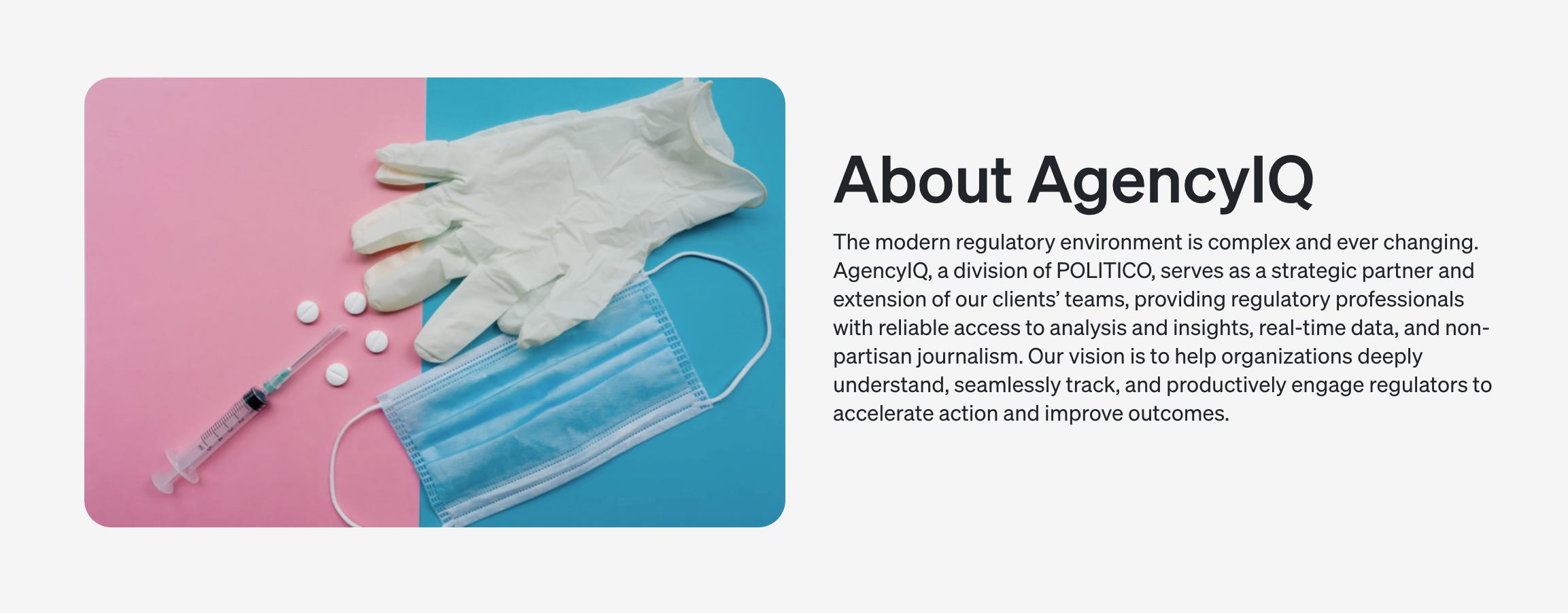
This isn’t ordinary advertising. Politico’s branded content has been described as a way for advertisers to reach “the Washington elite” in order to “shift policy.” The industries Politico covers pay for sponsored content, for events that put their people in the room with lawmakers, and for AgencyIQ, a Politico division that helps drug and food companies track and engage the regulators Politico writes about.
Look at who’s paying. PhRMA, the drug industry’s lobby, has sponsored Politico’s health newsletter, Pulse. The American Chemistry Council paid for “America’s Economy Runs on Chemistry,” where its CEO complained about “the enormous regulatory burden” on his industry. Gilead Sciences sponsored “Investing in America’s Future,” published as 2026 policy agendas took shape in Washington. Danone, a giant of ultra-processed food, paid Politico to tell readers that Americans are “rightfully looking at food as a critical part of the solution to many health challenges.”
And right now, Pulse is sponsored by the Partnership to Fight Chronic Disease. Sounds like a MAHA ally. It isn’t. PhRMA helped launch it, it shared PhRMA’s address for nine years, and it listed PhRMA employees as key officials on its tax forms. When the MAHA Commission released its childhood chronic disease report, this group pushed back on its scrutiny of prescription drugs, vaccines, and mental health treatment.
Now look at the headlines Politico chooses.
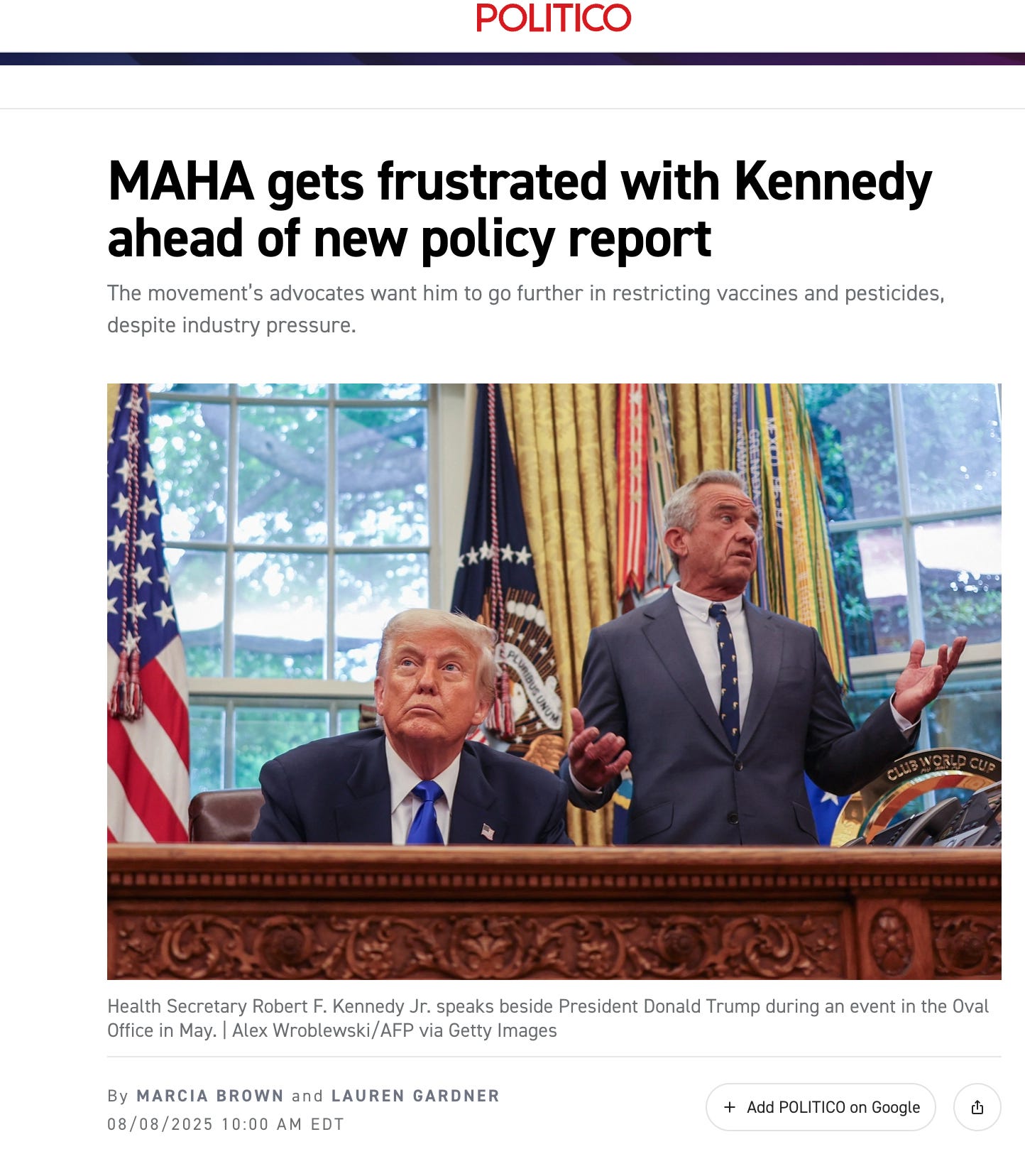
“MAHA gets frustrated with Kennedy.”
“The groups backing RFK Jr. are running low on cash.”
“RFK Jr.’s movement is in disarray.”
“RFK Jr.’s alliance with Trump is on tenterhooks.”
And just days ago, “The Short, Unhappy Marriage of MAHA and the GOP.”
The story is always the same: MAHA is divided, broke, failing, or already over. That isn’t scrutiny of an industry. It’s a campaign to convince you that the movement challenging the industries that Politico represents has already lost.
As I said the day after the midterms, when Politico was part of the pile-on: “The reports of MAHA’s death are wishful thinking by all those who want to continue poisoning the American public for profit.”
We are not going anywhere.
There’s another fact that belongs in this picture. Politico is owned by a German company, Axel Springer, which is controlled by two German billionaires, Friede Springer and Mathias Döpfner. And some of the clients paying Politico to reach policymakers are German companies, too.
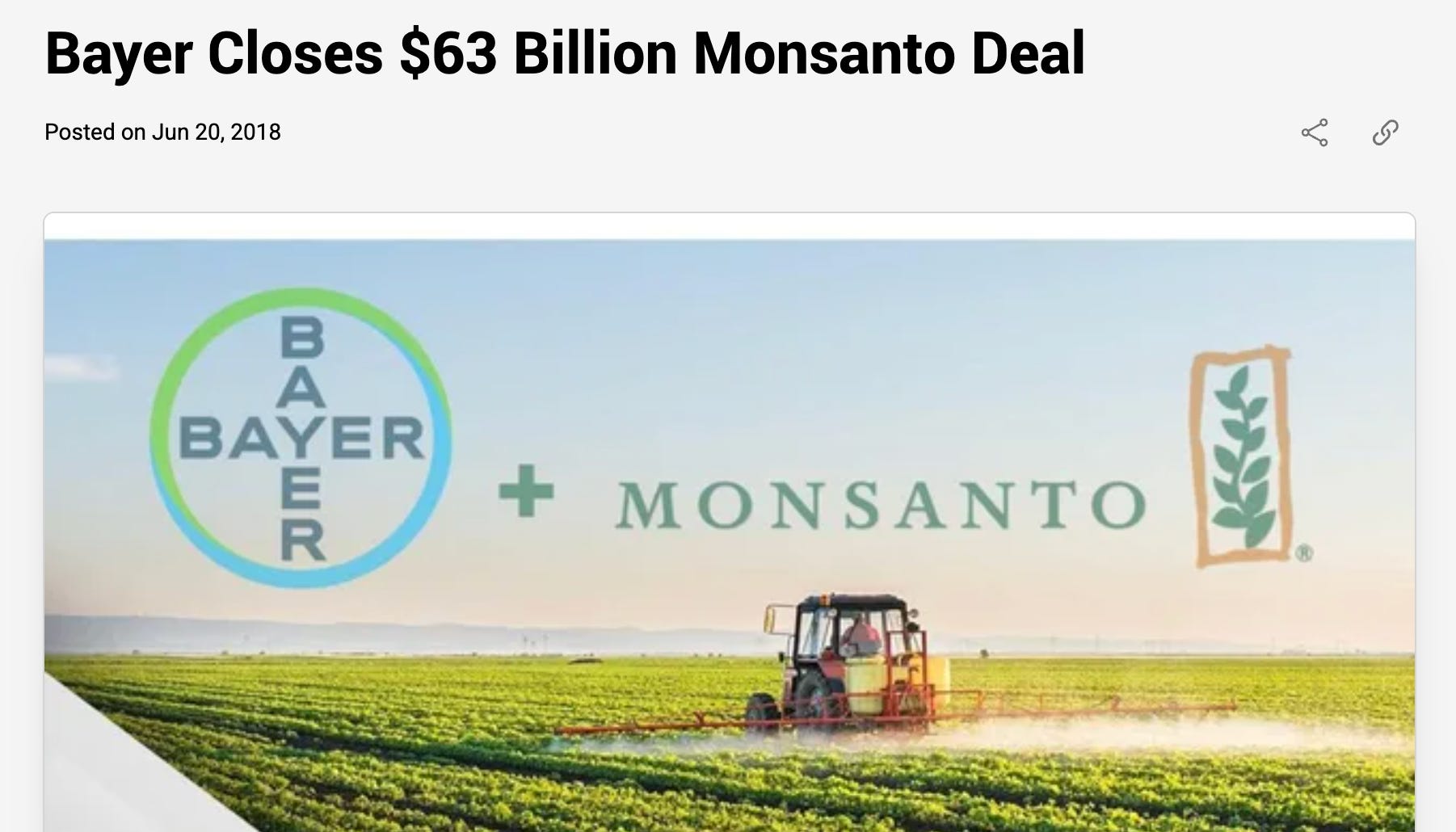
The clearest example is Bayer, the German drug and crop-science giant that bought Monsanto, the maker of Roundup. Politico ran a multi-year campaign for Bayer called “Drive Sustainable Progress.” In 2024, it was designed to reach “changing governments” and elected policymakers with “Bayer’s priorities as they prepared their 2025 agendas.” A Politico event opened with remarks from Bayer.
Here’s the double standard. Atrazine, still widely used on American farms, was banned in Germany in 1991 and across the European Union in 2004. Glyphosate, the chemical in Roundup, is restricted in Germany: it’s largely banned in private gardens, parks, playgrounds, and school grounds, and pre-harvest spraying is strictly banned. Here, it’s the most commonly used herbicide in the country. So a German company is helping other German companies poison Americans with products that are highly regulated or banned in Germany.
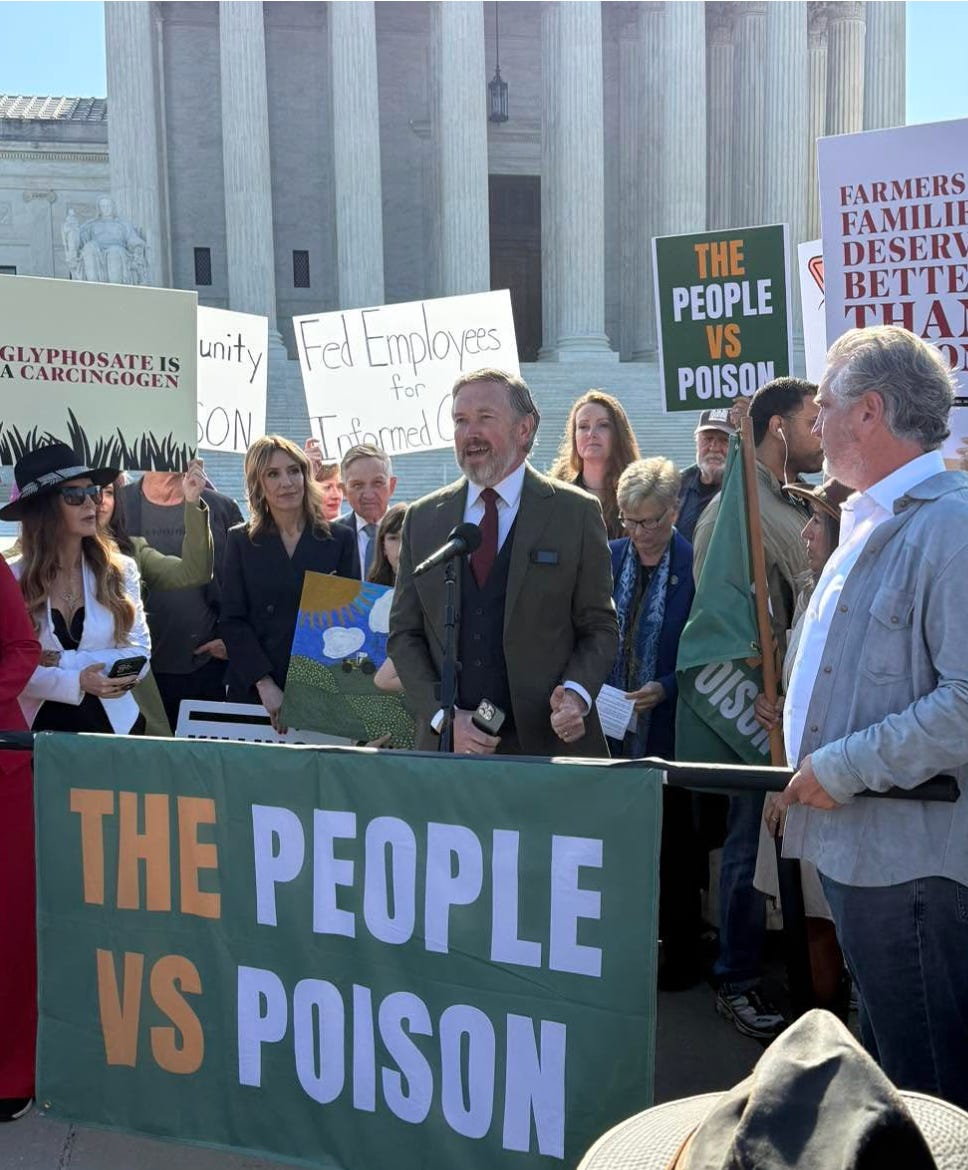
And these companies want more than access. They want immunity. Bayer pushed Congress for farm bill language that MAHA and a bipartisan group of lawmakers called a liability shield for glyphosate. In April, after a MAHA uprising, the House stripped it out. Two months later, Bayer got much of it from the Supreme Court.
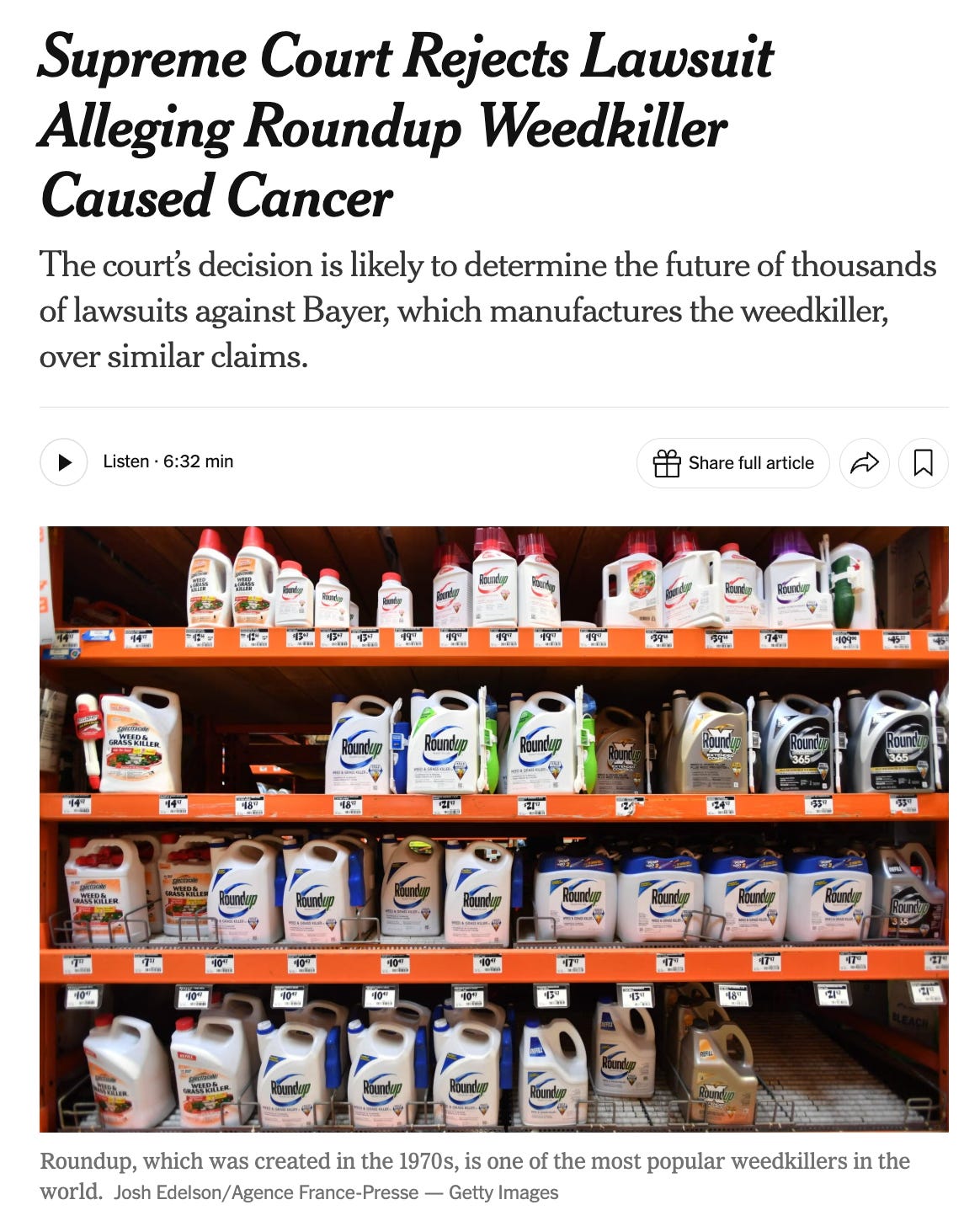
A St. Louis jury had awarded John Durnell $1.25 million, finding Roundup’s label should have warned him about cancer. But in June, the Supreme Court ruled 7 to 2 that federal pesticide law preempts his failure-to-warn claim. Justice Jackson, joined by Justice Gorsuch, warned that the ruling “unjustifiably closes the courthouse doors to state tort plaintiffs like Durnell.” That’s a liability shield by another route. And vaccine makers already have theirs, from the 1986 Act.
We are on the other side of every one of these fights. As we said many times, “If a vaccine, pesticide, or chemical company has to pay for the harm they cause, they’re going to make safer products. No product should be granted liability protection by our government.”
All of this makes MAHA a competitor for the thing Politico sells. If we succeed, the companies that pay Politico for access will stop paying. A German-owned publication that takes money from German chemical and drug companies has a straightforward commercial interest in seeing us fail.
Politico’s editorial standards say, “We are fair, objective and nonpartisan,” and promise to avoid conflicts of interest, “real and perceived.” A “sponsored content or discussion” label doesn’t make that conflict go away. Readers deserve to know who’s paying before they treat Politico’s obituaries for this movement as news.
The U.S. government paid $8.5 million in 2025 to bring Politico content to thousands of government employees. And the companies like Bayer and BASF paid millions to have access through Politico to government regulators. Politico was paid by the US government to deliver information to government officials to influence their policy decisions. Politico made millions, the companies they represent made millions and the American public consumed more toxic products. As a result, chronic disease goes up and then CMS pays more to treat the chronic disease. It’s great for Politico. Not so much for American children.
On today's show, we have incredible people who've had a front-row seat to the corruption of the mainstream media. We will be joined by Del Bigtree, Jeffrey Tucker, and Eric Berg.
But first, we’ll hear from Sharyl Attkisson. She’s an award-winning investigative journalist, a five-time Emmy Award winner, and a recipient of the prestigious Edward R. Murrow Award. After more than two decades reporting for CBS News, CNN, and PBS, she now hosts Full Measure with Sharyl Attkisson. She’s also a New York Times bestselling author who has consistently pursued the stories others are reluctant to tell. Welcome, Sharyl, it’s a pleasure to have you on!
Related Reading
On the MAHA Media Hub: The Big Pharma Propaganda Machine

On Wednesday, Tony Lyons, MAHA Action’s president, kicked off the weekly MAHA Media Hub podcast by reflecting on Politico, which has been attacking MAHA and HHS Secretary Robert F. Kennedy Jr. without revealing its conflicts of interest.
Like comedians have opined in the past: 'Why can't we make lawmakers wear their corporate sponsors on their clothing like race car drivers do?'
Maybe it's because race car drivers are far more productive.
Poor widdle toeknee