


From a bed at Vanderbilt University Medical Center, Shira Boehler became more than a patient. Motivated by questions about the diagnosis that led her to the hospital, the daughter of a pulmonologist and pediatrician emerged as an advocate.
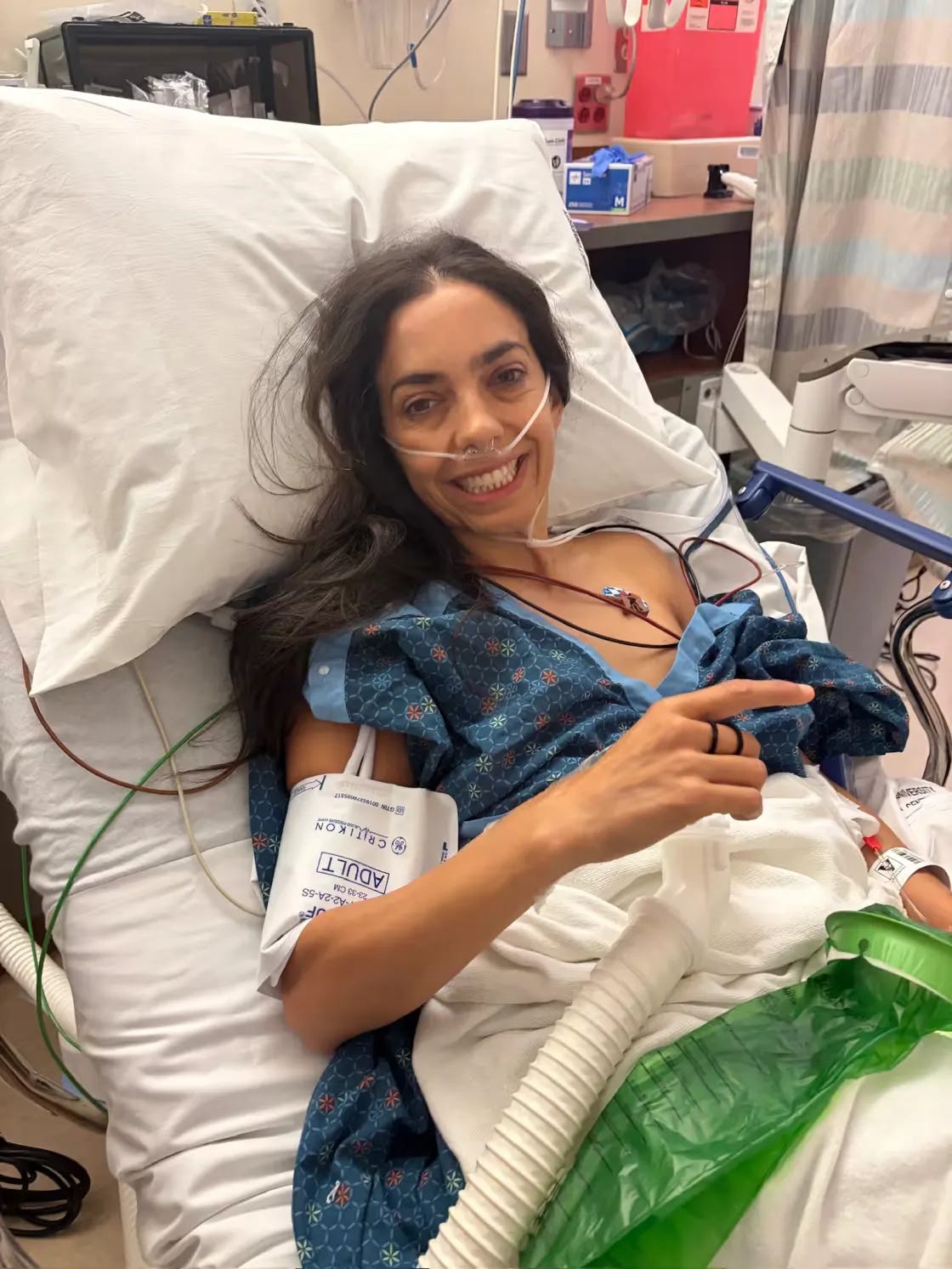
Boehler was undergoing surgery to address Stage 1B lung cancer – an early-stage cancer where the tumor is still relatively small and is limited to one area of the body. Initially prompted by a discovery during a full-body MRI a few months earlier, doctors told her she had adenocarcinoma, which the Cleveland Clinic reports is the most common type of cancer that starts in the organs.
“Wrong result. This has to be the wrong result,” Boehler remembers thinking. “I’ve never smoked. I eat healthy and exercise. I couldn’t have lung cancer.”
Boehler discovered that she was not unique in her diagnosis. Not only is lung cancer the leading cause of cancer death, according to the National Institutes of Health, but one in four lung cancer patients has never smoked.
“When I was in the hospital, I started conducting more research trying to figure out how all of this happened. A lot of people that I’ve known forever said, ‘Oh, I didn’t realize you smoked,’” Boehler recalled.
“It was really hurtful at first, because I’ve never smoked and they knew that, but I think people needed an answer. They needed a reason why they wouldn’t get lung cancer. And what I found, with all my research, really, is if you have lungs, you can get lung cancer,” she added.

The day last July that abruptly altered the course and purpose of Shira Boehler’s life started like many others.
Health-conscious and athletic, she ran six miles and ate a meal that would make the recently released Food Pyramid proud. Then the wife and mother who was 43 at the time drove to the doctor’s office and underwent a full-body MRI. It was part of a preventative medical screening suggested by her husband, Adam. That’s when her path unexpectedly shifted.
Boehler had no symptoms. There was no chest pain, unexplained weight loss, or shortness of breath. There was no family history of the disease.
The daughter of a lung doctor, she had never smoked.
Yet the results of the MRI revealed a 1-inch spot on her lungs. She was advised to follow up in three months if she experienced symptoms.
Boehler’s close friend, Dr. Kim Sandler, is a lung radiologist. Sandler encouraged her to get a low-dose chest CT. On Sept. 26, Boehler’s first low-dose CT scan showed that the tumor had grown. After a more detailed scan three days later followed by a bronchoscopy the next day, the woman who had run six miles the morning of that first preventative scan was told that she had Stage 1B lung cancer.
Five days after she was diagnosed, Boehler had surgery to remove the cancer. That was October 6, 2025. By November, she started running again.
Boehler recognized the impact of the preventative scan – the procedure she completed, even though she admittedly thought about not going because of her busy schedule.
“It saved my life,” she said about the scan. “Had I waited another year or two, the cancer could have spread. My children might have lost their mother, and my husband might have lost his wife.”
The whirlwind last summer and fall inspired Boehler to take action so that others would learn about the dangers of lung cancer and the benefits of preventative scans.
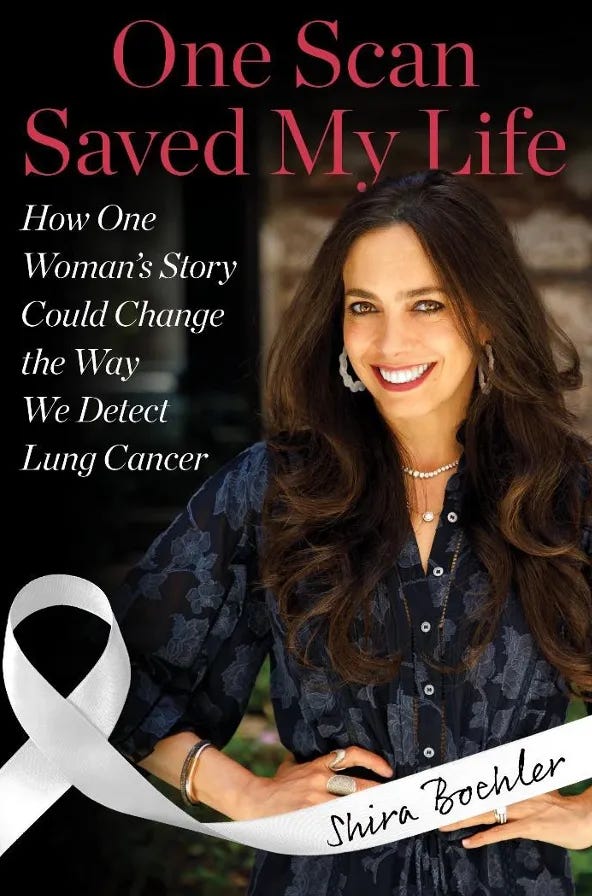
She authored One Scan Saved My Life: How One Woman’s Story Will Change How We Detect Lung Cancer (to be published by Skyhorse Publishing on April 28). The book tells Boehler’s story and addresses the myths of a disease that kills more Americans than breast, pancreatic, and ovarian cancers combined – a disease with dangerously low screening rates.
Boehler, who has spent her career in health care technology and finance, shows in One Scan Saved My Life how a disease that for years has been regarded as a “smoker’s problem” is claiming an increasing number of younger women who have never touched a cigarette.
Lung cancer, Boehler learned, is often silent, presenting vague symptoms or no symptoms at all. The disease is often found by accident, when someone is undergoing a test for a completely different reason.
“I’m not unique. We need people to get scanned. We need regular screenings just like we get for breast cancer,” Boehler said. “Lung cancer is not a smoker’s disease. I feel extremely grateful to be alive, and I’m driven to change the narrative about lung cancer.”
Proceeds from the book will support Boehler’s recently launched Cancer Doesn’t Care Foundation. Through the organization, Shira is crafting a long-term platform designed to impact policies and increase public education to increase early detection of lung cancer and influence system-level change.

Boehler’s personal story leading to the diagnosis contributes to her newfound mission.
She grew up in Santa Barbara, California. Her father is a pulmonary doctor and her mother is a pediatrician.
Her two brothers are orthopedic surgeons.
Boehler attended UC Berkeley, where she studied molecular and cell biology. She ventured into the business side of the medical field and met her husband, Adam, at a health care technology company.
The couple moved to New York City and she earned an entrepreneurship and finance degree from New York University.
Adam runs a health care investment firm. His father is a physician. His brother-in-law is an orthopedic surgeon.
Alongside her husband, Shira has helped build and scale multibillion-dollar health care businesses, cultivating deep networks and trusted relationships across payers, health systems, policymakers, and top health care executives.
Adam ran Innovation for Medicare and Medicaid during President Trump’s first term.
Connections and relationships helped Boehler navigate the lung cancer diagnosis and treatment.
The Boehlers have known Dr. Mehmet Oz, administrator of the Centers for Medicare & Medicaid Services, for years. Shira called Dr. Oz, a thoracic surgeon, upon learning of her cancer diagnosis, along with her father, the pulmonologist.
Since her surgery, and the debut of her foundation, Shira has talked to Dr. Oz and Secretary of Health and Human Services Robert F. Kennedy Jr. about what she deems essential changes in addressing lung cancer.
Screenings can help detect lung cancer early, when it’s more treatable, according to the CDC. Yet screening guidelines are mostly tied to people who smoke.
The U.S. Preventive Services Task Force recommends annual low-dose CT screenings for adults between the ages of 50 and 80 who are smokers or were smokers in the past.
The guidelines exclude millions of people, especially women and people who have never smoked, who may be at risk because of environmental factors, genetic susceptibility, and other unknown issues.
.Through Cancer Doesn’t Care, Boehler is striving to have federal health agencies expand guidelines for screenings and for insurance companies to cover the costs, just as they do for mammograms and screenings for other cancers.
Boehler points out that, when detected at the same early stage as her lung cancer, survival rates exceed 90 percent.”

The Cancer Doesn’t Care Foundation is working in partnership with the American College of Radiology to ensure that more people have the same access to life-saving scans that Shira was able to afford privately.
The organization is collaborating with leading researchers to accelerate new diagnostic approaches while working directly with imaging providers and policymakers to reduce costs and expand coverage, which will remove financial barriers to early detection, Boehler said.
“If we catch lung cancer when it’s still Stage 1, it’s an 80 to 90 percent chance of survival, and all we need to do is surgically remove the cancer, which is a lower health care cost,” Boehler explained.
“If we catch it in Stage 3 or 4, we have less than 20 percent survival rates, and people need chemo and radiation,” she added.
Boehler told The MAHA Report that, at a talk she gave about her story to a group earlier this year, a husband and wife were in the audience.
“They called me a month later. They left the talk on a Sunday morning, and called their doctor on Monday and asked to schedule a lung screen. The doctor said that was silly because they don’t smoke and they’re not high-risk. He told them it was a waste of time,” Boehler said.
The couple insisted, and they paid out of pocket for the screening. The couple soon learned that one of them had lung cancer.
“They told me that the doctor said, ‘I’m not sure who told you to do this, but that person saved your life.’ I recognize that we’re educating doctors, too, who don’t understand and haven’t learned what is going on,” Boehler added.
Boehler is tirelessly devoted to her new purpose, and One Scan Saved My Life is a valuable tool. She advocates for healthy eating, regular exercise, and measures like health screenings to be proactive on preventing disease.
She recalled a gathering at her house on Yom Kippur last October she says illustrates the importance of changing the narrative about lung cancer.
“I had met the surgeon earlier that day, and that night, we hosted around 70 friends. Many doctors were there. I told one doctor my story, and how a random scan caught my lung cancer, and he told me the scan was stupid and a waste of time. I said, ‘Well, I have lung cancer, and they’re going to cut it out, and I’m going to live. It wasn’t a waste of time for me.’”
One Scan Saved My Life: How One Woman’s Story Will Change the Way We Detect Lung Cancer, by Shira Kupperman Boehler, is due out from Skyhorse Publishing on April 28, 2026. It’s now available for pre-order on Amazon.
Related reading:

At the Trump Kennedy Center: Author Shira Boehler (“One Scan Saved My Life”) in Dialogue with Dr. Mehmet Oz and Dr. Kim Lori Sandler on Tuesday, April 14 @6pm

On Tuesday, April 14, at 6pm, on the Trump Kennedy Center’s Millennium Stage, Shira Kupperman Boehler, author of the forthcoming book, One Scan Saved My Life: How One Woman’s Story Will Change the Way We Detect Lung Cancer (to be published on April 28; available for pre-sale), will join CMS Administrator Dr. Mehmet Oz and Vanderbilt University Medical C…

Now MAHA is scaring people into cancer scans, which of course leads to cancer treatment while not ever spending any time on the corruption under the whole paradigm or alternative treatments and methods of prevention.
I’m done here.
No thank you. Cancer is generally caused by parasites that ivermectin and menbenozole destroy. No need for a billion dollar health damaging chemo/radiological solution.