


By Adam Garrie, The MAHA Report
Secretary Kennedy and team are closing out 2025 with a flurry of significant wins.
But first: stay up to date with all of the latest news from the world of MAHA: watch Caitlin Sinclair’s weekly MAHA Minute, available on MAHA Action’s social media channels.

The CDC Adopts ACIP Recommendations on Hep B Vaccine
The CDC formally adopted recommendations from the independent Advisory Committee on Immunization Practices (ACIP) on the hepatitis B vaccine, making it official: the CDC now endorses “individual-based decision making for hepatitis B immunization for parents deciding whether to give the hepatitis B vaccine, including the birth dose, to infants born to women who test negative for the virus.”
In a statement, the CDC further said that when making the decision on when or whether to have their child take the hepatitis B vaccines, “parents and health care providers should consider vaccine benefits, vaccine risks, and infection risks” and “parents [should] consult with their health care provider and decide when or if their child will begin the hepatitis B vaccine series.”
Kennedy Announces Support for People With Lyme Disease
Kennedy hosted a roundtable discussion titled “Invisible Illness — Leading the Way with Lyme Disease,” bringing together leading researchers, clinicians, patient advocates, elected officials, and administration members.
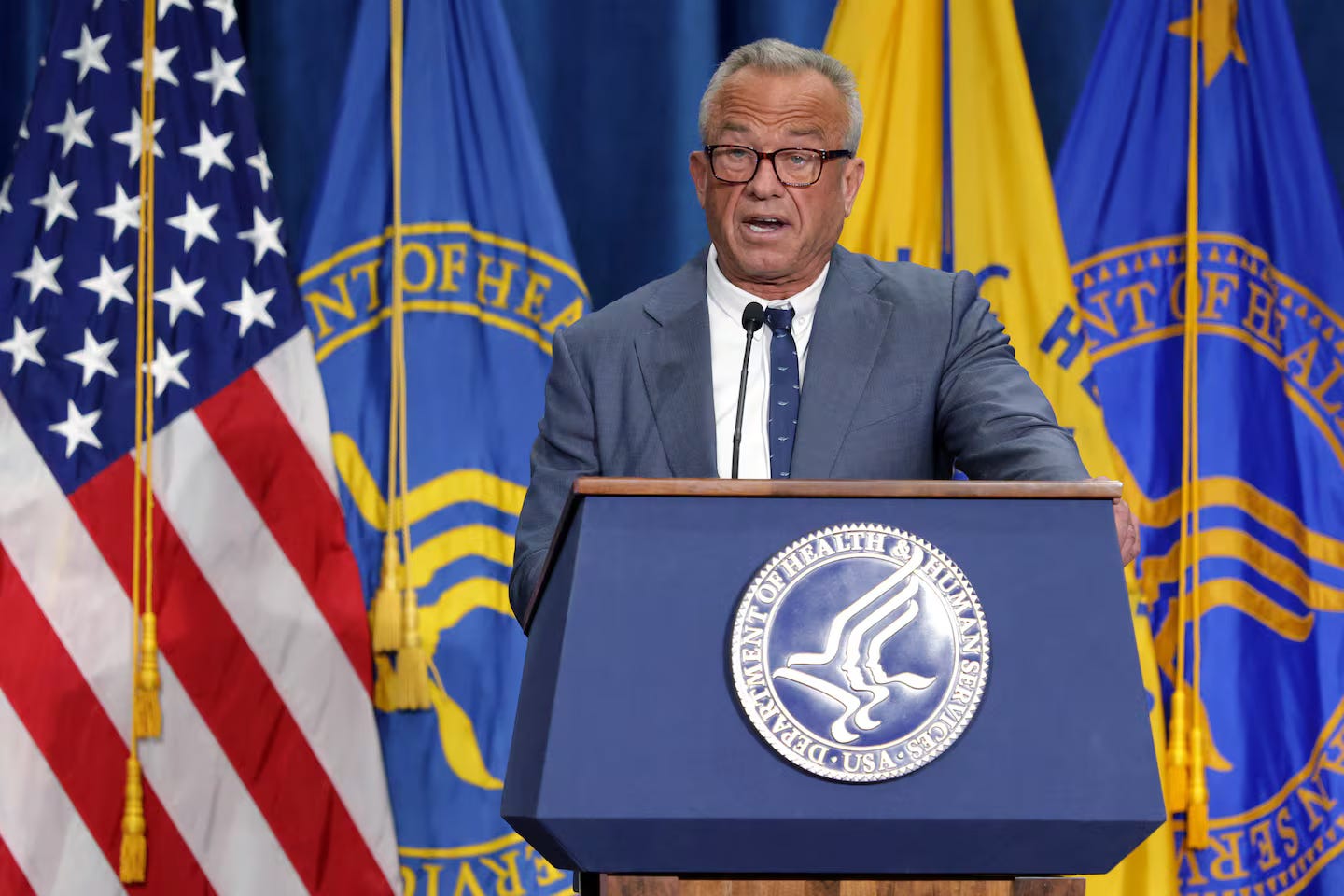
The event addressed innovative strategies to tackle Lyme disease, a tick-borne illness that impacts over 450,000 Americans each year. Kennedy, an avid outdoorsman, shared his experiences with the illness, emphasizing its profound personal and public health consequences.
At the roundtable, Kennedy said he’s renewing LymeX Innovation Accelerator, a $10 million public-private partnership with the Steven & Alexandra Cohen Foundation, focused on leveraging artificial intelligence to create advanced tools for earlier and more accurate Lyme disease detection.

Six More States Nix Junk Food for SNAP Recipients
USDA Secretary Brooke Rollins announced that six additional states – Hawaii, Missouri, North Dakota, South Carolina, Tennessee, and Virgin – have received a federal waiver allowing them to prohibit their states’ Supplemental Nutrition Assistance Program (SNAP) recipients from buying junk food and sugary beverages. That brings to 18 the number of states that have joined this MAHA initiative.
Kennedy Signs On to Protect Children From Transgender Surgeries
Secretary Kennedy signed a HHS declaration against “sex-rejecting procedures”—including puberty blockers, cross-sex hormones, and surgeries—for children and adolescents with gender dysphoria. The declaration, based on an HHS evidence review and supported by a January 2025 executive order from President Trump, notes that such medical interventions often cause irreversible harm, including infertility, bone density loss, certain cancers, cognitive dysfunction, cardiac illness, sexual dysfunction, infertility and an increased propensity for a variety of infections.
The announcement includes five main actions: barring federal funding for such procedures on minors via Medicaid and CHIP; requiring hospitals participating in Medicare/Medicaid to prohibit them; issuing FDA warnings on related products; reversing gender dysphoria’s disability classification; and issuing public health warnings.
HHS Improves Screenings for Rare Diseases in Young Children
During a roundtable discussion, Secretary Kennedy announced the addition of Duchenne Muscular Dystrophy and Metachromatic Leukodystrophy to the list of recommended screenings for newborns. .
According to an HHS Statement, “Most children with DMD or MLD are diagnosed at four to five years of age, when significant muscle loss or functional decline has already occurred. Not only will adding these conditions to the RUSP help children retain abilities for a longer period, but it also gives families a better chance to avoid the long delays, repeated specialist visits, and financial and emotional strain that often define the years-long diagnostic search for rare diseases.”
Pharmaceutical Companies Lower Drug Prices
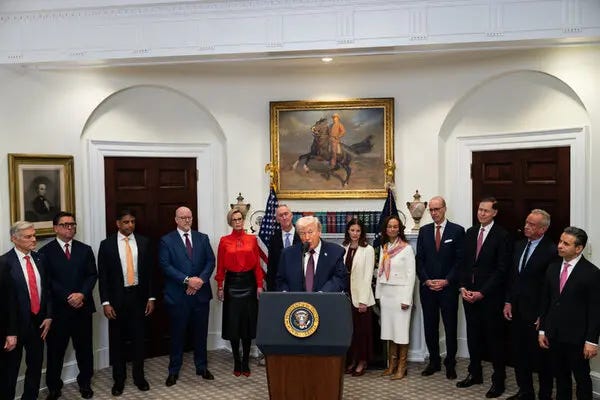
President Trump announced that the largest ever slate of drug companies have agreed to sell some of their most in-demand drugs to state Medicaid programs at Most Favored Nation (MFN) prices. The drugs will be sold directly to consumers via the new TrumpRX website at discounted prices.
The latest drug companies to reach MFN agreements with the federal government include Amgen, Bristol Myers Squibb, Boehringer Ingelheim, Genentech, Gilead Sciences, GSK, Merck, Novartis, and Sanofi.
The companies also agreed to invest a minimum of $150 billion to bring their research and development back to the U.S.
I had Lyme disease and used an integrative approach to healing and it took about a year but I was able to heal from not only the Lyme spirochete but the 6 co- infections that I was also infected with.
It’s time to ban gain-of-function research.
A lot of indications and some insider testimonies show that Lyme Disease was a result of a Cold War experiment, a gain-of-function research. The event took place at Plum Island, NY. The disease first appeared in 1975 in the town of Lyme, Connecticut, just 10 miles from the Island and gradually spread all over the USA and the world from there.
500,000 new infections a year in the US alone!!!!
‘Newby, who educates healthcare providers on vector-borne diseases, is the author of “Bitten: The Secret History of Lyme Disease and Biological Weapons.” She also produced the 2008 Lyme disease documentary “Under Our Skin,” which was nominated for an Academy Award the following year. A follow-up film, “Under Our Skin 2: Emergence” came out in 2014.’
A study came out in May 2025: ‘piperacillin—a Food and Drug Administration-approved antibiotic—cleared Lyme infections in mice at doses up to 100 times lower than those of doxycycline, the current first-line treatment.’
Epoch Times
Children's Health Defense 3/16/23