


By Adam Garrie and Staff, The MAHA Report
Over the past week, numerous MAHA warriors have spoken out about the use of glyphosate in products such as Bayer’s Roundup, the controversial weed killer.
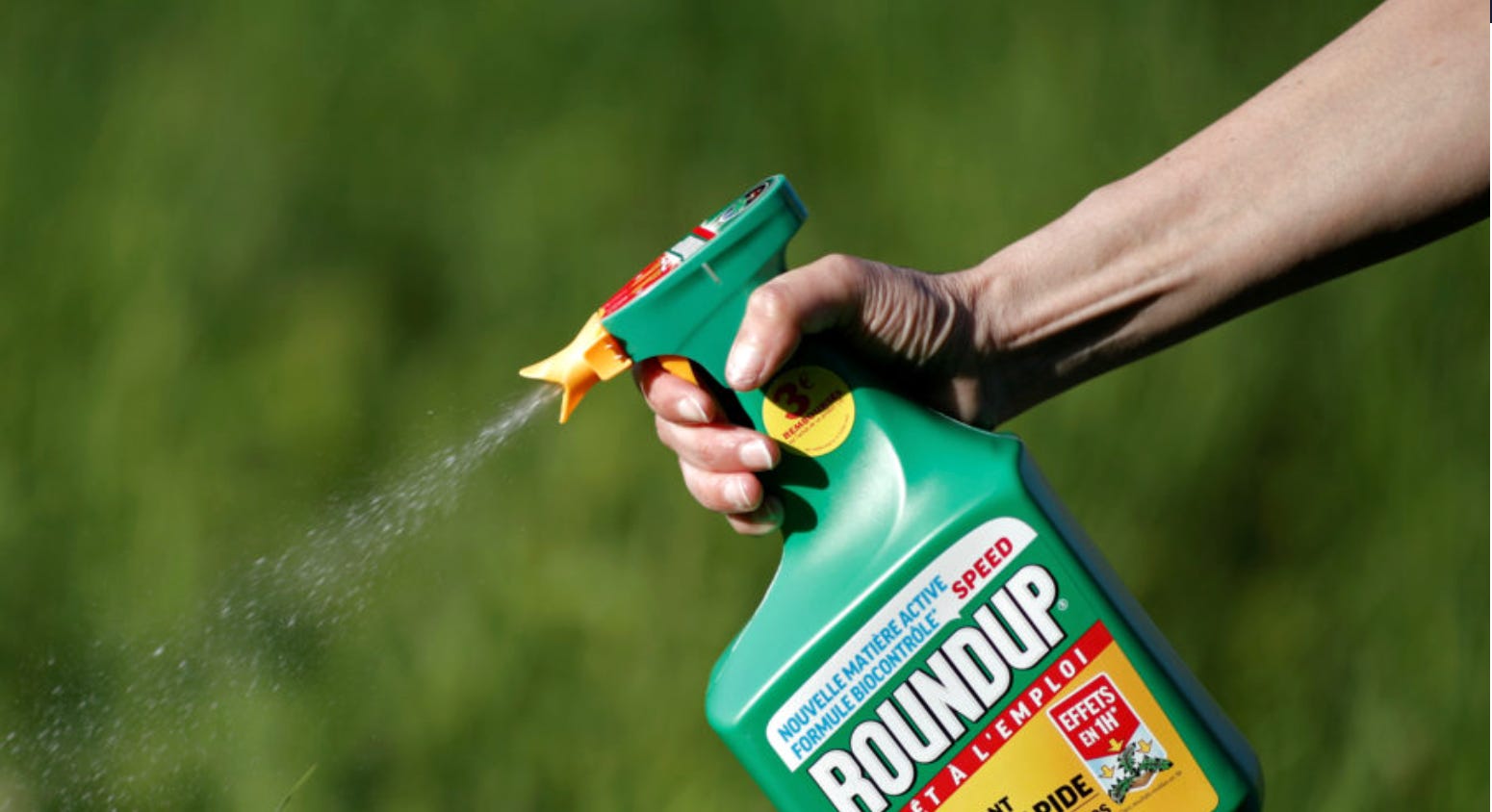
As you’ll read below, we focus on three: HHS Secretary Robert F. Kennedy Jr. and NIH Director/ Acting CDC Director, Dr. Jay Bhattacharya, both clarify the administration’s long-term goal of eliminating the need for glyphosate on farms and ranches. But, they acknowledge, the process of creating a glyphosate off-ramp will require a substantial investment in technological alternatives that can eventually offer a cost-effective replacement.
And a third voice: Tony Lyons, President of MAHA Action. Below are his measured and resonant words at the start of the Feb. 25, 2026 edition of the MAHA Media Hub.
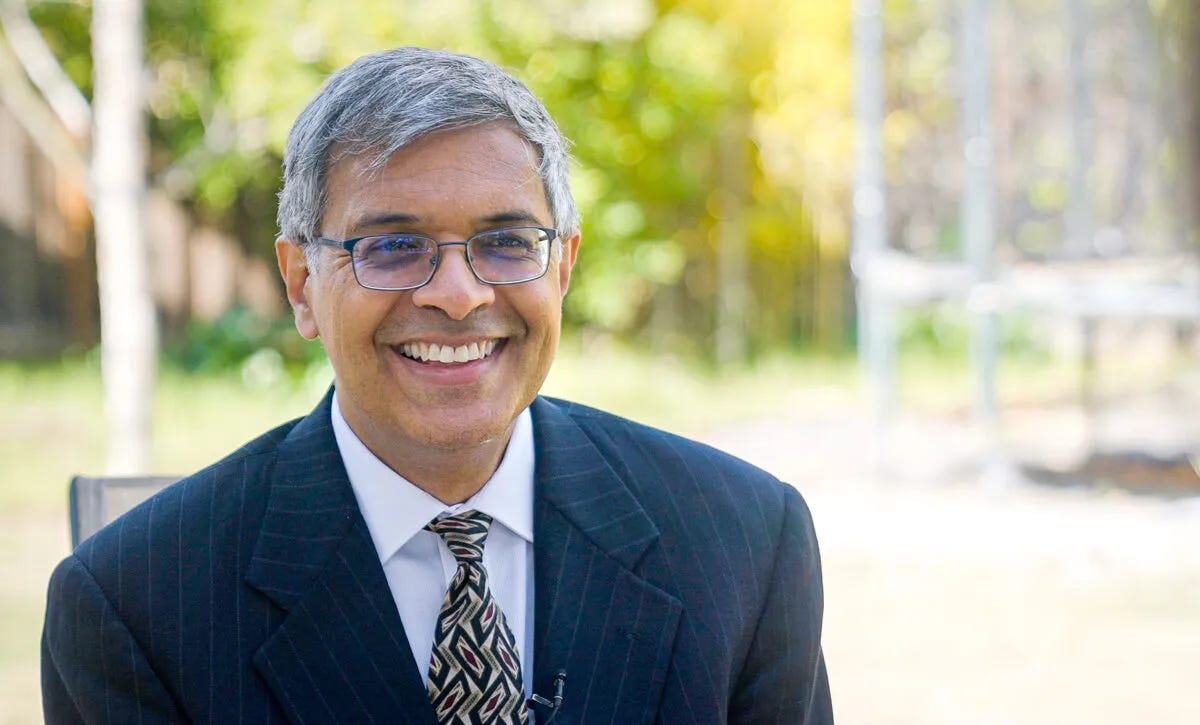
Dr. Jay Bhattacharya
Dr. Bhattacharya took to social media to address concrete steps for researching the dangers of chemical-based pesticides and herbicides. He also discussed the administration’s plans to search for viable alternatives to chemicals.
“One of the greatest challenges we face is our agricultural system, that relies heavily on toxic chemicals that impact human health,” Bhattacharya wrote. “Farmers apply more than one billion pounds of pesticides and herbicides each year in the United States, yet we still lack a clear scientific framework to mitigate the risk and chart a path toward reducing that dependence.”
In addition to investments in regenerative agriculture, Dr. Bhattacharya unveiled new incentives for high-tech developments of non-chemical alternatives to pesticides and herbicides. This includes launching a $1.1 billion initiative to transform the American food system, prioritizing human health and long-term food security by transitioning away from chemically intensive farming.
Additionally, Dr. Bhattacharya announced a $100 million grand prize challenge to investigate the cumulative health effects of chemical exposure, while The Advanced Research Projects Agency for Health (ARPA-H) will invest $100 million in breakthrough technologies to reduce reliance on chemical crop protection. The EPA is also deploying $30 million for cost-effective alternatives to pre-harvest pesticide desiccation, and the USDA is providing $840 million to scale regenerative agriculture.
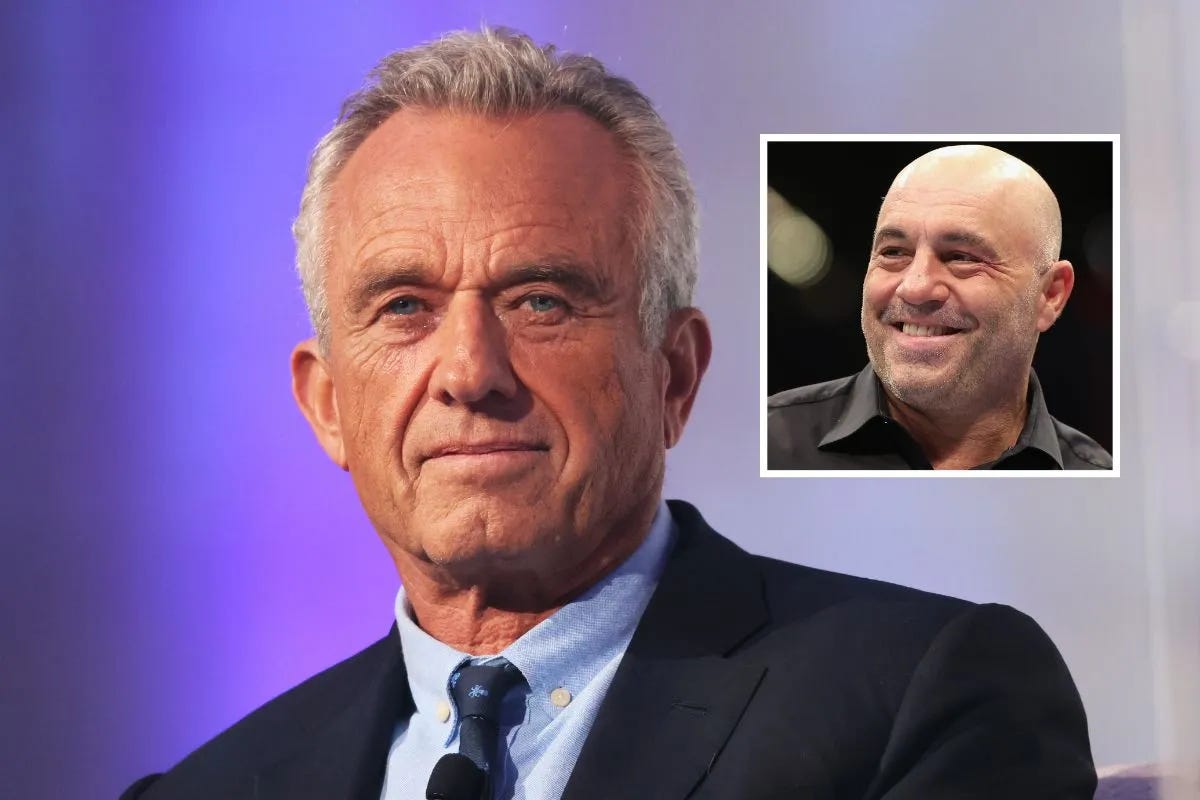
Secretary Kennedy on the Joe Rogan Experience Podcast
Dr. Bhattacharya’s concerns echo those of Secretary Kennedy, who laid out his views on chemical pesticides during a recent episode of the Joe Rogan Experience. During the podcast, the HHS Secretary warned that the Supreme Court will soon hear a case to determine whether federal preemption laws will bar individuals allegedly injured by products containing glyphosate from seeking justice in state courts.
Secretary Kennedy explained that the administration is investing in both regenerative agriculture and non-chemical alternatives to glyphosate-based products like RoundUp. “There’s all these kinds of new, exciting technologies that give us a light at the end of the tunnel to transition – and it could be very very fast,” Kennedy said. “What the president wants to do is accelerate that. He says, ‘Yeah . . . we can’t allow the company to go bankrupt, we can’t allow foreign interference, but we’ve got to get off of this stuff, we’ve got to give these farmers an offramp so that they can get off of it because they don’t want to be on it and nobody wants to be without crashing the food system.’”
Sitting with Rogan, the HHS Secretary clarified earlier remarks about the impossibility of an immediate phase-out of glyphosate-based agricultural products.
Kennedy reflected on a conversation he had with an organic corn farmer regarding the implementation of high-tech pest control—specifically, automated machinery capable of identifying and “zapping” individual insects. While noting the farmer’s enthusiasm for the technology, Kennedy highlighted a significant economic disparity between different types of agriculture: vegetable crops can command $1,500 per acre, whereas row crops typically generate only $50 per acre.
To bridge this gap, Kennedy argued that row crop farmers must achieve massive scale. He called for increased investment from Silicon Valley entrepreneurs and billionaires, to fund technological advancements; such innovation, he said, can provide the primary path toward reducing reliance on traditional chemical inputs.
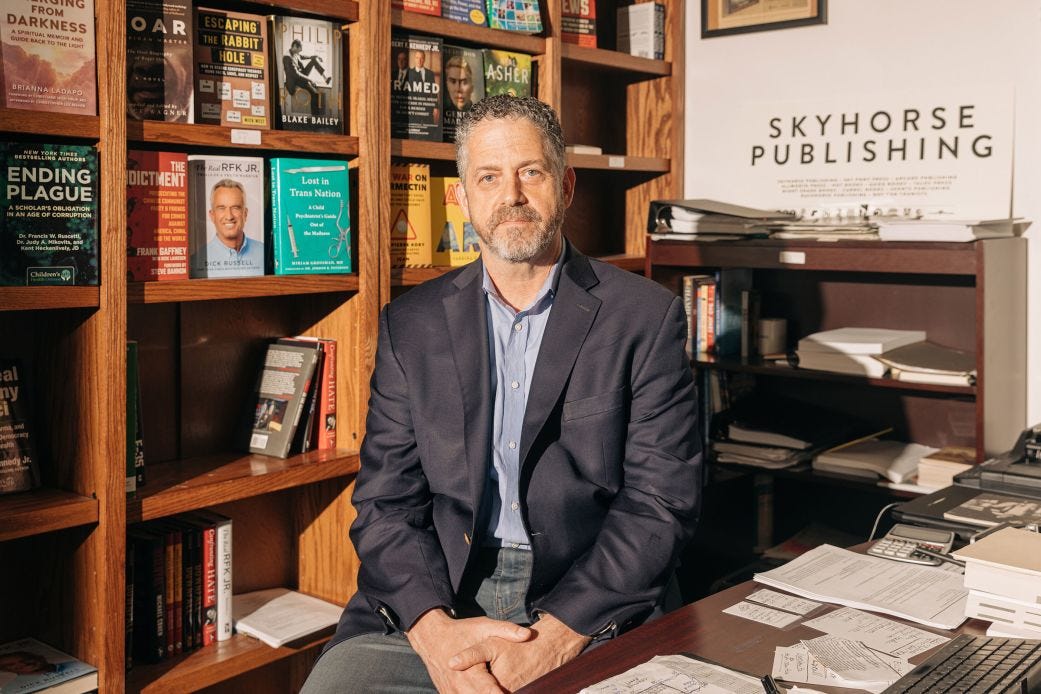
Tony Lyons (from the MAHA Media Hub, February 25, 2026)
Let me address the noise head-on, because there is a lot of it right now, and some of it is designed to fracture this movement.
Some people are saying that MAHA leadership just admitted their top priority is supporting Trump’s agenda, not making America healthy. Let me be direct: that framing is a trap. If we take the bait and turn on each other, the only people who win are the people who want to make and keep us sick.
Here is what actually happened. Secretary Kennedy put out a statement, and he told the truth. He said pesticides and herbicides are toxic by design. He said chemical manufacturers have paid tens of billions to settle cancer claims. He said glyphosate is found in over 80% of American urine samples, including 87% of our children. And then he said something uncomfortable but honest: if these chemicals disappeared overnight, crop yields would collapse, food prices would surge, and millions of farm families would go under. That is not selling out. That is telling the truth about where we actually are so we can chart a real path to a better future.
The executive order does not change the position of glyphosate in our agriculture sector. Glyphosate was used yesterday. It is being used today. But with our efforts, it does not need to be used in the long-term future.
Is the executive order perfect? No. MAHA Action’s own memo says the immunity provision under Section 707 of the Defense Production Act warrants continued legal scrutiny. But it is not a blanket shield for cancer lawsuits. Over 60,000 Roundup cases are still pending. Bayer’s $7.25 billion settlement offer is still on the table. And a No Immunity for Glyphosate Act has just been introduced.
Now here is what I want everyone focused on: the real threat. It is not one executive order. It is the coordinated push for pesticide liability shields at the state level, already passed in North Dakota and Georgia, and now embedded in the House Farm Bill. They want to strip your right to sue if pesticides make you sick and prevent local communities from restricting spraying near schoolyards. That is the fight.
Secretary Kennedy has always been clear: we are not going to break our addiction to glyphosate by going cold turkey. We need to ease into a better future, and that future is closer than people think. As he told Theo Von before the executive order was signed, new laser-based technology will soon be widely available. It will destroy weeds without destroying our health. MAHA Action’s memo lays out exactly how we accelerate that transition: an independent EPA review of glyphosate not funded by industry, accelerating biological herbicides, robotic weeding, and electrothermal systems already working on American farms right now, expanding the USDA’s $700 million Regenerative Pilot Program, tax credits for farmers who adopt next-gen equipment, mandatory labeling so families know what is in their food, and writing these protections into law, not just executive orders that can be undone with a pen.
The commonsense vision we should all rally behind is a one-year plan to eat more real food, use fewer pesticides, take fewer drugs, take fewer unnecessary vaccines, boost the immune system, and build a stronger, healthier country with drastically lower chronic disease rates. That is not partisan. That is not parenting. That is common sense.
This is what MAHA has always been about: not magic or unrealistic views, but scientific, practical solutions that turn our ideas into reality and everyday best practices. MAHA is, at its core, an optimistic movement aimed at making it easier and more affordable to be healthy.
So to the critics: we are not here to be anyone’s voting bloc, but we do believe that this president and Secretary Kennedy are a gift to the MAHA movement. In the end, we are here because our kids are sick, our soil is dying, and 280 million pounds of a probable carcinogen are being sprayed on American farmland every single year. If you want to help fix that, regardless of party, welcome aboard. If you want to use this moment to divide us, we are not interested.
Listen not to the naysayers, rather, use common sense and plan for a cleaner, healthier future.
This is a straw man.
The people I know who are frustrated by the glyphosate drama are not calling for a ban—for one day glyphosate to be legal, and the next for it to be illegal.
What we're advocating for is for the EPA to represent the science and to inform the public about the dangers. We want a warning label. This strategy, taken from the cigarette playbook, will raise awareness of the issue and change consumer behavior, thereby increasing demand and incentivizing conventional farmers to transition to regenerative, organic practices.