



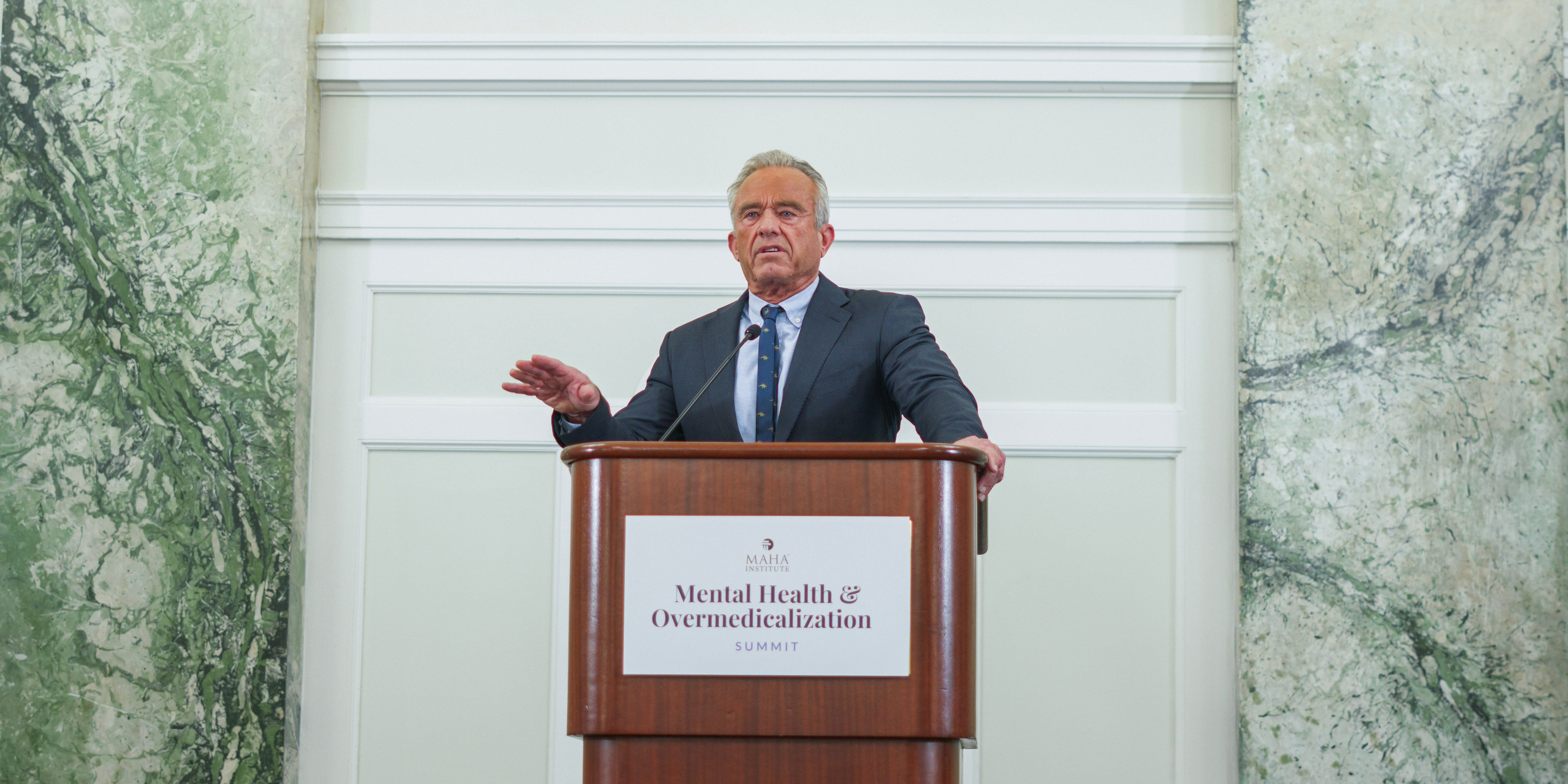
On Monday, HHS Secretary Robert F. Kennedy Jr. announced a major pivot in America’s mental healthcare policies as the secretary seeks to roll back the chronic overmedicalization that continues to plague millions of Americans.
Kennedy was the last speaker at a summit organized by the MAHA Institute: the Mental Health and Overmedicalization Summit, held Monday at the Willard Hotel in Washington, D.C.
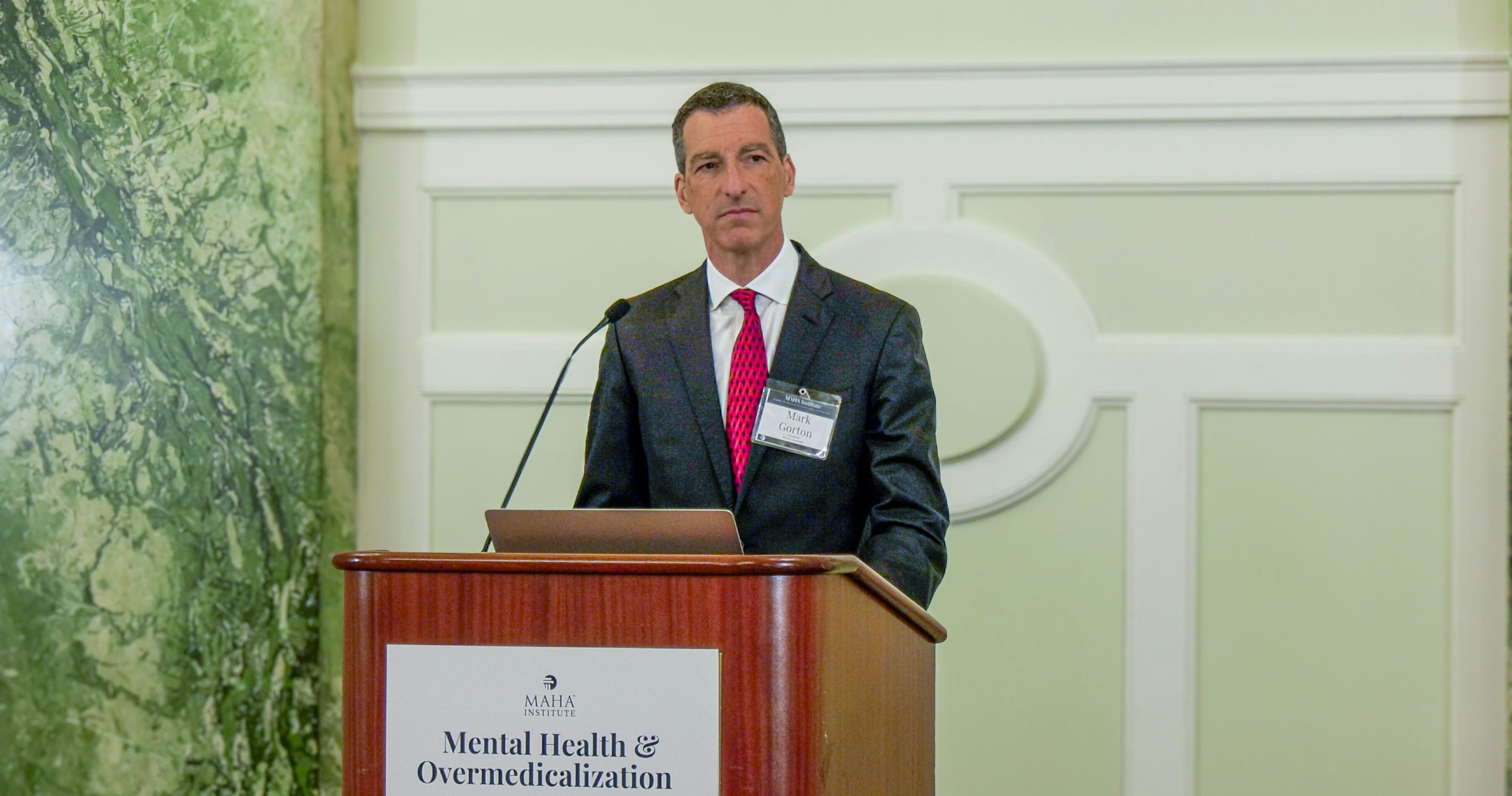
Introduced by Mark Gorton, President of the MAHA Institute, the secretary began his prepared remarks, saying: “The issues that you’ve been addressing today at the Maha Institute Summit demand action – and I’m here to take them on with you.”
Kennedy continued, “The United States does not just face a mental health crisis, we face a dependency crisis driven by over-medicalization. The data is clear: one- in-six American adults take an antidepressant. One in 10 children are on prescription medication for their mental health. 30 percent of college students report using psychiatric medications in the past year. And in nursing homes, more than half of the residents are on prescribed antidepressants. That’s not a marginal issue.”

Secretary Kennedy said HHS and four of its sub-agencies have issued a “Dear Colleague” letter, directing healthcare providers across the country to expand their use of “non-pharmacologic” treatment for mental health, and strengthen informed consent whereby patients are informed of a medication’s risks and side effects.
Kennedy also said the traditional doctor-patient relationship must change; instead of a doctor being the sole decision maker on how to treat a patient’s mental health issues, as has been the practice for generations, the HHS will recommend that decision making on treatments will be a shared decision between doctor and patient.
Following the MAHA Institute event, The MAHA Report obtained a copy of the letter to which Kennedy referred. It comes from HHS, the Centers for Medicare & Medicaid (CMS), the Administration for Children and Families (ACF), the Health Resources and Services Administration (HRSA) and the Substance Abuse and Mental Health Services Administration (SAMHSA).
“HHS encourages clinicians and provider organizations to support a treatment approach grounded in shared decision-making, patient autonomy, and fully informed consent,” the letter reads. “Individuals should receive clear, understandable information regarding the potential benefits and risks of psychiatric medications at initiation, during ongoing treatment, and when discontinuation is being considered.”
The letter continues, “That discussion should include the purpose of the medication, expected benefits, possible adverse effects, monitoring needs, potential discontinuation symptoms, the risks of abrupt cessation when relevant, the possibility of relapse or recurrence, and the availability of evidence-based non-pharmacological interventions. Evidence from mental health settings suggests that shared decision-making interventions may improve patients’ perceived involvement in decision-making and related person-centered outcomes”

Kennedy told the audience at MAHA Institute’s event that, moving forward, federal health regulators will advance regulations that support evidence-based treatments that don’t rely on medication. Such alternatives to medicalization include psychotherapy, building social connections, behavioral strategies, sleep-focused care, exercise programs, and dietary improvements.
These approaches, Kennedy said, should not be framed as direct substitutes for medication in every situation or presented as sufficient on their own for all patients. Instead, they should be integrated into a comprehensive menu of proven mental health services. Treatment choices must balance the strongest available research, clinical expertise, and each individual’s personal goals and preferences.
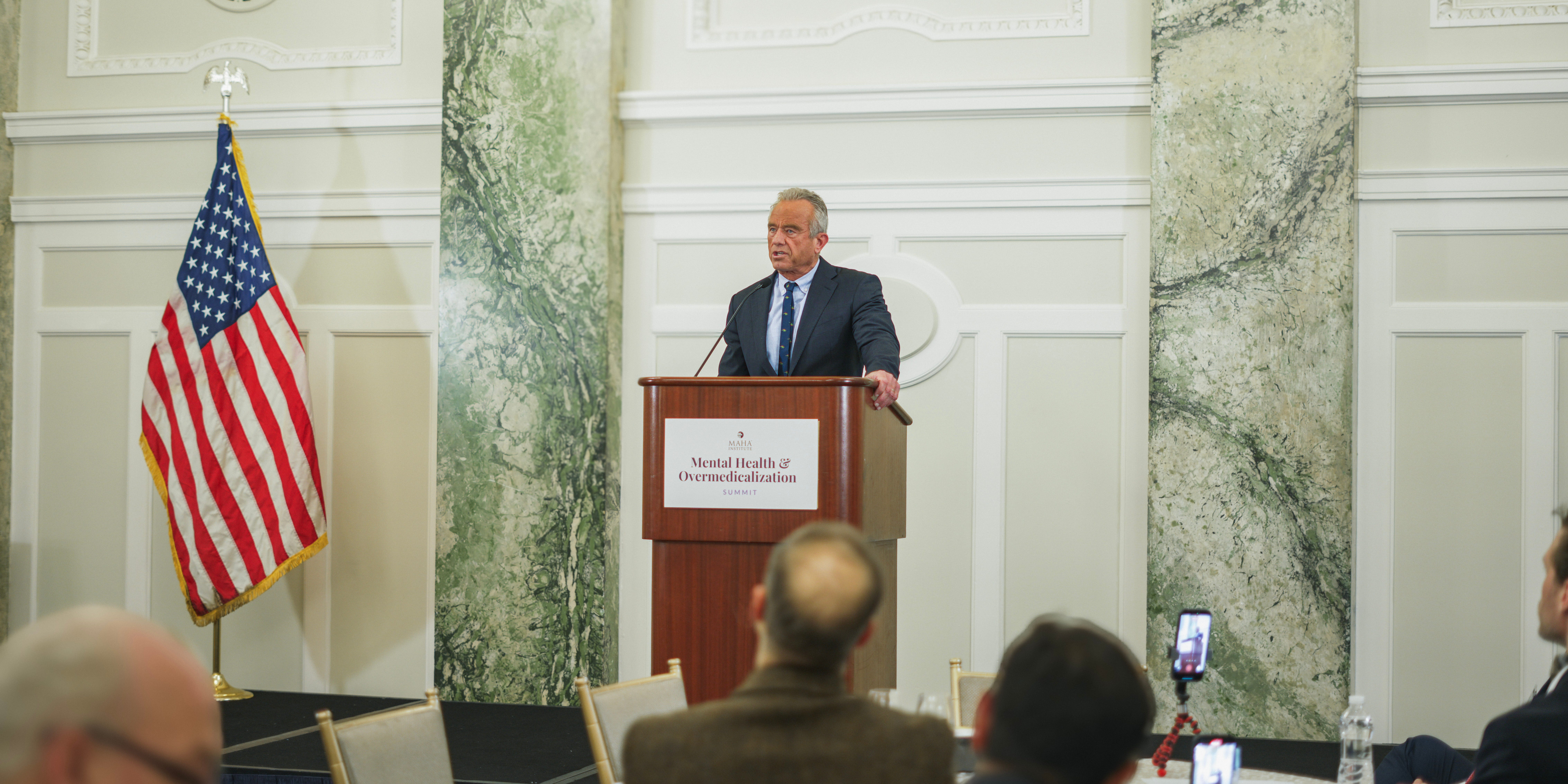
“Today, we take clear and decisive action to confront our nation’s mental health crisis by addressing the overuse of psychiatric medications—especially among children,” Kennedy told the MAHA Institute conference attendees. “We will support patient autonomy, require informed consent and shared decision-making, and shift the standard of care toward prevention, transparency, and a more holistic approach to mental health.” He added that federal agencies will specifically focus on the overmedicalization crisis among foster children and those living in senior facilities.
The Dear Colleague letter maps out the subsequent actions HHS and its sub-agencies will take.
Later in May, the SAMHSA will issue a report on prescribing trends aimed at reducing excessive prescribing while preserving appropriate access, accompanied by a fact sheet for prescribers and patients.
Throughout June and July, SAMHSA will host educational webinars for prescribers and other health professionals. These sessions will focus on raising awareness of psychiatric medication side effects, best practices for deprescribing, and evidence-based non-medication treatments.
Also this summer, SAMHSA and HRSA will co-host a joint webinar tailored for Federally Qualified Health Center providers (community-based, patient-friendly clinics) emphasizing holistic care models that incorporate nonmedication approaches and clinically appropriate deprescribing and tapering of psychiatric medications.
In July, HHS will convene a Technical Expert Panel, bringing together health professionals, patients, families, government agencies, and professional societies to help shape formal HHS clinical guidance on psychiatric medication use, tapering, and discontinuation. .
“Taken together, these activities reflect a shared federal commitment to ensuring that people with mental health conditions have access to the full range of evidence-based care,” the letter reads. “That includes medication when clinically indicated, but it also includes psychotherapy, family engagement, and lifestyle and behavioral interventions, with careful reassessment of ongoing treatment over time. It also includes ensuring that individuals are meaningfully involved in decisions about their care.”
Kennedy is shifting the culture of medical care. He is insisting on informed consent which includes benefits and risks. He is also making patients take more responsibility for their health and not rely on a pill for every ill. Finally we are seeing health care that is about health and not simply pimping for the pharmaceutical industry.
Look into studies on circadian rhythm and mental health. Our lighting (and lighting regulations) and glazing (and glazing regulations - I'm talking window and door glass) are a huge problem and are making us all sick and sad. Please make this a MAHA issue!
Here are a few to start:
https://www.sciencedirect.com/science/article/pii/S004896972500823X
https://www.nature.com/articles/s44220-023-00135-8