


Two days after Secretaries Kennedy and Rollins announced the Harvest to Hallways program to bring healthier food into American schools, the Department of Health and Human Services has revealed how it plans to answer a more difficult question: Can schools actually make the transition to serving real food work?
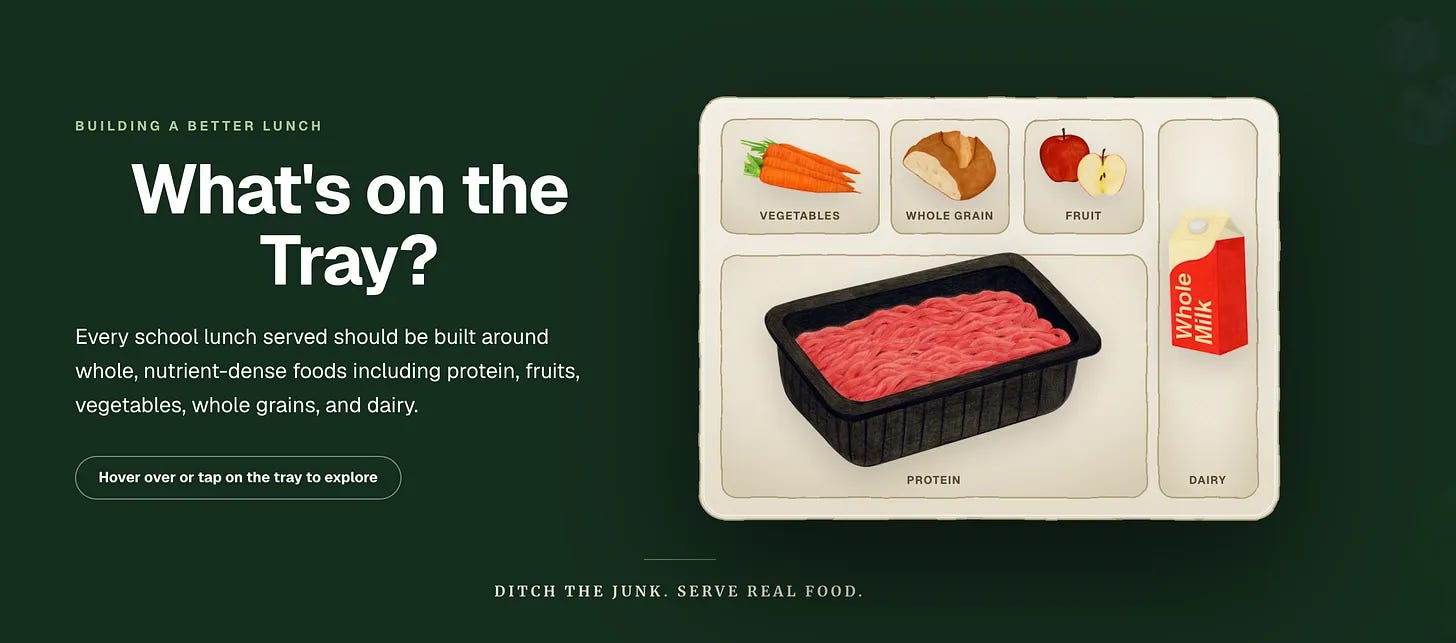
On Wednesday, HHS announced a $32.5 million initiative called Developing Evidence for Programs to Ensure Nutrition for Development, or DEPEND, which will provide funding to selected schools to test ways to replace highly processed foods with more nutrient-dense options and then rigorously evaluate which approaches are affordable, scalable, and sustainable.
“Millions of American children depend on school meals every day,” HHS Secretary Robert F. Kennedy Jr. said, adding that the government will no longer spend taxpayer dollars on food that “undermines their health.”
Why Another Announcement Two Days Later?
Monday’s Harvest to Hallways announcement from Kennedy and Rollins laid out the vision: investments in school kitchens, local food procurement, Farm to School grants, and adoption of the administration’s new dietary guidelines.
Included in that package was a relatively brief commitment by HHS to invest $30 million in research to identify practical, cost-effective ways to improve school meals.
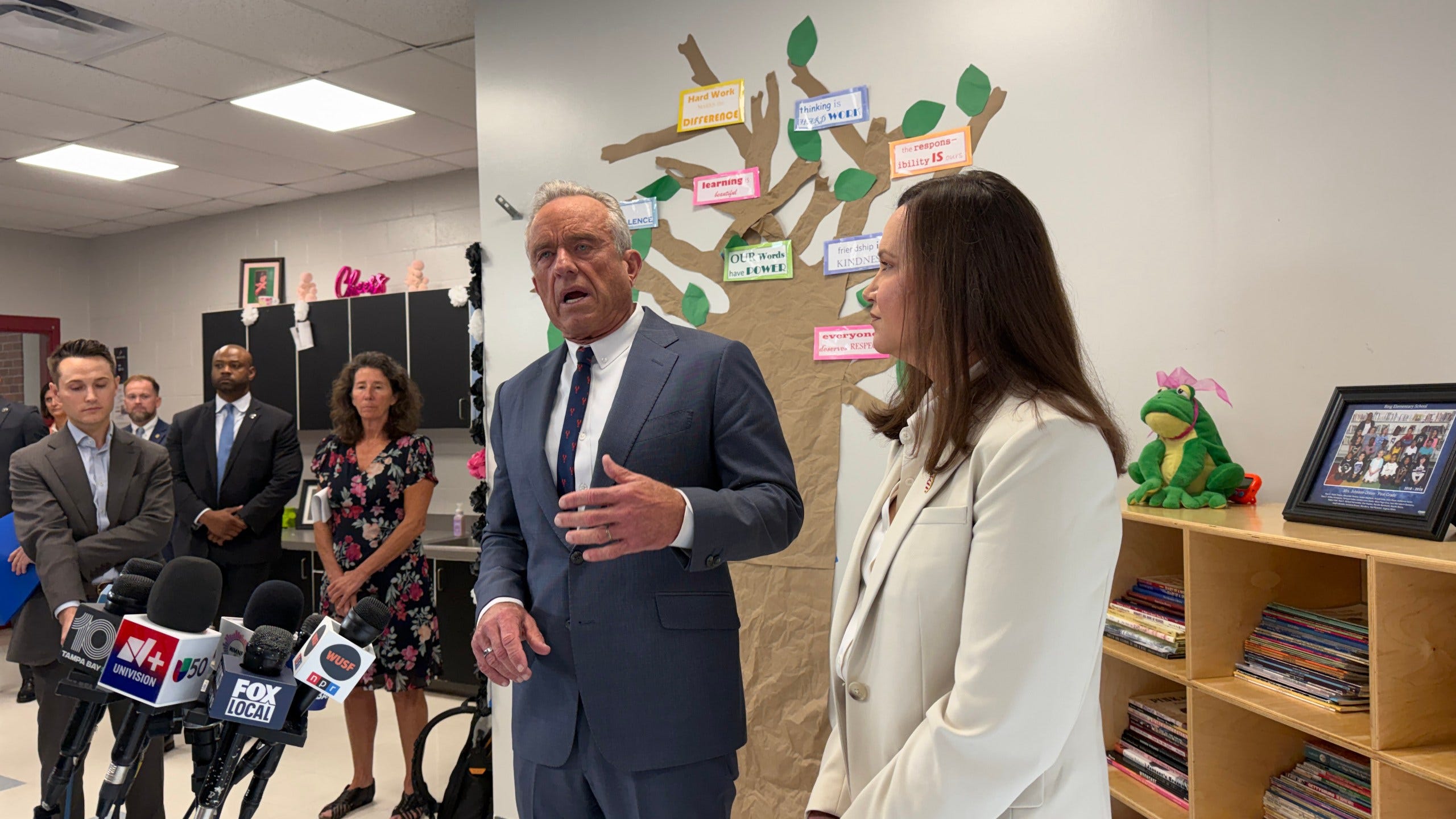
Wednesday’s DEPEND announcement, issued as Kennedy visited Tampa Bay Boulevard Elementary School in Florida and met with educators and nutrition leaders, provides specifics. It gives the research effort a formal name, an administrative home, and a clearer structure.
Importantly, DEPEND does not appear to be a separate $32.5 million initiative layered on top of Harvest to Hallways. Rather, it appears as a more fully developed version of the research investment announced Monday, with HHS now citing an updated total of $32.5 million.
HHS says DEPEND will be led by the Agency for Healthcare Research and Quality (AHRQ) and the National Institutes of Health (NIH), with individual awards ranging from $75,000 to $2.5 million. Projects will focus on four areas: purchasing and supply, workforce and food production, student demand and meal economics, and operations and infrastructure.
The Real Test: What Happens When the Grants Run Out?
One of the most important new details in Wednesday’s announcement is that DEPEND grants will be one-time investments, and HHS says it wants to identify approaches that schools can continue to use within their existing resources.
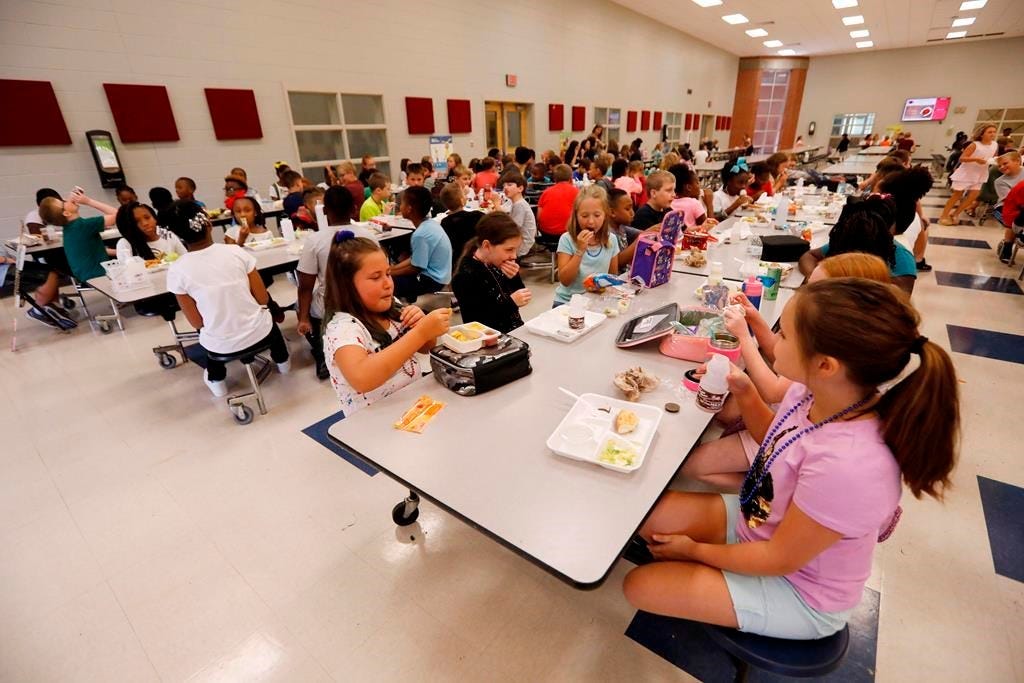
School nutrition directors have consistently said that moving toward more scratch cooking, meaning preparing meals with less reliance on ultra-processed food, is not simply a matter of changing recipes.
The needs are already well documented across school nutrition programs. In a 2026 School Nutrition Association survey of 1,240 school meal directors, 79% reported an “extreme need” for more funding to expand cooking from scratch and reduce ultra-processed foods; 94% cited staffing, equipment, or infrastructure needs, and 95% said more culinary training was needed.
DEPEND is not a response to that specific survey, but rather to the broader, longstanding challenges schools have repeatedly identified. It is designed to test whether addressing those needs actually changes what schools can serve and which combinations of funding, staffing, training, procurement, and infrastructure produce lasting results.
Bringing It All Together
In January, HHS and USDA released the 2025–2030 Dietary Guidelines with a crystal-clear message: “eat real food.”
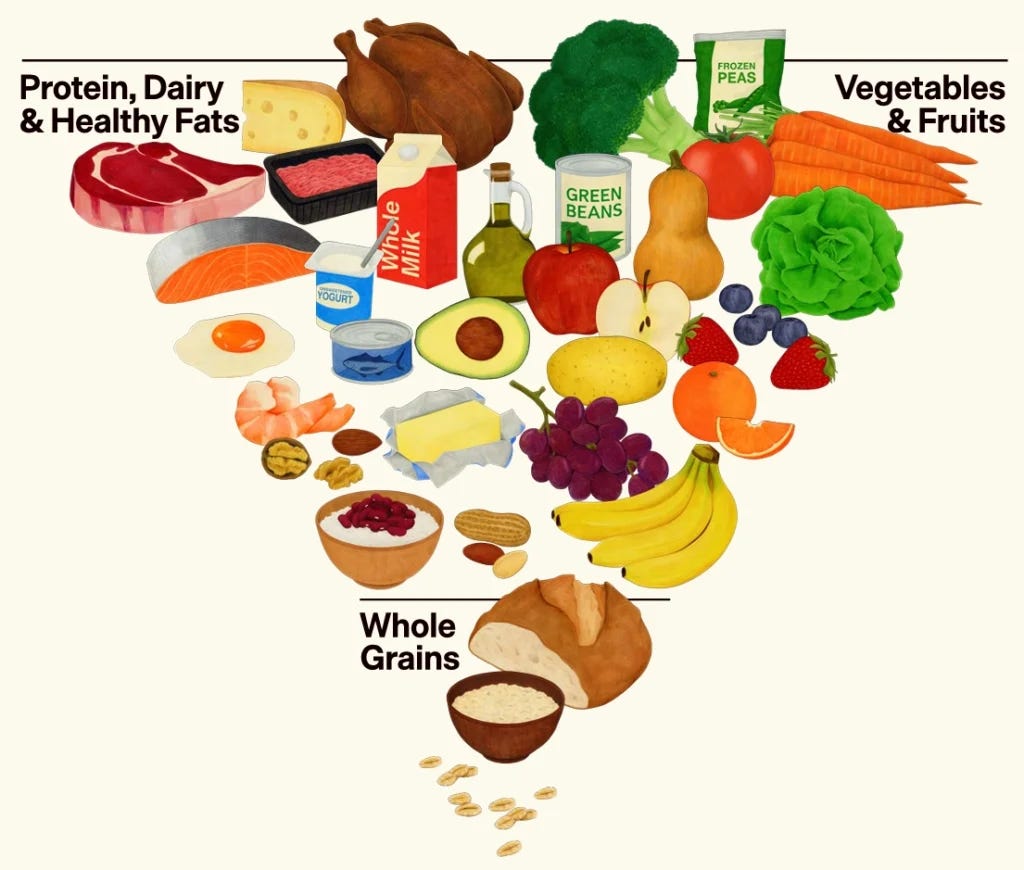
“These Guidelines return us to the basics,” Kennedy said at the time, calling on Americans to prioritize whole, nutrient-dense foods and dramatically reduce highly processed foods.
On August 10, HHS and USDA announced they had submitted the federal government’s first proposed definition of ultra-processed foods for final review by the White House Office of Management and Budget. The language itself, as well as details specifying which ingredients, processing methods, or food categories fall under it, will not be released until the review is complete.
That leaves an important piece of the administration’s school-food strategy unresolved: DEPEND is being launched to help schools reduce highly processed foods before the federal government has publicly established exactly how it intends to define them.
That means federal policy is now advancing along several tracks at once: defining ultra-processed food, translating the new dietary guidelines into institutional settings, investing in school-food infrastructure and generating evidence about what implementation actually requires.
Building a Playbook, Not a Prescription
Rather than prescribe a single solution, HHS says DEPEND will fund different pilots and partnerships to identify “what works and what does not.” A central coordinating center will help standardize data across participating sites, enabling researchers to compare approaches and identify models that can be replicated elsewhere. HHS has not yet said who will operate the center or where it will be located. NIH’s All of Us Research Program will help make the findings widely accessible, with Kennedy describing the goal as a “practical, affordable playbook” for schools nationwide.
Applications are expected to open soon through the Real Food in Schools website, with the first awards anticipated in October and additional funding possible in fiscal year 2027.
Shop our merch store to support the MAHA Report and the MAHA movement.
All proceeds go to supporting the cause.

It would take 20 minutes to suggest how to provide nutritious food for school children.
Spending 33 mil is a ridiculous waste of funds. Pathetic
I tried to get my local school to stop serving sweetened milk with cheese pizza and a sugared fruit cup for lunch 3 times a week. It turned out that that was the favored menu because the school could get reimbursed from the Federal gov for that meal. I wrote a comic novel about it called Locus Amoenus. "Secretary Robert F. Kennedy Jr. said... that the government will no longer spend taxpayer dollars on food that undermines their health.” That's a good first step. Do no harm.