


No smoke, no coughing, no bad smell – and no tar in the lungs. Vaping was introduced as the cleaner and healthier alternative to smoking cigarettes. But Dr. Eric Berg – known on social media as “The Knowledge Doc” – is warning that much of what people assume about vaping is not really true.
In an appearance on the MAHA Media Hub last week, Dr. Berg, author of the forthcoming book Change Your Environments: Redesign Your Life to Reclaim Your Health, outlined three myths about vaping, which has become popular among teenagers and young adults in recent years.
The first misconception, he said, is that vaping relaxes you.
“This is a myth, because nicotine is a stimulant,” he said. “It speeds things up. It increases pulse rate, it increases blood pressure.”
Over time, nicotine raises your level of stress, he said, and after about three weeks of vaping, causes both higher blood pressure and higher cortisol. Vaping can give some temporary relief from high cortisol, and this is what causes people to feel somewhat relaxed.
“You think, ‘Oh, this is relaxing me.’ But it’s actually bringing down the cortisol that the vaping has created,” said Berg.

Dr. Eric Berg has become hugely popular online with his YouTube views in which he explains, in the clearest terms, what could be causing various ailments, and how to improve your health by changing your lifestyle. Many of his videos focus on the ketogenic diet – eating mostly protein and vegetables – and also intermittent fasting.
His most popular YouTube video, “What Happens If You Stop Eating Sugar for 14 Days,” has been watched 19 million times.
He has almost 15 million subscribers on YouTube and a total of 45 million followers across all social media platforms.
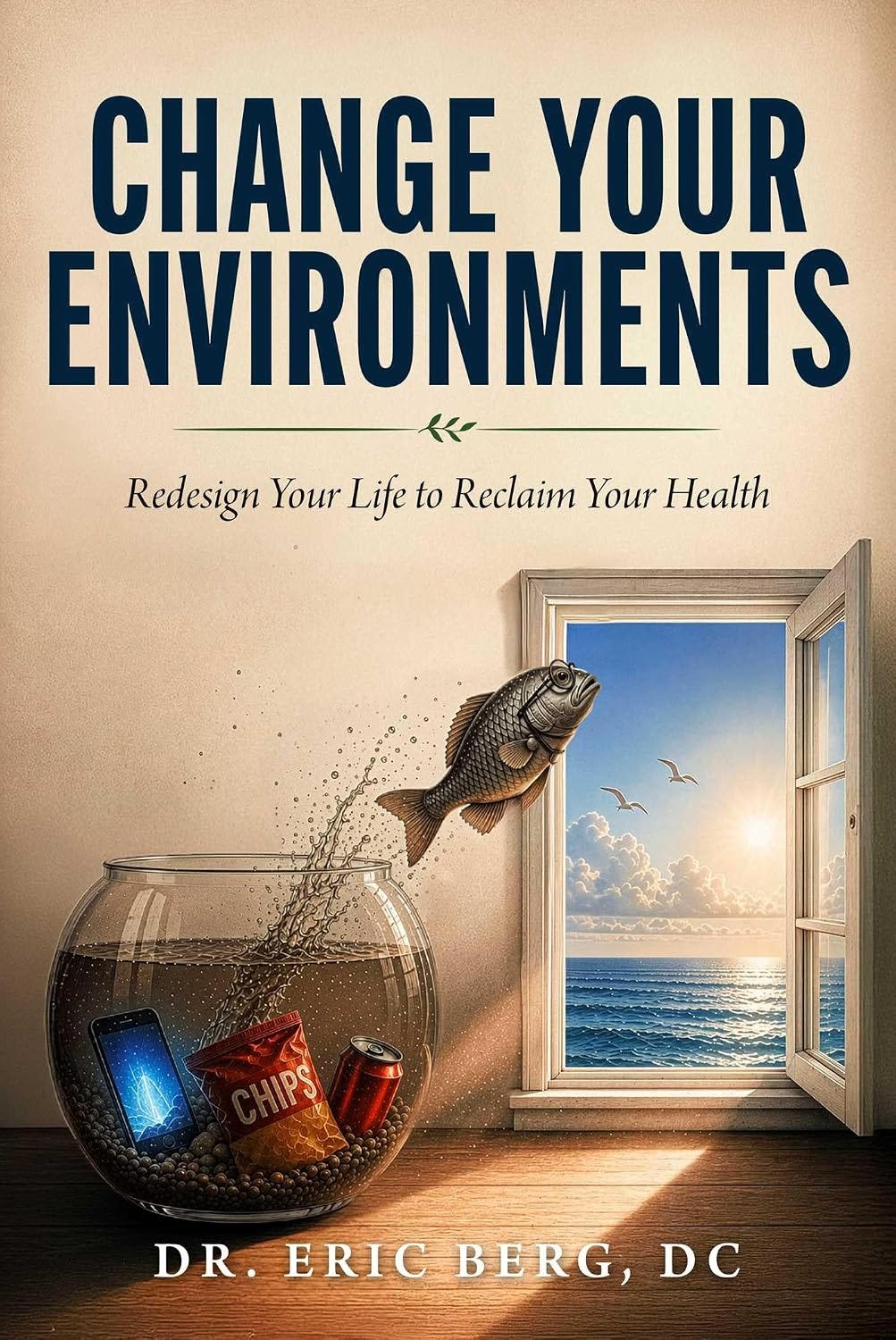
Dr. Berg’s book, Change Your Environments: Redesign Your Life to Reclaim Your Health, is due out September 8 from MAHA Books, an imprint of Skyhorse Publishing.
The issue of vaping, Berg said last week, is directly tied to the issue of changing your health by changing your environment, as one of the biggest changes you can make to your environment is to remove the toxins.

One vape unit is equal to the same amount of exposure as 400 cigarettes, Dr. Berg said.
“It’s just incredible how much you’re getting in your body as far as these puffs. An average person who is like a heavy vaper will get about 70,000 puffs per year. This is insane.”
The second myth about vaping, Berg said, is that it makes a person happy.
“It doesn’t make you happy,” Berg told the Media Hub audience. He went on to explain that nicotine mimics other chemicals in the body including acetylcholine and dopamine, known as the feel-good chemical, and causes the brain to release less dopamine, which flattens the mood. When a person vapes, they get a pick-me-up.
“So you get this temporary boost in mood making you think, ‘Wow, vaping is making me happier.’ It’s not. It’s just bringing you up above the flat line that this problem created.”

The third myth, Berg says, is that vaping is just like water as a person who is vaping is inhaling a vapor – a liquid that’s been heated up inside the vape pen.
“These are tiny little liquid droplets small enough to carry nicotine, solvents, flavoring chemicals – which were never designed to be inhaled – deep into your lungs,” said Berg. “So you have something that is, like, very very new to our bodies that we’ve never done before.”
One of those solvents is formaldehyde, used most commonly to embalm bodies after death. And when a person vapes, they’re also inhaling acetyl aldehyde and some heavy metals like nickel and chromium from the heating coil inside the pen.
“It is true that vaping is less dangerous than smoking,” said Berg, “but it’s not safe, especially for teenagers.”
Another aspect of vaping is that the companies that make the vape pens and the liquid cartridges that go in them have worked to create these toxic solvents in a way so that they don’t cause coughing, Berg explained, allowing a person to inhale a lot more without taking a break.
“So you end up getting a lot of extra things in your body without any kind of resistance,” he said.
Berg urged parents to talk with their teenagers and, if they vape, to try to get them to re-evaluate if it’s something they really want to continue, warning that it’s going to affect their health in the long run.
Change Your Environments: Redesign Your Life to Reclaim Your Health, by Dr. Eric Berg, is due out September 8, 2026 from MAHA Books, and is available now on Amazon for pre-order.
Shop our merch store to support the MAHA Report and the MAHA movement.
All proceeds go to supporting the cause.

Trump made good on his promises to big vape manufacturers like Juul (donors) to get fruit flavored vapes approved. Gotta hook those pre-teens.
This chiropractor gets lots of the details wrong - Formaldehyde isn't "used as a solvent" in vapes. Propylene glycol (PG) and vegetable glycerin (VG) are used. When these are heated, especially at high temperatures or during "dry puff" conditions (when the wick is insufficiently saturated), they MAY decompose into aldehydes including formaldehyde, acetaldehyde and acrolein.
There's nothing "brand new" about formaldehyde exposure or inhalation either -- umm, cigarettes.