


By The MAHA Report
Late Thursday, the Environmental Protection Agency (EPA) announced that it’s pushing forward in what it called an “accelerated review of public health risks from fluoride in drinking water.”
The agency, an EPA press release states, will release the “Review of Science on Fluoride in Drinking Water: Preliminary Assessment Plan and Literature Survey.”
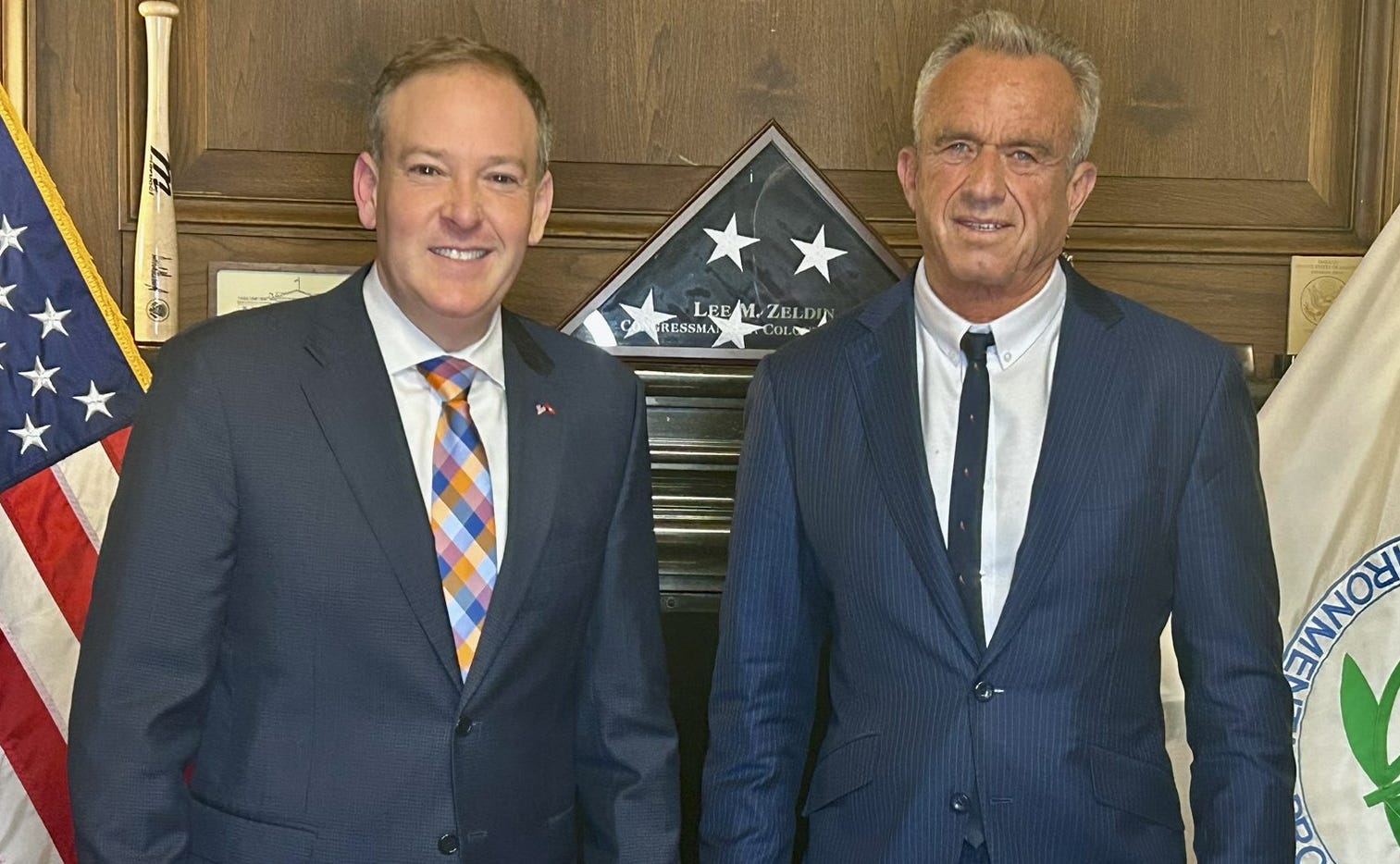
The EPA calls this “a critical step in Administrator Zeldin’s April 2025 directive to expedite EPA’s next fluoride health assessment under the Safe Drinking Water Act schedule, while adhering to gold-standard scientific methods and radical transparency.”
To address public concerns over the safety of fluoride, the EPA says it’s employing “interagency collaboration” to answer public concerns about fluoride’s safety, especially in respect to “childhood development and maternal and infant health.”
Once it is published in the Federal Register, the public will have 30 days to comment on the EPA’s new plan. On January 28 the EPA will host a public webinar to discuss “the assessment plan and next steps.” Register here.
“Making America Healthy Again is a top priority, especially when it comes to concerns about what is in our water,” said EPA Administrator Lee Zeldin. “Every American should be able to count on safe, healthy drinking water when they pour a glass to drink or use it to cook a meal, especially for a child. The Trump EPA is working in lockstep with [HHS] Secretary Kennedy and following gold standard science to guide our next steps to protect drinking water under the Safe Drinking Water Act.”
Added Kennedy, “Science is always evolving, and our policies should too. A growing body of evidence indicates that ingesting fluoride can cause neurological harm, and other adverse effects. By contrast, fluoride’s benefits to teeth come almost entirely from topical contact, not from ingestion. Most of Europe has already moved away from water fluoridation in favor of topical products such as toothpaste, and it may well be time for the U.S. to follow suit.”

The EPA’s release continues, in part:
Rather than conducting a fluoride risk evaluation under the Toxic Substances Control Act (TSCA), the agency determined that a review under the Safe Drinking Water Act (SDWA), led by the Office of Water, is the most appropriate regulatory pathway for addressing fluoride as a drinking water contaminant. This decision reflects SDWA’s specific statutory framework for protecting public health from contaminants in drinking water systems.
The Preliminary Assessment Plan and Literature Survey announced today outlines the transparent and systematic approach EPA intends to follow in evaluating scientific studies of fluoride health effects. The plan describes the key science issues EPA will consider, including sensitive populations such as infants and children, and compiles a literature survey of relevant health effects studies to be evaluated in the assessment. Releasing this plan for public comment is a critical step next step in developing a new, comprehensive health assessment on fluoride in drinking water.
The assessment will reflect a comprehensive, current, and accurate review of the best available scientific data on fluoride exposure and health effects, conducted with external peer review and public input to inform potential revisions to federal drinking water regulations that bring the nation closer to evidence-based standards that protect future generations. EPA will use gold standard scientific practices, draw on expertise across the federal government, and will not prejudge any outcomes of the assessment.
EPA’s role under the Safe Drinking Water Act (SDWA) is to limit the amount of contaminants in drinking water provided by public water systems to protect public health. EPA previously set the maximum contaminant level (MCL) for fluoride at 4.0 milligrams per liter, a standard designed to prevent known or anticipated adverse health effects that was set in 1986 and most recently reviewed in 2024. Under normal SDWA timelines, the next comprehensive analysis of new scientific information on potential health risks of fluoride in drinking water would not be due until 2030, but EPA has accelerated this work to deliver updated science to the public sooner while maintaining rigorous review and quality controls.
Decisions on whether to add fluoride to drinking water are guided by public health recommendations from the Department of Health and Human Services (HHS) and the Centers for Disease Control and Prevention (CDC) and have ultimately been made at the state or local level. U.S. Public Health Service has issued Recommendations for Fluoride Concentration in Drinking Water for the Prevention of Dental Caries, otherwise known as tooth decay. CDC’s Community Water Fluoridation Program recommends amounts of fluoride in drinking water to best prevent cavities. Their recommended optimal level of fluoride is 0.7 milligrams per liter. These recommendations are just that – recommendations that are advisory and do not alter EPA’s legal role under the SDWA.
The federal regulatory standards set by EPA apply regardless of whether fluoride is naturally occurring in a system’s source water or is intentionally added by the water system. EPA’s responsibility is to ensure that overall fluoride levels remain within health-protective limits, but the agency does not make policy recommendations to state or local systems to add fluoride to drinking water.
About time!! Thank you
It's just all so mind-blowingly ridiculous. Mass murder, mass assault on the human race.
God will have His day