


Just as I was getting excited by the work of a federal autism committee, I came across a sloppy Opinion piece, published in The New York Times.
The title tips the paper’s hand: “Profound Autism Is Difficult Enough Without This Debunked Method.” The ‘method’ the Times’ guest author, Amy Lutz, says is debunked is, not surprisingly, not debunked. In fact, it is helping thousands of Americans with profound autism communicate in a way they never have before.
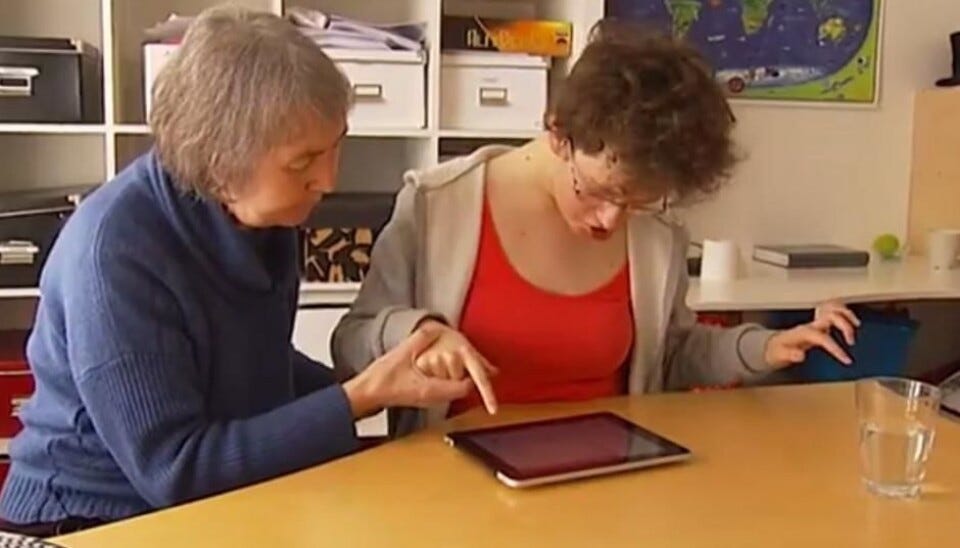
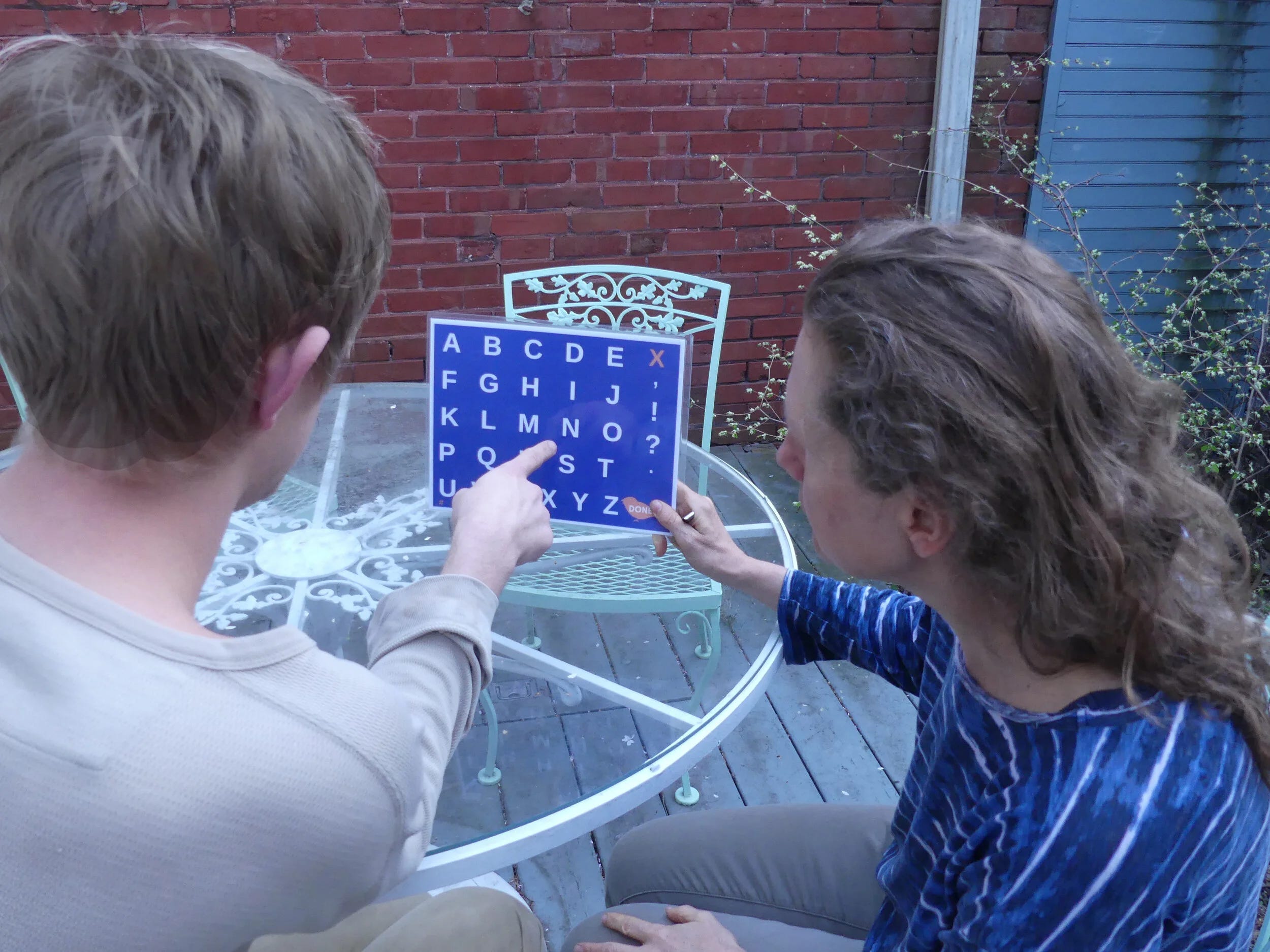
Lutz writes, “Facilitated Communication, or F. C., is an intervention in which profoundly autistic individuals spell messages with the physical support of a nondisabled facilitator, who generally provides direct touch to the speller’s hand, wrist, elbow or shoulder.”
Two paragraphs later she writes: “Here’s the thing about F.C., though: the science doesn’t back it up.”
If I had a quarter for every time I’ve heard the word “science” used in this way, I’d be a rich man. Science on just about everything, but especially autism, is evolving. It’s no monolith.
Citing a variety of studies, none of which is by any measure definitive, Lutz argues that people with profound autism are not actually using F.C. to communicate; rather, it is their facilitators doing the heavy lifting.
“Over time,” Lutz writes, “many such studies have reported essentially the same thing: Spellers could not communicate information unknown to their facilitators.”
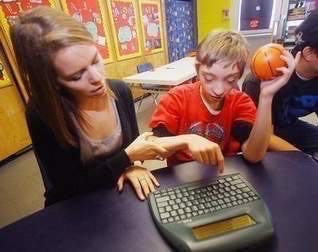
But what does this mean? Does it negate their ability to communicate if those who are closest to profoundly autistic people are assisting in the process? I have seen and heard how well the method in fact does work. Such empirical evidence is a blessing; it is not, as Lutz concludes, “almost irresistible” false hope.
Which brings me back to the meeting last week in Bethesda, Maryland, where a federal autism committee took the boldest action that it’s taken in its 25-year history, putting people with autism and their families at the forefront of driving recommendations for federal government programs for the first time.

The Interagency Autism Coordinating Committee (IACC) was established in the year 2000 to advise the Secretary of the Department of Health and Human Services on all federal programs related to autism spectrum disorder. Unfortunately, the IACC has had a history of funding projects that have had a negligible impact on the lives of people with autism. Representatives of the public health establishment, many of whom denied the existence of the autism epidemic, steered research dollars away from scientific inquiry that would address environmental causes of autism or other controversial areas of investigation.
But that is now changing.
At the April 28 meeting, under the leadership of IACC ‘public members’ – committee members from the autism community who were not representing federal public health agencies – votes were cast in favor of several crucial initiatives that will recharge the federal government’s response to the autism epidemic. The initiatives seek to provide the first meaningful improvements in the lives of people with autism and for the families who love them.
The committee approved several important proposals that addressed issues such as establishing Centers for Medicaid and Medicare (CMS) diagnosis codes and safety measures; policy objectives to address the dangerous wandering behavior that plagues many people with autism; and a framework intended to support more consistent clinical recognition of co-occurring medical conditions, reduce ‘diagnostic overshadowing’ (the tendency to attribute physical symptoms to mental illness), and improve safety assessments in autism care.
Finally, the committee voted to acknowledge an important and underserved subgroup – people with “profound autism” – those with the highest and most persistent support needs. [Full descriptions of the proposals and other important IACC meeting information is provided here.]
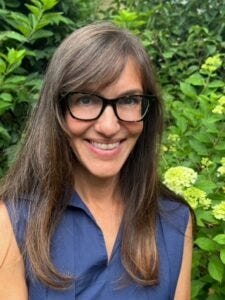
Dr. Sylvia Fogel, IACC Chairwoman
Under the guidance of IACC Chairwoman Dr. Sylvia Fogel, working groups were established to begin work on committee initiatives ranging from biomedical treatments for autism, autism causation, and the need to provide care for people with autism throughout their lives.
One may ask: “Shouldn’t all of this have been done before?”
It should have been
The fact is that previous iterations of the committee took little meaningful action and avoided decisions that were controversial despite calls from the autism community for bolder action.
In January, the 21 public members of the IACC were all replaced by Secretary of Health and Human Services Robert F. Kennedy Jr., with the replacements representing some of the strongest advocates for advancing the fight against autism.

“President Trump directed us to bring autism research into the 21st century. We are doing that by appointing the most qualified experts –leaders with decades of experience studying, researching, and treating autism,” Kennedy said at the time. “These public servants will pursue rigorous science and deliver the answers Americans deserve.”
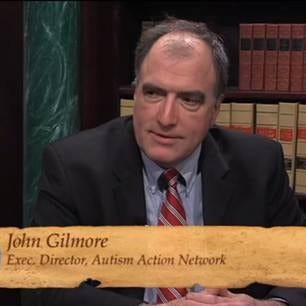
John Gilmore, the founder and executive director of the Autism Action Network, is one of the new members appointed by Kennedy.
“The public members of the committee are leading the way, and we will finally see meaningful progress for the autism community after years of broken promises,” Gilmore said at the April 28 meeting. He added that it was good to see that many government committee members had joined them at the meeting.
The IACC includes members representing the CDC, NIH and several other federal agencies.

The restructured IACC is charting a new course toward meaningful research and a more hopeful future for all people with autism.
This, and Facilitated Communication for the profoundly autistic, is not false hope.
The Spellers movie showed that using gross motor function to help nonverbal autistic. People spell is a miracle and the New York Times should be ashamed of themselves.
Multiple studies across ages, settings and populations have failed to validate FC under controlled conditions. These findings have been replicated repeatedly (https://journals.sagepub.com/doi/10.1177/002246699502800403). Anecdotal reports and case claims have not held up under rigorous controlled testing, which is the standard for establishing efficacy.
The strongest evidence (of non-efficacy) comes from multiple large message-passing (blinded) experiments - FC does not reliably demonstrate independent communication by the autistic person; https://link.springer.com/article/10.1007/BF02172232
Multiple major reviews have summarized a large body of negative evidence, not merely isolated failures. For example - https://journals.sagepub.com/doi/10.1177/1053451217692564
The consistent finding is that apparent success occurs only when facilitators can influence responses. Research and analyses point to the ideomotor effect as the reason why FC can FEEL SUBJECTIVELY CONVINCING despite failing to show efficacy in objective evaluations. Facilitators can unconsciously guide movements, similar to Ouija board effects.
Studies generally show autistic subject output depends critically on “mental support” from the facilitator rather than the autistic subject's independent ability - https://journals.sagepub.com/doi/10.1177/1362361398024005
In a rare case of near-unanimous consensus across disciplines, all major scientific, clinical and professional organizations are aligned. The American Speech-Language-Hearing Association states FC has no scientific evidence of validity, and strong evidence that facilitators author the messages (https://www.asha.org/policy/ps2018-00352). Other professional bodies (e.g., speech-language and clinical organizations internationally) similarly conclude there is no reliable evidence of efficacy (https://www.rcslt.org/members/delivering-quality-services/facilitated-communication).
Beyond lack of efficacy, DOCUMENTED RISKS include false attribution of communication (misrepresenting the autistic person's views), false allegations (including abuse claims generated via FC) and diversion from (known to be) effective interventions.