


WASHINGTON, D.C. — Leaders from across the health, technology, food and agricultural industries gathered at the Waldorf Astoria Washington, D.C. on Tuesday for the second annual MAHA Summit, a daylong event focused on one of the movement’s central concerns: America’s growing chronic disease epidemic.
The Summit brought together federal officials including Vice President J.D. Vance, Health and Human Services Secretary Robert F. Kennedy Jr., Centers for Medicare and Medicaid Services Administrator Dr. Mehmet Oz, Agriculture Secretary Brooke Rollins and Environmental Protection Agency Administrator Lee Zeldin, alongside entrepreneurs, physicians, technology executives, athletes and health advocates.
The summit’s program included discussions on everything from psychedelic medicine and early cancer detection to artificial intelligence, food production, longevity, healthcare affordability and regulatory reform.
Finn Kennedy, Board member of MAHA Holdings, opened the Summit by pointing to the mounting pressures on America’s healthcare system. “When the cost of maintaining the status quo exceeds the cost of change, change tends to occur,” Kennedy said, arguing that the country has reached a similar inflection point as chronic illness, physician burnout, hospital closures and rising costs strain the existing system.
Tony Lyons, president of MAHA Center, pointed to the historic collaboration between HHS, the USDA and EPA as an example of agencies working across traditional bureaucratic boundaries on issues including food, environmental health and chronic disease. Lyons noted that “1.2 million Americans die each year from food related chronic disease,” while 60% of the population suffers from some form of chronic disease.
“The chronic disease epidemic is the defining domestic crisis of our generation, and ending it is our greatest shared mission,” said Lyons.

Alex Hardy, CEO of MAHA Holdings, traced his commitment to the movement to his own experience with chronic illness. “I battled chronic sinus disease for seven years,” he said. “But it wasn’t my sickness that got me into MAHA. It was the lengths I went to heal myself.”
Hardy said he grew up believing that health problems could be solved through conventional medical interventions. “I was taught that every health problem could be solved with a pill, a shot, or a scalpel,” he said. But after five surgeries and 10 rounds of antibiotics, “I was still unwell.”
His search for an alternative eventually led him to leave his tech job and move to Costa Rica. “In just three months, I undid a decade of inflammation,” Hardy said. “No surgeries, no pharma—I simply cleaned up my diet and lifestyle.”
The experience changed how he viewed the American health care system. “That experience radicalized me,” he said. “Because I shouldn’t have had to leave our country to get healthy.”
For Hardy, that experience became a reason to devote himself to the broader MAHA movement. “I decided the most important thing I could do for the future of humanity was pour my life force into making America healthy again,” he said.
Psychedelic Medicine: “The Next Frontier”
The Summit’s panel on psychedelic medicine highlighted how dramatically the conversation around these treatments has changed. For decades, federal criminal prohibition severely constrained psychedelic research, leaving potential treatments largely outside mainstream medicine. Now, the MAHA movement is making psychedelic medicine central to the health-care conversation, with HHS itself increasingly supporting research into treatments for conditions including treatment-resistant depression and PTSD.
Kabir Nath, CEO of Compass Pathways, said roughly 4 million Americans live with treatment-resistant depression after failing multiple medications, while “nothing has actually been approved for PTSD for more than 25 years.” Panelists believe psychedelics can offer a fundamentally different approach. “They can work quickly, they can have sustained, durable effects,” Nath said. The presence of psychedelic-medicine executives alongside an HHS official at the MAHA Summit colorfully illustrated the movement’s role in bringing therapies once marginalized by federal policy into a mainstream discussion about the future of American health care.
Prevention and Earlier Detection
During the “Prevention at Scale” discussion, Eugene Woods, CEO of Advocate Health, framed access itself as a measure of quality: “We look at access as a quality measure. If we can’t see you, we can’t take great care of you.” Advocate Health has used technology to expand access to care, including same-day virtual appointments for as many as 1.5 million patients.
Eduardo Conrado, President and CEO of Ascension, described a health care system in which better primary care keeps patients from reaching the point where hospitalization is necessary. He said hospitals should have a capacity cap and that they should just be for the sickest patients. The goal, he explained, is to deliver primary care better so that hospitals are ultimately treating the patients who are truly sick or facing an emergency.

Cancer detection was another focus, with speakers emphasizing how identifying disease earlier leads to successful treatment and potentially reduces the cost of care.
AI Enters the Health Care Conversation
Artificial intelligence was woven throughout the Summit, with speakers describing it as both a major opportunity and a technology that requires careful consideration.
Dr. Mehmet Oz, administrator of CMS, said chronic illness is pivotal to the country’s health care affordability problem. “There is no way to make healthcare costs affordable if what’s driving at least 75% of it is chronic illness,” he said.
Oz also addressed the risks and opportunities due to increasingly powerful AI systems. “The big risk is superintelligence,” Oz said. “It has real risks, right? Real value.” He acknowledged the potential dangers while arguing that super intelligence (“SI”) could also help address medical errors and improve health outcomes.
With a poetic soliloquy, moderator Russell Brand expressed similar caution and optimism.
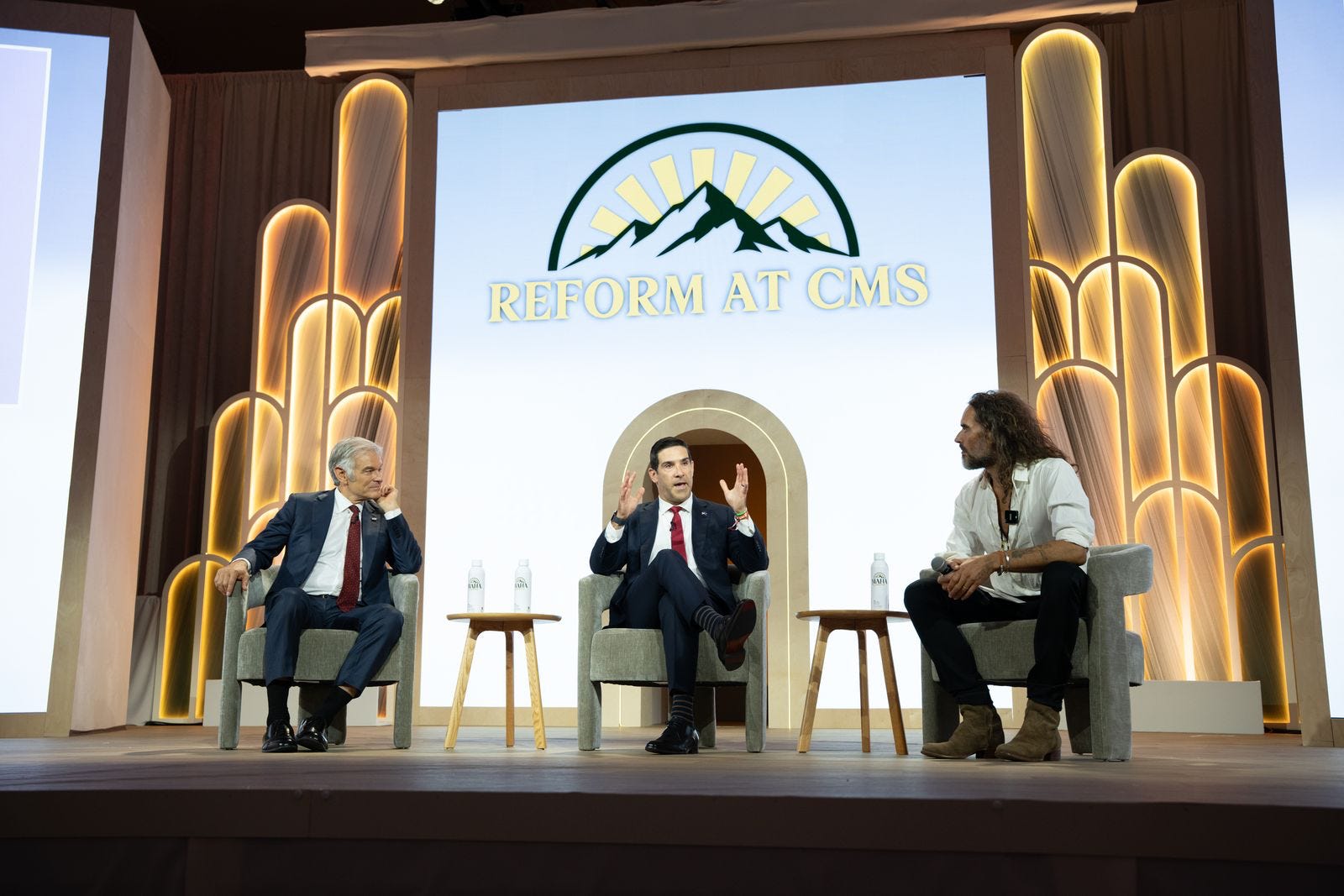
“AI in the hands of a centralizing and somewhat demonic power will be terrifying,” Brand said. “But if it is used to achieve the kind of outcomes that you’re pursuing ... then of course, it could be excellent for diagnosis, distribution, recognition and identification of the type of problems that I know you’re about to identify.”
The subject peppered discussion throughout the day as health technology companies mentioned and promoted AI tools designed to help patients interpret health data, navigate care and identify potential health risks earlier.
Felipe Millon, head of Government Go-to-Market at OpenAI, argued that AI is already becoming part of how people seek health information. The Summit’s AI panel also emphasized the importance of privacy, security and giving individuals control over their own health data.
The MAHA Athlete
The Summit also brought the MAHA message into the world of professional sports.
Former heavyweight champion Mike Tyson joined UFC champion Michael Chandler and former MLB pitcher Noah Syndergaard for a conversation about health, athletic performance and how their understanding of health has changed over their lifetimes.
“I believe in health,” Tyson said. “I believe all… Americans should be able to compete with all the countries in the world, physically and psychologically.”

The discussion touched on physical training, nutrition, recovery and the long-term consequences of athletic competition.
Gene Editing, Peptides and Longevity Culture
The Summit’s longevity panel began with an ambitious but seemingly straightforward question: How can Americans add a decade of healthy years to their lives? The answers, however, revealed very different ideas about what the future of human health should look like.
Alex Colville, co-founder of Age One, argued that sleep, exercise and diet should be considered “the floor of what is possible for humanity.” Even people who follow those pillars, he noted, can still develop cancer, Alzheimer’s, Parkinson’s or suffer a stroke. His answer was to go deeper into human biology, targeting “the basic biological mechanisms that are driving so much of the chronic disease in this country at once.”
Colville called for the FDA to create a “front door” for aging therapies and argued that existing accelerated approval pathways could be applied to interventions targeting aging. Max Marchione, co-founder and CEO of Superpower, pushed the technological vision even further, pointing to AI, peptide therapeutics and eventually genomic medicine as tools that could move human health beyond its current limits.
“If we actually want to push the human species forward,” Marchione said, “we’re likely going to have to explore some of these kinds of gene-based therapies.”
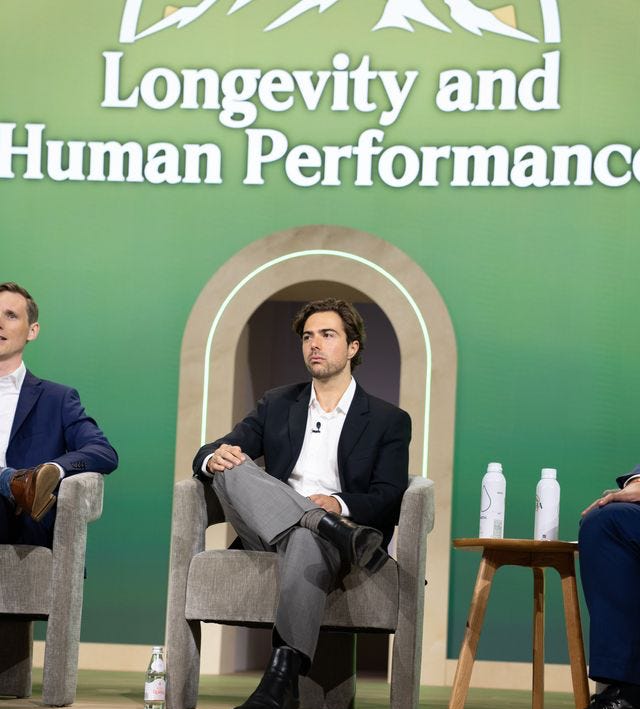
That idea represents a striking turn in the conversation around health technology. The prospect of altering human biology itself has been among the most controversial questions in modern medicine. Yet at the summit, gene-based therapies were presented not simply as a possibility, but as part of a potential path toward extending healthy human life beyond its current limits.
Bryan Johnson approached the question from almost the opposite direction.
Rather than beginning with gene editing, pharmaceuticals or AI, Johnson focused on the culture that determines how Americans live today. He asked why a society pursuing a longer life would simultaneously tolerate systems that make unhealthy choices cheap, convenient and profitable.
Johnson argued that the problem goes deeper than regulation alone. In his view, the economic incentives built into the food system can allow companies to profit from products that cause poor health, particularly inexpensive foods marketed around convenience, comfort and taste. He described a system in which a person can consume something that gradually damages their health while the companies selling it continue to benefit financially.
Johnson said the deeper problem is cultural. He argued that Americans have become accustomed to choosing convenience and short-term gratification even when those choices come at the expense of long-term health and human life. For Johnson, changing the country’s health outcomes therefore requires more than changing regulations. It requires changing the values and behaviors that shape what Americans eat, what companies produce and what society is willing to accept as normal.
The contrast was difficult to miss. While some panelists were looking toward transhumanistic interventions into human biology, including gene-based therapies, Johnson was questioning why society has accepted so many forces that undermine health in the first place.
And that may be the more fundamental question underlying the longevity movement: Are we trying to build technologies that allow humans to live longer, or are we willing to change the culture that determines how well we live now?
Predicting Health Emergencies
Maayan Cohen, co-founder and CEO of Hello Heart, offered perhaps the boldest vision of the future of wearable health technology: a world in which having a heart attack at home could seem as irresponsible as getting into a car without wearing a seatbelt. Her company combines data from blood-pressure monitors, connected pillboxes, wearables and, with patient consent, electronic medical records to identify risks before they become emergencies.
Cohen described her hope for a future in which heart attacks and strokes no longer occur because they can be predicted and prevented early enough. Rather than simply treating cardiovascular disease after it develops, she emphasized the possibility of identifying risk early enough to intervene before a heart attack or stroke happens without warning.
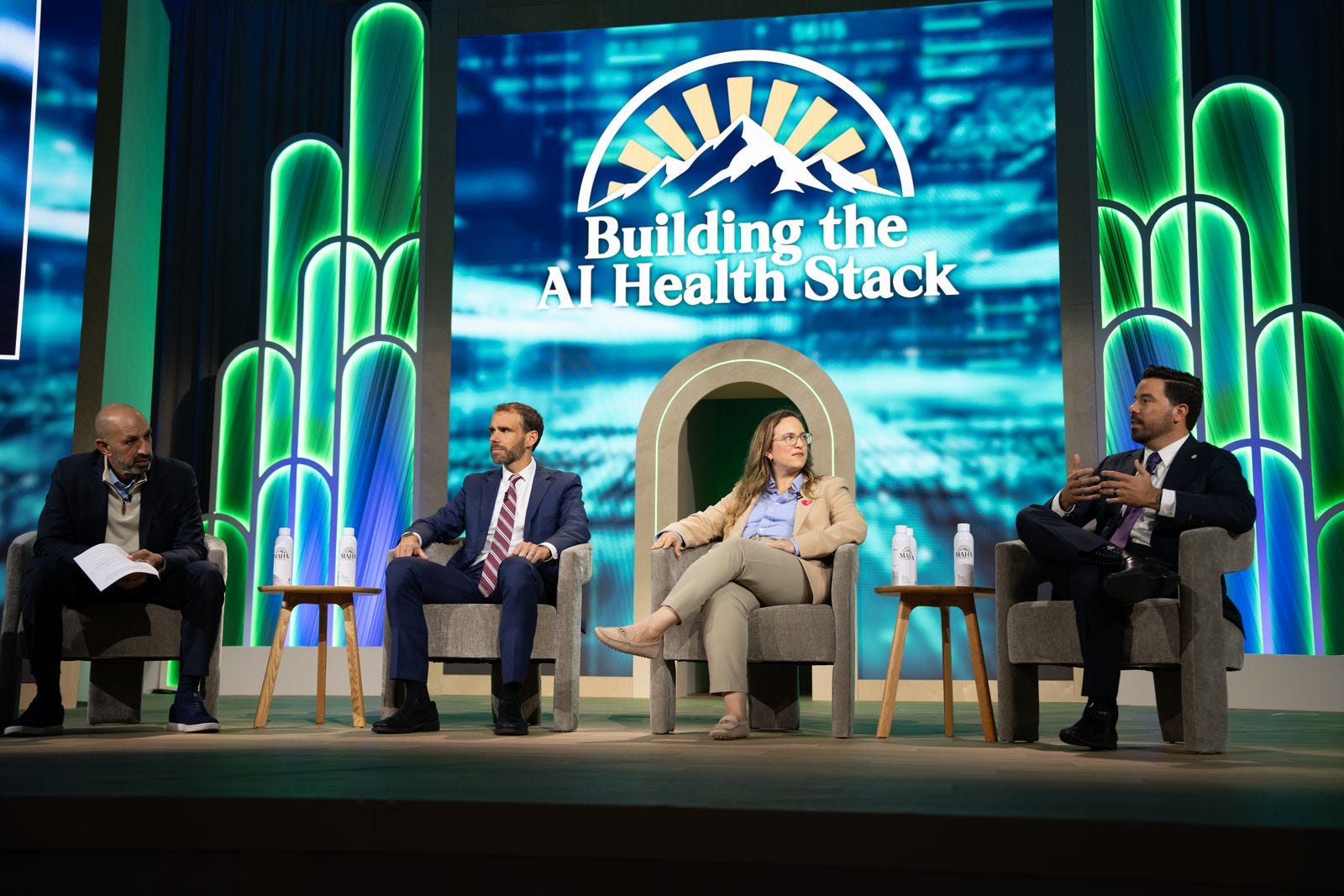
That vision relies on collecting and analyzing enormous amounts of personal health data, and Cohen acknowledged that this raises legitimate privacy concerns and how private data can be used. She pointed to the history of technology companies collecting personal information for commercial purposes and argued that the growing use of AI in healthcare should come with clear limits and meaningful control for the people whose data makes these systems possible. In her view, patients should ultimately have control over their own health information rather than surrendering it to companies or institutions.

At Hello Heart, Cohen said AI is already being used to analyze health data and identify people who may be at risk of a heart attack or stroke within a roughly 90-day window. She described one case in which the system identified signs of a potentially fatal “widow maker” – blockage in a person who was not experiencing symptoms. The warning prompted medical intervention, allowing doctors to address the blockage before it became a fatal event.
Ed Baker, chief product officer of WHOOP, makes a wearable that monitors biometric data around the clock – using AI to identify changes from a person’s baseline while continuously encouraging healthier behavior. Baker said the company is building a foundational AI model around “the language of your body,” with the long-term goal of predicting the next heartbeat—and eventually detecting conditions such as a heart attack, stroke or cancer before they occur. Baker has experienced the technology personally, saying WHOOP helped him identify atrial fibrillation twice.
Felipe Millon, OpenAI’s head of government go-to-market, offered a different application: using AI as a second opinion and guide for patients navigating complex medical information. Drawing on his wife’s cancer diagnosis, he said AI helped them understand a dense pathology report before they spoke with her doctor. “It actually empowers me more,” Millon said. “It gives me superpowers.”
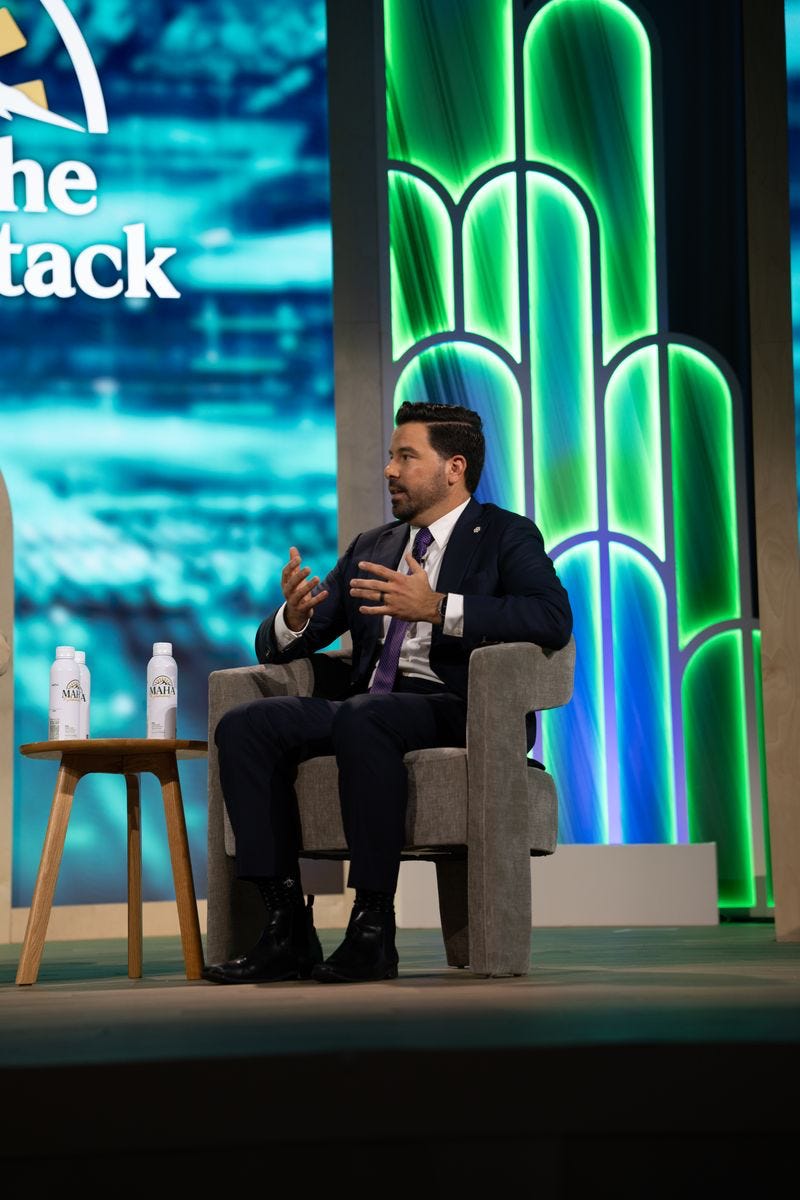
The promise is transhumanistic: a medical system in which the body is continuously monitored. AI synthesizes information from across a person’s health history and warning signs appear while there is still time to act.
But the same vision raises a question that the technology itself cannot answer: How much of our lives do we actually want to predict? If every irregular heartbeat, abnormal reading or unexplained symptom can be detected, analyzed and flagged, what happens to the parts of being human that remain uncertain and beyond our control? And who gets to decide when that monitoring becomes too much?
The panelists made a compelling case that AI has a place in medicine—and that these tools can already save lives. But Cohen’s insistence on consent and control may be just as important as the technology itself: if medicine is moving toward a world where almost everything can be known, patients should still have a say in what they choose to know.
Kennedy and Vance Close the Summit
The summit concluded with a conversation between Vice President JD Vance and HHS Secretary Robert F. Kennedy Jr., covering artificial intelligence, health care fraud, government accountability and the future of the MAHA agenda.
Kennedy argued that emerging technology, now being called Superintelligence, could fundamentally change the way Americans interact with their medical records and receive health information. He said SI could, in minutes, help patients and doctors analyze large medical records and provide additional perspectives on diagnoses and treatment.
But like others at the summit, Vance acknowledged the risks associated with SI.
“Every technology in human history has risks, every technology has downsides, but they also have incredible upsides,” he said. “Part of our jobs as adults, as policymakers, and as leaders is just to balance the good with the bad.”
The conversation also focused heavily on healthcare fraud. Kennedy described efforts within HHS and CMS to identify fraudulent spending, while Vance discussed the role of his administration’s fraud task force.

The Vice President also credited Kennedy and HHS officials with questioning long-standing assumptions in public health and health care policy.
Kennedy closed the summit by thanking Vance’s office. “We had tremendous support from the White House, but from nowhere as much as the vice president’s office,” he said. “And I want to thank you for that, for your commitment to our country, to our children and health.”
The MAHA Summit galvanized a community of forward-thinking men and women and their new technologies, from wearable health devices and SI-driven medicine to psychedelic therapies and genomic interventions – approaches that some health-freedom activists have questioned, even as they are increasingly being presented as tools for addressing chronic disease.
Hardy, the MAHA Holdings CEO, acknowledged that tension. He said disagreement is inevitable in a movement as broad as MAHA. “We’ll naturally differ in opinion, because a healthy system always has some tension to it.” But he returned to the movement’s larger purpose: “The chronic disease epidemic is humanity’s greatest threat, and defeating this enemy will require all of us, from the grassroots to the boardroom along that road to victory.”
A century from now, the MAHA may be remembered for having drawn a line in the history of human health, between an era that accepted chronic disease as inevitable and one that believed it could be confronted, prevented and ultimately reversed.
Related Reading:
At MAHA Summit, a Sense of Forever Change

Near the start of the second annual MAHA Summit on Tuesday in Washington, D.C., Tony Lyons, president of MAHA Center, said the gathering represented “a critical moment in a movement that started with autism moms and grew into the MAHA revolution.”

Wax on, wax off. Wax on, wax off. Polish, polish, polish …
Just amazing - https://www.trialsitenews.com/a/the-fund-the-movement-and-the-gray-zone-inside-finn-kennedys-health-venture-bet-196a9e60