

By Margaret Menge, Special to The MAHA Report
At a conference on mental health held Monday, May 4, at the Willard Hotel in Washington, D.C., three young adults shared their stories about how they were first put on antidepressants, and how their lives were forever changed by these drugs.
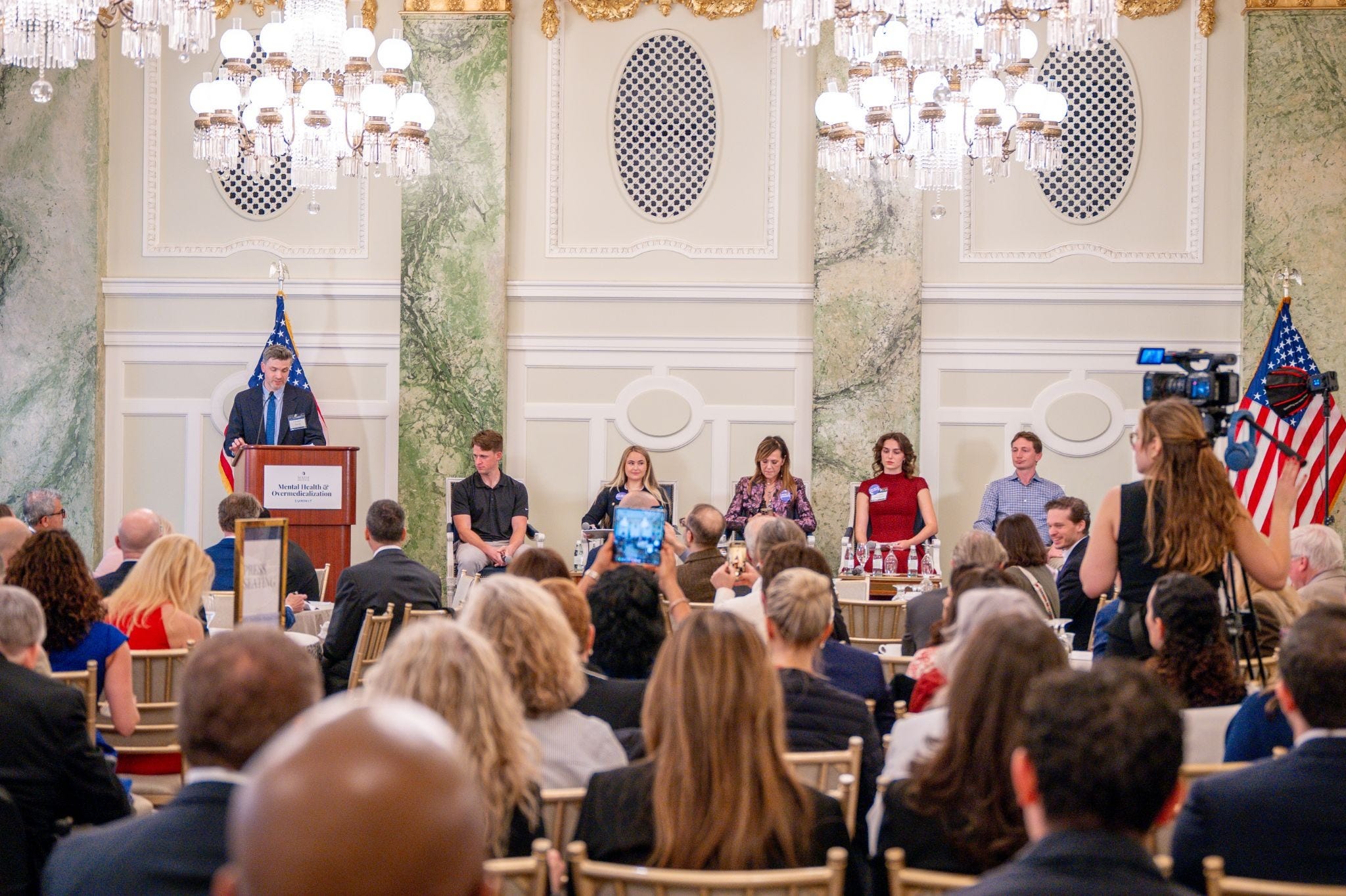
The first speaker, Danielle Gansky, now 30, said she was put on an SSRI when she was still in elementary school.
“At just seven years old I was prescribed psychiatric drugs. I was far too young to understand what they were, let alone the lasting impact they would have on my developing brain,” she told the audience. “It started in the second grade when a teacher noticed I was fidgety, distracted and not keeping up academically.”
Her parents, she said, were advised to take her to a doctor for an evaluation and she was quickly diagnosed and put on medication – Adderall, then Ritalin, and then more medications to treat side effects from those drugs.
“This spiraled into a prescription cascade of antidepressants, benzodiazepines, mood stabilizers and antipsychotics, all before my 10th birthday,” she said. “None of it ever felt right, but I was a child and I didn’t have the words to explain what was happening and I didn’t have the authority to challenge it. My completely normal childhood behavior was pathologized.”
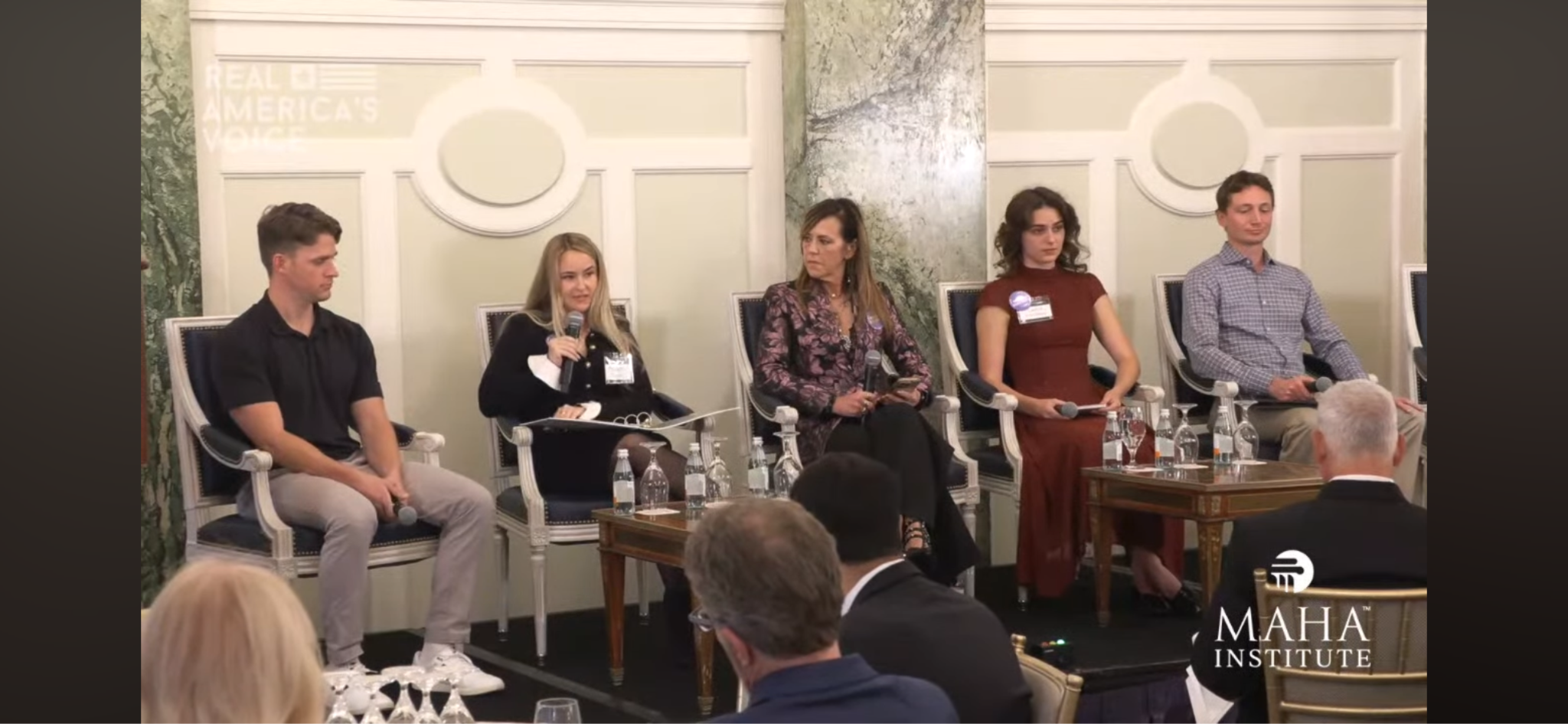
In college, when she decided to get off the medication, the pain of withdrawal was extreme. Her brain felt like it was on fire, but her doctor denied that the withdrawal from an SSRI could be causing that much pain.
He might not have known, because almost all studies look at withdrawal from SSRI’s after a short period of time, never 10 or 15 years.
Danielle had been on SSRIs for 16 years by that point. Her 20s were spent grieving a life that was taken from her.
“I cannot come off of it because of the severe debilitating withdrawals,” she said.
But withdrawal, she said, is a misnomer. What it is, really, is a neurological injury caused by the earlier withdrawal she started at the age of 23. She now can only reduce her dose by a tenth of a milligram at a time, and so has been in protracted withdrawal for the last seven years.
SSRIs, which stands for Selective Serotonin Reuptake Inhibitors, are the most common type of antidepressants and include brand names Prozac, Zoloft, Lexapro and Paxil.
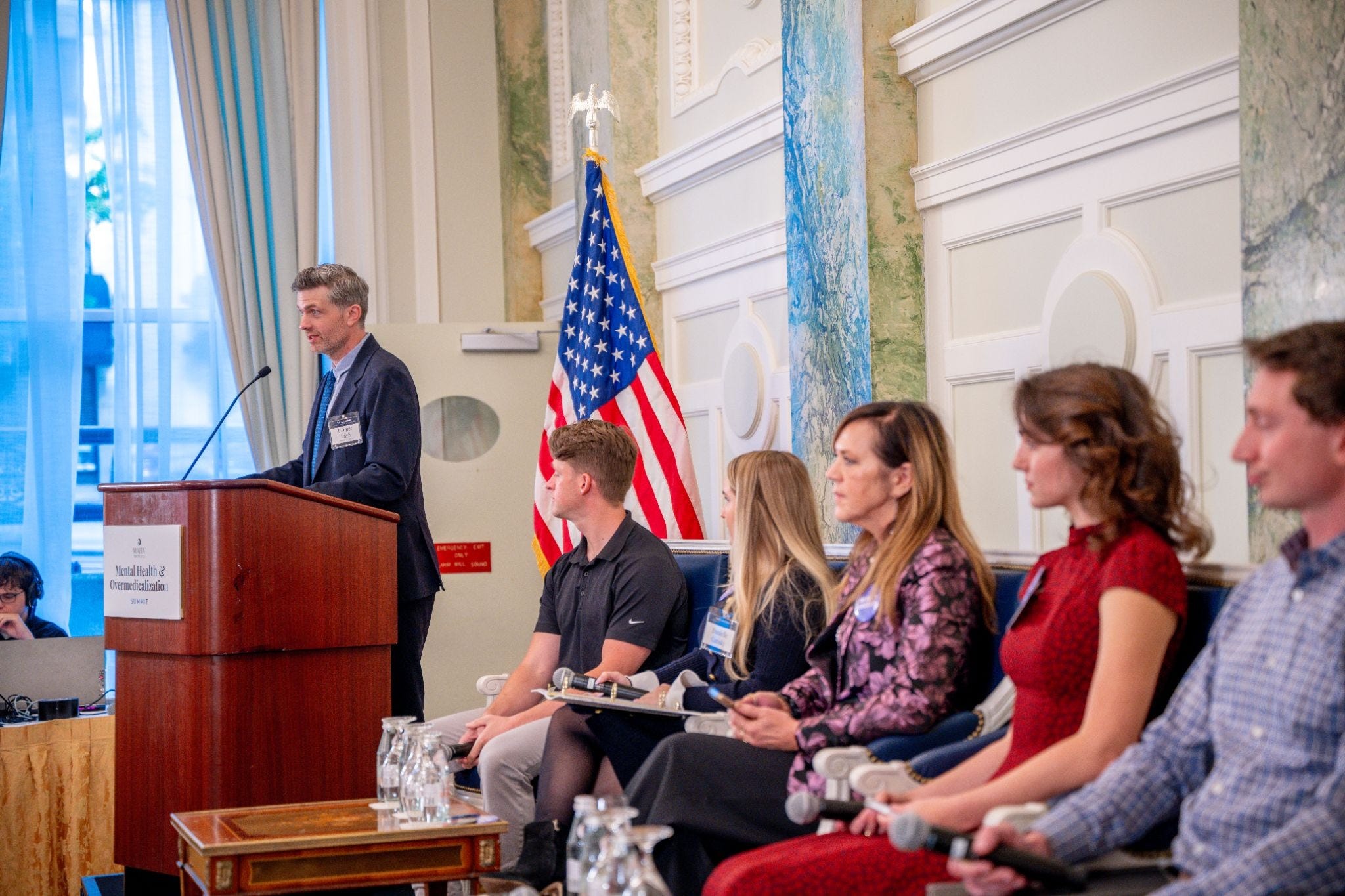
One in six American adults now takes an antidepressant; one in 10 children are on prescription medication for their mental health; 30 percent of college students report using psychiatric medications in the last year; and in nursing homes, more than half of residents are on prescribed antidepressants.
Monday’s event, the Mental Health and Overmedicalization Summit, organized by the MAHA Institute, a non-profit launched in 2025 by Mark Gorton, is dedicated to, as the home page on the company’s website reads, “fixing America’s broken health system and making America healthy again.”
Inner Compass Initiative, founded by Laura Delano, author of the 2025 memoir Unshrunk: A Story of Psychiatric Treatment Resistance, co-organized the event.
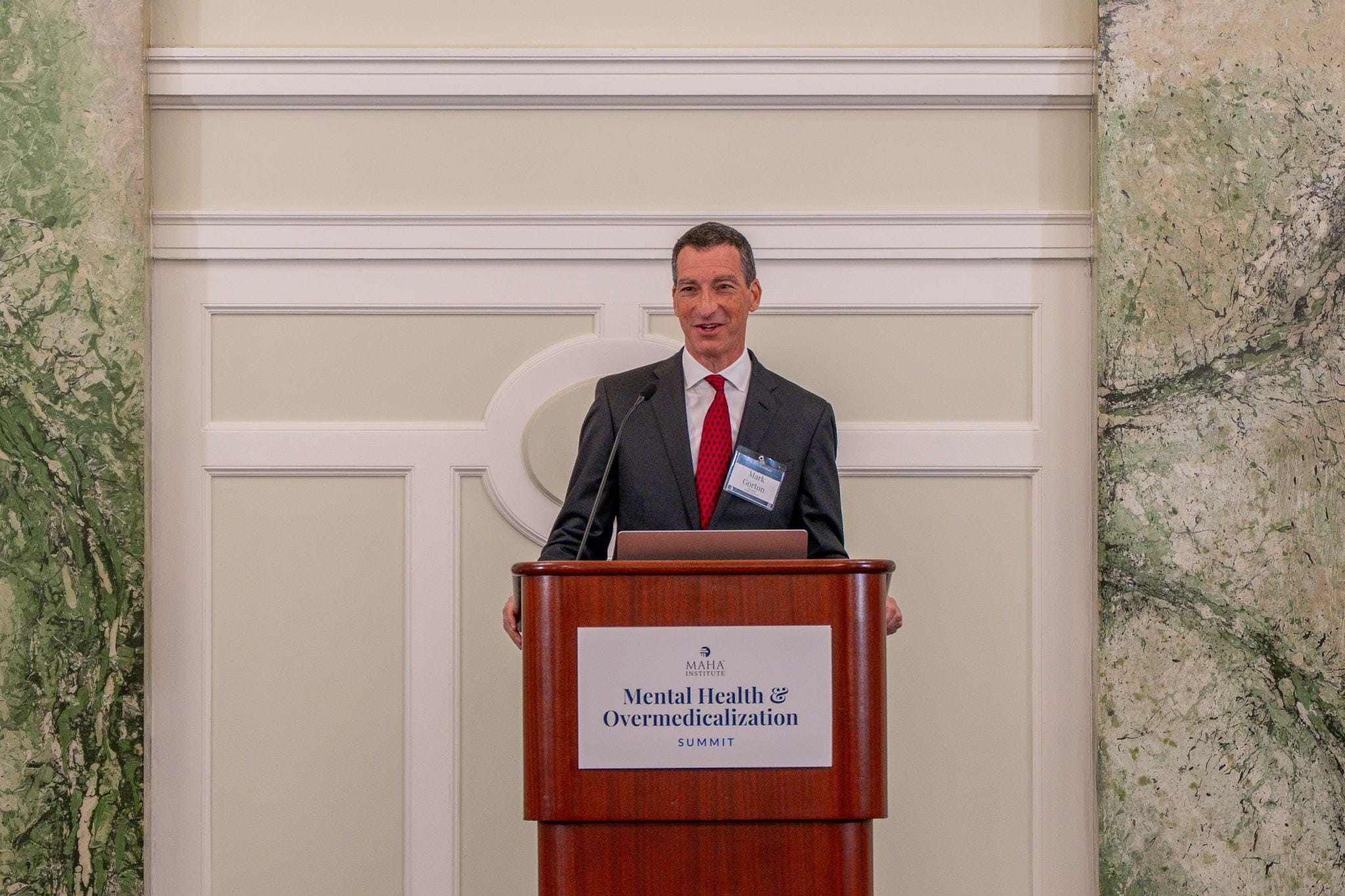
On Monday, MAHA Institute president Gorton kicked things off by decrying the state of the American healthcare system.
“Today’s kids are medicated at rates that would have been unthinkable a generation ago,” he said, describing the medicalized system of healthcare in the United States as one that was “designed, built, bought and paid for by profit-seeking corporations.”
“Our system of experts and leading physicians is a cathedral of lies, paid for in large part by the pharmaceutical industry and guided with the purpose of maximizing corporate profits, not public health,” Gorton told the audience.
Medicaid spending on psychiatric drugs has increased five-fold since 1997, he noted, and Medicare and Medicaid combined have spent a staggering $335 billion on psychiatric drugs over the last decade.
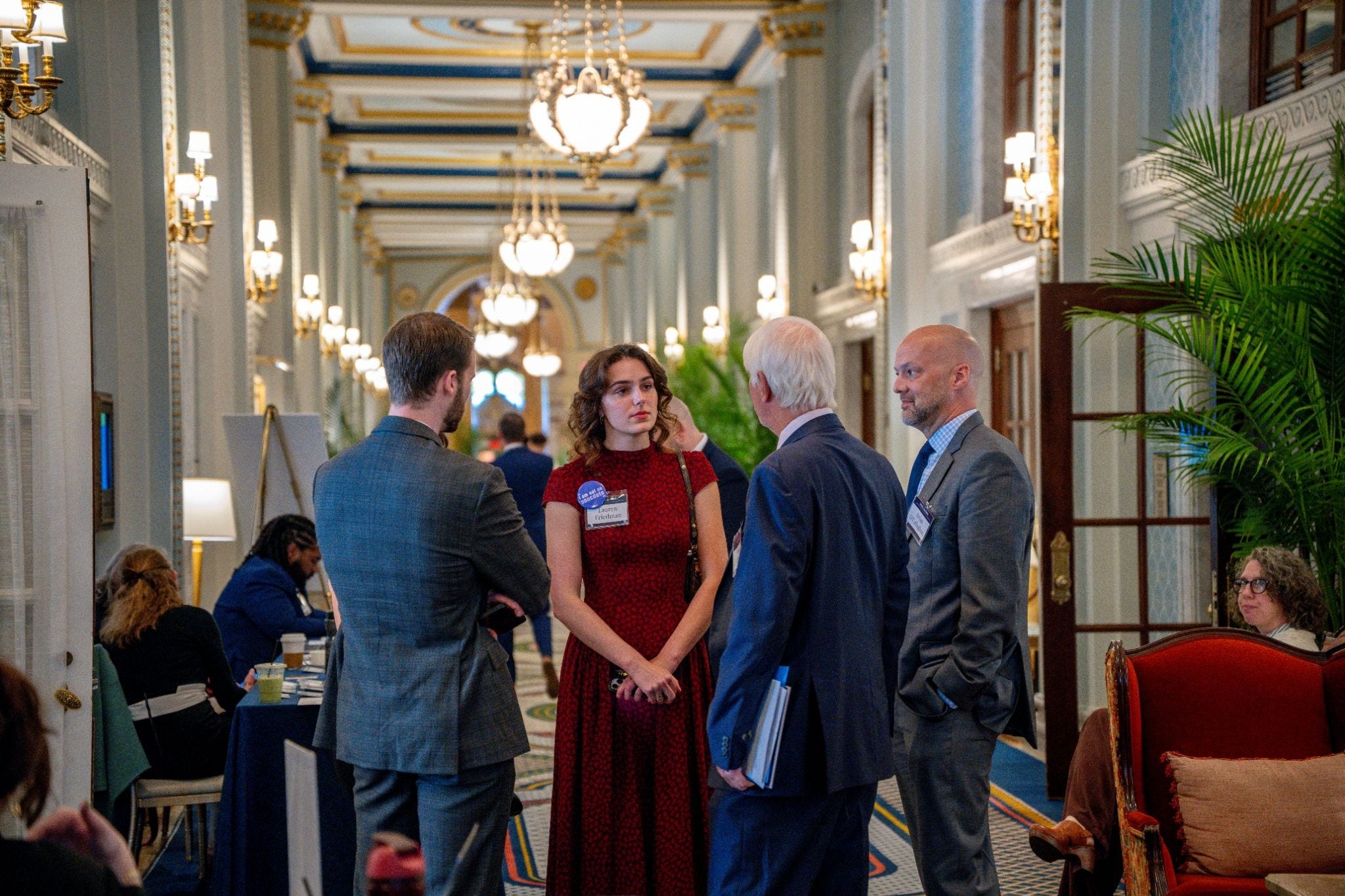
Another young adult on the day’s first panel, Lauren Friedman, is a senior at Vanderbilt University. She told the audience that she’d suffered a side effect of an SSRI that is known as PSSD, for Post-SSRI Sexual Dysfunction, and that she’s been told it’s likely permanent.
It’s not just a loss of libido, she said, but also nerve system damage that results in genital numbness.
“For me – I clearly hate to talk about this – but my clitoris is completely numb as if it’s the back of my elbow. I have no sensation internally. I’m 23 years old. Sufferers also lose the ability to orgasm permanently, like for the rest of their lives.”
She described her injury as being a “sudden onset” of chemical asexuality, and said she now considers what was done to her by the SSRI as akin to “chemical castration,” given that it is likely permanent.
But the loss, she said, has not been limited to sexuality, but has also included an emotional numbness that has robbed her of part of her humanity.
“Before this, I was a super emotional, empathetic, loving, caring, like, Sylvia Plath-reading and resonating girl, and the day I woke up with this injury I quite literally felt my soul leaving my body,” she said. “It was the most unbelievable, inorganic thing I’ve ever experienced, and it’s a common symptom of people who have this condition.”
To this day, she said, she cannot feel love for her own mother, choking up as she described this as “the hardest thing on earth.”
When asked later by a member of the media what she thinks the government can do, she said she thinks written, informed consent must be a legal requirement, with patients signing a consent form that informs them of potential side effects before starting to take a medication.
Her doctor, she said, admitted he was aware that PSSD was a potential side effect of the SSRI he was prescribing her, but didn’t tell her.
“Nothing should be withheld when it’s your nervous system,” she said. “That was my decision to make.”
Following the emotional first discussion, “Newsmakers Hour - Lived Experience Presentations,” the day included four panels: 1) The Current State of Mental Health in America - and How We Got Here; 2) Psychiatric Drugs: Informed Choice and Building Safe Off-Ramps; 3) Children First - Addressing the Overmedicalization of Childhood and Fostering the Future; 4) Federal Reform: A Coordinated Path Forward and Q & A.
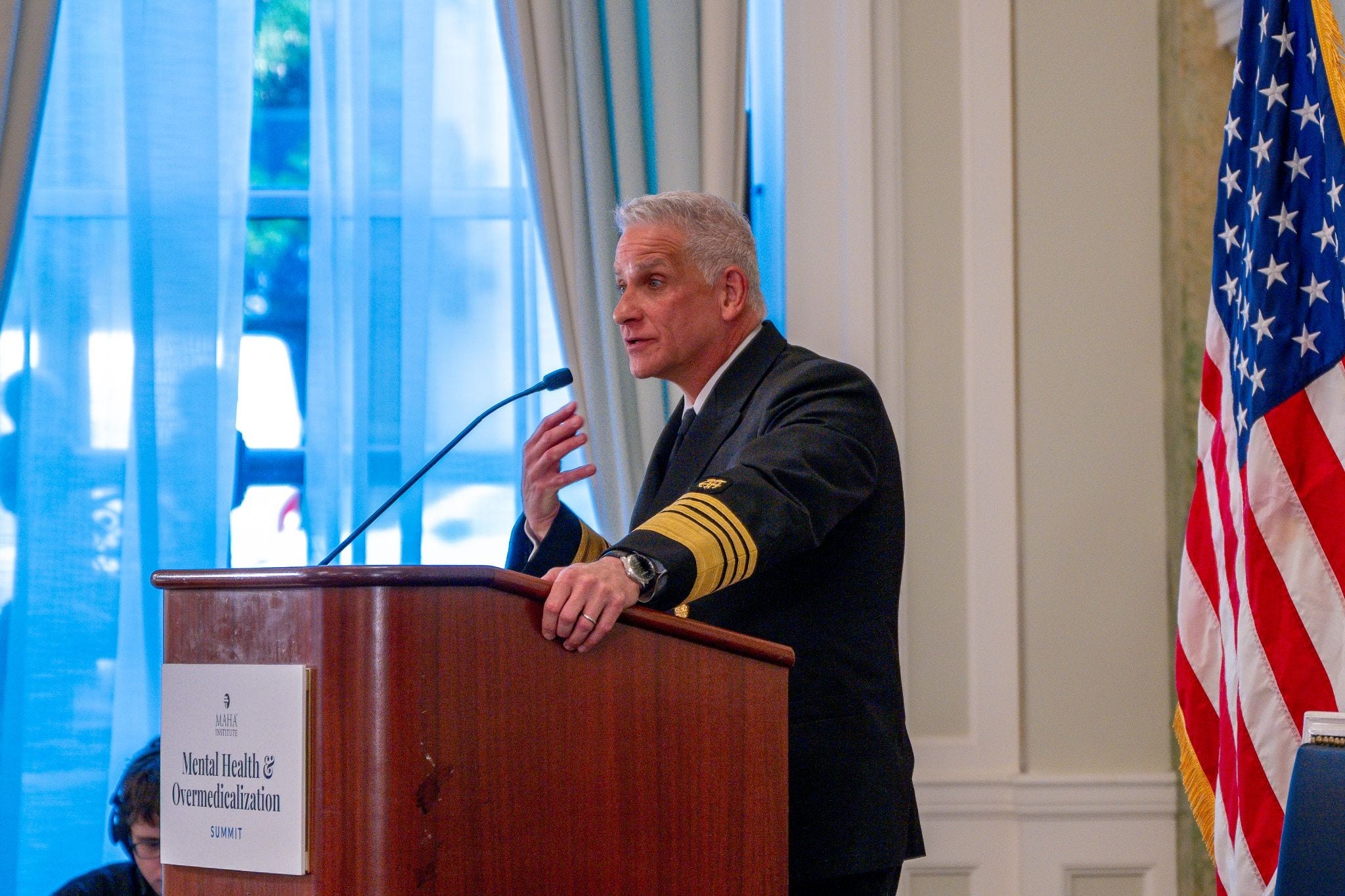
The MAHA Institute summit brought together a number of citizens and advocates with astonishing stories and also a number of people representing the public health agencies, including Admiral Brian Christine, a physician and the Assistant Secretary of Health in the Department of Health and Human Services, who sat in the audience and listened to the panelists.
In his speech, Christine said he thinks, as a nation, we have to be honest about the problem of “overmedicalization” and need to take a more complete view of health that includes nutrition, sleep and movement.
He also spoke specifically to the topic of men and mental health, saying we need to ask why so many men are struggling.
“I do know that we’ve created a culture where a lot of men feel like they are on the outside, looking in,” he said. “Their traditional anchors – work, family, responsibility – they don’t feel as stable as they once did. In some spaces, the message is that masculinity itself is something to be minimized, something to be criticized, and by some, something to be demonized, and we can see the effects.”
Also representing HHS at the event was Alex J. Adams, assistant secretary at the Administration for Children and Families, who addressed the over-medication of foster care children.
“Too often the foster care system responds to the trauma and instability facing the lives of kids, and they respond with medications as the most accessible response rather than one component of coordinated care,” he said. “Psychotropic medications can play an important role in treatment, but when they are used appropriately as part of a broader, coordinated care plan.”
On an afternoon panel, an assistant professor and researcher at Florida State University, Jeffrey Lacasse, spoke about the theory of a ‘chemical imbalance’ in the brain as the cause of depression and anxiety – specifically, a lack of serotonin.
“We probably never had any good reason to believe this theory,” he said, noting that even with the lack of evidence supporting it, and the general acknowledgement among most researchers that it’s probably false, it is still something that many people, including clinicians, believe.
“The self-correcting nature of science didn’t work,” he said. “It’s sort of a zombie theory that goes on and on and on.”
Another panelist representing veterans spoke of the overmedication of veterans for Post-Traumatic Stress Disorder with SSRI’s, often causing sexual dysfunction.
“The reality is that what we’re doing is not working,” said Derek Blumke, a Veteran Policy Fellow at the Grunt Style Foundation. “Seventy percent of all veterans that are VA-prescribed medications and this is the result.”
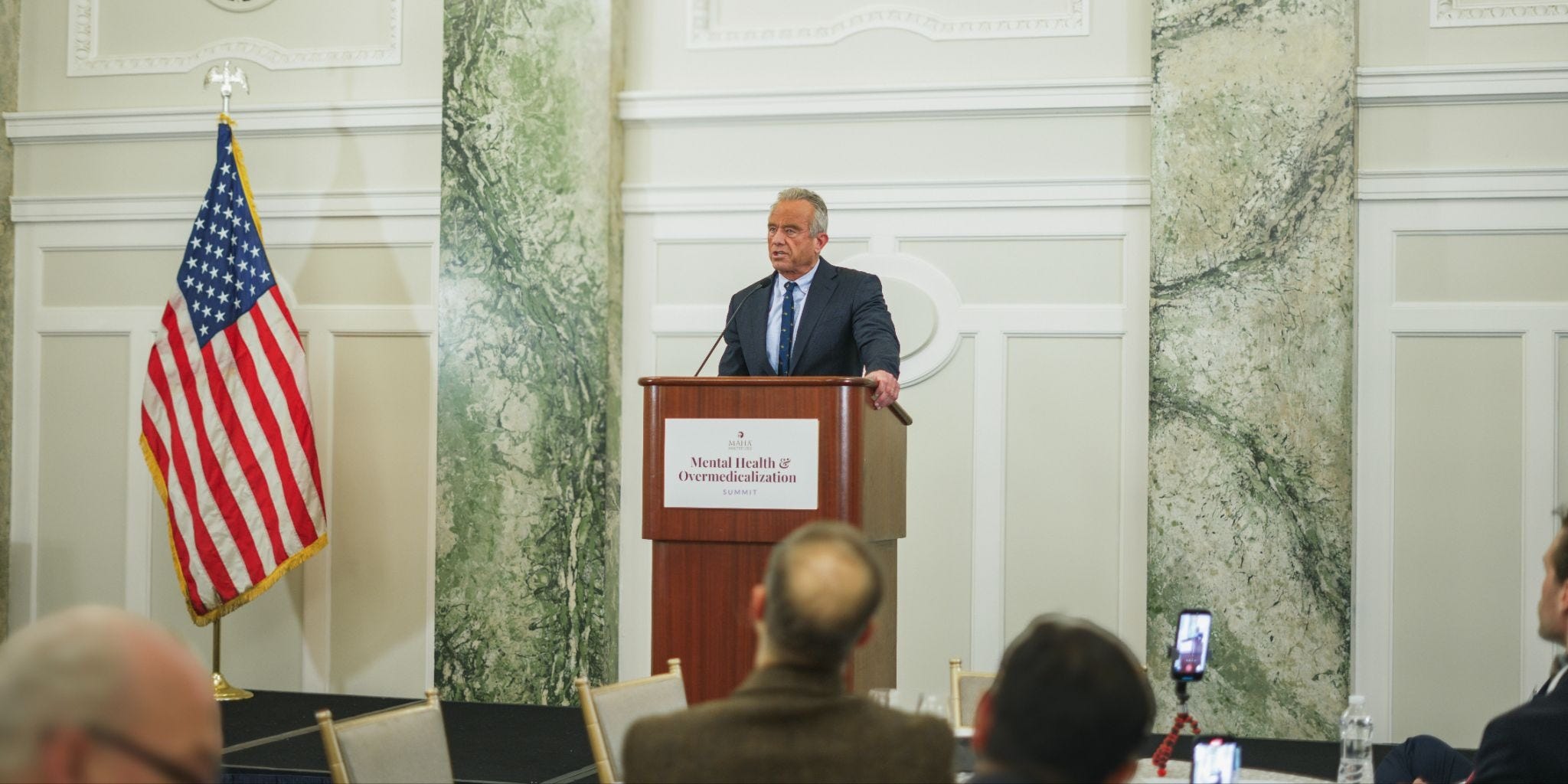
Secretary of HHS Robert F. Kennedy Jr. spoke at the conclusion of the summit, announcing that HHS had issued guidance to all healthcare providers nationwide, through a “Dear Colleague” letter, requesting that they expand the use of non-pharmacological treatment for mental health issues and strengthen both informed consent and shared decision-making.
Kennedy said HHS is offering new guidance on prescribing and national training modules on the tapering and de-prescribing of psychiatric medication and also billing guidelines issued by the Centers for Medicare & Medicaid Services that will allow clinicians to be paid for de-prescribing work for the first time.
“We’re aligning policy with practice,” said Kenney. ‘“Psychiatric medications have a role in care, but we will no longer treat them as the default. We will treat them as one option used when appropriate, with full transparency, and with a clear path off when they are no longer effective.”
[Below are links to the full MAHA Institute event]
Part 1: MAHA Institute Mental Health and Overmedicalization Summit
Part 2: MAHA Institute Mental Health and Overmedicalization Summit
What a terrible tragedy for all of these innocent children and adults. I had no idea how rampant this was. I’m 72 years old and have never been on any medication, seems quite unnatural. Obviously has its place but this is outrageous. This country has a medical system that is Pathetic, and here we are “celebrating” our 250th birthday of “freedom”
How tragic! RFK, Jr., is a Hero walking through a minefield!
And what was not even mentioned here is the suicides that are a result of these medications. We know of several, with two within our extended family. When my step niece hung herself as a result of psychosis from anti-anxiety medication, my niece, her half sister, went to a therapist for help. He offered to prescribe her SSRI medications. It is insane what’s going on.