


It might be the best-kept secret in public education.
Every day in America, 30 million children eat a hot lunch at school. But that lunch is usually cooked somewhere else and brought to the school in trucks or vans where it’s re-heated in warmers. It doesn’t taste fresh because it isn’t fresh. The hamburgers are often a pale grey color and rubbery, the chicken is dry, and the bread is soggy. Students joke about it, but they have no recourse. They have only two choices: eat the food anyway, or throw it away. A lot of school food ends up in the trash, and many students find themselves hungry an hour or two later, long before the bell rings and they can go home and eat.

What if things were different? What if school meals in America were made from scratch every day, in the school, by trained chefs? What if students got excited about the food they were eating because it was fresh-cooked at the school, and was juicy and delicious?
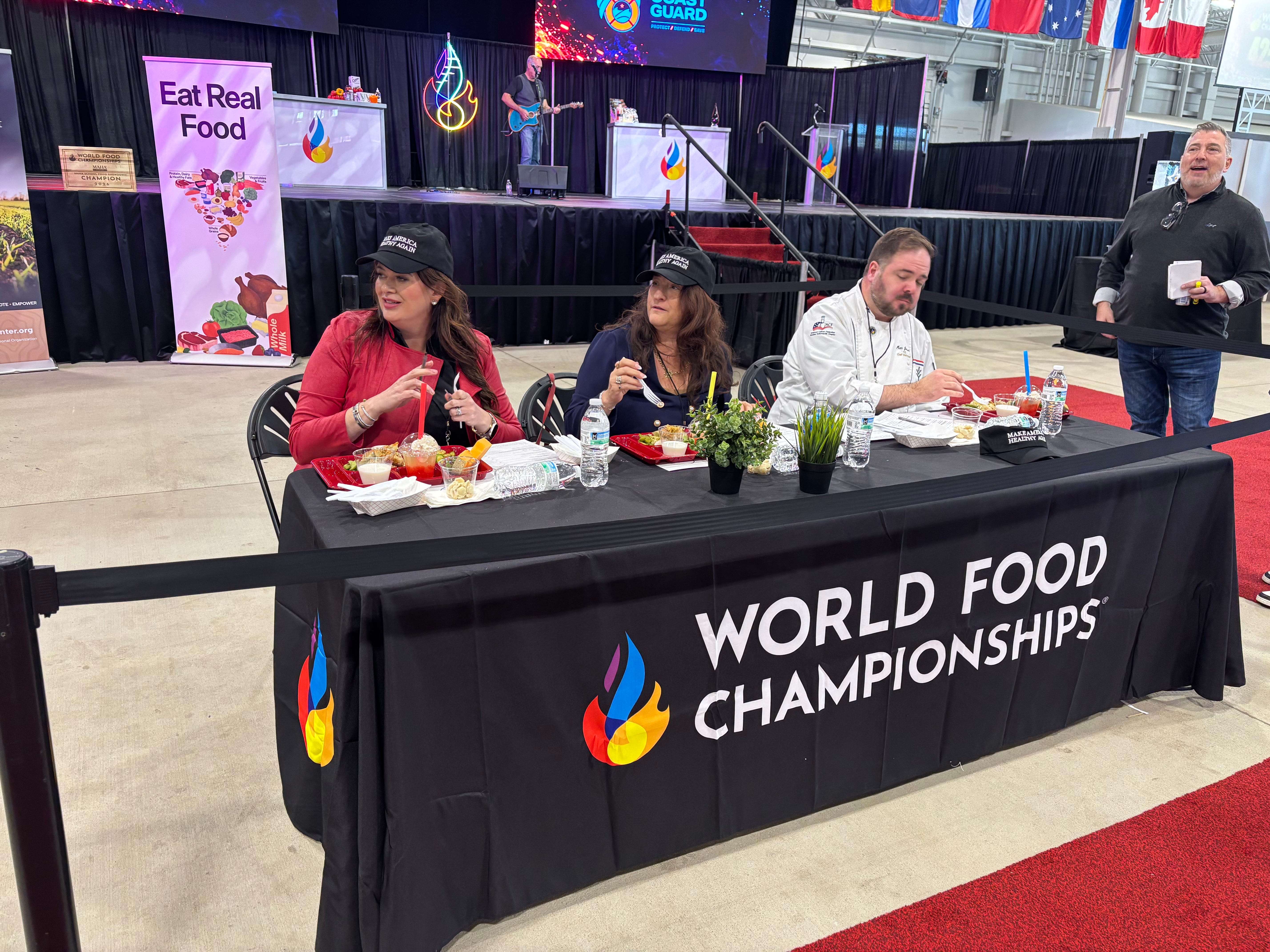
On Saturday, Oct. 17, at the World Food Championships in Indianapolis, the MAHA Center sponsored a special contest to have chefs compete to make the tastiest school lunches, from the freshest ingredients, while meeting all USDA nutritional guidelines for the National School Lunch Program.
More than 20 million kids in America qualify for free lunch, because their family’s income is at or below 130 percent of the federal poverty level.
Those meals are provided at taxpayer expense through the National School Lunch Program, which is run by the U.S. Department of Agriculture. Schools are reimbursed a base rate of $4.76 for each free lunch.
Because this program pays to feed so many children, all food provided by schools is made to meet the nutritional requirements of the program, which are very specific.
Lunches must have between 550 and 650 calories for students in grades K-5, 600-700 calories for students in grades 6-8 and 750-850 calories for high school students (grades 9-12). The maximum amount of sodium is 1,110 milligrams for K-5, 1,225 for grades 6-8, and 1,280 for high schoolers.
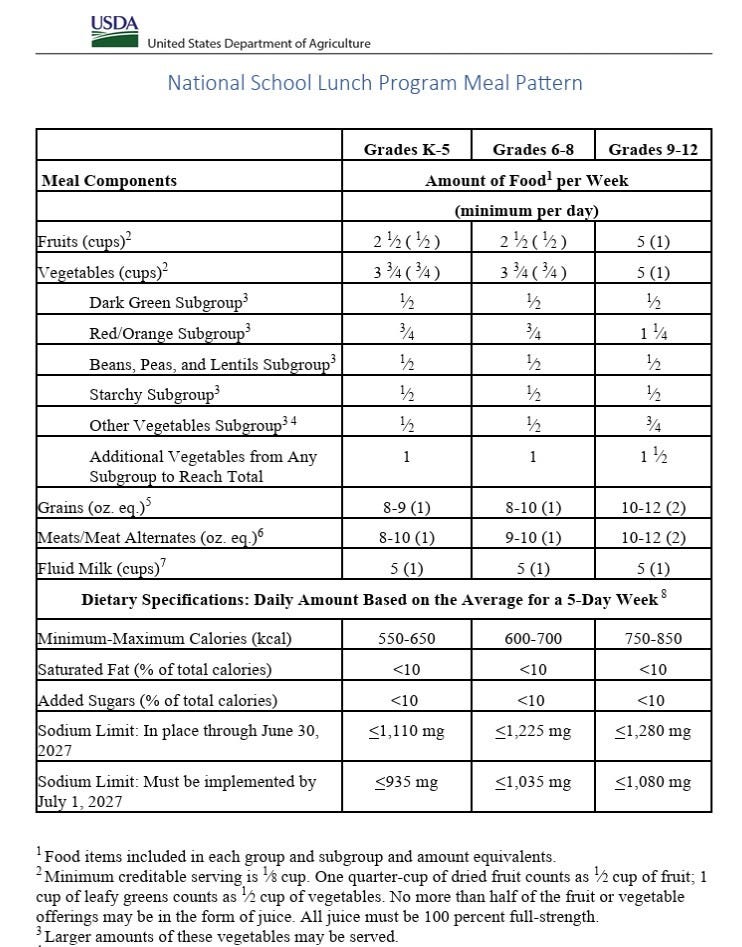
There must be a certain amount of food from different categories in each lunch: including 8-10 ounces of meat or fish for grades K-5, 9-10 ounces for grades 6-8 and 10-12 ounces for high schoolers. Students also must be given fruit, a starch and a certain mix of vegetables.
But these requirements aren’t really enough to make sure that meals taste good. Without trained and talented chefs, and with food so often cooked offsite hours before it’s served, the lunches are often overcooked and dry or just not tasty.
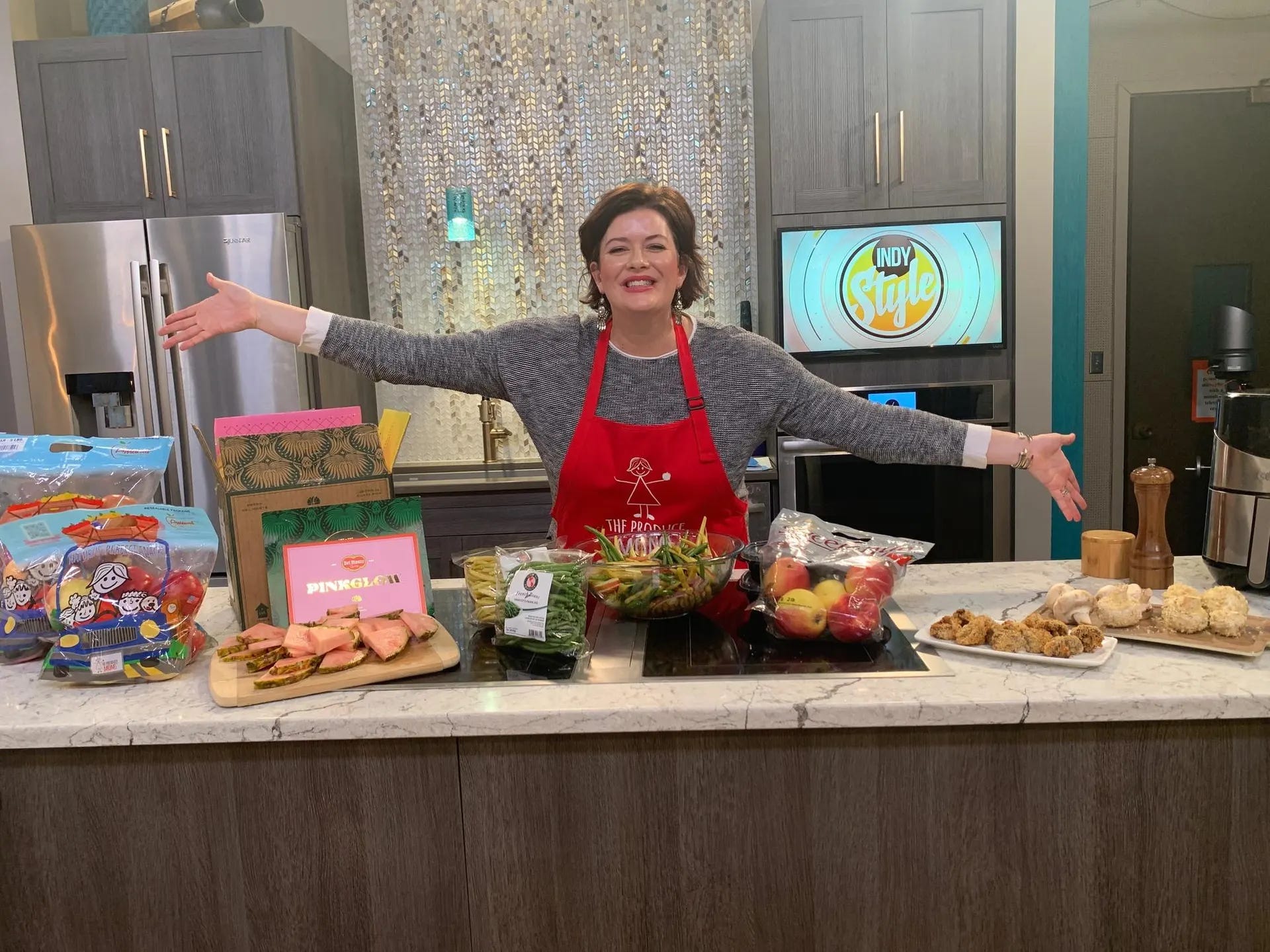
At the Indianapolis event, one of the judges was Lori Taylor, the founder of a nonprofit organization called The Produce Moms.
“We need great chefs in our school cafeterias,” she said just before the competition began. “We need infrastructure, we need these schools to be properly equipped. But we also need schools to have the funding and the talent pipeline of culinary skilled, trained professionals to come make these scratch meals in school cafeterias across America.”
Five chefs competed in the MAHA School Food Showdown in a large building at the Indiana State Fairgrounds – all of them chefs employed by Taher, a Minneapolis-based company that provides food service to schools, making all food from scratch.
Each chef was assisted by a middle or high school student, most of them from the small town of Monrovia, Indiana.
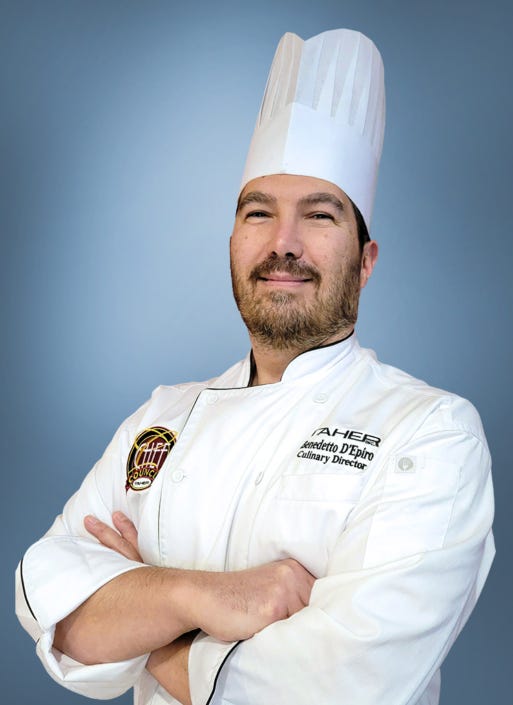
One of the five chefs, Benedetto D’Epiro, made chicken cacciatore – a recipe based on the dish his grandmother in Italy used to make, with the chicken marinated in a vinaigrette made with honey and three kinds of vinegar, but no olive oil, surprisingly.
“I have to make it and represent my culture,” he said with a smile.
D’Epiro is originally from Rome, Italy, but is now based in Milwaukee where he works for Taher as the executive chef for the Muskego-Norway School District in Waukesha County.
He had to adjust his chicken cacciatore recipe to comply with USDA requirements and use a little less salt than his grandmother used to use. But it must still be full of flavor, he noted. His grandmother used to say in Italian that “the food should jump from the plate to your mouth – otherwise it’s not good,” D’Epiro said.
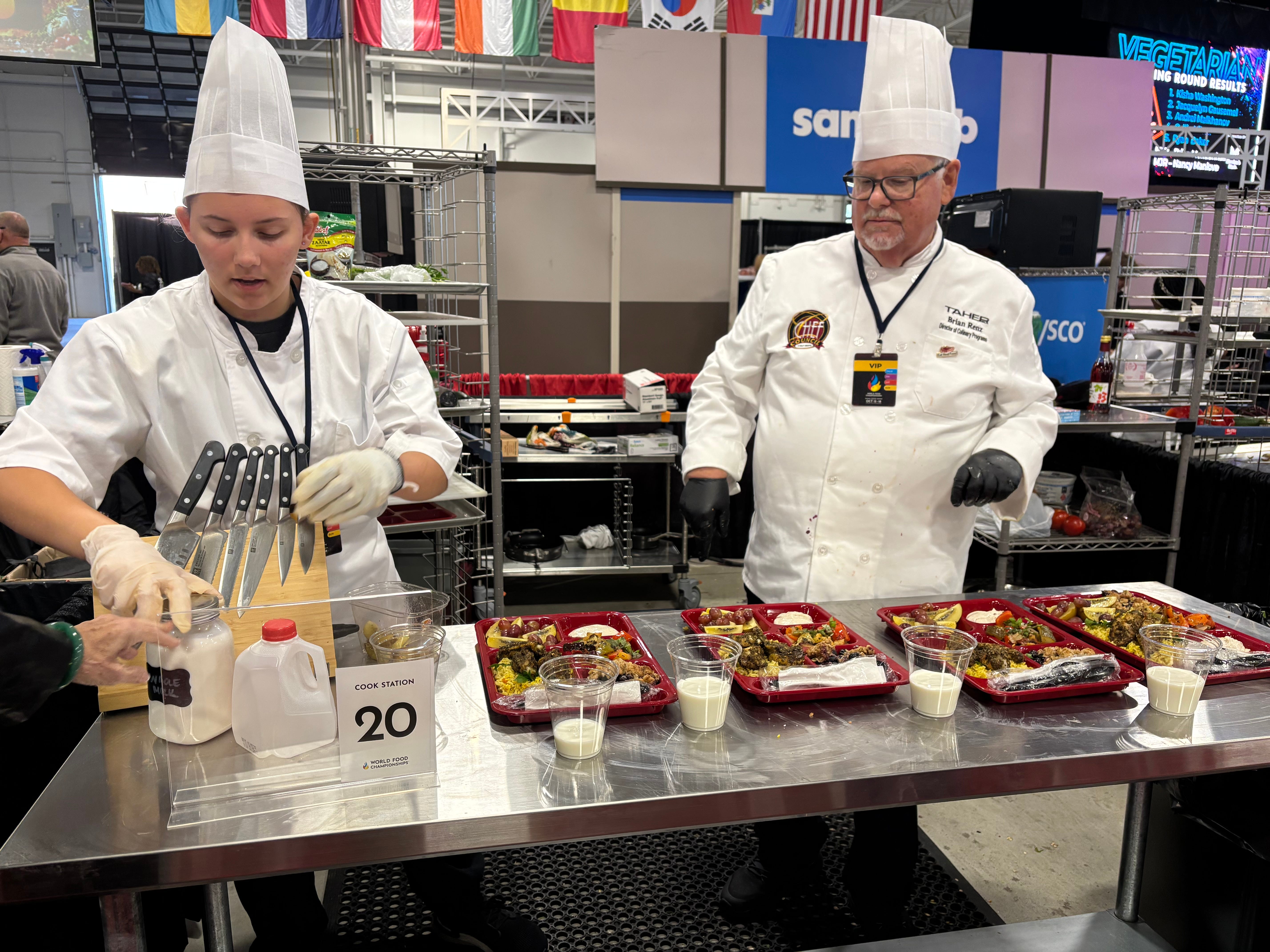
The MAHA School Food Showdown was timed, with chefs working in makeshift kitchens set up on the floor of the pavilion. As usually happens at such events, everything didn’t go exactly as planned.
“The sheet pans don’t fit in the oven!” one chef called out to another. “The sheet pans do NOT fit in the oven!”
The young assistants were mostly tasked with prepping vegetables, and the chefs were seen instructing them how to slice red peppers, and chop green onions.
The emcee of the event went from one chef to another with a microphone, asking what they were making. Just as he was about to put the microphone in front of one of the middle school students, she fainted. It turns out it was just nerves. After a brief pause, and some assistance from adults, she was able to get up and everyone got back to cooking.
Another one of the chefs, John Sugimura, made boba – an Asian drink with jelly-like bubbles on the bottom that’s become wildly popular among American teenagers and young adults.
“How do you make boba?” I asked him, curious about those colorful bubbles and how they’re formed.
“How do I make boba? My boba?” he asked.
Yes, his. It’s not the regular boba found at the bottom of milk tea that is laden with sugar. His boba uses no sugar. The bubbles are made from coconut gelatin and sit in small cups on the lunch trays, soaking up natural strawberry juice so that they are naturally sweet.
For his entree, he and his student assistant, high schooler Jamarah Frederic, made Japanese dumplings called gyoza that they dusted with potato starch. The starch “keeps the dough soft and keeps the moisture from going in,” he said.
Taher is known as a school food service company that only cooks food from scratch, with ingredients from large providers like Sysco, but also with food sourced from local farms with which they’ve built relationships. They grow lettuce in towers in schools, so that it’s always super fresh.

Jeri Crater, the vice president of operations for Taher, was on hand assisting the chefs. She said the company has been committed to cooking from scratch since its founding.
“Quality is always number one,” she told The MAHA Report. “When you can’t get kids to eat when it’s free, you’ve got a problem.”
In August, USDA Secretary Brook Rollins and HHS Secretary Robert F. Kennedy Jr. announced that the Trump administration will spend $70 million to help schools upgrade their kitchens.
Many schools had their ovens ripped out years ago, and some schools have even been built without ovens and stoves, with districts centralizing food preparation at a separate facility, or contracting it out.
In a survey of school superintendents last summer, only 44 percent of those who responded said that every school in their district had a fully equipped kitchen for cooking meals from scratch.
This is all likely changing, and the MAHA School Food Showdown may play a small part in sparking interest in upgrading the meals children are served every day.
At the competition, the lunches were plated on school cafeteria trays – the same trays that Taher uses in the schools where their chefs work – and were judged by a panel made up of Lori Taylor, Deirdre Goldfarb, and a chef from the culinary arts program at Ivy Tech Community College.
The winners of the first round were John Sugimura and his assistant Jamarah Frederic and the dumplings they made, and chef Brian Renz and his assistant Zoey Beltz, who made za’atar sumac chicken wings, with flavors inspired by trips Chef Renz has taken to Turkey and North Africa.
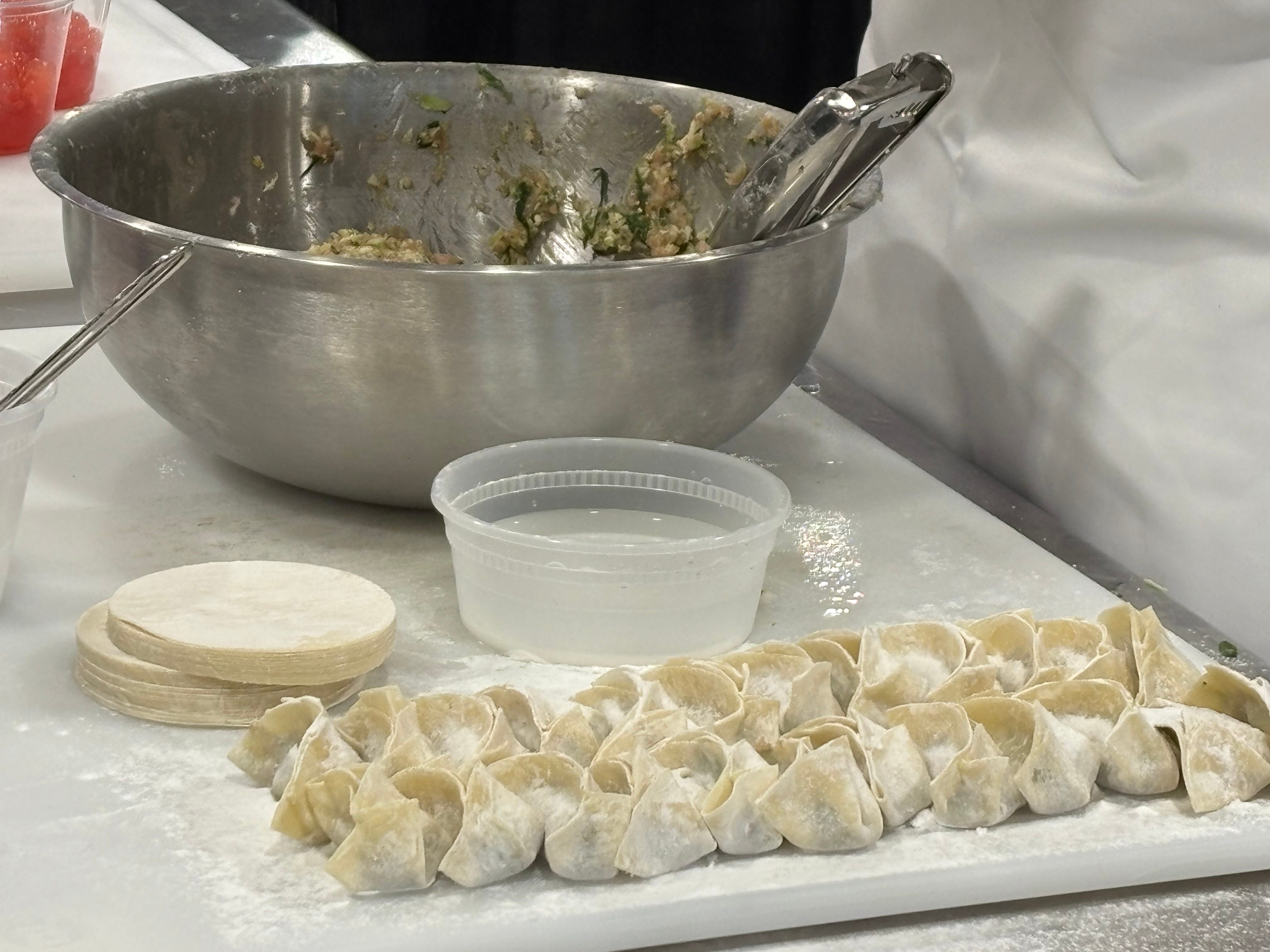
The final winner later that afternoon was Sugimura, who was awarded the title of MAHA School Food Champion.
The MAHA School Food Showdown was part of the MAHA Center’s “Eat Real Food” campaign, which aims to put whole, nutrient-dense foods back at the center of the American plate, from school lunches to federal nutrition policy.
Before the event, Deirdre Goldfarb, a spokesperson for MAHA Center, said, “Students deserve food that’s real, nourishing, and actually tastes good. The World Food Championships brings together some of the most talented cooks in the world, and we can’t think of a better place to show what school food can be. The MAHA School Food Showdown is proof that healthy, affordable, and delicious can all go on the same tray.”
Related Reading
MAHA® School Food Showdown Brings Real-World School Lunch Challenge to WFC2026

INDIANAPOLIS, IN - (October 12, 2026) - The World Food Championships (WFC), the global leader in Food Sport, will host the MAHA® School Food Showdown on Saturday, October 17, at the Indiana State Fairgrounds & Event Center’s Fall Creek Pavilion in Indianapolis.

Love this report. First, for those schools that don't have cooking facilities, they could use 1. Cargo containers or Trailers outfitted with the necessary equipment, 2. Build purpose built facilities similar to those used by many schools that are overcrowded.
I would strongly request that MAHA look into doing the same for HOSPITALS. They serve the WORST UNHEALTHIEST FOOD in America. IN A HOSPITAL that's supposed to be helping you to regain your health after being incarcerated there.
ULTRA MAGA AMERICAN
I just want to mention, I think the chart shows per week in the regular text then minimum per day in parentheses.
They should have separated the two data types into separate columns. It's not even laid out as clearly as it should be, in the header column. One could wonder if a clearer layout was tried and rejected because it makes the 1 oz per day so obvious.
I can totally see how it would be assumed that it specifies 8-10 oz per meal, as that is more what a person actually needs and that it would be better aligned with the new food upside down pyramid, right? That is, except the 5 cups of milk, which is why I noticed the meaning of the parentheses.
Once I figured it out, I was dismayed to see that the meat/alternate minimum is 1 oz/day until high school and only 8-10 oz per week. It's disturbingly bad and not "Healthy America" at all. The vegetables also are 3/4 cup per day, which I suppose is about what an under 6 would eat but the rest of them should be having more.
All this is crazy for the growing years, which all of K-12 is. Thinking itself is a huge nutritional burden. The brain requires a lot of energy just thinking.
~
And now some additional thoughts on their giving 1 oz of meat per day not per meal!
I don't see where this chart doubles if students are also receiving breakfast, as I have heard some do, in the poorer districts especially. If they no longer do, it should be done going forward.
If a need above the minimum isn't specified, it won't be budgeted for, so it should be specified.
The benefits of real food in the morning are huge and this is not an expensive meal, even with higher quality foods such as the Trader Joe's ancient grains cereal instead of the plain oatmeal which is not as nutritious. Or an egg, an apple, a cheese or complex grain, and milk. All of it glyphosate free at a minimum.
I always come back to basic brain development and gut flora, and what nutrition means for each of these and therefore for IQ.
The "minimum nutrition" numbers were never created with intention to support brain development. When they were to address anything true in biology, they were for preventing major issues like rickets.
Brain development, of the quality needed for self control and long term planning, and gut health, both require a higher level of nutrition than the bare minimum for life.
School meals are a great place to help move disadvantaged kids away from a life of impulsive crime and poor decisions. They are also a good way to help mitigate kids' home exposure to terrible parental choices.
And school meals can help block out the sugars and the pesticide residues that trash endocrine systems. Schools could simultaneously be giving the cadence of nutrition that supports mental focus, and helping our population avoid obesity and diabetes, as is happening so early in life.
I would rather we pay for a couple unprocessed meals per day per student, than pay for a lifetime of scooters and the frustration of dealing with mentally impaired employees in every store and bureaucracy.