


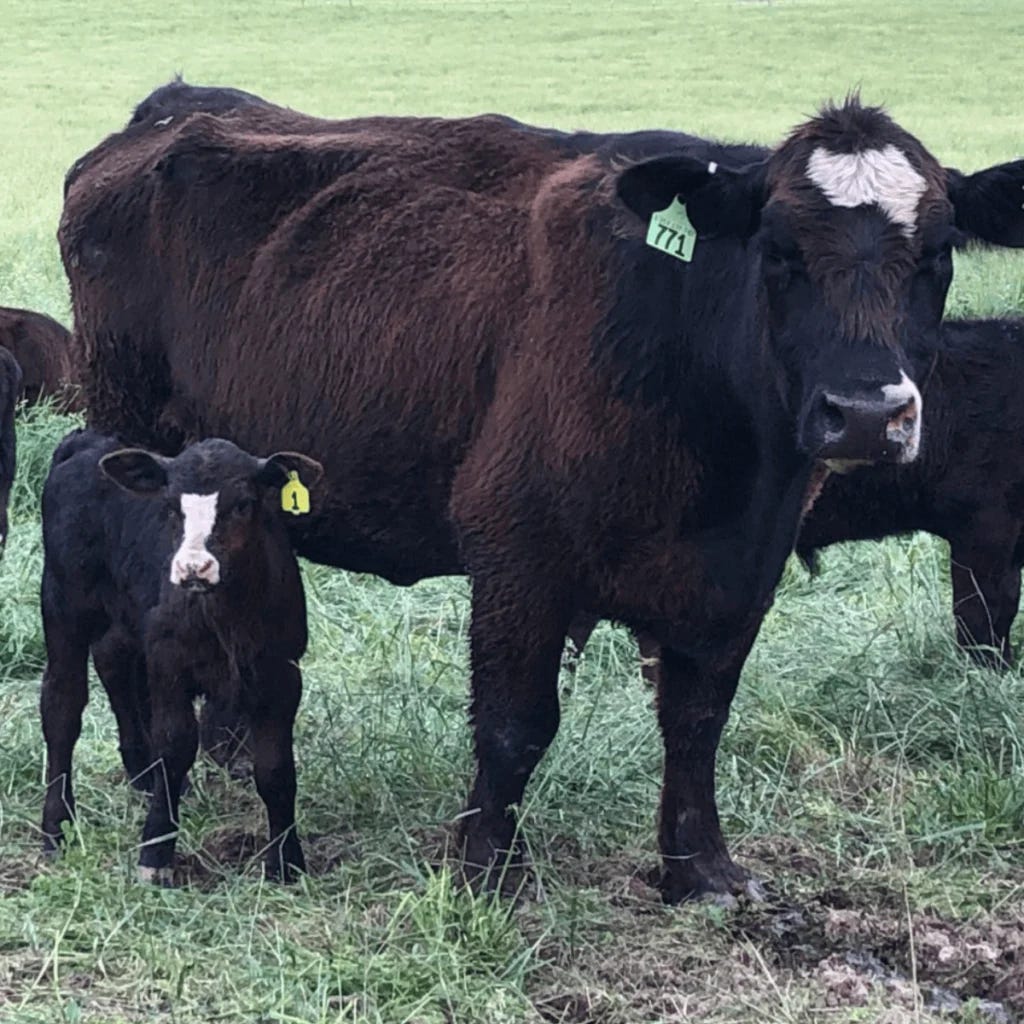
On September 3, President Trump announced that up to 300,000 metric tons of foreign beef trimmings would be imported with no out-of-quota tariffs for 90 days. The move was designed to ease grocery prices. Instead, it fueled a fierce backlash from ranchers and farmers, who have suffered years of drought and low commodity prices. The last thing they want is their president helping the competition.
So, President Trump took another tack. On September 4, he issued two Executive Orders (EOs) – one directing the USDA to expand interstate meat sales (aimed at helping the little guy rancher/farmer ship meat across state lines, something the nation’s four biggest meat producers do); and a second directing the U.S. Department of the Interior to start delisting gray and Mexican wolves (known for their predation), while also directing the USDA to review mandatory country-of-origin labeling for beef.
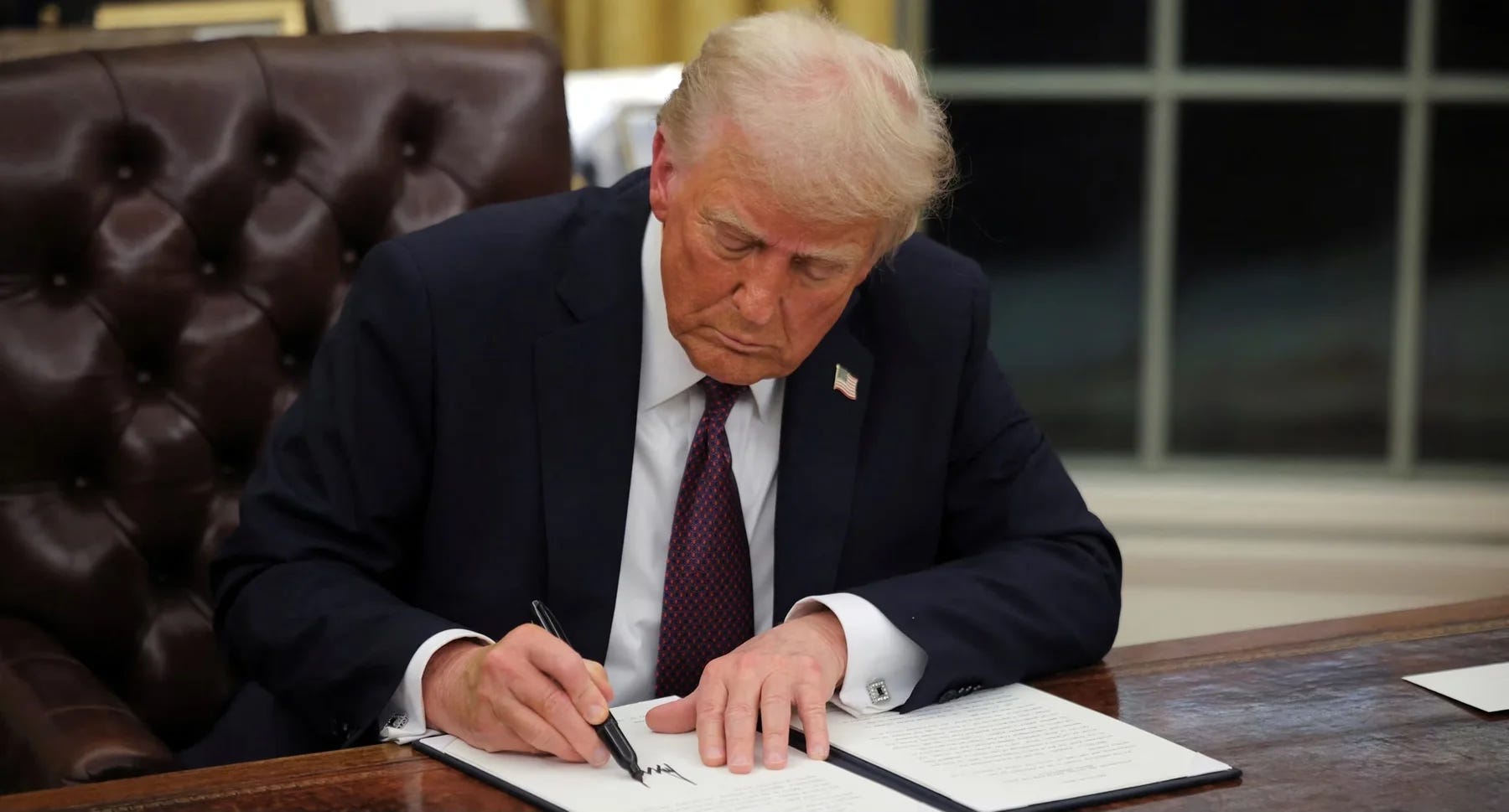
More specifically, “Promoting Fair Competition in Livestock Markets and Expanding Market Access for American Meat Producers” seeks to counter unfair trade practices and monopolization in the meat processing industry, expand small-scale processing facilities with USDA support, reduce burdensome regulations, and lower processing costs for producers and consumers alike.
And “Supporting America’s Ranchers” addresses rancher concerns over wolf predation, directs the USDA to assess whether the U.S. can legally impose country-of-origin labeling, and closes with an all-agency directive to “benefit American consumers in the form of lower prices to the maximum extent possible.” Country-of-origin labeling is a hot topic for ranchers and diners alike.
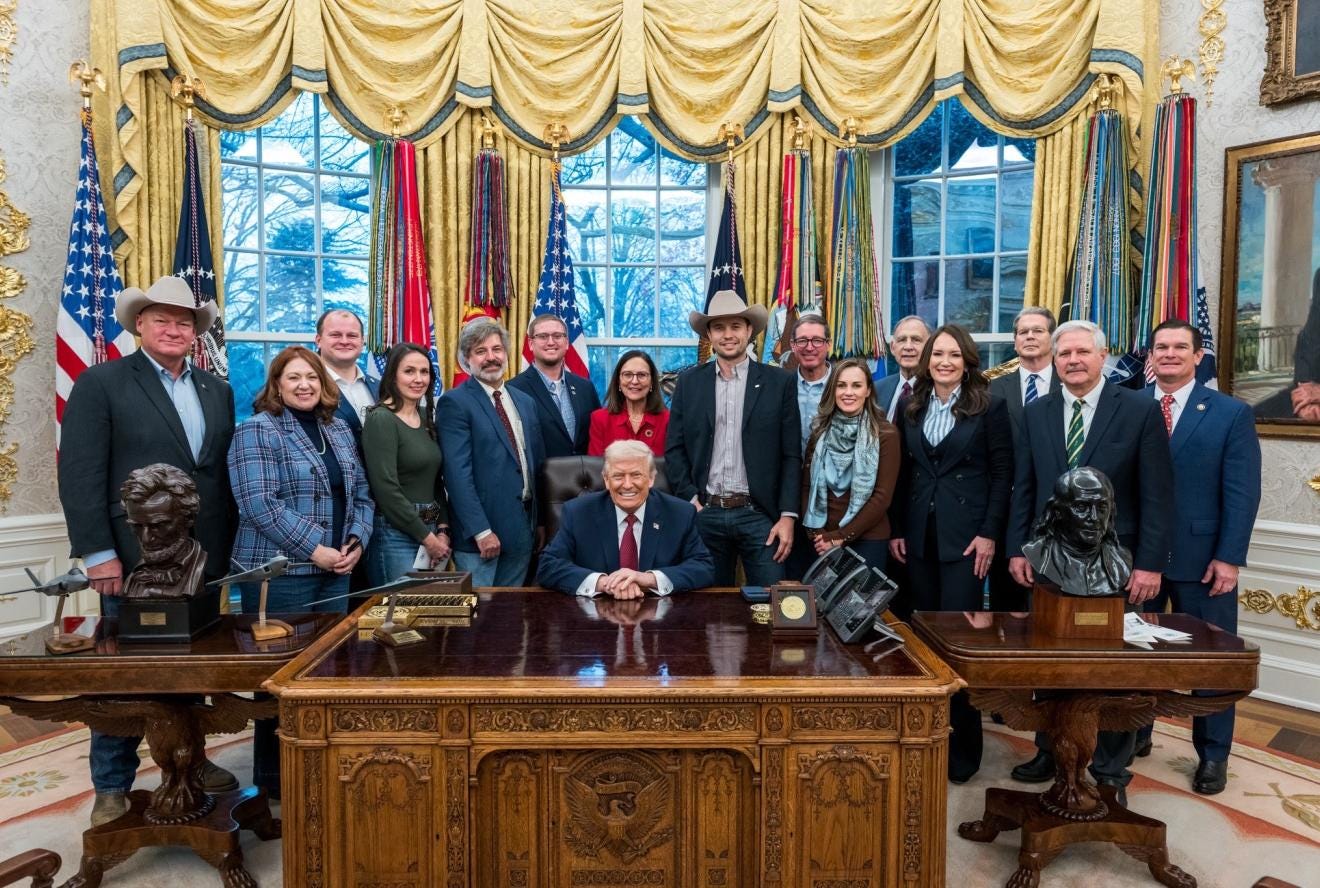
Concurrent with these September 4 executive orders, the USDA announced four new initiatives to support producers through its existing Ranchers First Initiative.
The agency is expanding the use of its Conservation Reserve Program to enroll nearly 1 million new acres of grasslands; doubling the number of producers and plants in its remote grading program, which employs modern technology to more efficiently grade beef carcasses remotely; increasing adoption of instrument-enhanced grading technology; and becoming more aggressive in defending agricultural producers from abusive litigation.
Still, President Trump is stuck in a conundrum not of his making, and the entire nation is stuck with him.
Years of severe drought, industry consolidation, and low profitability have shrunk the U.S. beef herd to its lowest numbers in 75 years. The RFK Jr.-fueled MAHA revolution has increased consumer demand for domestic beef, especially organic, grass-fed cuts and burger, beef tallow, and all foods wholesome and local. An unprecedented decrease in livestock supply has now collided with a spike in supermarket demand, which has spiked.
The nation’s food pyramid now recommends meats and fewer carbohydrates. Cheeseburgers are no longer condemned as dangerous but are now embraced as healthy. As a result, a pound of hamburger that cost $5.19 in March 2019 has increased 62%, to an average of $8.41 per pound in July 2026.
This is a perfect economic storm for hamburger prices, amplified by the upcoming midterms, during which affordability features prominently in voters’ minds.
The MAHA movement is truly bipartisan. Most of those No Kings protesters (if not vegan) are likely frequent visitors to local farmers’ markets, or pay top dollar for local grass-fed tenderloin. Yet much like the egg price crisis of early 2025, President Trump will be faulted for high beef prices despite his best efforts, including those two recent EOs. Meanwhile, the ranchers he has alienated by trying to appease consumers may also stay home in November and not vote.
This is the Scylla and Charybdis the president must navigate for the midterms, but the nation will still face for years: how to rebuild the nation’s beef herd while accommodating greater MAHA demand for healthy hamburgers? If prices rise too high, struggling livestock owners benefit, but consumers may riot in the streets; if grocery store hamburger prices plummet, more U.S. ranchers will go bankrupt or quit, and the nation will depend ever more on foreign producers.
High beef prices also pressure ranchers and farmers to liquidate breeding stock, which is counter to expanding the nation’s herd. This is a national security issue as well as an economic and health one.
To his credit, President Trump has recognized the growing crisis and committed resources to finding solutions. In his February 6 proclamation, “Ensuring Affordable Beef for the American Consumer,” he increased in-quota beef imports of lean trimmings from Argentina by 80,000 metric tons for the year. (Lean trimmings are added to U.S. domestic beef fat to make hamburgers.)
Unsurprisingly, prices have continued to climb, prompting the president’s controversial August 26 proclamation, “Further Ensuring Affordable Beef for the American Consumer,” which increased the permissible duty-exempt lean trimmings another 300,000 metric tons for 90 days, without limiting countries of origin. This infuriated many ranchers who felt betrayed by the administration.
The new 90-day window opened on September 3. President Trump subsequently referenced Brazil as a likely source of the lean trimmings. Both of these announcements spurred more criticism.
These efforts to deliver on campaign promises to lower grocery prices were followed by two executive orders designed to deliver on campaign promises to support America’s ranchers and farmers.
The problem of inflated beef prices facing Americans and the Trump administration will not be resolved overnight. Unlike chicken eggs or pork chops, U.S. agriculture cannot ramp up beef cow production overnight. Chickens lay eggs almost daily; pigs farrow (give birth) twice yearly, often with litters of a dozen or more piglets. But a cow generally has only one calf each year, which in turn requires 18 months (two years for grass-fed) to mature for market.
Market prices for hamburger meat will likely remain unchanged in the near term as many ranchers say the cost savings from expanded imports of lean trimmings will not trickle down to the consumer.
What is required in the long term is a profound reassessment of the U.S. food production system.
Speaking on the MAHA Media Hub on September 9, regenerative farmer Mollie Engelhart said that President Trump cannot unilaterally make the changes necessary to truly transform the U.S. beef industry and rebuild the national herd. Engelhart credits the president for focusing the nation on this vital cause, but explained that much more must be done.
“Ultimately, it needs to be a congressional movement,” she said. “It can’t be an executive order because an executive order can just get flipped by somebody else.”
Idaho cattle rancher Glenn Elzinga is skeptical that importing 300,000 metric tons of lean trimmings will have much impact on a market in which Americans eat some 76 million pounds of beef daily. However, he watched prices for feeder cattle (young animals raised for sale at maturity) slide about 10% on the import news, noting that most ranchers operate on single-digit profit margins.

“When the price drops 10%, things can go red in a hurry. Ranchers are NOT happy,” he told The MAHA Report in an email.
Elzinga believes the U.S. beef herd will be rebuilt slowly, but that hamburger prices will be high for some time.
“In the short term, it just gets uglier,” he said. “Heifer retention practices will probably fix the supply side of the economy no earlier than five years from now. But I could easily see it taking quite a bit longer than that.”
The beef market faces unique challenges that will likely keep burger prices high for some time. Yet many of the tensions the beef debate has presented extend to agriculture more widely and raise the question of how to produce healthier food for all Americans while ensuring the nation’s ranchers and farmers earn a fair income.
The MAHA movement has created greater demand for healthier foods. Over the long term, this will reduce healthcare costs and combat chronic disease. It will also create new marketing opportunities for America’s ranchers and farmers, both domestically and abroad.
MAHA consumers and the nation’s livestock producers must become strong allies. They need each other, and are growing more aware of that vital MAHA connection. Americans must come together to support both, just as President Trump is trying to do.

This post is nothing but propaganda. Instead of investing $1billion + into low-quality meat ‘trimming’ from south America we should be investing that $1billion into American ranchers into expanding their grass fed cow operations . It’s a no brainer.
And oh great, they are ‘looking into’ whether they can do country of origin. Just do it already! The American people deserve to know where their food comes from. This is insanity. And this post is just MAHA trying to put lipstick on a pig. The pig being our current food supply problem.
Trump policies made an existing supply problem worse and complicated the process of rebuilding the herd. Thumb-twiddling for a year while screw worm progressed north. Trump’s tariff policies complicated beef trade and increased uncertainty for cattle producers - who were already having trouble rebuilding herds.