


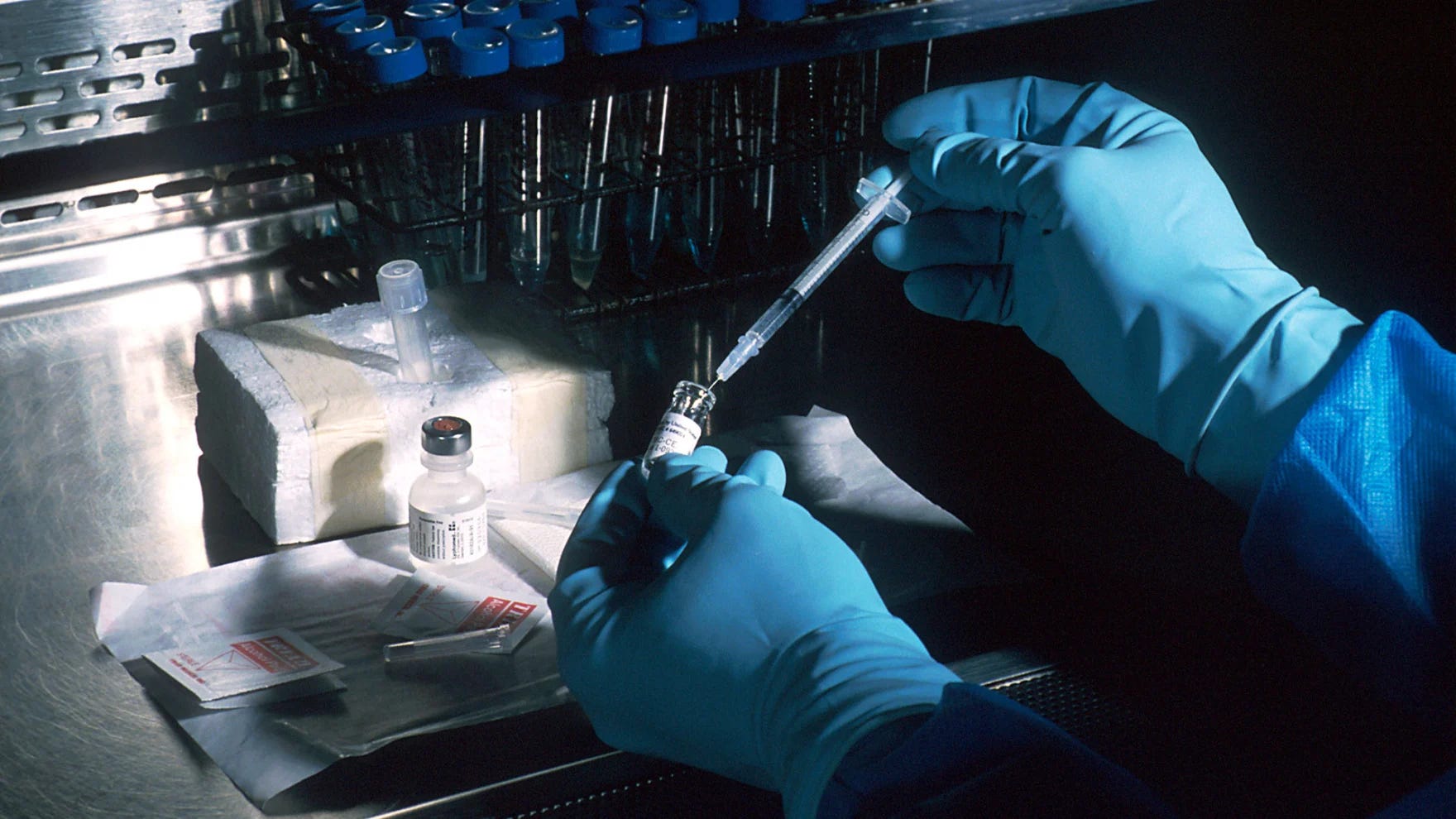
The same test used to diagnose Covid-19 is now being used to diagnose measles cases in the United States, and some experts say the test and false positives are ginning up a measles hysteria to scare the American public and punish HHS Secretary Robert F. Kennedy Jr. for questioning vaccines.
“This is a scientific bushwhacking going on,” says Dr. Dan Stock. “It’s the biggest bullshit story I’ve ever seen.”

Dr. Stock is a functional medicine doctor in the Indianapolis area, and was previously an elected member of the physicians board of one of the largest hospital chains in the state. He’s also a fellow with the Independent Medical Alliance, formerly called the Frontline Covid-19 Critical Care Alliance.
The PCR test, he says, is “so unscientific that it cannot be said to have anything to do with the scientific method.”
It gives very high false positive rates, he says, and is being used to produce a false narrative of a resurgence of measles.
“PCR Positive. RFK stupid. That’s the rigor that they’re using right now,” Dr. Stock told The MAHA Report during a phone interview.
He says previously, in order to reach a diagnosis of measles, a doctor had to do a serology test – a blood test that looks for antibodies to determine whether a patient’s immune system responded to a past infection or vaccination. To say for sure that the patient had measles, he had to have symptoms of the disease, including a fever and the characteristic rash, and other diseases had to be ruled out with further testing.
James Lyons-Weiler, a biologist who has lectured on PCR tests, says the PCR test used for measles is much different than the one used for Covid. One, he says it’s quantitative, not qualitative – meaning that it produces a numerical result, showing how much of the virus is in the system rather than just a positive or negative; and two, he says the measles PCR test uses a negative control, which acts as a sort of placebo control group.
Lyons-Weiler points out that it’s actually an RT-PCT test, with RT representing “reverse transcription.”
Still, he said, this PCR measles test should not be the deciding factor in diagnosing a case of measles, or a death from measles, because it cannot differentiate between bits of the live virus from the MMR vaccine and the actual wild virus.
“You should never diagnose someone with just the PCR test,” he told The MAHA Report.
But it appears this may be what is happening.

In Pennsylvania, where the state health department has reported eight measles-associated deaths so far this year (as of November 19), county coroners do swabs in the case of a suspected measles death and send them to the state health department’s lab for RT-PCR testing and also an antibody test. But it’s not clear whether both of these tests are always done. The Pennsylvania Department of Health could not be reached by phone and the department’s media office did not respond to an email, sent on Wednesday, with questions about what tests are used.
Dr. Stock says it’s clear from a recent report of a measles-associated death of a newborn baby in Lancaster County, Pennsylvania, that the PCR test that Pennsylvania is using is delivering false positives.
The baby died during or right after birth, and the cause of death, according to the coroner, was a ruptured spleen. The PCR test, the coroner said, showed the presence of measles, but there was no indication the baby had measles. The Pennsylvania Department of Health reported that the infant’s death was a measles-associated death. But how could a baby that was just born have measles? It couldn’t.
“That automatically tells you that the test is giving you false positives,” said Stock.
It’s more likely, he said, that the test came back positive because the baby’s mother had recently fought off a measles infection.
What you have to do, he says, is validate the tests.

Dr. Ryan Cole, the medical director of the Independent Medical Alliance, agrees with Stock, and also somewhat with Lyons-Weiler.
Measles was never eradicated in the United States, he says, so some percentage of the population is always going to test positive for measles, even if they’re not infected.
What we have, he says, is a “test-demic” where a lot of testing turns up more positive results, which allows government officials to claim there’s a measles epidemic, or at least outbreaks of the disease.
Also, he says, older people have had their immune systems weakened by the Covid vaccines, so may now be more susceptible to measles. This may be one reason, he speculated, that states like Pennsylvania and New York are refusing to release any information on people it claims died of measles – even basic information like age and gender.
“If they’re hiding these factors, they’re hiding something,” he says.
PCR during the Covid pandemic
The PCR test was famously misused during the Covid pandemic to generate false positives, with doctors describing how once the federal government mandated that insurers cover the full costs of the tests, patients were often tested repeatedly until a positive result was achieved.
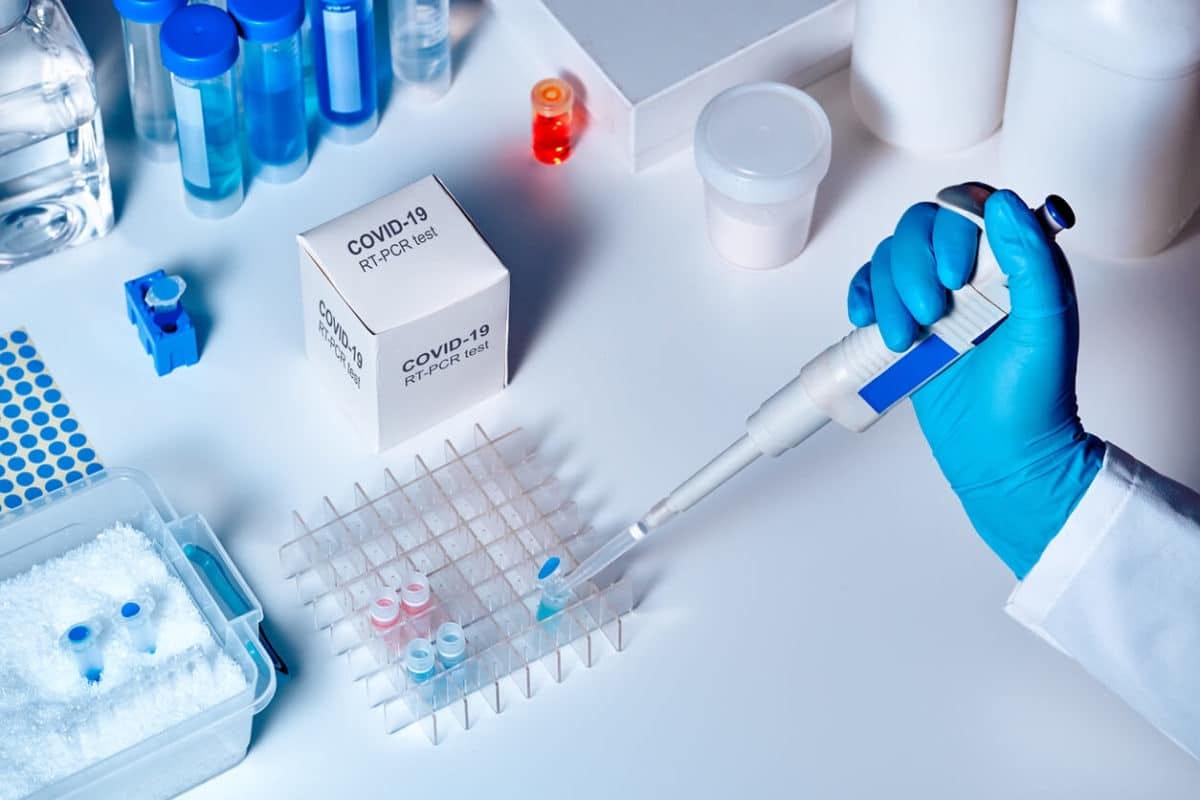
The PCR test was invented by the maverick American biochemist Kary Mullis, who died of complications from pneumonia in August of 2019 at the age of 74, just before SARS-CoV-2 first began circulating in China.
PCR tests use a technique called a polymerase chain reaction – a highly original concept that involves amplifying molecules until they can be detected by the device. The new technique was considered so significant that Mullis was awarded the Nobel Prize in Chemistry in 1993 for it, along with Michael Smith, a British-Canadian biochemist.
But Mullis warned about the test’s limitations, or the potential for its reckless misuse, in clips of an old interview that circulated online during Covid.
With the PCR test, he said, “if you do it well, you can find almost anything in anybody; it starts making you believe in the Buddhist notion that everything is contained in anything else, cause if you can amplify one single molecule up to something you can really measure – which PCR can do – then there’s just very few molecules that you don’t have at least one single one of in your body.”
The former Pfizer scientist Michael Yeadon was highly critical of PCR testing in the early days of the Covid pandemic, saying that PCR is a “powerful technique” but is “not a good technique for diagnosing viral infections.”

But one issue with the way PCR tests were used to diagnose Covid had to do with something called the “cycle count” – which Del Bigtree described as how many times you turn the knob on the microscope to zoom in on a molecule. With every turn, the miniscule biological material appears larger. With every cycle count, the material is magnified.
During an interview with Del Bigtree on The Highwire, Yeadon said he noticed that in the UK, the British government in 2020 was refusing to disclose how many cycles they were using on the PCR tests, and weren’t using any “internal standard.” Yeadon said he noticed that in the UK, the British government in 2020 was refusing to disclose how many cycles they were using on the PCR tests, and weren’t using any “internal standard.”
At a cycle count of 45, Bigtree explained, “anything looks like a problem.”
What does the CDC say?
In an email communication with The MAHA Report, a public affairs specialist with the CDC says that states use the criteria for diagnosing measles in its measles case definition.
These criteria include a rash and a fever along with “detection of measles-virus specific nucleic acid from a clinical specimen using polymerase chain reaction [PCR]” or an antibody test or a direct connection to a confirmed case.
But the CDC employee also said the following:
“According to CDC, clinicians should use both PCR for suspected measles cases and serology testing, whenever possible to further confirm or classify suspected cases.”
In the responses to emailed questions, she specified “on background only” – meaning that the agency is requesting that no name be associated with the quote or any answers to the questions posed.
When asked whether the CDC is aware whether all states are in fact performing both of these tests before announcing a case of measles or a “measles-associated” death, she did not respond directly, saying only that states are using the measles case definition criteria “to classify and count cases consistently across all reporting jurisdictions.”
