


“Parkinson’s is a man-made disease that didn’t exist years ago, and we need to really look at that.” — Dr. Stephanie Haridopolos, Office of the U.S. Surgeon General
On June 29, a new federal advisory committee will hold a first public meeting in Washington. Its work could reshape how the administration combats one of the swiftest-growing health threats in the United States: Parkinson’s Disease (PD).
Worldwide, PD is the fastest-growing neurological disease and in America roughly 1.3 million people live with it, while doctors diagnose some 90,000 new cases each yeear. Moreover, the condition is difficult to diagnose; true numbers may be higher.
In July 2024, the Biden administration created The Advisory Council on Parkinson’s Research, Care, and Services and a National Plan to End Parkinson’s Act, which President Biden signed into law. It is the first federal law dedicated to preventing, diagnosing, treating, and curing the disease.
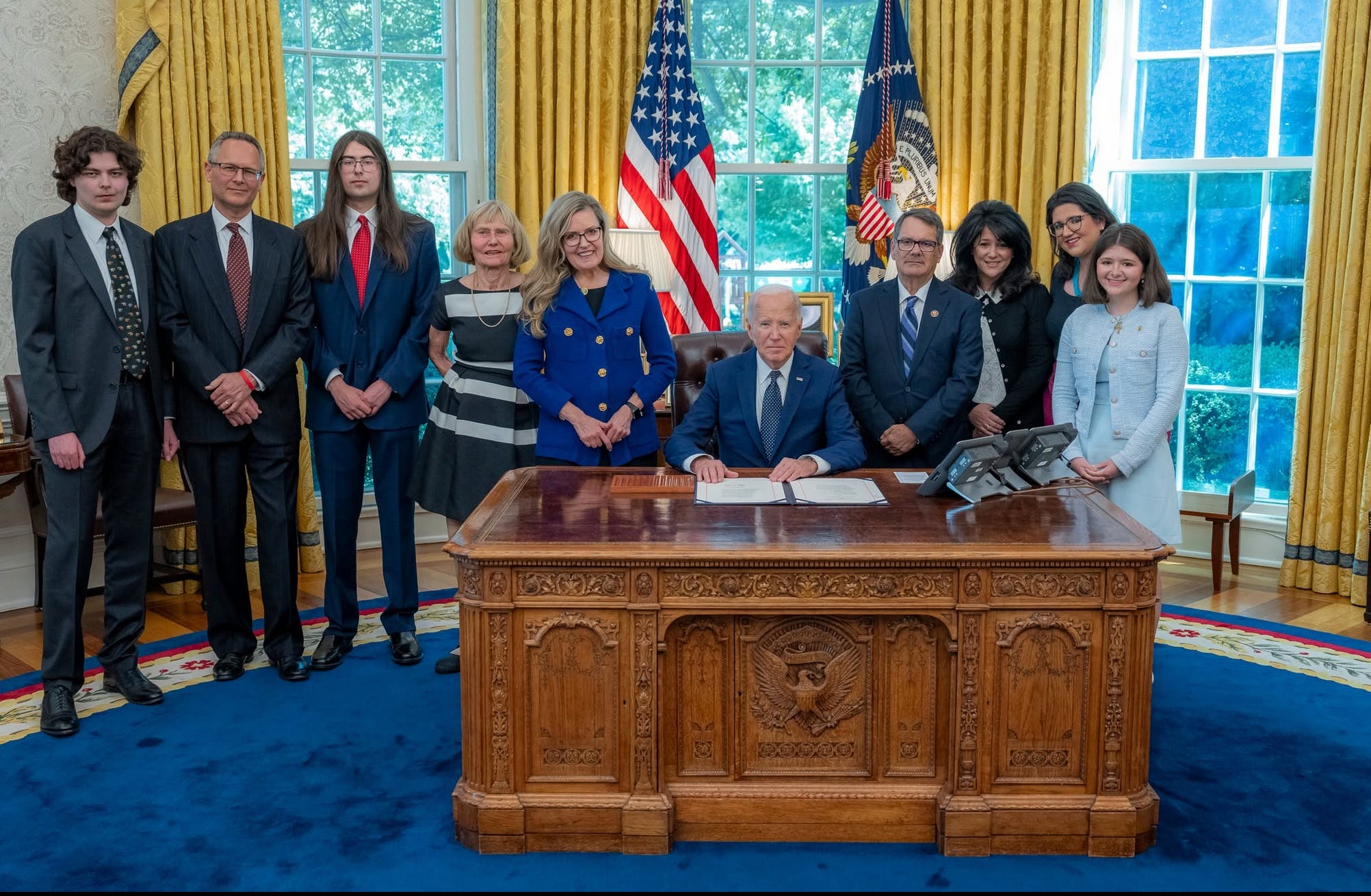
The act is named for Dr. Emmanuel Bilirakis, a physician who lived with Parkinson’s for years, and former Congresswoman Jennifer Wexton, who championed the bill after her own diagnosis with a related disorder.
Under the Trump administration, the U.S. Department of Health and Human Services (HHS) appointed new experts to the council in April, including Dr. Stephanie Haridopolos, who also currently serves as director of National Health Communications for the Office of the Surgeon General and acting Surgeon General.
The new council’s approach to Parkinson’s will be different from that of its Biden-era predecessor.
On June 10, Haridopolos joined The MAHA ‘Media Hub,” MAHA Action’s weekly podcast hosted by Tony Lyons. Noting that only about 13% of today’s Parkinson’s cases are genetic, Haridopolos said her focus will be on prevention and environmental exposure, to better understand what’s driving the PD spike.
“That means overwhelmingly 87% are due to multifactorial, mostly environmental toxins,” Haridopolos said during the podcast.
Beginning on June 29, she’ll join other members of the advisory committee including representatives from the FDA, CDC and EPA, and private citizens such as patients, doctors, researchers, and representatives of advocacy organizations.
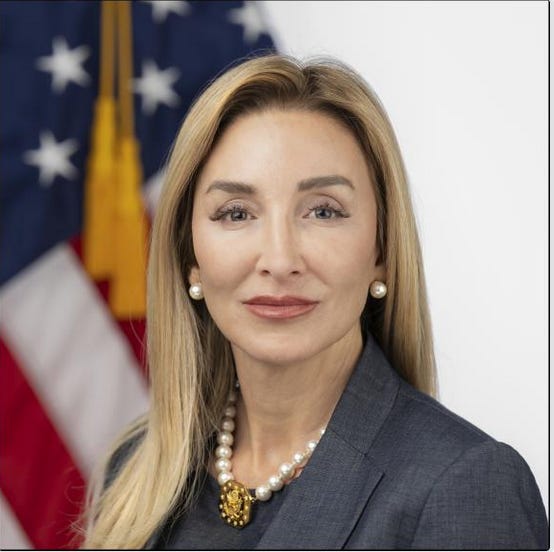
Haridopolos points to questions the country has been slow to ask. Why is Parkinson’s appearing in more people at younger ages? And why do American veterans seem to face a higher incidence than the general public? The answers may lie in the toxic chemical exposures of 21st Century American life and military service. As has been well documented, pesticides, industrial solvents and other chemicals damage the brain over time.
The Chemicals Under Scrutiny
The National Institutes of Health (NIH) lists pesticide exposure as a major risk factor for Parkinson’s, and a growing body of research has tied specific chemicals to the destruction of dopamine-producing neurons in the brain. These chemicals are created to kill weeds, insects, and pests by attacking their nervous systems. Even at chronic low doses, there is cumulative damage to the human brain as well.
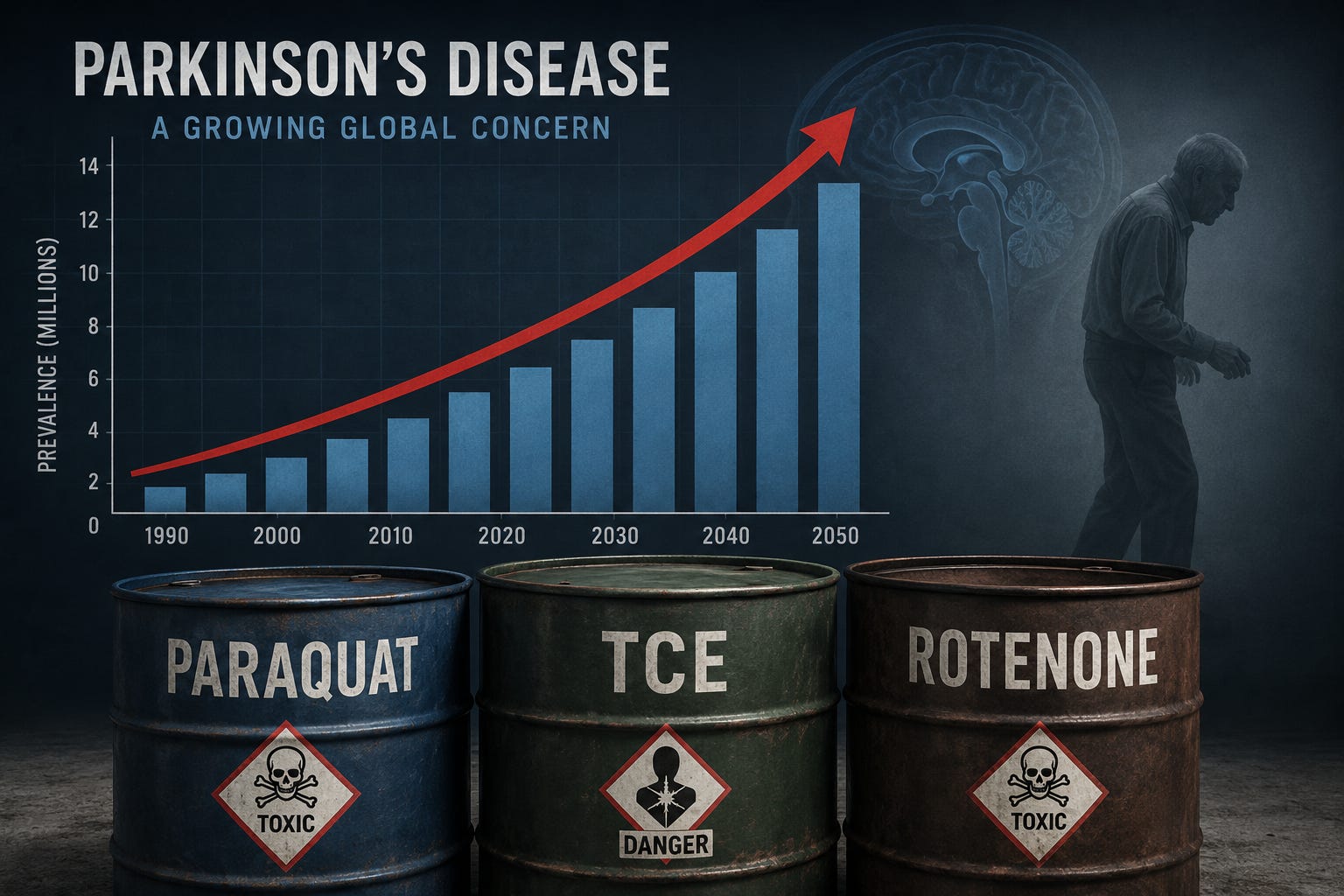
Paraquat sits at the center of the concern for researchers studying Parkinson’s. This fast-acting weed killer is sprayed on grains, almonds, strawberries, grapes, apples, and many common crops, with 11 to 17 million pounds used across American farmland each year. More than 70 other countries, including China and the entire European Union, have banned it.
Of any substance studied, Paraquat has one of the strongest links to Parkinson’s. This potent chemical triggers the oxidative stress and mitochondrial damage that destroy dopamine-producing neurons, the cells lost in PD. One study found that heavy exposure raises Parkinson’s risk by 150 percent. Case in point: In rural farming regions in Nebraska, Parkinson’s rates run two to four times higher than in the city of Omaha.
There are other problematic chemicals including Trichloroethylene, or TCE, an industrial solvent once used to degrease metal in factories, clean machinery on military bases, and dry-clean clothes. For decades it was dumped with little oversight, seeping into the soil and down into the drinking water of homes, schools, and whole towns. It is now linked to a sharply higher risk of Parkinson’s, often decades after exposure.
Rotenone, another pesticide, directly kills dopamine neurons in laboratory studies. And glyphosate, the most widely used weed killer in the world, is now detectable in most Americans’ bodies and has been tied to the same oxidative stress that drives neurodegeneration.
In May, Vermont became the first state in the nation to ban paraquat, when Governor Phil Scott signed the bipartisan legislation into law. The ban takes effect November 1.
At least a dozen other states, including New York, Pennsylvania, Utah, and Washington, have introduced similar measures. In April, the House approved an agriculture bill with an amendment allowing people to sue pesticide manufacturers whose products cause harm.
A Different Way of Looking at Cause
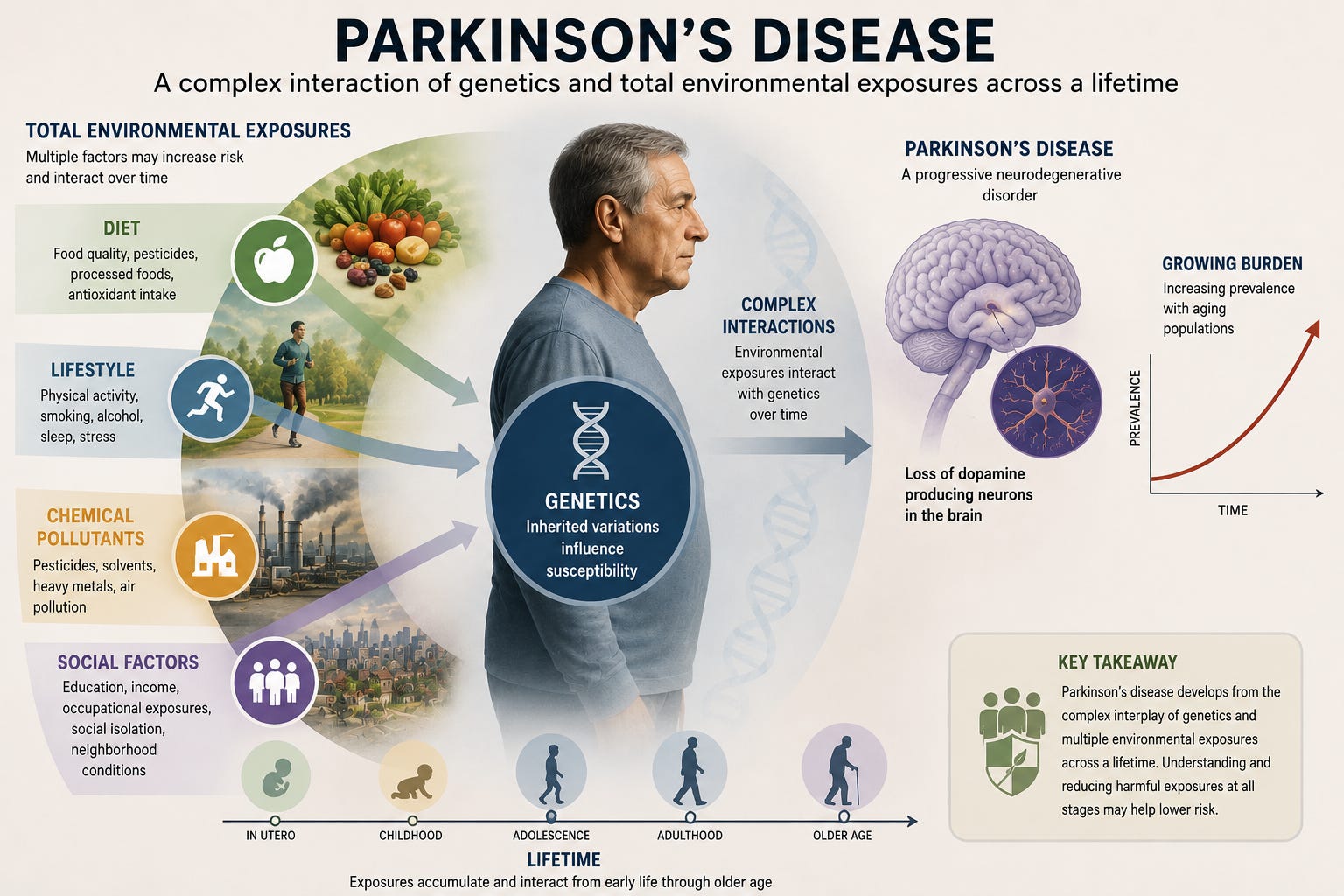
Haridopolos describes her approach through a field called exposomics, the study of how a person’s total environmental exposures, including diet, lifestyle, chemical pollutants and social factors, interact with their genetics across a lifetime. The list of suspected triggers is long, from pesticides and dry-cleaning chemicals to living near Superfund sites, head trauma, and air pollution.
She also introduced a word to define the debate ahead: agnotology, the deliberate production of ignorant information, often for commercial gain. Industries have practiced it for decades, she said, to obscure the harms of their products.
“There is nature and there is nurture,” Haridopolos said, “but the benefit of the doubt should go to the people and not to the chemical.” Such an approach would require chemicals to be proven safe before they enter the environment, rather than forcing scientists, regulators, and policymakers to prove harm only after a product is on the market and inside millions of bodies.
The Shift Toward Prevention
MAHA has long argued that chemicals should be proven safe before they reach the market, not after the damage is already done. Our nation’s chronic disease crisis cannot be fixed with doctors and pharmaceuticals. It must be confronted upstream, in the food, water, soil, and air that shape the nation’s health long before symptoms appear.
A federal council that treats Parkinson’s as a preventable disease, rather than an unlucky roll of the genetic dice, marks a meaningful shift. The council’s real test is whether it names the chemicals at the root of the Parkinson’s epidemic, and whether it takes strong action to remove them from our food, water, and soil.
Millions of Americans are waiting to find out.
Related Stories:
Breaking: Vermont Becomes First State to Ban Paraquat
The Radical Message Behind the Book The Parkinson’s Plan: “We Have a Chance to Get Rid of This Disease”
Why Every American Must Resist the Chemical Liability Shield
