


By Jeff Louderback, Contributor, The MAHA Report
Standing on the same Vermont farmland that his mother’s family tended for multiple generations, John Klar admires the grazing cattle and reflects on a childhood spent here in the Green Mountains.
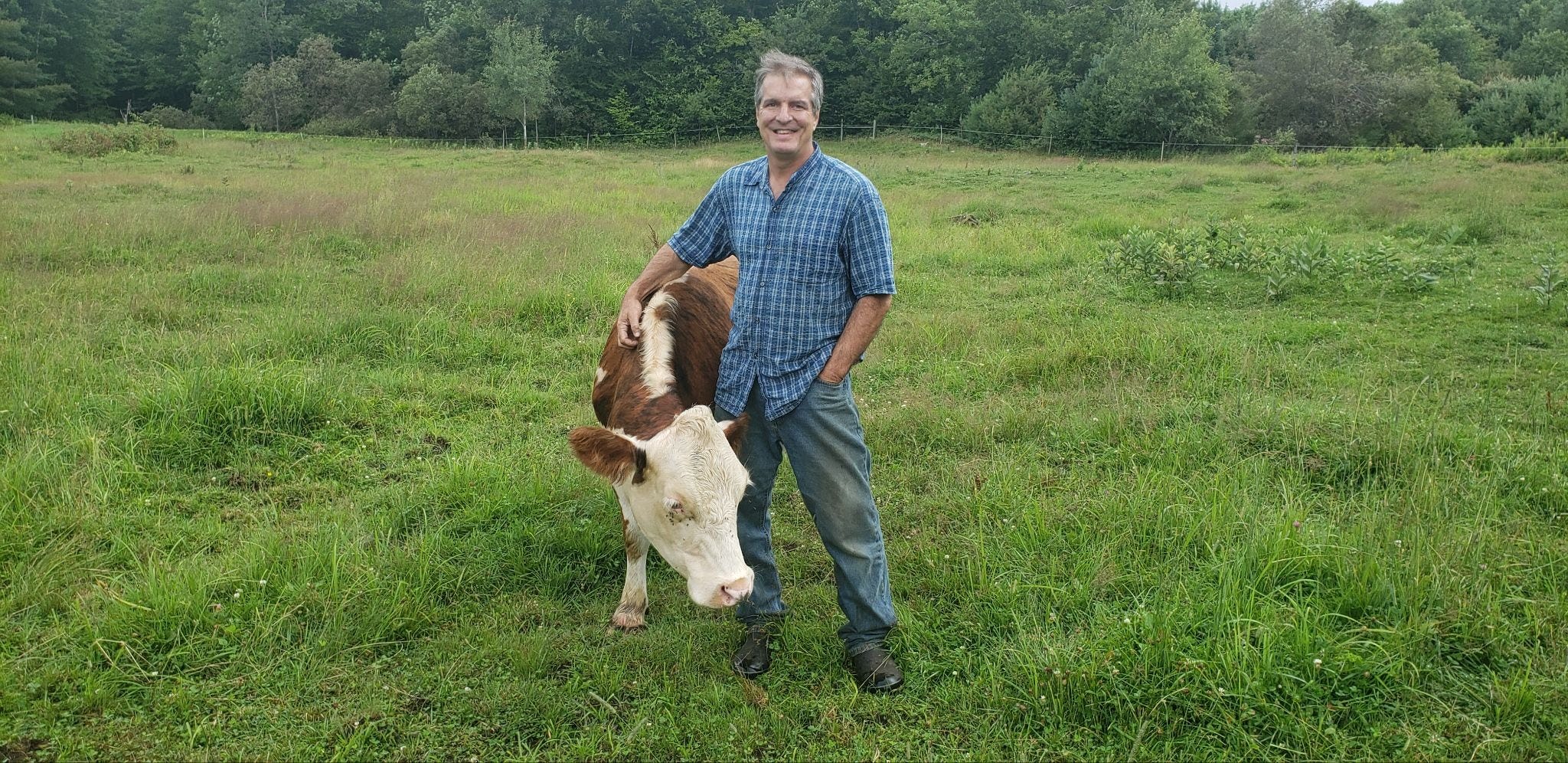
“There were no stores to visit or video games to play—the forests, fields, and farms were our playground. We milked our cows. We knew where our food came from because we raised it. We knew what we were eating was healthy. There was no reliance on items on grocery store shelves, and imports from other states and other countries. For our health and our security, this way of life must return,” Klar said.
Today, Klar raises grass-fed organic beef using regenerative farming practices. This includes rotational grazing, reduced tillable acreage, less reliance on conventional livestock feed methods, manure in place of synthetic fertilizers, and reduced soil erosion and water waste.
He is also a writer (including for The MAHA Report), a MAHA activist, and a pastor with a wry sense of humor who at times talks about food insecurity, legal subjects, the history of the Green Mountains, and scriptures from the Bible in the same conversation.
“I’ve been called a lot of things, but I’ve never been told I’m one-dimensional,” Klar said with a grin.
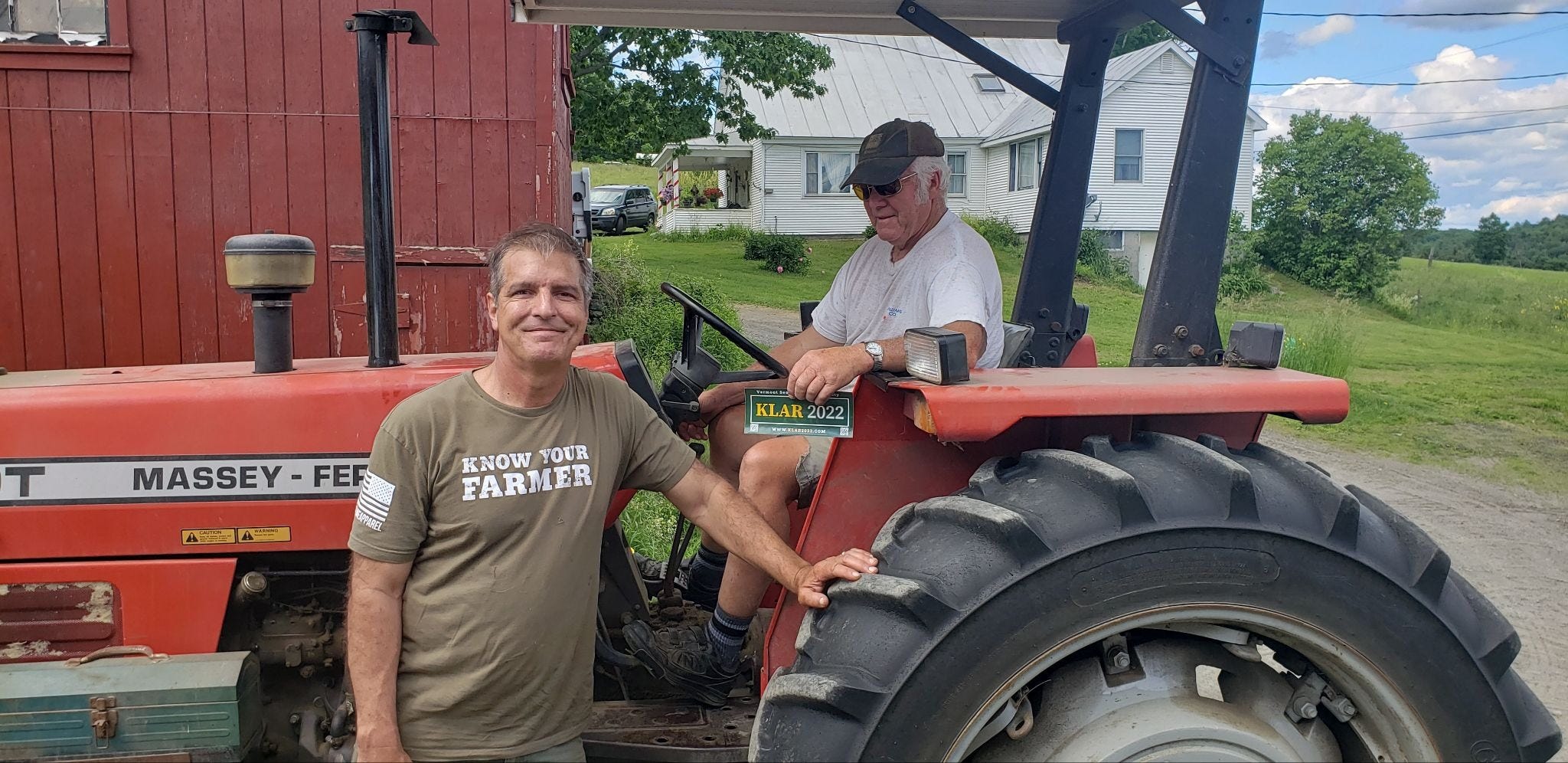
In 2020, Klar ran for governor as a Republican. The political newcomer penned an outline to revive agriculture in the state he titled “The 2020 Vermont Farming Manifesto: An Economic Rescue.”
He eventually left the gubernatorial race and focused on his evolving advocacy.
“I guess they weren’t ready for me at the state house,” Klar jokingly said.
He’s the author of books, including Small Farm Republic: Why Conservatives Must Embrace Local Agriculture, Reject Climate Alarmism, and Lead an Environmental Revival.
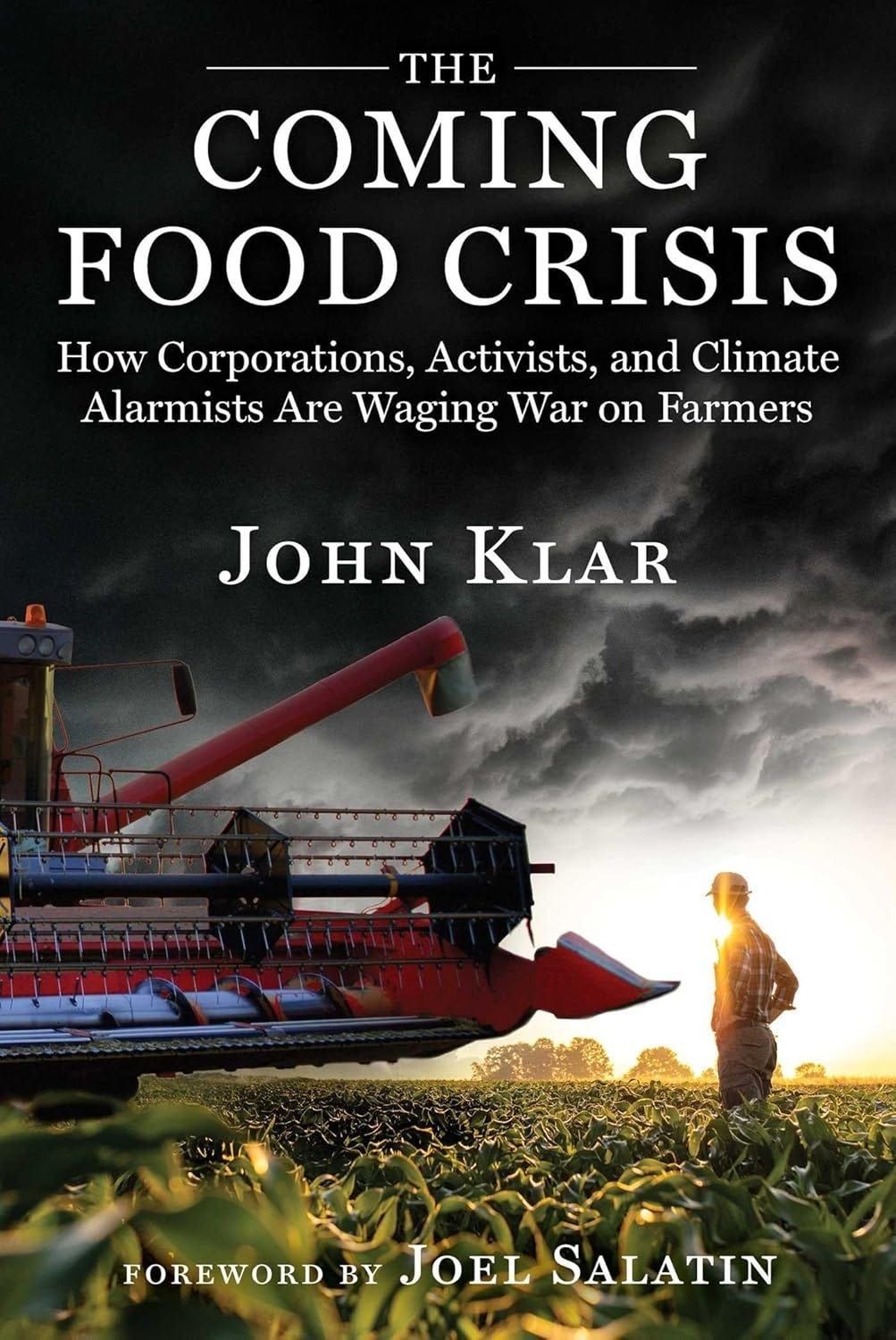
In his newest title, The Coming Food Crisis: How Corporations, Activists, and Climate Alarmists Are Waging War on Farmers, Klar details how America’s food production and distribution system has become consolidated and dominated in ways that threaten our health, economy, national security, and fundamental liberties. Klar describes how Americans can take action and be prepared.
As America prepares to celebrate its 250th birthday, a troubling “first” has emerged. The U.S. remains the world’s largest food-producing country, but for the first time in its history, our nation imports more food than it exports.
This fact is related to other statistics that impact America’s food supply.
The number of American family farms keeps declining as they shutter or are absorbed by large producers. Large swaths of farmland have been erased by suburban sprawl and solar panel fields. Fewer Americans grow backyard gardens than previous generations. The U.S. cattle herd is the smallest it’s been in more than 75 years. The average age of a farmer in the U.S. is 58, and younger generations are reluctant to take over family farms because of costs, profit margins, and regulations.
“Now is the time to reform U.S. agricultural and food policy,” Klar said. “The new food pyramid requires healthier, locally produced foods, not ever more imported junk. The nation’s cattle herd must be replenished even as consumers demand ever more steaks and burgers.”
He added, “Fewer chemicals in agriculture, reduced corporate capture of regulatory agencies, improved testing of food additives, and regulatory and fiscal support for rural and regenerative agriculture are vitally essential policies that must be adopted by both political parties as soon as possible.”
Long before Klar raised grass-fed cattle and became an outspoken MAHA proponent, he was a tax attorney who left Vermont’s countryside to practice law.
As a boy, he was surrounded by family members who operated dairy farms, yet he had no plans to enter the profession until he developed disabling pain in 1998. He later learned that his fibromyalgia symptoms were triggered by chronic Lyme disease.
Muscle flares from the fibromyalgia were crippling. The long hours of maintaining a law practice exacerbated his condition.
Seeking a change in lifestyle, Klar made a decision with his wife, Jacqui. They bought a former dairy farm in Barton, Vermont, and built an artisanal raw milk and cheese facility.
“It might seem strange that a man who was suffering from debilitating pain would leave a sedentary job for a strenuous one, but I felt that I needed to be active to better deal with the pain,” Klar said.
The Klars welcomed self-sufficiency.
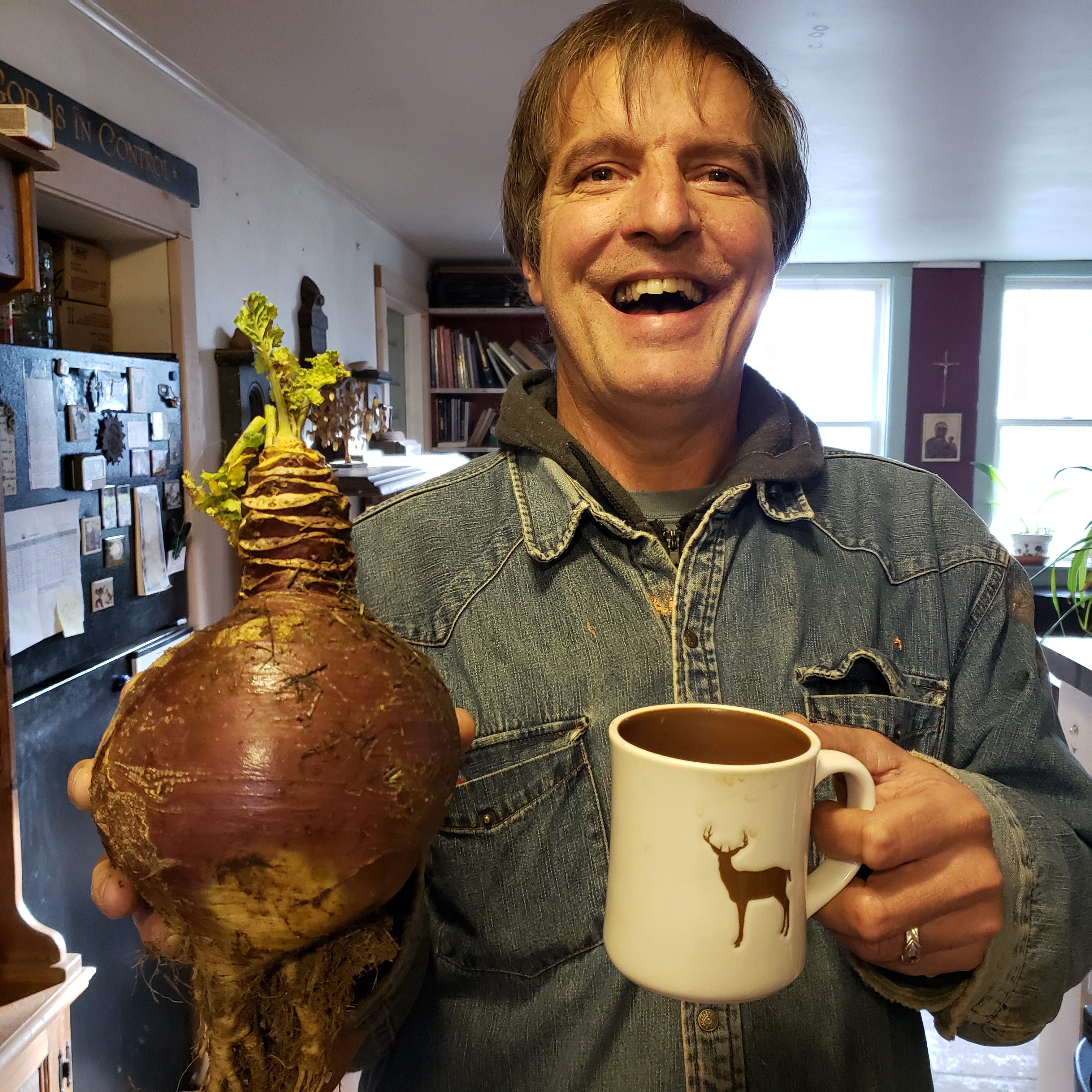
“Jacqui and I would play a game of seeing how many weeks we could go without visiting the grocery store, a tradition we learned was practiced by many Vermont farmers for generations,” Klar said.
In 2016, the couple settled on their current property in Brookfield, where Klar is surrounded by farmland that his mother’s family worked for generations.
Klar’s foray into advocacy stemmed from the plight of being an independent farmer.
He was advertising halves of beef on Craigslist when, one day, a car pulled into his driveway. Out stepped a Vermont Agency of Agriculture, Food, and Markets meat inspector.
Klar was selling meat illegally, he was told. “I could only sell whole animals and not halves, he explained. He said I could sell by live weight and not by hanging weight,” Klar said.
The encounter left Klar furious and motivated.
He recognized that many farmers could not afford to hire a lawyer to fight, and most lawyers wouldn’t understand farming like a farmer himself.
Klar called a news conference on the farm and declared that he would keep selling halves of beef. He challenged authorities to arrest him so he could show in court that the laws were unconstitutional.
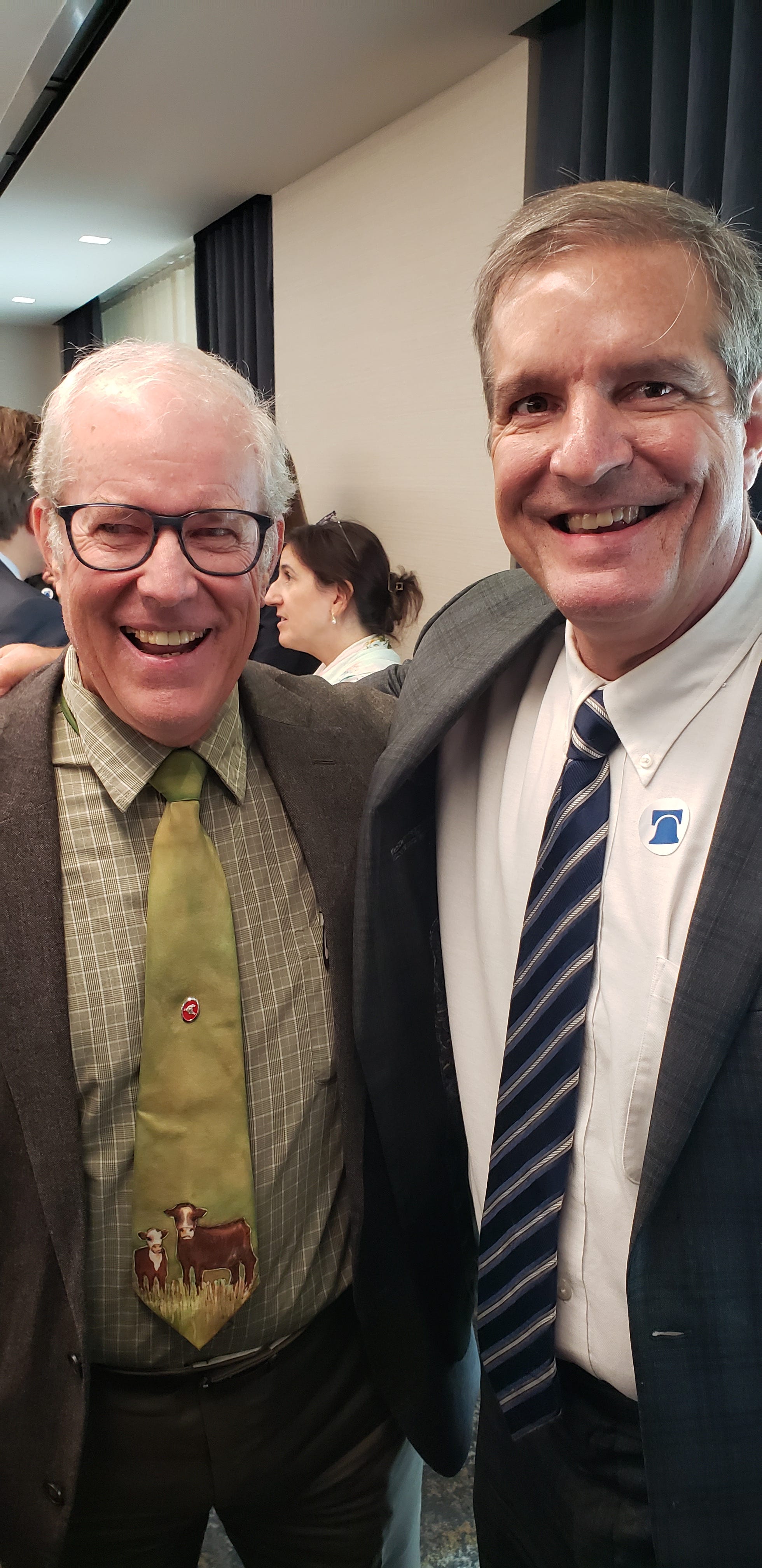
Undeterred, Klar gathered a group of farmers, slaughterhouse operators, and custom processors to attend a Vermont state Senate agriculture committee hearing and testify against proposed legislation on farm slaughter restrictions.
They prevailed and secured a repeal that meant farmers were able to sell halves and quarters legally.
That was the beginning of his fight for small farmers, he said. It also provided a clearer purpose in his own farming.
“Now, I sell my own animals so that I can fight for other people to keep theirs and to make it more economically viable for them,” Klar said.
“It’s not just the right to have an animal, but it’s also to work on removing regulations and subsidies that favor the big guys and put the small farms out of operation,” he added.
A key part of Klar’s focus within the MAHA movement is to encourage the sourcing of local foods, build the volume of local farmers, and support healthier foods in hospitals and public schools.
Klar noted that his involvement with MAHA Action has “ignited an even stronger fire” to dive deeper into advocacy.
“More Americans are waking up to what’s happening. They’re reading labels, becoming more aware, and demanding change.”
“It’s my purpose to do all I can to help small farms, grow our rural economy, and encourage a local farm-to-consumer mindset,” he said.
President Donald Trump signed an executive order that propelled the domestic production of elemental phosphorus and glyphosate-based herbicides on Feb. 18. Many MAHA proponents said that backlash from the move will increase awareness among farmers and consumers about the dangers of chemicals in agriculture and encourage more growth in regenerative farming.
Through its subsidiary Monsanto, Bayer is the only U.S. producer of glyphosate, which is the key ingredient in Roundup. It is the most widely used herbicide in history, according to the Global Glyphosate Study.
The chemical is used to kill weeds and dry crops before harvest.
Glyphosate-tolerant crops compose a significant majority of the corn, soy, and cotton acreage on American farms.
According to the nonprofit Center for Food Safety, which advocates for organic and sustainable food, 280 million pounds of glyphosate are sprayed on 285 million acres of U.S. farmland every year.
MAHA Action President, Tony Lyons, said that the organization is encouraging the Trump administration to perform an independent, transparent EPA review of glyphosate’s health profile; accelerate the shift to next-generation technologies and non-chemical herbicides to protect crops; provide tax incentives for next-generation equipment (including robotic weeding), matching grants for farmers who reduce reliance on glyphosate; authorize expedited processes for MAHA-approved alternatives; and expand the regenerative agriculture transition already underway.
On Dec. 10, Kennedy announced a $700 million pilot program that will give farmers who are dependent on chemical and fertilizer inputs a financial off-ramp to help them transition to a model that emphasizes soil health.
The program aligns with the Make America Healthy Again Commission’s focus on addressing the nation’s chronic disease epidemic by strengthening the nutrient density in food and decreasing reliance on chemicals, Kennedy said.
That is one example of the initiatives MAHA Action embraces.
More people are becoming educated about glyphosate, which is a silver lining to Trump’s order, says Klar.
“The more that people learn about it, the more they seek to avoid it and scrutinize their food labels. The more they avoid it, the more they purchase trustworthy organic alternatives, thereby increasing demand for those safer offerings.”
During COVID, supply chain disruptions provided a wake-up call for many Americans who recognized that there is no guarantee that food will always be readily available on grocery store shelves. Klar points out that the current Middle East conflict has the potential to create an even more significant crisis with fuel prices escalating.
Inflation impacts energy-layered food production inputs, Klar said.
“Tractors need diesel as they till, plant, spray, and harvest; pesticides, seeds, equipment, and fertilizers are manufactured and delivered using fuel; crops and processed food products are shipped through vast distribution networks of shipping containers and tractor-trailer trucks. Food supplies are thus particularly vulnerable to compounded inflationary impacts,” he explained.
“Our energy-dependent food supply is highly vulnerable to a global spike in oil prices. The Iran conflict is a wake-up call to Americans to stop taking their farmers and food supplies for granted. The threat is not merely rampant food inflation. One day, a national crisis may prevent millions of Americans from obtaining any food at all,” he added.
Another in-depth media interview complete, Klar makes sure that on this particular day the crisis doesn’t impact the journalist who has just routed his farm, providing a copy of his Small Farm Republic book and a bottle of fresh and local maple syrup.
“You can’t leave here without a taste of Vermont, and some words that will hopefully have an impact.”

"For our health and our security, this way of life must return,” Klar said." Reclaiming ourselves as natural humans who eat real food and live with sovereignty in our local communities is very needed as technocracy approaches.
Lots of good information here that makes sense. Basically the problem is that organic farming of crops potentially produces maybe half the yield of today's heavy chemical production. Is there enough world acreage today to feed 7.5 billion people?