


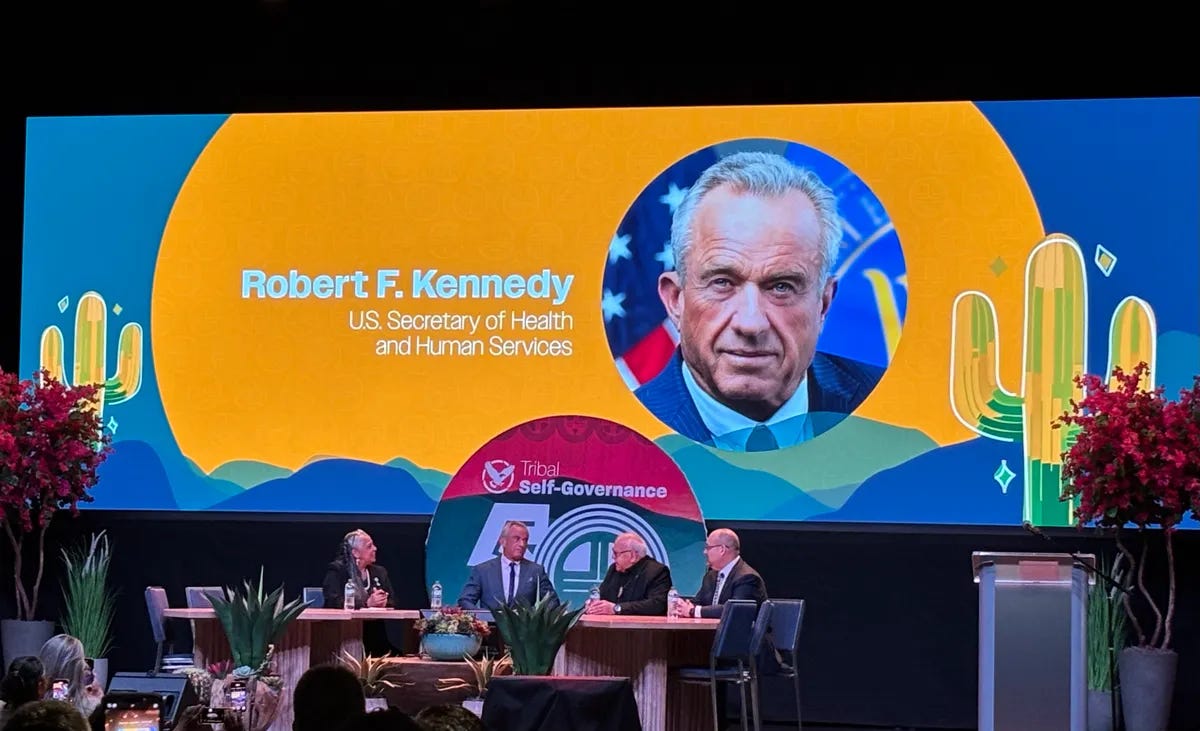
For the second time since being sworn in as Secretary of Health and Human Services, Robert F. Kennedy Jr. appeared at the annual Tribal Self-Governance Conference. Following his 15-minute keynote address to a packed conference hall of 1,400 attendees on April 8 in Chandler, AZ, at the Gila River Indian Community’s Wild Horse Pass Resort and Casino, the secretary sat down for a fireside chat onstage.
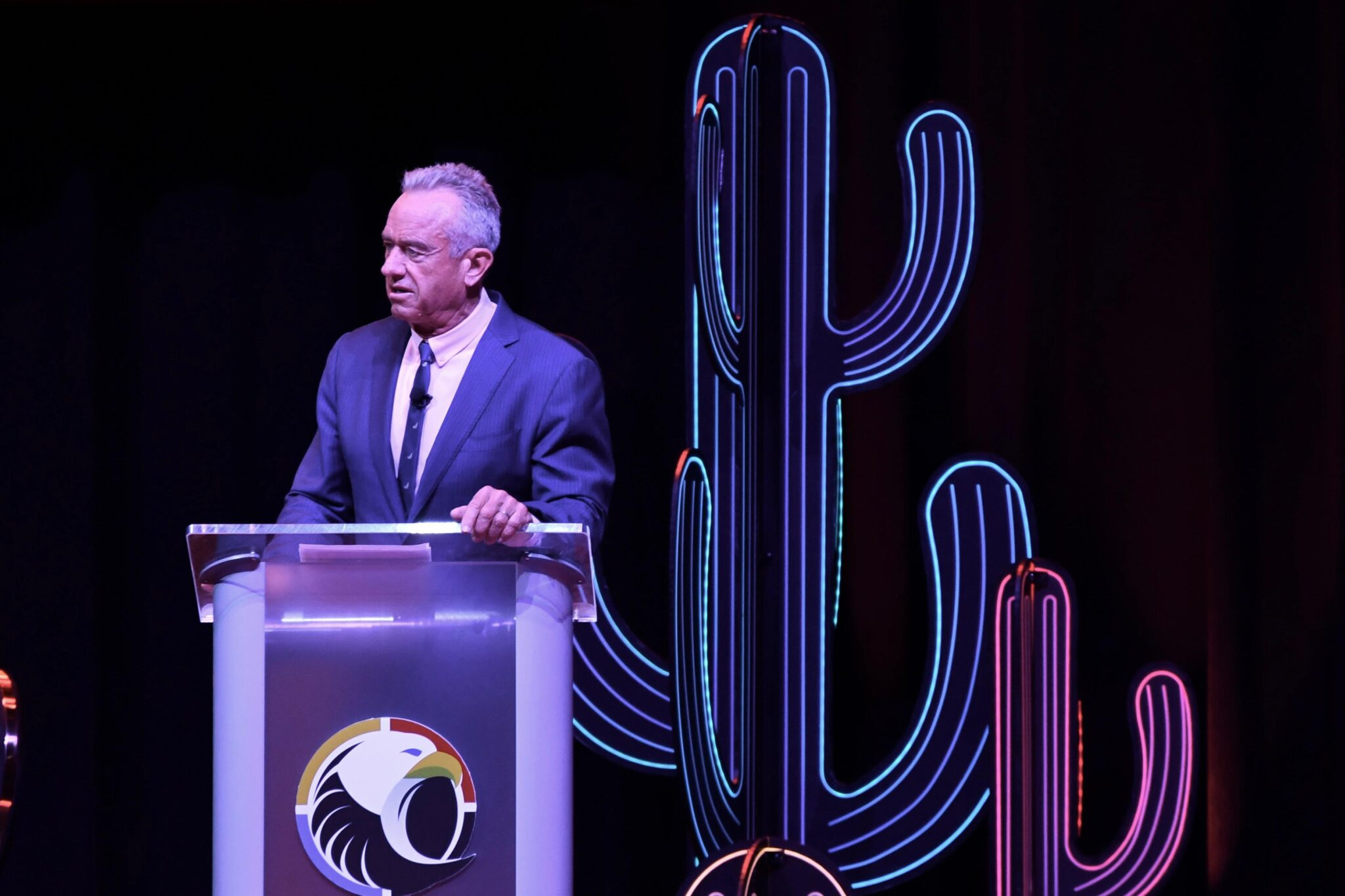
Joining Kennedy to talk about the health of Indian Country was Chairman W. Ron Allen of the Jamestown S’Klallam Tribe, Chairwoman Cheryl Andres-Maltais of the Wampanoag Tribe of Gay Head (Aquinnah), and Lieutenant Governor of the Chickasaw Nation, Chris Anoatubby.
“Most of the tribes in this country are living in food deserts,” Kennedy said. “One of the tribes hosting this event, the Pima Tribe, were 100 years ago among the longest-lived people in the world. There was no obesity and no diabetes. And today they have the second highest diabetes rate in the world – almost 50% diabetes rate. Their longevity has dropped to 47 or 50 years old, from the 80 or 90 that it was 100 years ago.”
Kennedy’s visit to the conference is part of the southwest leg of his “Take Back Your Health” tour, focusing on personal empowerment and agency over one’s own health, starting with what we eat. Nowhere does that message ring more true than among Native Americans whose loss of land and traditional foods have impacted their health and longevity for generations.
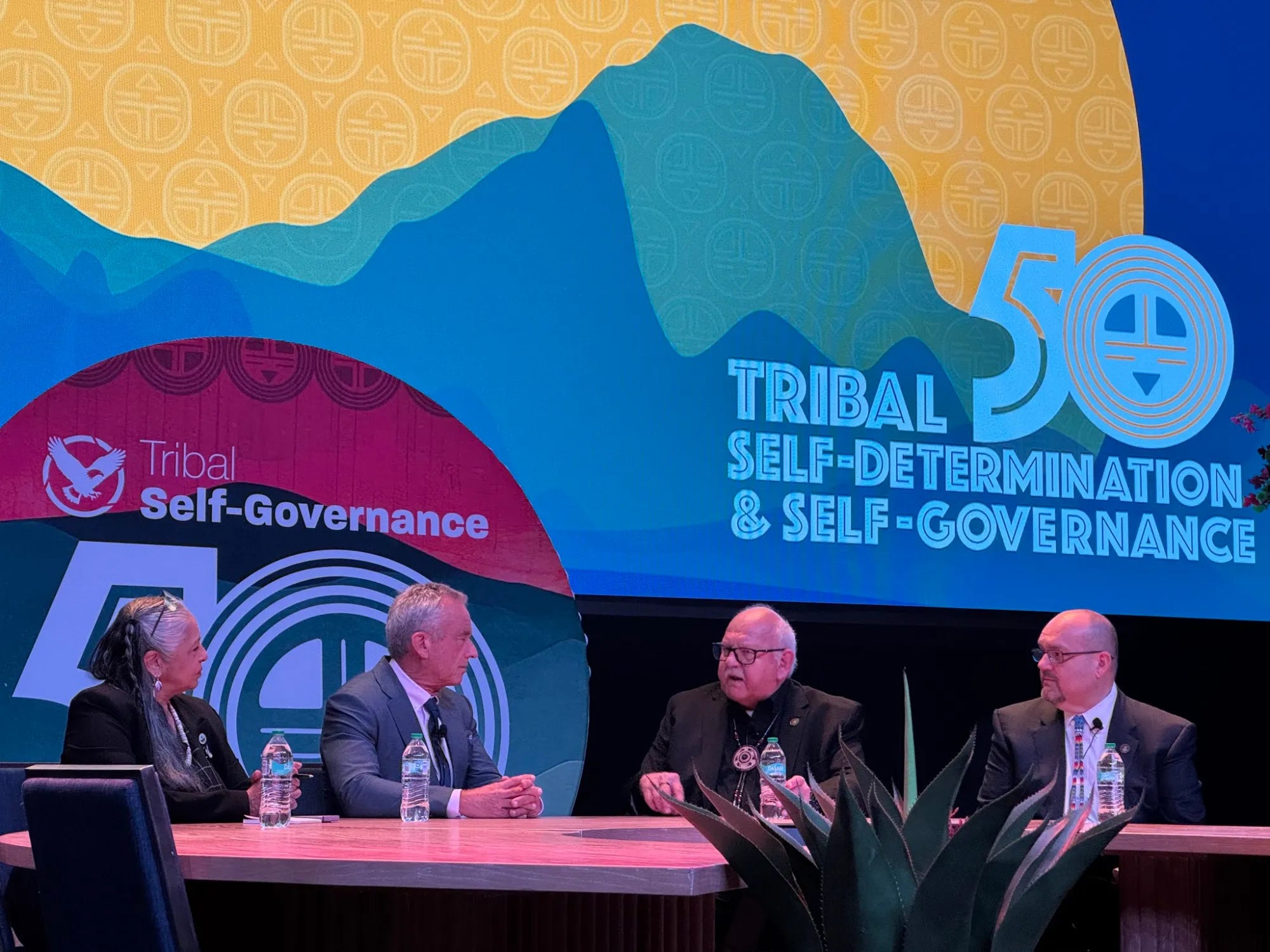
One participant in the fireside chat, Chairman Allen, echoed the secretary’s philosophy about the role of healthy food in healthcare. “He [Kennedy] recognizes restoration and the importance of Indigenous foods,” Allen said in an interview with The MAHA Report. “And we’ve got that—his initiative about eating right.”
For Natives like Allen who have been on the frontlines of providing care on every level for their people for decades, it’s a perpetually challenging journey to navigate the federal system and achieve lasting physical and economic outcomes that empower their peoples. And he and others in attendance had hoped for more time with the secretary to address specifics.
Allen said, “He reiterated his commitment to tribes and elevating our healthcare capacity through IHS (Indian Health Services) to provide better coverage, and he has made numerous visits to Indian Country. It is clear that he believes HHS and all of its agencies need to do their part to help elevate the quality of care.”
The president’s 2027 HHS budget proposal also includes a $1.1 billion increase for IHS, which means it is an area set for a potential budget expansion.
One of the biggest hurdles for Native healthcare is and always has been funding. Allen said, “Secretary Kennedy touched on infrastructure and mentioned the $1 billion from HHS set aside for infrastructure,” which is an important area where HHS has excelled under Kennedy’s leadership, Allen acknowledged. “That billion dollars is an important approach. But we are also finding success through the 105L initiatives that give the tribes the right to negotiate agreements to cover the costs of infrastructure, brick and mortar projects. We can borrow based on building, and then recover the costs.”
Allen believes that what he terms “a bigger solution” can be found through the 105L process, which is authorized under the 1975 Indian Self-Determination and Education Assistance Act. “There are still problems, but during Kennedy’s tenure that [105L] has been moving forward constructively.”
Native sovereignty is recognition of the inherent rights of Natives to run their own affairs, and Secretary Kennedy is a consistent supporter of Native rights with a long history (since childhood) of standing with Indigenous peoples. The problems that need to be solved, as Chairman Allen sees it, are in how to move forward and build on what Kennedy brings to the realities of Native healthcare.
“They’re still a bit slow in restoring the vacant positions in the IHS system, but that is more of an agency process issue,” Allen said, careful to distinguish between policy and procedure. “He [Kennedy] wants it to happen. And it has been very constructive working with Mark Cruz as well.” Cruz, who is a citizen of the Klamath Tribes, was sworn in last June as Senior Advisor to Secretary Kennedy, fulfilling a promise Kennedy made to the tribes to ensure Natives have a voice at the highest levels of HHS.
Earlier this year, HHS launched the largest hiring effort for IHS in the history of the agency’s existence, aimed at strengthening the Indian Health System network services stretching across 37 states. IHS includes over 1,100 clinics, hospitals and health centers that serve Natives in urban and rural areas.
However, as Chairman Allen points out, most of these facilities are rural. “If rural America, meaning Indian country, is not healthy, the country is not healthy. We are where the rubber meets the road on healthcare.”
“Tribal nations know how to care for their people — and we are expanding their authority to drive better outcomes,” Secretary Kennedy said following the event. “At HHS, we are investing in infrastructure, incorporating traditional foods into federal nutrition policy, and delivering results in Indian Country while upholding tribal sovereignty.”
During the fireside chat, as Secretary Kennedy spoke about the imperiled health of Pima Indians, he said, “Interestingly, the Pimas across the border in Mexico are still among the longest-lived people in the hemisphere. Because they are not getting the processed food. So processed food is poison for all of us, but it seems to disproportionately impact Indian Country.”
Chairman Allen said, “He’s a very smart man, and has his own vision and philosophy. In regard to his ‘eat right’ initiative, that will be how you heal many challenges. It’s about what your intake is and the consequences. Eating right is a big part of the solution. But you still have to deal with people who have mental and physical health struggles, and behavioral challenges. This might be trauma from war, or trauma from violence against women, or a broken leg . . . we need to treat trauma. They (HHS) are doing better,” he said, in direct reference to MAHA.
“What we have is a capacity issue,” the chairman continued. “We know Secretary Kennedy is part of the answer. But we are also part of the solution, we’re not the problem. When you hear media coverage of fraud and abuse in Medicaid and Medicare, that’s not the norm in Indian Country. We dot our i’s and cross our t’s and walk with integrity.”

Ty RFKJR! Keep
Up the great work!!
This is so important when I had patience in the reservation. This was in another state. The Mother's came to me complaining that their children were all addicted to drugs because the reservation police were in on it as well. And they just wanted, the government are US government to help get rid of the drug dealers in their own reservation. Sometimes when you're given a stipend , there's no initiative to work , and there was nothing for their young men to do. With all the alcohol and drug use , we also know that native women have the highest rate of rape and murder. Anyway , just sharing what the mothers begged me to share.