


It has been nearly five years since The Real Anthony Fauci: Big Gates, Big Pharma, and the Global War on Democracy and Public Health was published but it feels as relevant now as when it first reached readers in November 2021.
Despite the fact that the legacy media barely covered it, the book quietly sold over one million copies and sat on The New York Times’ bestseller list for 20 weeks.
What drew readers around the world to the book is precisely what repelled legacy media from it – the book dared to ask questions of the institutions and institutional figures, mainly Dr. Anthony Fauci (a physician and former Chief Medical Advisor to the President of the U.S.), that the corporate media refused to ask.
For decades, Dr. Fauci was the unflappable face of expertise—calm, avuncular, seemingly above politics. Kennedy, who prior to his position as HHS Secretary was an attorney and environmental activist, reframes Fauci not as a humble civil servant but as the central architect of a half-century of regulatory capture, scientific suppression, and profit-driven policy.
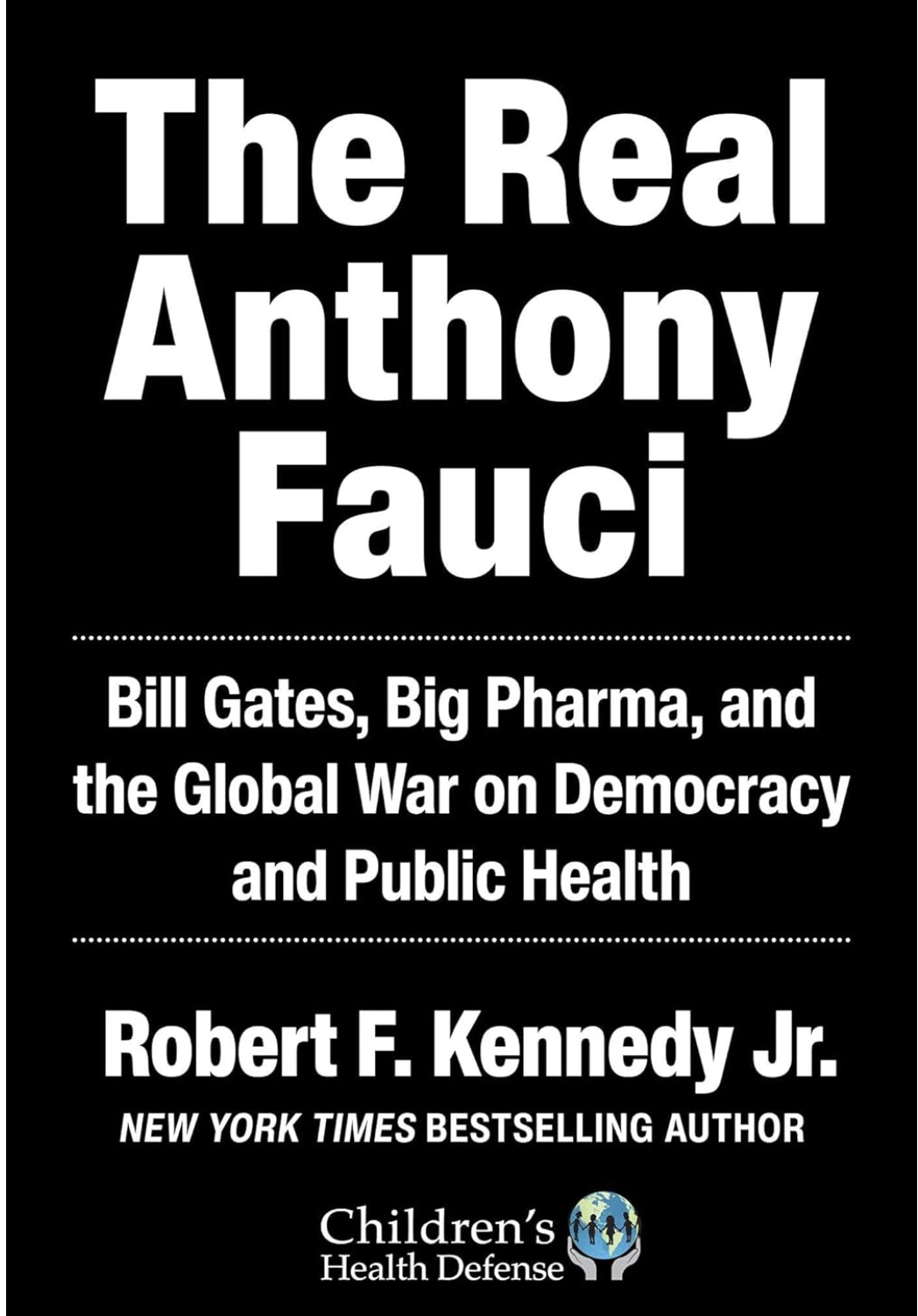
Part legal brief, part historical autopsy, and part cri de coeur for evidence-based medicine and open debate, the book demands to be read.
What emerges is a portrait of a technocrat who, in Kennedy’s telling, consistently placed pharmaceutical profits and institutional power above public health—long before Covid-thrust Fauci into every American living room.
The book opens with the pandemic that defined our era. Kennedy meticulously catalogs the early decisions: the dismissal of repurposed drugs like hydroxychloroquine and ivermectin, the promotion of remdesivir, the relentless focus on novel vaccines, and the sweeping lockdowns whose collateral damage—economic ruin, educational setbacks, mental health crises, and excess deaths from deferred care—would prove, in his view, more devastating than the virus itself for many populations.
In The Real Anthony Fauci, Kennedy contrasts the U.S. death rate with nations that pursued different strategies, marshaling data that will discomfort anyone who accepted the dominant narrative without question.
Yet the pandemic is merely one slice of the story Kennedy tells. He traces Fauci’s career arc from the AIDS era onward, arguing that the same patterns—suppression of dissenting scientists, elevation of expensive patented treatments over cheaper alternatives, ethical lapses in clinical trials (including disturbing accounts of experiments on vulnerable children), and deep financial entanglements with industry—repeat with incriminating regularity.
The HIV chapter is particularly harrowing, detailing what Kennedy calls a “template” for pharma profiteering: the rush to AZT despite its toxicity, the sidelining of alternative hypotheses, and the vilification of heretics. Kennedy is especially tough on the regulatory agencies (NIAID, CDC, FDA) that, his research suggests, have been hollowed out by the very industry they are meant to oversee.
What makes the book compelling is not just its litany of allegations but its grounding in regulatory capture—the “Pharmanation” Kennedy describes with cold precision. Fauci’s agency receives massive funding from industry user fees; NIH and its scientists earn royalties on products they help develop; career incentives align with blockbuster drugs rather than root-cause public health solutions. The chronic disease epidemic exploding under Fauci’s watch—autism, allergies, autoimmune disorders—receives sustained attention as a damning indictment of government priorities. While mainstream voices attribute these trends to better diagnosis or genetics, Kennedy demands environmental investigation and accountability that, he argues, never happened
Kennedy humanizes the stakes. The book’s dedication honors the “Heroic Healers Honor Roll”—doctors and scientists who challenged orthodoxy at great personal cost. Endorsements from figures as varied as Tucker Carlson, Tony Robbins, Alan Dershowitz, and Robert Malone give the project intellectual breadth, even as they underscore its heterodox appeal.
The writing is clear, blending legal rigor with moral passion. At times the accumulation of detail can feel overwhelming—but it needs to feel that way. This is a book meant to overwhelm (and alarm) the comforting simplicities peddled by legacy “news” and official pronouncements.
Some critics, those precious few who have read the book, have dismissed The Real Anthony Fauci as conspiracy-minded or partisan. That reflex misses the deeper service Kennedy performs.
In an era of elevated distrust of institutions, Kennedy’s work is a model of investigative journalism infused by moral outrage and palpable passion focused on ferreting out the truth and showing it to the world.
Science is not a priesthood; it is a method. When fear, money, and power distort that method—when debate is replaced by decrees, and dissent by deplatforming—democracy itself erodes. Kennedy shows how easily “public health” can become a vehicle for authoritarian impulses and concentrated wealth.
The upward wealth transfer during lockdowns, the censorship apparatus, the shattered small businesses and families: these are not side effects in Kennedy’s narrative but features of a system optimized for control and profiteering.
Whether one accepts every claim in the book or not, the book performs a vital civic function: it restores agency to citizens long conditioned to trust the ‘experts.’ It invites readers to examine primary sources, question what they’re being told to believe, and reclaim the spirit of skepticism.
In that sense, The Real Anthony Fauci is less about one man than about the fragility of democracy when its guardrails—independent science, free speech, accountability—are captured by the multinationals who own the media most Americans, and millions of people around the world, consume.
At nearly 500 pages plus endnotes, this is not light reading. But it is necessary reading — reading that will radically challenge the comfortable narratives we’ve all heard many too many times.
Finally, the book insists that public health serve people, not power. In an era desperate for accountability, The Real Anthony Fauci is an unflinching act of intellectual resistance in which ‘America’s Doctor’ meets his most formidable adversary: the documented record.
The Real Anthony Fauci was an instrumental publication to get me through the covid years. As stated, it's mainstream critics unlikely ever read it, and if they did, could not deny its scientific and political content, so they attacked RFKjr's character, instead of the book's contents, which to this day, cannot be denied
So hantavirus is probably his baby too. Dry run with covid. Now bringing it home with 50% death rate. And they actually let those people off that damn boat!