


For seventeen years, J.B. Handley believed his son Jamie inhabited a separate, simpler world—one of ocean swims, leaf-shredding rituals, and wordless joy. “It may be a blessing in disguise,” he once told a friend: Jamie had “the kind of autism where he doesn’t even know he has autism.”
He was wrong by a wide margin. What J.B. discovered, and what he and his son Jamie chronicle together in this resonant memoir, is that Jamie had been fully present, aware, and capable all along—trapped inside a body whose motor system would not obey his mind.
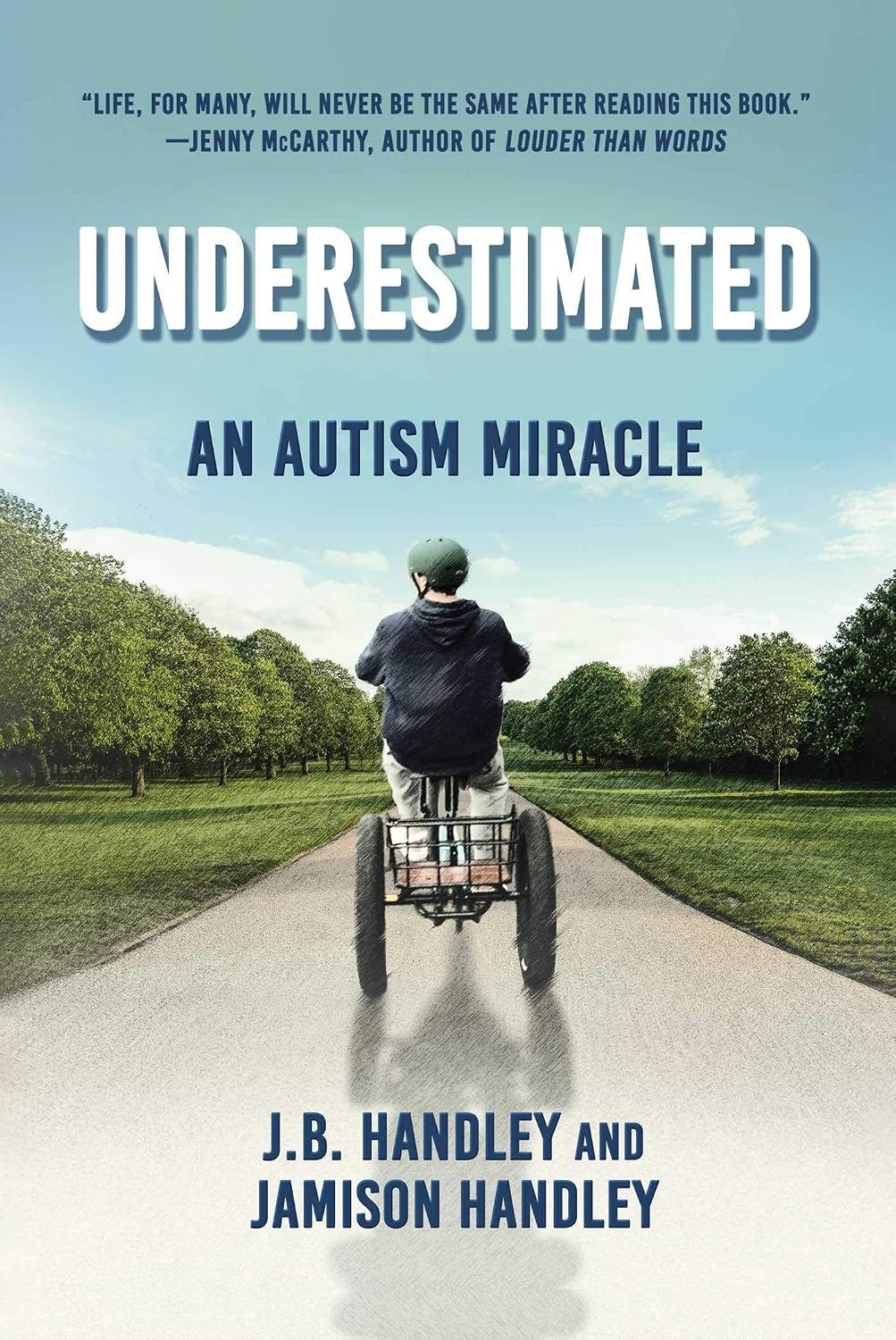
Underestimated: An Autism Miracle begins in the familiar territory of severe, non-speaking autism: self-injurious outbursts that sent Jamie to the emergency room, a “life skills” classroom at Victory Academy in Portland, where teachers could only guess at his cognition, and a parental exhaustion so profound that Handley, at fifty, wondered whether he could endure another 30-40 years of it.
The book’s first section, “Twelve Months,” moves with precision through a year of interventions pursued with desperate hope—gluten-free diets, methyl B-12, hyperbaric oxygen, even a fecal microbial transplant in Canada—each helping a little, none enough. J.B is unflinching about his own fraying nerves and the particular hell of watching a gentle child slam his own head.
The pivot arrives, almost casually, via a text from another autism parent. Honey Rinicella reports that her son Vince, previously limited to phrases like “I want juice,” is now producing sophisticated written answers on a letterboard. The method is Spelling to Communicate (S2C), developed by Elizabeth Vosseller. J.B. and his wife Lisa travel to Herndon, Virginia. Within weeks Jamie, too, begins to spell. What emerges is not tentative or childlike but fully formed: wit, fury, philosophical clarity, and a devastatingly precise memory of years spent being ‘underestimated.’
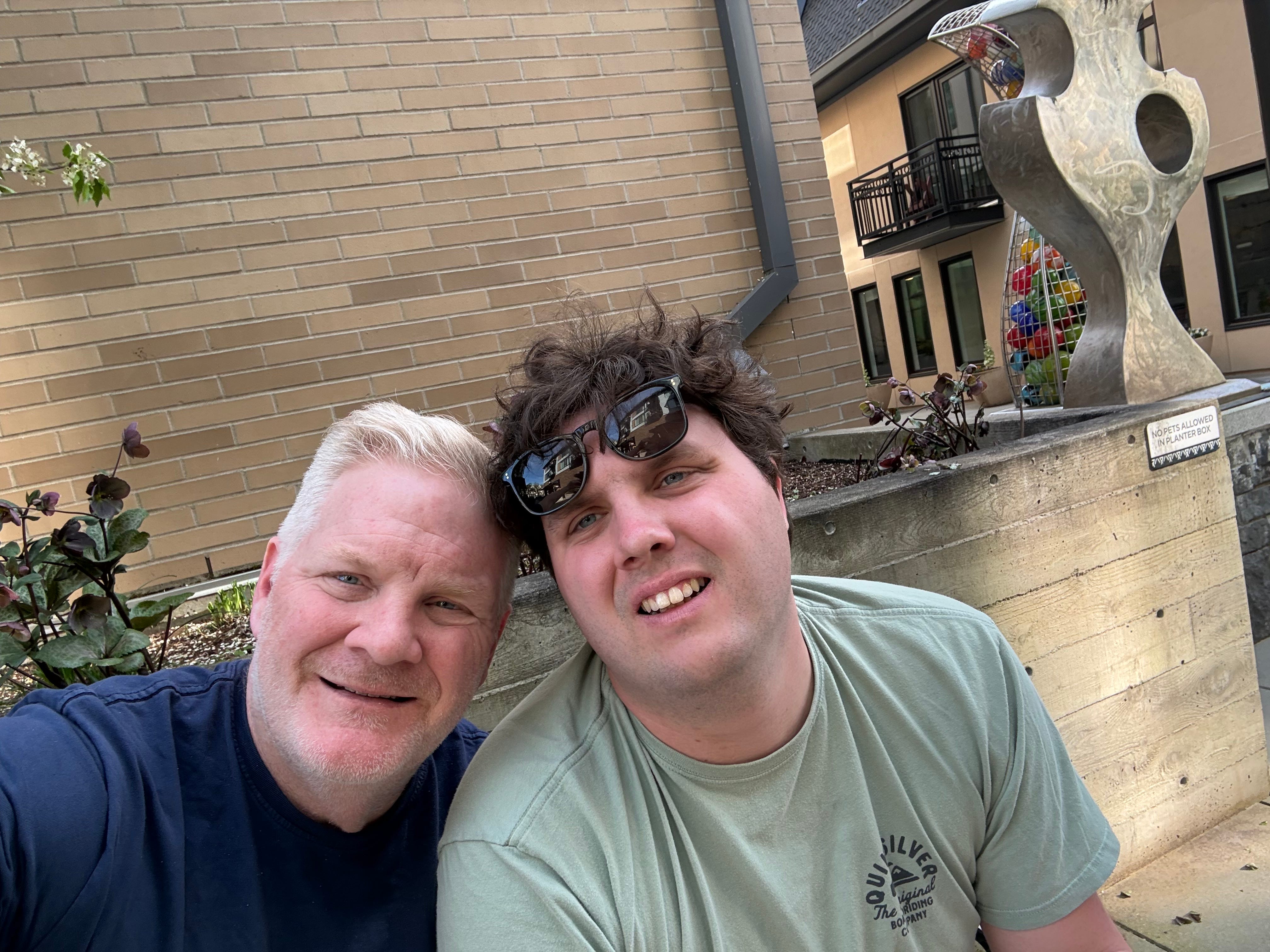
Jamie’s spelled words—generous, sometimes biting, always alive—form the emotional core of the book. He explains his school self-injury as rage at being treated “like a retard.” He relates to Einstein because he too is “underestimated.” When asked if he is angry at his parents for missing so much, he answers with characteristic grace: “No, because [they] never gave up on me.”
Once he can communicate words, Jamie’s ambitions become defined: he wants to study neuroscience, focusing on motor disabilities. He wants to get married. He wants to write a book with his father “to inspire others like me” and make a movie because “seeing is believing.” Most movingly, he becomes an advocate for other non-speaking students still trapped in the old classroom, drafting letters with demands that the school train teachers in letterboarding.
“No one should be denied their voice,” Jamie writes.
J.B. does not pretend the breakthrough erases seventeen years of pain or that S2C is universally embraced. A clear-eyed section on “Science and Controversy” acknowledges the legacy of facilitated communication, and the institutional resistance Jamie still encounters. Yet the book also cites a 2020 Nature study that found letterboard users actively generating their own text.
J.B. ‘s argument is ultimately experiential and moral: when a child who could not reliably say “potty please” is suddenly discussing calculus and organizing on behalf of his peers, the burden of proof shifts. The words are his.
What makes Underestimated more than a recovery narrative is its double authorship and its refusal to lean into sentimentality. Jamie’s voice—funny, exacting, occasionally imperious about pancakes—keeps the book honest.
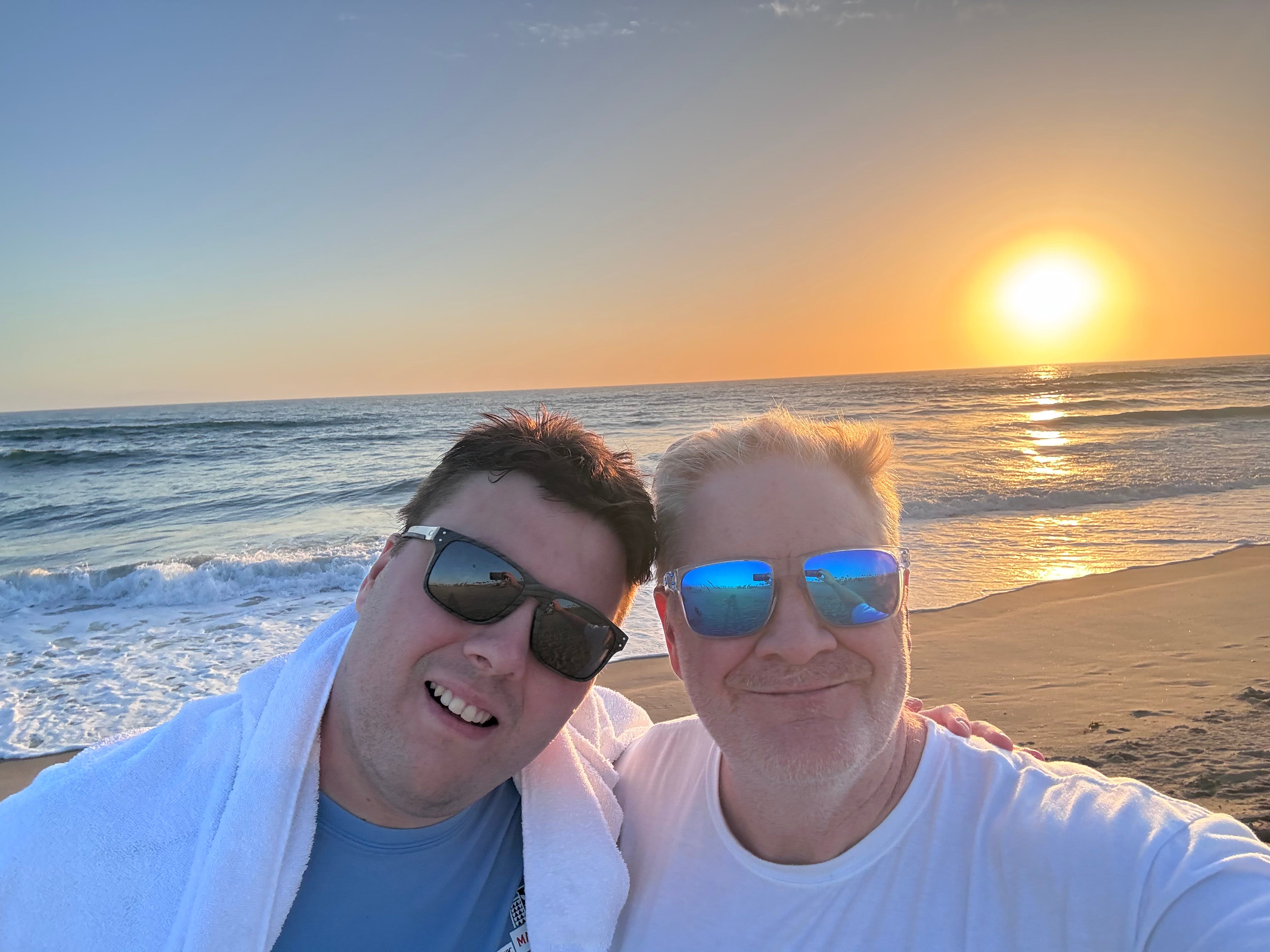
J.B. ‘s voice supplies the context, the guilt, the logistical heroism of two parents who never stop trying – and the humility of realizing they had been looking in the wrong place. The result is a memoir that feels both intimate and necessary. It offers families of non-speaking autistic children something rarer than hope: a concrete method, a community, and a vision of adulthood that includes college, independence, meaningful work, and even marriage.
In the epilogue, set in 2020, Jamie is calm, academically engaged, and finally free of hurting himself – the type of self-injury that once defined his life. He no longer needs his parents as communication partners at school; a former nanny turned S2C practitioner now serves that role. The darkness, J.B. writes, has lifted. Jamie puts it more simply: by showing people how smart he is, he believes he can change the world. This book is proof that he already has.
For anyone who has ever loved someone whose voice was presumed missing, or who has wondered what intelligence looks like when it cannot yet move a hand on command, Underestimated is essential reading. It’s a miracle recounted with the rigor and tenderness it deserves.
[Underestimated: An Autism Miracle, written by J.B. Handley and Jamie Handley, published by Skyhorse, is available on Amazon.]
Shop our merch store to support the MAHA Report and the MAHA movement.
All proceeds go to supporting the cause.
I can only imagine the thrill Jamie and his parents experienced when the letterboard came to life and Jamie could communicate! So wonderful!
Jamie's experience seems very similar to that of Ido, who wrote "Ido in Autismland." I suspect your readers will want to read both books. I'm definitely going to read Underestimated No More. Thanks for the review!
A fantastic account of what is possible by asking the right questions. Stellar reason to never
"give up". The account was earning interest all the while.
Does not touch the causation issue, emphasis on solutions.
No question whatsover, the most likely causation for most autism is the vaccines... Really would like to know details. Regarding the interventions employed:
The reason that hyperbaric is useful is simple-
O2 under pressure perfuses tissue with oxygen.
The reason "gluten free" is useful is the avoidance of glyphosate (Round-Up)
The reason B12 (methylated) is useful has to do with CH3 groups. Many chemistry details...