


For years, the American public was told seed oils were good for you. They are not. A new book, The Truth About Seed Oils: How the “Heart-Healthy” Myth Made Us Sick―and How to Heal with Real Fats, eloquently explains why.
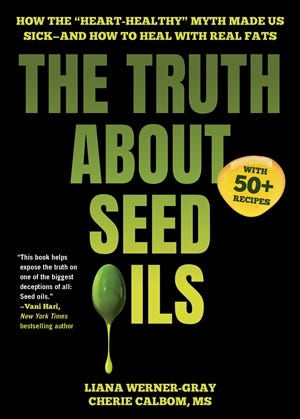
Written by Liana Werner-Gray and Cherie Calbom, two trusted voices in holistic health, the book cuts through decades of confusion and marketing hype to deliver clarity on one of the most overlooked culprits in modern chronic disease: industrial seed oils.
The book publishes April 30 from MAHA Books, a division of Skyhorse Publishing.
From the very first pages, the authors make a compelling case that what we’ve long been told is “heart-healthy” (canola, soybean, corn, sunflower, safflower, grapeseed, cottonseed, and rice bran oils—the so-called “Hateful Eight”) may be silently undermining our health.

Backed by historical context, biochemical explanations, and a growing body of research, Werner-Gray and Calbom argue that these highly processed, omega-6-rich oils promote oxidative stress, chronic inflammation, and metabolic dysfunction. The authors link such oils to rising rates of anxiety, depression, insulin resistance, obesity, heart disease, cognitive decline, and even certain cancers—not as fear-mongering, but as a call to informed action.

What makes this book especially powerful is its balanced tone. It doesn’t just criticize; it educates.
Chapter 1 dives into the “Seed Oil Scandal,” tracing how the eight oils rose to prominence – not through health science, but through wartime economics, aggressive marketing (think Procter & Gamble’s Crisco), and flawed studies like Ancel Keys’ lipid hypothesis. The authors highlight how subsidies, conflicts of interest (including early American Heart Association funding), and the demonization of traditional fats like butter, tallow, and coconut oil, created a perfect storm.
The authors also address the spiritual dimension—how disconnecting food from its natural, whole-food roots turns it into a commodity rather than a gift.
Chapter 2 explores the mechanisms by which seed oils may contribute to brain and body dysfunction. The brain is nearly 60% fat. The authors explain how excess linoleic acid from seed oils can crowd out protective omega-3s, promote neuroinflammation, damage mitochondria, disrupt neurotransmitters, and even compromise the blood-brain barrier. They connect these processes to anxiety, depression, Alzheimer’s risk, and more, while contrasting modern Western diets (often 15:1 or worse omega-6 to omega-3 ratios) with ancestral patterns. Real-world examples, such as the low dementia rates among the Tsimané people, reinforce the message: traditional, minimally processed fats align better with human biology.
The book doesn’t stop at problems—it offers clear, practical solutions. Chapter 3 serves as an excellent “fats and oils handbook,” comparing saturated, monounsaturated, and polyunsaturated fats, explaining smoke points, oxidation risks, and why quality matters. It debunks myths around cholesterol and saturated fat while celebrating stable, nourishing options like extra-virgin olive oil, avocado oil, coconut oil, grass-fed butter, ghee, and beef tallow. Individual fat tolerance is respected, with thoughtful disclaimers acknowledging bio-individuality.

Chapter 4 focuses on cooking, offering up over 50 delicious, blood-sugar-friendly, anti-inflammatory recipes featuring nature’s healthiest fats. From Liana’s OG 3-Hour Chicken Bone Broth Noodle Soup and Guacamole Greens Chicken Salad to Cherie’s classics like Cream of Carrot Soup and old-fashioned beef tallow cornbread, the recipes are approachable, flavorful, and nutrient-dense. They prove healthy eating doesn’t mean deprivation—meals can be indulgent and supportive of liver, mitochondria, hormones, and nervous system health. Highlights include golden anti-inflammatory rice bowls, pumpkin pancakes, and even treats like mini cashew cheesecakes and feather-light coconut macaroons.
Later in the book, the authors provide a valuable shopping guide: how to choose cold-pressed or expeller-pressed oils, read labels, avoid hidden seed oils in restaurants and packaged foods, and source high-quality animal fats. Resources like Seed Oil Scout (an app) and the Templeton List make real-world application easier than ever.
The Truth About Seed Oils has a hopeful, solution-oriented spirit. It’s not about fear—it’s about empowerment. Werner-Gray and Calbom remind us that simple swaps (ditching industrial oils for real, traditional fats) can reduce inflammation, stabilize energy and mood, support metabolic health, and potentially lower chronic disease risk.
This is a must-read for anyone serious about wellness, whether you’re dealing with inflammation, fatigue, brain fog, or simply want to eat more intentionally. It’s accessible for beginners yet substantive enough for those already familiar with ancestral or functional nutrition. The writing is warm, clear, and engaging, blending science, history, personal stories, and practical advice.

If you’ve ever felt confused by conflicting advice about fats—or suspected that the “vegetable oil” in your pantry might not be as benign as advertised—The Truth About Seed Oils will feel like a breath of fresh air. It challenges decades of dogma without dogma of its own, always circling back to biology, tradition, and listening to your body.
The Truth About Seed Oils, due out from Skyhorse on April 28, 2026, is currently available for pre-order. A portion of the proceeds from this and all subsequent books released by the Skyhorse MAHA Books imprint will be used to support initiatives by MAHA Action, tying the book to the broader movement for better public health policy.
Related Reading:
The ‘Hateful Eight’ Seed Oils Most Americans Don’t Know – But Should

By Dr. Cate Shanahan, MD, Contributor, The MAHA Report
New Dietary Guidelines Expected to Group Seed Oils With Ultra-Processed Food. That Alone Is a Breakthrough.

By Cate Shanahan, MD, Special to The MAHA Report
Liana Werner-Gray: The Outback Oracle Who Wants to Heal America

By Emilie Hagen, Contributor, The MAHA Report
Higher dietary omega-6 intake has NOT been shown to increase systemic inflammation markers in any consistent way.
Every large population study has failed to show higher omega-6 intake = higher inflammatory disease risk. Many studies actually show neutral or inverse associations with inflammation and cardiovascular disease.
The valid concern is “highly processed oils," which can be problematic when:
Reused at high heat (deep frying repeatedly)
Oxidized through poor storage or excessive heat
Consumed in ultra-processed foods.
That’s different from “omega-6 oils in general are harmful,"
Casey Means is out. Nominated a Fox-doc (of course) that couldn't get into a US medical school and went Caribbean.