


For seventeen years, J. B. Handley’s son Jamie lived inside a body that refused to obey him. Diagnosed with autism at eighteen months, he had no reliable speech and was tracked into a life-skills classroom. Experts assumed limited intellect. Then, in one January session, his shaking finger spelled his first word: “NO.” Three months later, asked if he believed the method could work, he spelled “ABSOLUTELY.”
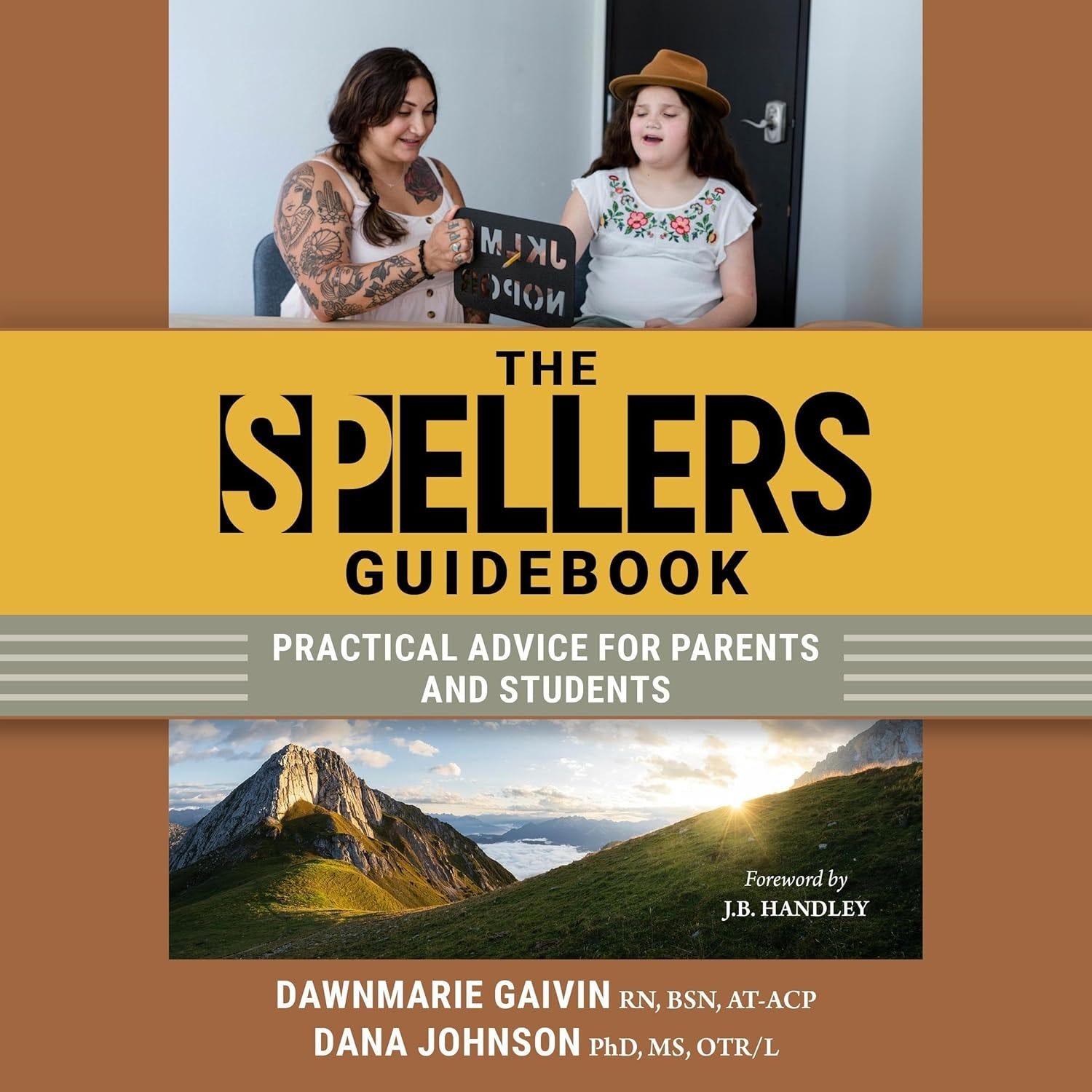
That breakthrough, recounted by J.B. Handley in the foreword to The Spellers Guidebook: Practical Advice for Parents and Students, is the living proof of Dawnmarie Gaivin and Dana Johnson’s central claim: many nonspeaking or minimally speaking autistic people are not cognitively impaired. They are motor-impaired in ways that have been catastrophically misread for decades.
In their clear, practical manual, the authors give parents and clinicians the tools to correct that misreading and unlock what was always there.
Gaivin, mother of two nonspeaking sons and a key voice in the documentary Spellers, writes with the hard-won clarity of someone who has lived the before and after. Johnson, an occupational therapist, brings clinical precision to the same territory. Together they treat the reader as an intelligent adult who has probably tried everything else and is running out of hope. Their tone is never salesy. It is direct, occasionally wry, and deeply respectful of how frightening it feels to stake everything on one more approach – an approach legacy media tries to discredit at every turn.
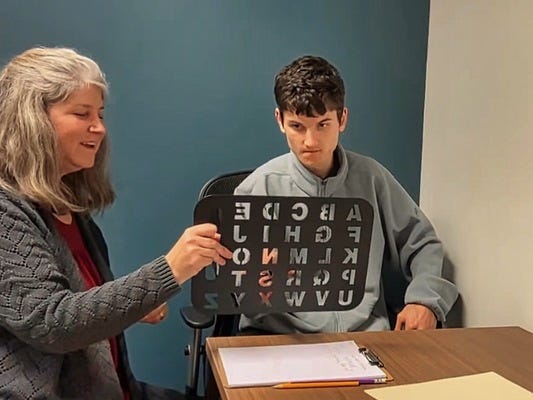
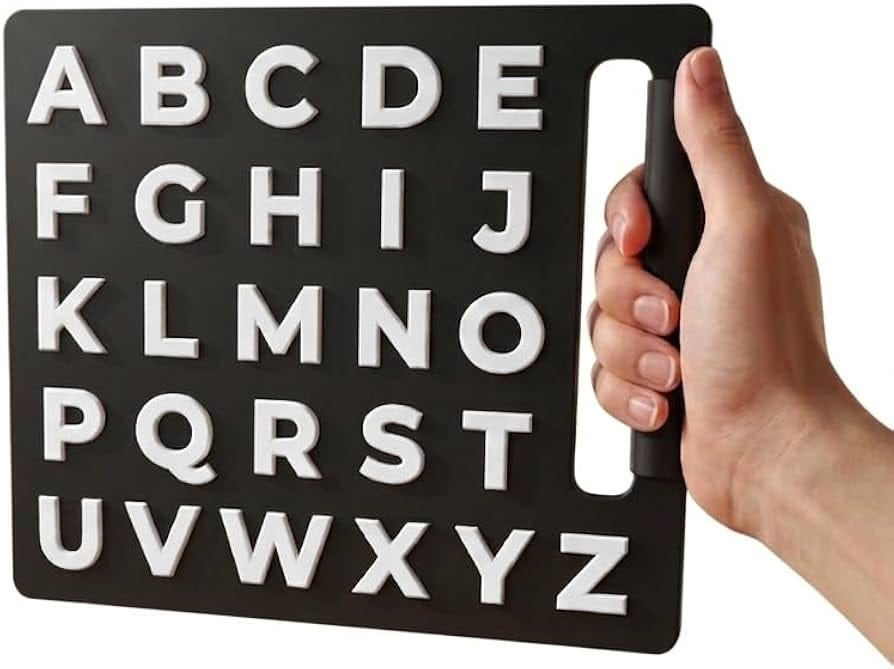
The argument is straightforward once the distinction is made. Apraxia — trouble with intentional motor planning — is not intellectual disability. Standardized tests that demand pointing, speaking, or writing on command have measured motor output, not thinking. Once that distinction lands, the work shifts from “teaching the child to understand” to “teaching the body to show what it already knows.” The Spellers Method lowers the motor load: large three-inch letters on a vertical board, shoulder-and-arm pointing instead of fine-motor speech muscles or tiny keys, and steady rhythmic coaching until the sequence becomes automatic.

What sets the book apart is how thoroughly it prepares parents for the daily reality of coaching. Chapters on sensory-motor profiles turn theory into tactics. Some children need to touch or lick everything because their bodies crave input. Others seek deep pressure or crash into furniture to regulate. Still others bolt or grab because their nervous systems are flooded. The authors explain why a child who seems to be “escaping” a lesson may actually be protecting an overloaded auditory system by moving to the hallway — and why the lesson should continue anyway.
Regulation receives the same rigorous, usable treatment. Drawing on polyvagal theory, the authors distinguish bottom-up strategies (rhythm, deep pressure, intentional movement warm-ups) from top-down ones (age-appropriate academic content, even college lectures through headphones). They are blunt about the emotional labor required of the communication partner: slow your own voice and movements when arousal spikes, finish the last word of the lesson even when the body is melting down, stop comparing one child’s pace to another’s. These are not inspirational slogans. They are field-tested instructions for staying steady while your child learns to stay steady.
The authors are also candid about the real costs — daily practice, practitioner support, reorganized family priorities — and about the skepticism many parents will meet from professionals still attached to older models. A short chapter for “the agnostics” walks through the history of misdiagnosis without defensiveness. The most moving passages belong to the fluent spellers themselves, who describe spelling as freedom from a “silent prison” and urge younger nonspeakers to keep going.
The Spellers Guidebook does not promise instant transformation. It offers a disciplined, repeatable process for giving a child back their own voice, one letter at a time. For families who have felt they had nowhere left to turn, this may be the most important book they read this year.
Finally, this is the kind of book that parents will press into one another’s hands with the fierce hope of those who have finally found a roadmap through treacherous terrain. It deserves the widest possible audience.
[The Spellers Guidebook: Practical Advice for Parents and Students, written by Dawnmarie Gaivin and Dana Johnson, with a foreword by J. B. Handley (Skyhorse Publishing), can be ordered on Amazon]
Shop our merch store to support the MAHA Report and the MAHA movement.
All proceeds go to supporting the cause.
;-} Thank You.
just ordered the book! read SPELLERS and watched the documentary. the time commitment looks beyond daunting for a self-employed single parent but I KNOW my 22 yr old is 'in there'... so here goes!