


By The MAHA Report
With Making America Healthy, a 48-page children’s book written by Dr. Shannon Kroner with illustrations from Manfred Calderon, the authors for the first time bring the MAHA movement to the hearts and minds of young readers, ages roughly 8 - 12.
The book, from Skyhorse Publishing imprint MAHA Books, is available Nov. 24, 2026.
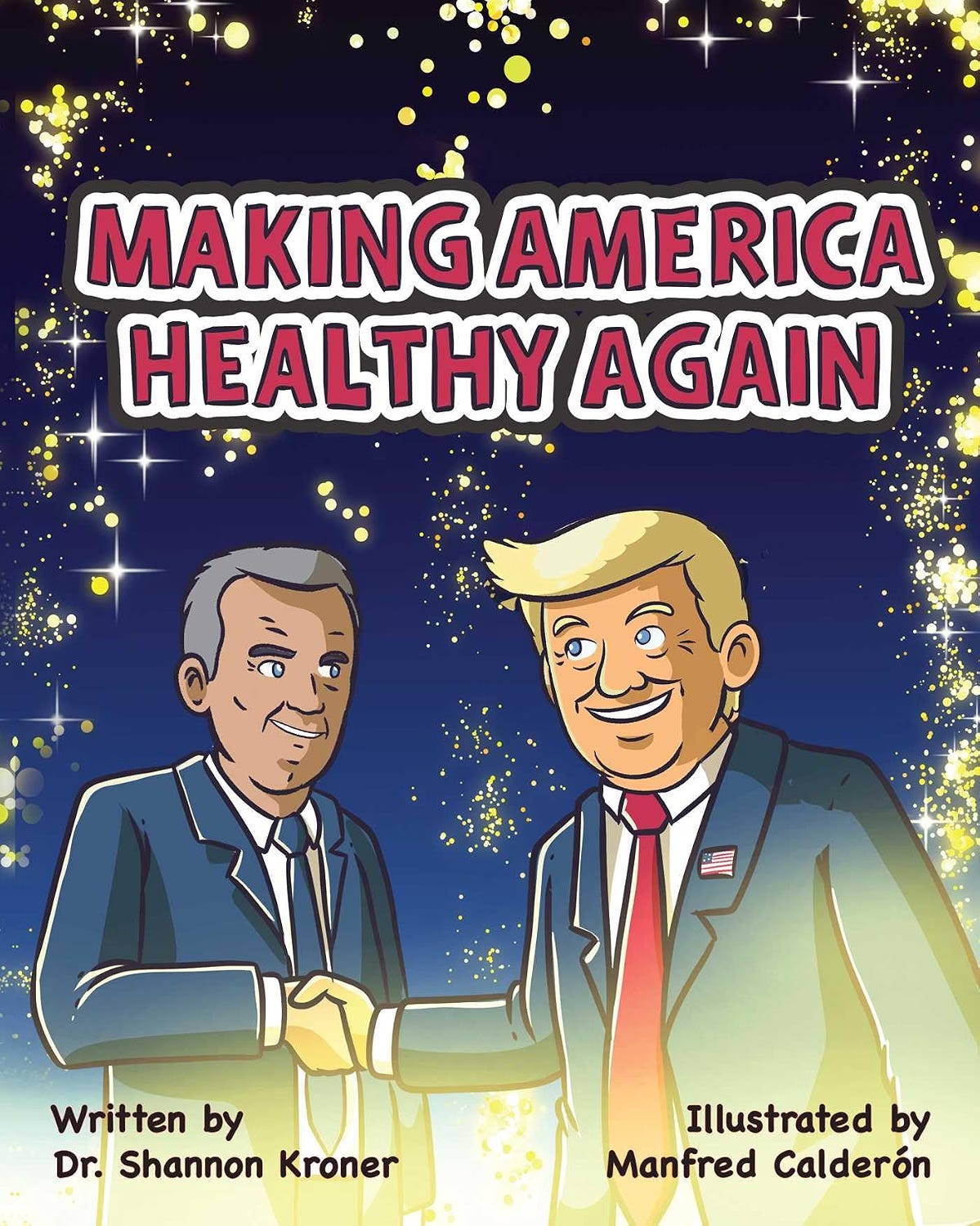
Narrated by a curious girl named Layla Liberty, the book walks through the health challenges facing American children and the solutions being advanced by Health and Human Services Secretary Robert F. Kennedy Jr. in partnership with President Donald Trump. It does so without condescension, using clear language, concrete examples, and colorful illustrations that keep the material engaging rather than alarming.
The book opens with a dedication to families affected by vaccine injury and a note of gratitude to both President Trump and Secretary Kennedy.
Kroner, a clinical psychologist and longtime advocate for children’s health and medical freedom, draws on years of work with children facing developmental disabilities, learning challenges, and mental-health struggles. Many of those children appear, with parental permission, in the illustrations.
Layla, a fictional character, guides readers through statistics that many adults find sobering: roughly 1 in 6 American children have developmental, learning, or mental-health challenges; more than 7 million have ADHD; autism rates stand at about 1 in 31; diabetes affects over 350,000 children; and nearly 5 million have asthma.
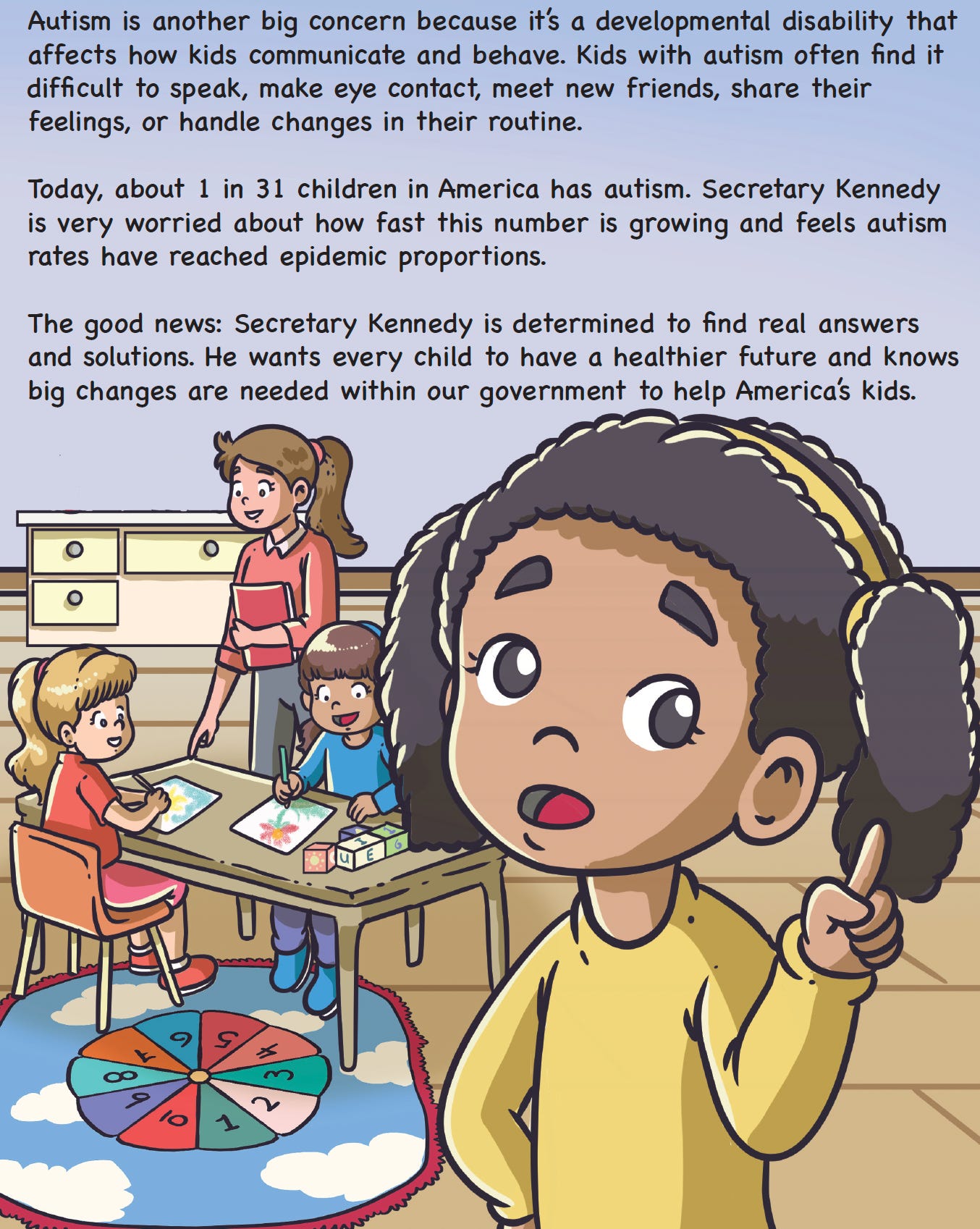
Making America Healthy presents these numbers plainly, then links them to environmental toxins in food, water, air, and medical products; ultra-processed foods; excessive medication; reduced outdoor play; and a childhood vaccine schedule that the text describes as containing far too many shots for young immune systems. It does not claim simple causation for every condition, but it does argue that environmental factors and policy choices deserve rigorous examination—an argument Kroner says Secretary Kennedy is now empowered to pursue.
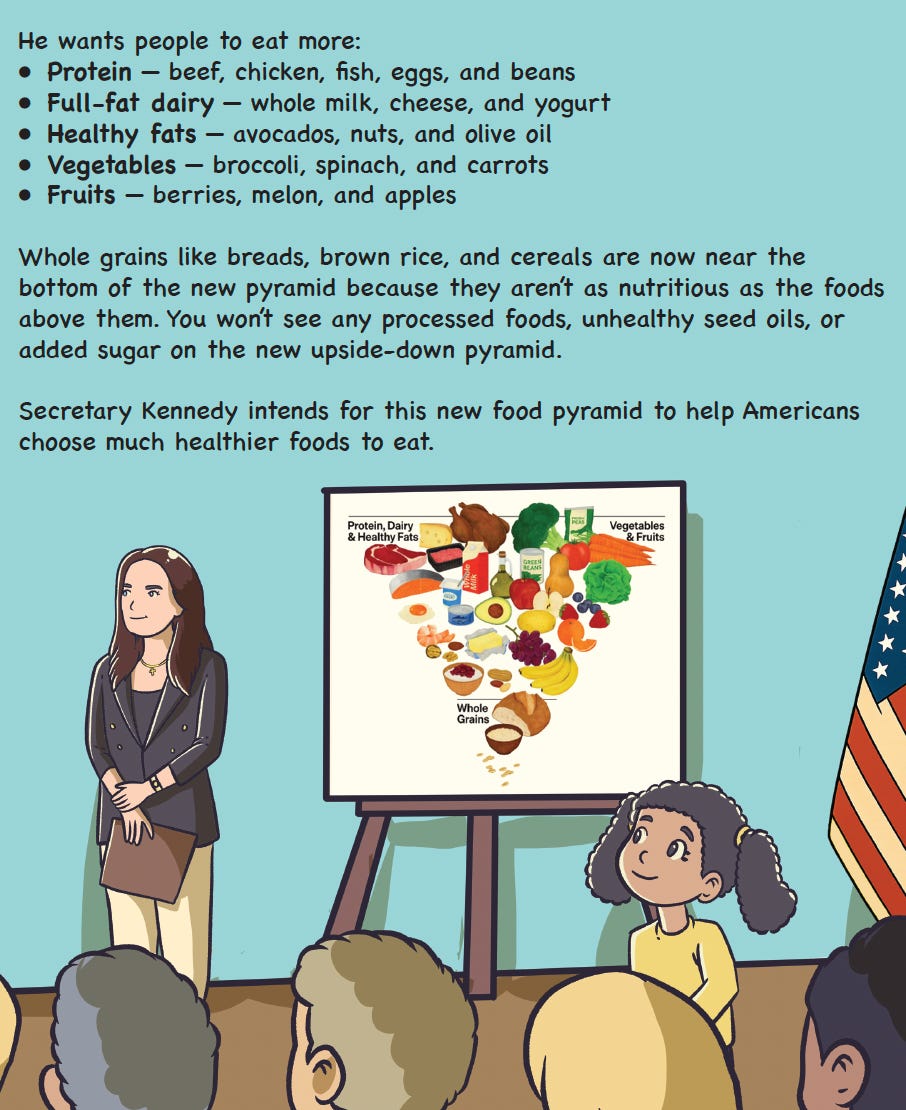
The sections on everyday choices we can make are especially effective. The book contrasts the 1992 food pyramid, which emphasized breads, pastas, and cereals, while downplaying meat, eggs, and healthy fats, with a new upside-down version that prioritizes protein, full-fat dairy, healthy fats, vegetables, and fruits, placing whole grains near the bottom and excluding processed foods, seed oils, and added sugars.
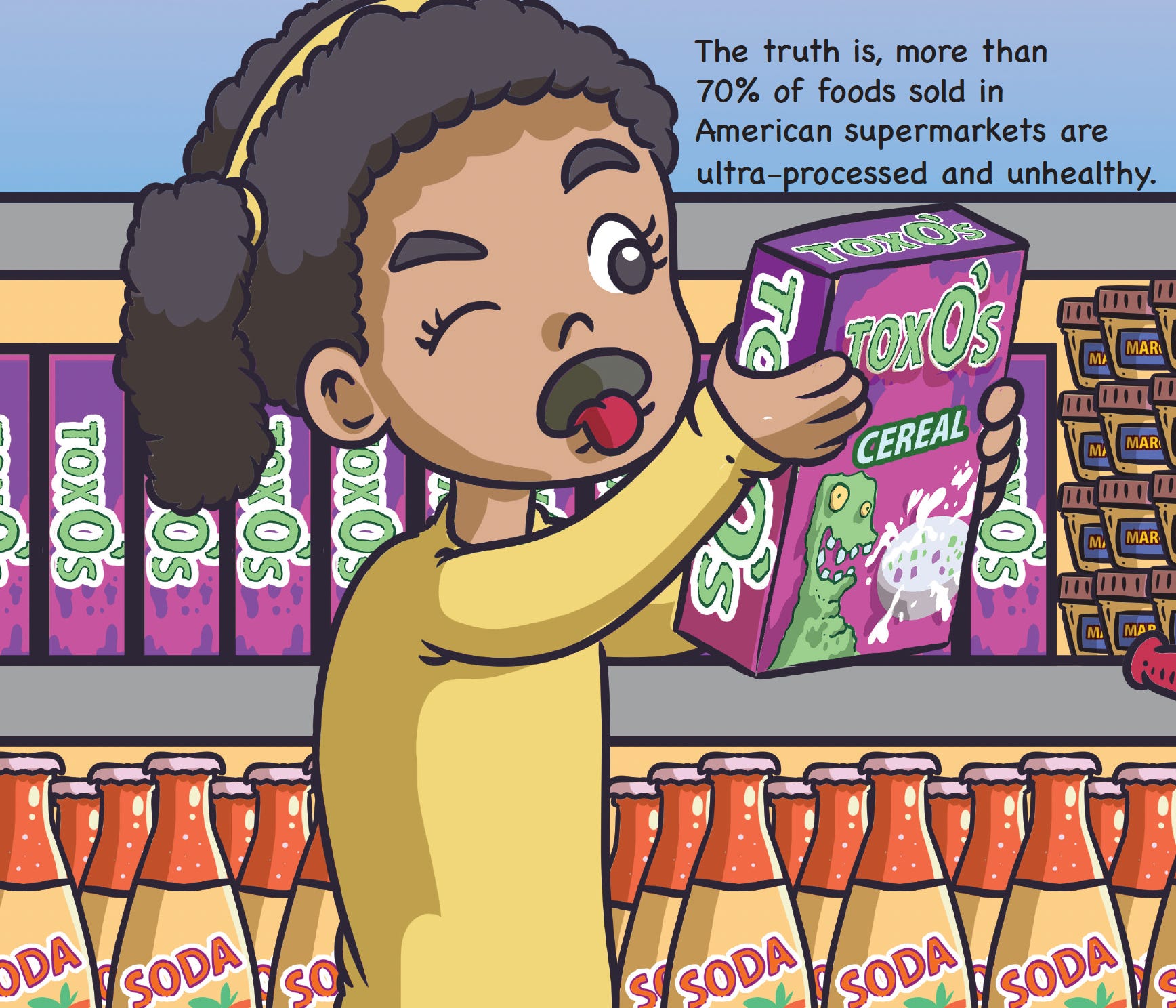
It also explains ultra-processed foods, artificial dyes, preservatives, and PFAS in packaging, in language a child can follow, then notes that more than 70 percent of supermarket items fall into this category and that many ingredients allowed in the U.S. are restricted in Europe.
School lunches receive similar treatment: the book encourages kids whose cafeterias still serve sugary and fried foods to speak with parents and principals about healthier options.
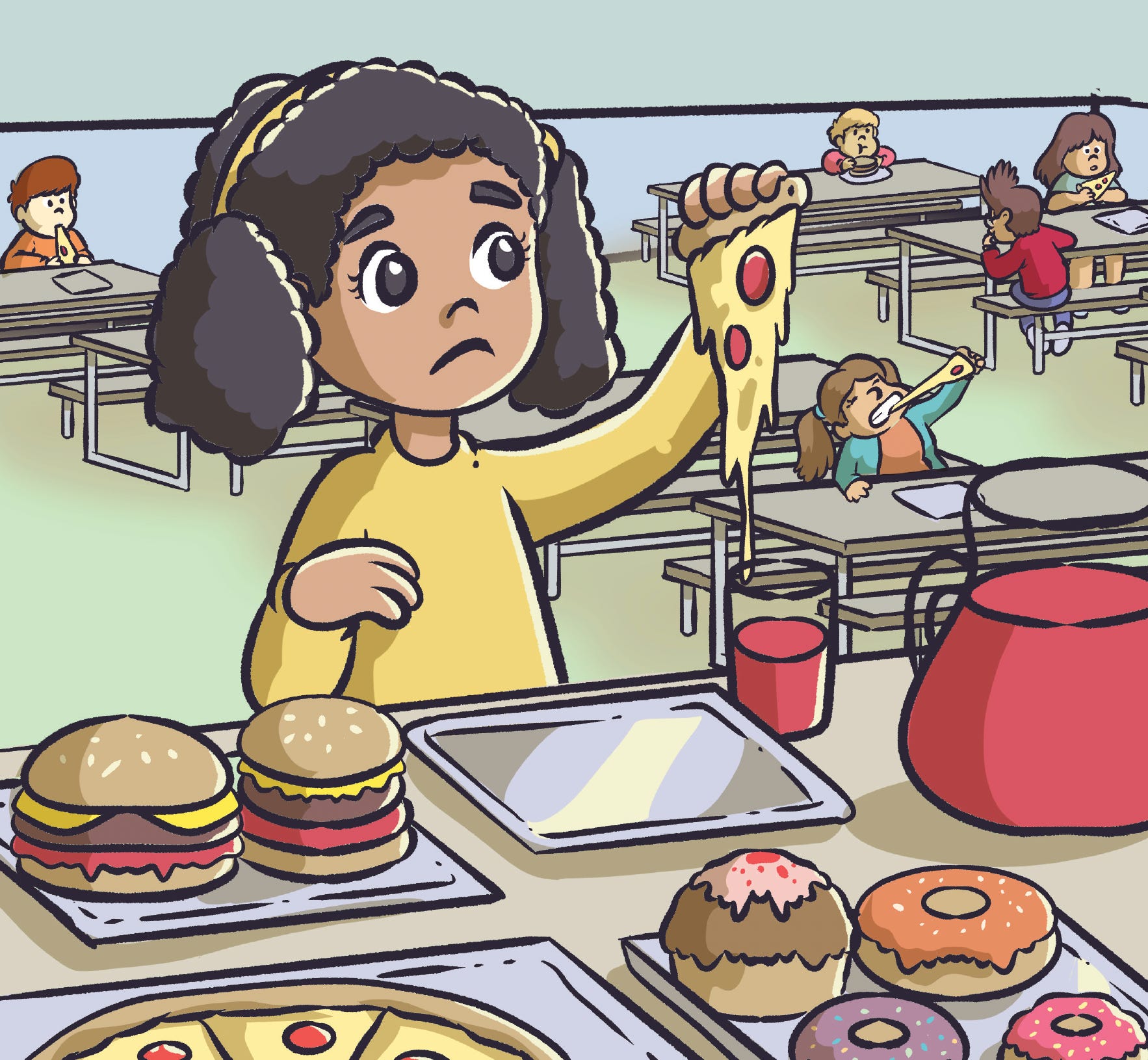
Environmental themes receive equal attention. Readers learn about pesticides and herbicides such as glyphosate, the benefits of organic and regenerative farming, the importance of washing produce, and the conditions in which some industrial livestock are raised.
Drinking water is discussed in relation to fluoride (including the toothpaste warning label and studies on high intake), microplastics, and pharmaceuticals that can enter waterways. The book recommends filtered water in reusable bottles and fluoride-free toothpaste as practical steps families can take immediately.

Exercise and outdoor time appear as straightforward antidotes to screen-heavy days and rising rates of anxiety and depression; one illustrated spread shows Secretary Kennedy doing pull-ups beside Layla, underscoring the message that fitness should be ordinary and joyful.
Vaccines are treated carefully but directly. The book notes that most manufacturers say their products are safe and do not cause autism, while also stating that Secretary Kennedy has listened to thousands of parents who report injury, that some studies suggesting links have been set aside, and that he has directed researchers to examine genetics, the immune system, brain development, and the role of vaccines.
The goal, the text says, is real answers rather than matter-a-fact dismissal of observed vaccine injuries. Medication overload, direct-to-consumer advertising (permitted in only the United States and New Zealand), and the roughly $4.3 trillion annual U.S. health-care expenditure are presented as related problems that healthier food, cleaner environments, and fewer unnecessary interventions could help reduce.
Manfred Calderón’s illustrations keep the book’s tone warm and approachable.
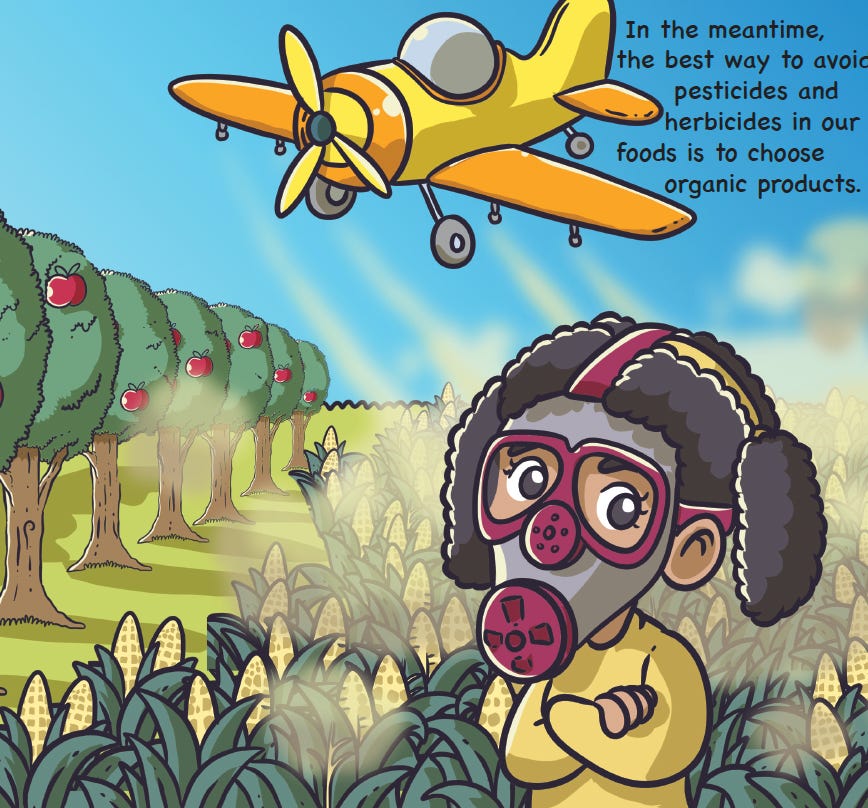
Diverse children appear in classrooms, playgrounds, farms, and living rooms; thought bubbles show factories, crop-dusting planes, and pharmacy counters; and the new food pyramid is rendered clearly.
The art never feels didactic. A short glossary defines terms such as ultra-processed foods, glyphosate, PFAS, and regenerative farming, and a references section lists CDC data, nutrition studies, and a 2025 JAMA Pediatrics review on fluoride and IQ—giving parents further teaching tools for their children.
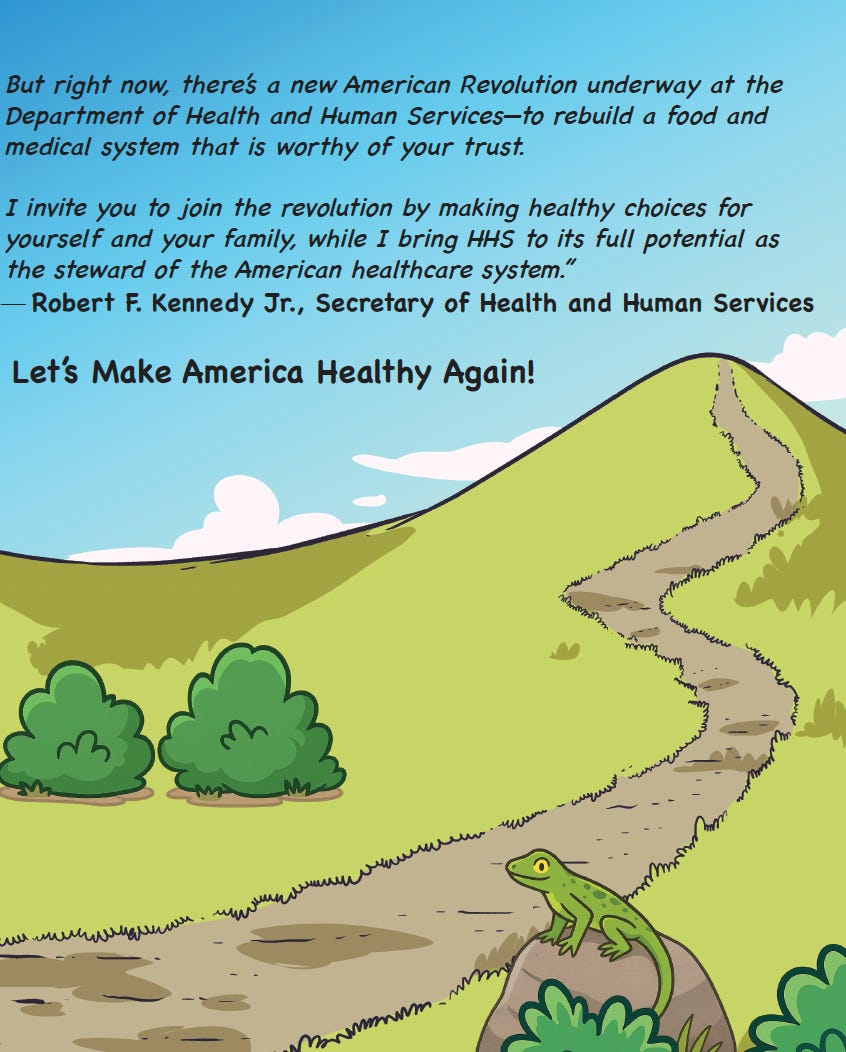
The book closes with a quotation from Secretary Kennedy about rebuilding a food and medical system worthy of public trust, an invitation for families to join by making healthier daily choices, and a simple call: “Let’s Make America Healthy Again.” An author’s note and illustrator bio reinforce the project’s roots in special-education work and health-freedom advocacy.
At roughly 48 pages, Making America Healthy Again is an accessible introduction rather than a MAHA Bible.
It does not pretend that every chronic condition has a single environmental cause, nor does it ignore genetics or individual variation. What it does is equip children and parents with a coherent framework for noticing ingredients, asking about water quality, valuing outdoor play, and understanding why current policy attention is focused on these issues.
For families who want a straightforward, illustrated way to discuss health with children, ages 8–12, the book offers a clear, hopeful, and practical starting point.
[Making America Healthy Again (MAHA Books, 2026), written by Dr. Shannon Kroner with illustrations by Manfred Calderon, is available November 24.]