


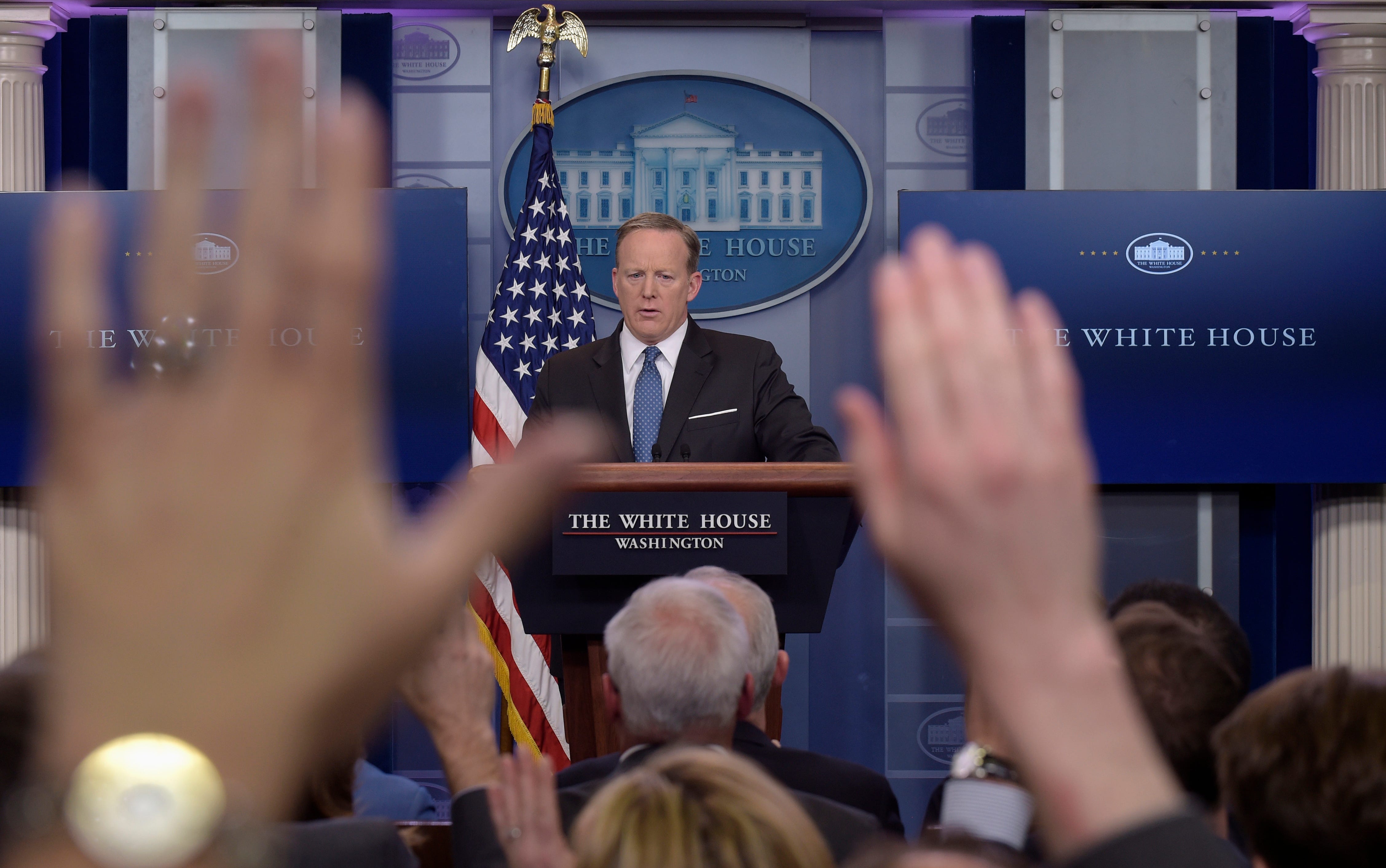
Sean Spicer is best known as President Donald Trump’s first press secretary. But in his new book, Trump 2.0: The Revolution That Will Permanently Transform America (to be published by Regnery on April 28 ), Spicer establishes himself as a highly competent writer and a shrewd political observer.
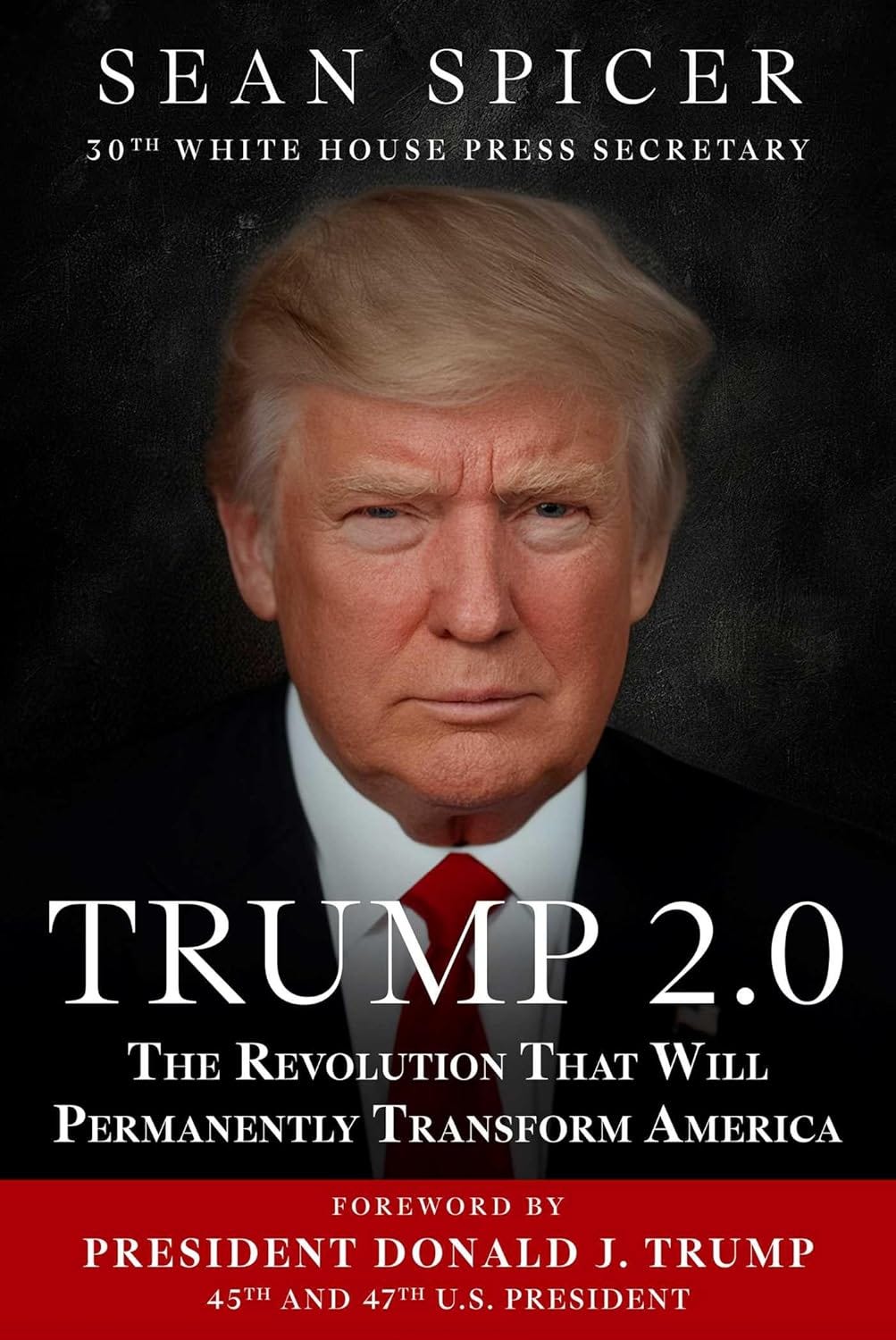
Moreover, Spicer gives us something more consequential than an insider’s memoir. He presents the president’s second term not as a sequel to the first but as a well planned historical pivot, arguing that the new Trump administration is locking in structural change designed to outlast any single presidency.
The foreword, written by President Trump, sets the book’s authoritative tone. Trump writes, “In everything we do, we are fighting for the law-abiding, hardworking people of our country. This is the essence of ‘Trump 2.0,’ and there are few people who understand it better than my friend and former White House Press Secretary Sean Spicer. Sean has been with us since the beginning. He played a central role in helping us defeat Crooked Hillary Clinton in 2016—and he has been a warrior for our cause ever since.
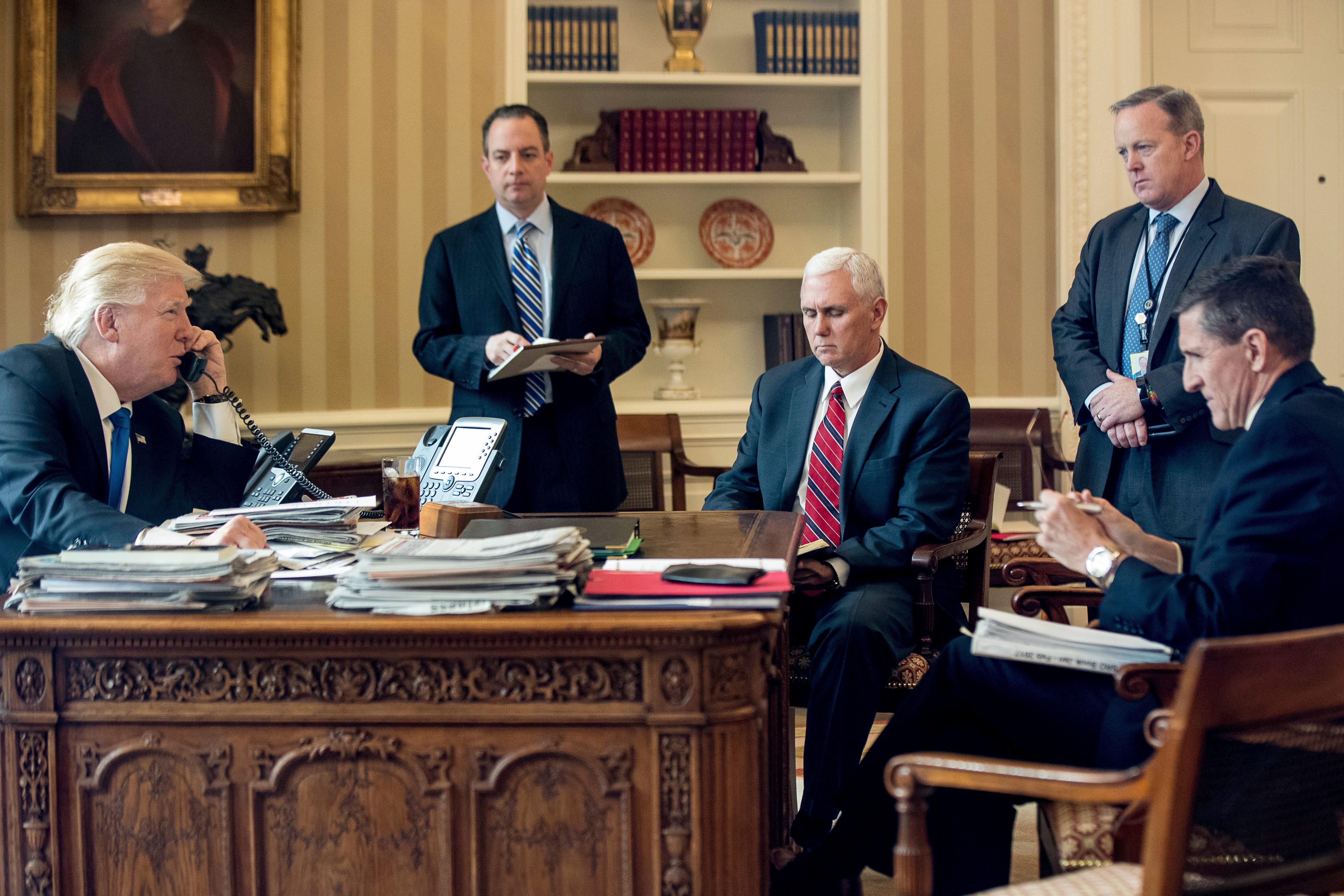
Continues President Trump, “If you want to understand the people, the policies, and the process of my second term in office, read this book.”
Early in his book, Spicer makes the point that, unlike every modern two-term White House, the second Trump administration benefited from four full years of deliberate and concentrated reflection outside of the White House. While Democrats celebrated what they hoped was the MAGA movement’s demise, Trump loyalists at the America First Policy Institute and the Heritage Foundation’s Project 2025 were quietly drafting policies and processes. The plan: when Trump returned to the White House the new administration could hit the ground running. .
The result, Spicer writes with evident pride, is an administration that arrived on January 20, 2025, ready to execute.
Spicer’s prose moves with the confidence of a seasoned communicator who has spent years distilling complex issues for the press and the public. Chapters on border security, trade fairness, NATO burden-sharing, smarter defense, and the Department of Government Efficiency (DOGE) include a wealth of data presented in an easy-to-understand format.
Spicer also goes after Biden-era policies that didn’t work – open borders, stagnant growth, eroded deterrence—comparing them with early triumphs during Trump 2.0.
According to Spicer, under Trump 2.0 border crossings have decreased from thousands per day to zero for months – and there has been record investment flooding into the country.
What emerges is less partisan triumphalism than lucid case study of how strategic patience and personnel discipline can convert campaign promises into governing reality.
For advocates of the Make America Healthy Again (MAHA) movement, Chapter 7—“The MAHA Policy Blueprint”—will feel like the book’s quiet masterstroke.
Spicer devotes sustained, respectful attention to Robert F. Kennedy Jr.’s role as Secretary of Health and Human Services, framing MAHA not as a niche cause but as a foundational pillar of national renewal. He articulates the movement’s ambitions with clarity: to confront America’s chronic-disease epidemic by challenging the iron grip of Big Food and Big Pharma, demanding transparency on vaccines and ultra-processed foods, and shifting federal policy toward prevention, wellness, and personal freedom rather than on what Kennedy ridicules as “sick care.”

MAHA advocates will particularly appreciate how Spicer weaves the movement’s priorities into the broader America First vision, demonstrating that restoring physical and mental health is inseparable from restoring economic vitality, cultural confidence, and sovereign strength.
In an era when public health has too often been politicized or corporatized, Spicer treats MAHA with the seriousness it deserves—as a bold, evidence-driven corrective that belongs at the center of conservative governance.
Throughout his book, Spicer maintains a tone of measured optimism. He candidly acknowledges the first term’s frustrations—internal resistance, relentless investigations, bureaucratic inertia—while celebrating the second term’s structural advantages: pre-vetted loyalists, battle-tested senior staff, and a four-year policy incubation that allowed genuine depth.
The afterword from Vice President JD Vance and Spencer’s concluding reflections reinforce the central thesis: Trump 2.0 is built to endure.
Trump 2.0 is, in the end, a hopeful book written by a master communicator who still believes ideas matter. Spicer makes a persuasive case that the changes underway—on borders, trade, education, government efficiency, and public health—are not fleeting corrections but the foundation of a new political era.
Whether one embraces that vision or approaches it with skepticism, the book offers a lucid, insider’s take into how the second Trump administration is remaking America.
For anyone who has followed Spicer’s journey from the White House briefing room to podcast host and author, this volume marks his most interesting work to date. It is essential reading for those who want to understand the ambitions, early achievements, and long-term aspirations of the second Trump presidency.
Spicer’s measured conviction that America’s best days lie ahead of us feels both ambitious and refreshing.
Trump 2.0: The Revolution That Will Permanently Transform America is due out on April 28, 2026 from Regnery but is available now for pre-order.
"Spicer makes a persuasive case that the changes underway—on borders, trade, education, government efficiency, and public health—are not fleeting corrections but the foundation of a new political era."
He was never able to make persuasive arguments, given who he was working for. And no one outside the deluded 30% buy that propaganda about wonderful trade education and 'government efficiency' 😂 improvements.
Fortunately for Sean, there's plenty of dark money to bulk purchase pallets of his trump-glaze.
This is delusional. MAHA people have some good points about food systems and chemicals, albeit mostly obscured by waves of quackery, but when will they realize that the easiest way to tank their movement is by continuing to carry water for an increasingly unpopular president?