


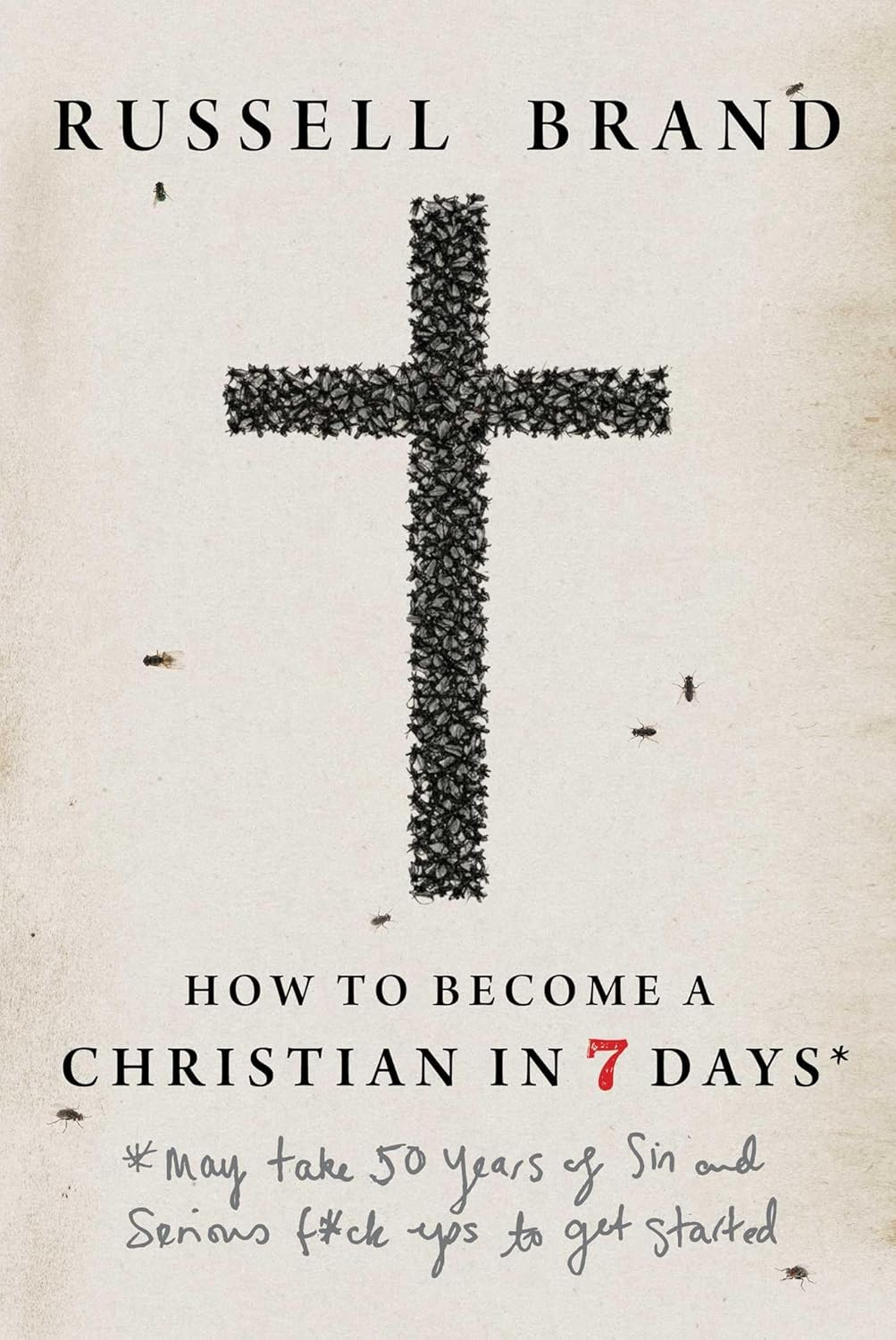
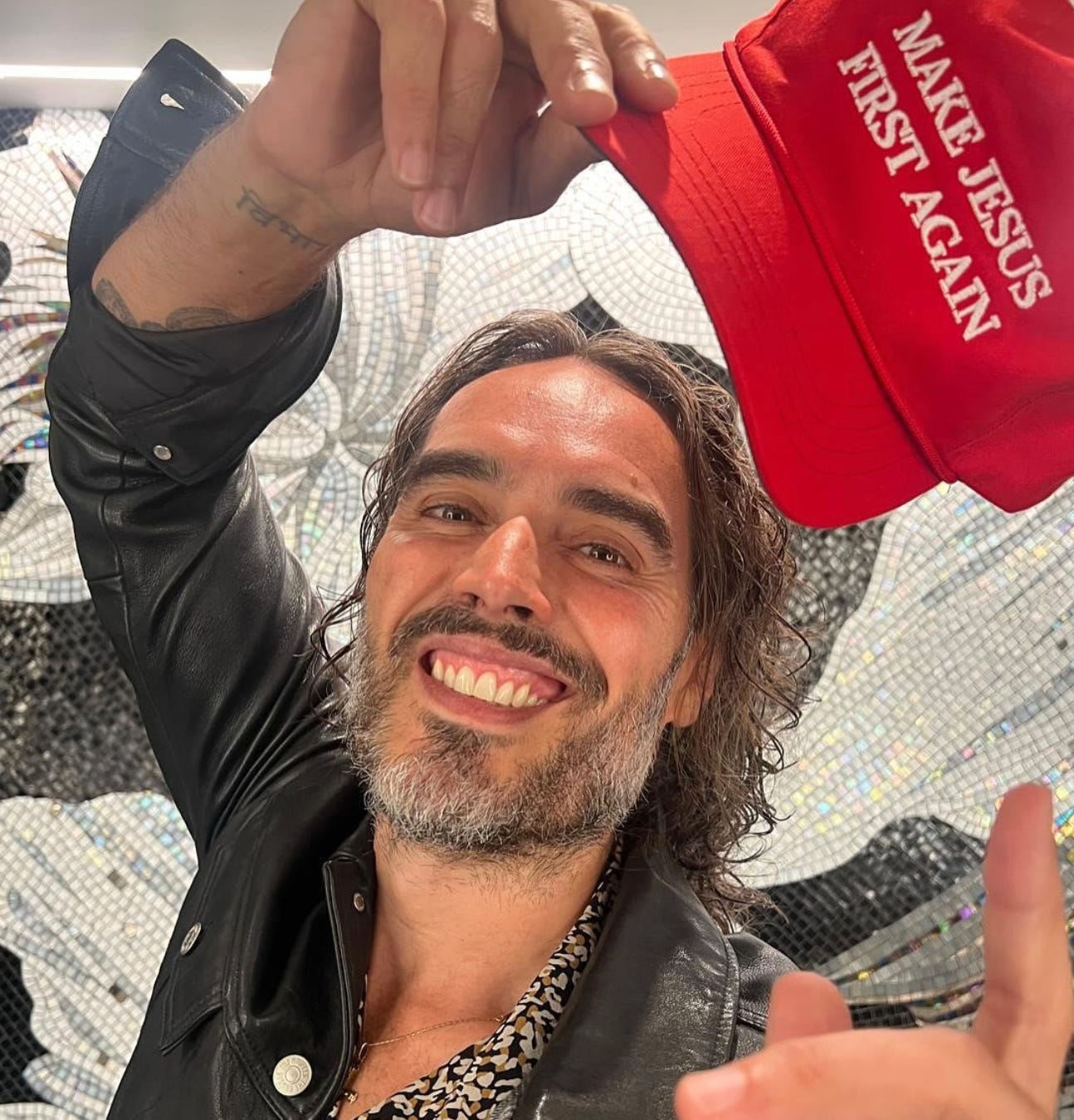
Russell Brand’s public life has been a whirlwind of cultural provocation, addiction recovery and conspiracy-tinged commentary. But in the spring of 2024, the English comedian announced he’d been baptized in the Thames River and had become a believer in Christ.
In the pages of his new book, How to Become a Christian in Seven days (due out in May and currently available for pre-order), Brand tells how that conversion happened. It wasn’t actually seven days, he writes: It happened, rather, in an instant – an instant that changed everything.
The book begins with a raw and disarmingly humble testimony.
“I’ve spent, indeed it’s hard not to say ‘wasted,’ my whole life trying to prize love from a loveless world on the basis of personal merits that I do not, and could not, possess,” he writes in the opening pages. “Newly, and with a rawness that still hurts, that Love is now mine, and if one so hopeless as I can be the recipient of such Grace, then you can too.”
From there, the book moves into a practical seven-day framework that blends 12-step wisdom, reflections on Bible passages and unflinching honesty.
Brand writes with the same deeply honest and electric prose that have made him so compelling as a presenter, columnist, comedian and YouTube host, where he has over six million followers.
He’s erudite without being pretentious, poetic and sometimes profane (toned down in this book but not erased). Sentences crackle. Metaphors land like perfectly timed jokes. He moves effortlessly between Carl Jung, cosmological musings (entropy, negentropy, the limits of materialism), quantum-adjacent reflections on infinity and gut-punch personal stories of addiction, fame’s hollow excesses, and the moment the cross appeared to him while walking his German Shepherd, Bear, by the Thames.
The dedication says it all: “To Bear, my dog. And to Jesus Christ, my God. Both Shepherds.” From there, Brand frames his conversion not as a tidy seven-day sprint but as a figurative journey toward completeness (the biblical resonance of “seven”), rooted in the recognition that real change often arrives in an instant of grace after years of wandering. He’s clear: this book is no substitute for the Bible itself. His job, he writes, is to use his messy experience to point others toward Christ.
Structurally, the book mirrors the creation account in Genesis while overlaying the 12 Steps of recovery. Each “day” tackles a theme—Day 1: Honesty (admitting brokenness and powerlessness); Day 2: Hope (spiritual thirst and the reality of evil in the world); Day 3: Faith (surrender and turning toward dry land); Day 4: Courage & Integrity (moral inventory and sacred time); and so on, culminating in perseverance, spirituality, and service. Interwoven are Brand’s testimony fragments: the hedonistic highs of fame (sex, drugs, applause as false worship), the crashing lows (allegations, family crises, the dread of a child’s serious heart condition, suicidal shadows), and the quiet, theophanic breakthrough where self-will finally cracks and Christ steps in.
The book is unapologetically positive, in the context of unflinching realism. Brand doesn’t sugarcoat the darkness: He names the “prince of this world,” cultural idolatry, the counterfeit promises of secularism, Hollywood’s “sick liturgy of self,” and the spiritual warfare that underlies addiction, power, and despair. He draws on Ephesians 6:12, Jung’s insights on evil as an organized intelligence, and his own hard-won recovery wisdom to argue that the world’s patterns are a kind of addiction from which we need deliverance. Pain is soil for growth. Setbacks come paired with humor, insight, and the radical claim that hope isn’t naive—it’s revolutionary. Grace is received by the broken, the hopeless, the formerly self-worshipping.
The characters in Brand’s story feel vividly human: the eccentric friends, the loyal dog Bear (a recurring shepherd motif), the wife and children navigating crisis, the veterans and prophets he encounters in unexpected places like a D.C. charity event. Brand’s supporting cast—including figures like Rick Warren clips, 12-step mentors, and biblical giants like David, Moses, Joseph, and Paul—illustrates that transformation is repeatable, not rare. His own “old self” (the fame-chasing, pleasure-seeking, conspiracy-curious provocateur) dies so a new one can be born.
Intellectually, the book is much richer than might be expected. Brand weaves together cosmology, philosophy (Meister Eckhart, Chesterton, Lewis), science (Heisenberg’s quip about God at the bottom of the glass), and cultural critique (Harari, globalism as satanic counterfeit, the limits of reason) into a coherent case for why materialism leaves a “God-shaped void.” He’s especially sharp on how addiction—whether to substances, sex, fame, or self—is a misguided quest for the divine encounter we’re wired for. The exercises (mirroring The Artist’s Way or 12-step inventories) are actionable: honest lists of pain points, moral inventories using the seven aspects of self (pride, self-esteem, relationships, etc.), breathwork suggestions, prayers of surrender. They invite participation, not passive reading.
What stands out most is the warmth and accessibility. Brand addresses skeptics, the burned, the “too clever” or “too broken,” the atheists, the culturally Christian, and the already-convinced with equal gentleness and fire. He knows the church’s cultural baggage and meets readers in that shared disillusionment.
“I didn’t want to be a Christian,” he admits, yet here he is, reading Acts, finding peace that “passeth all understanding.”
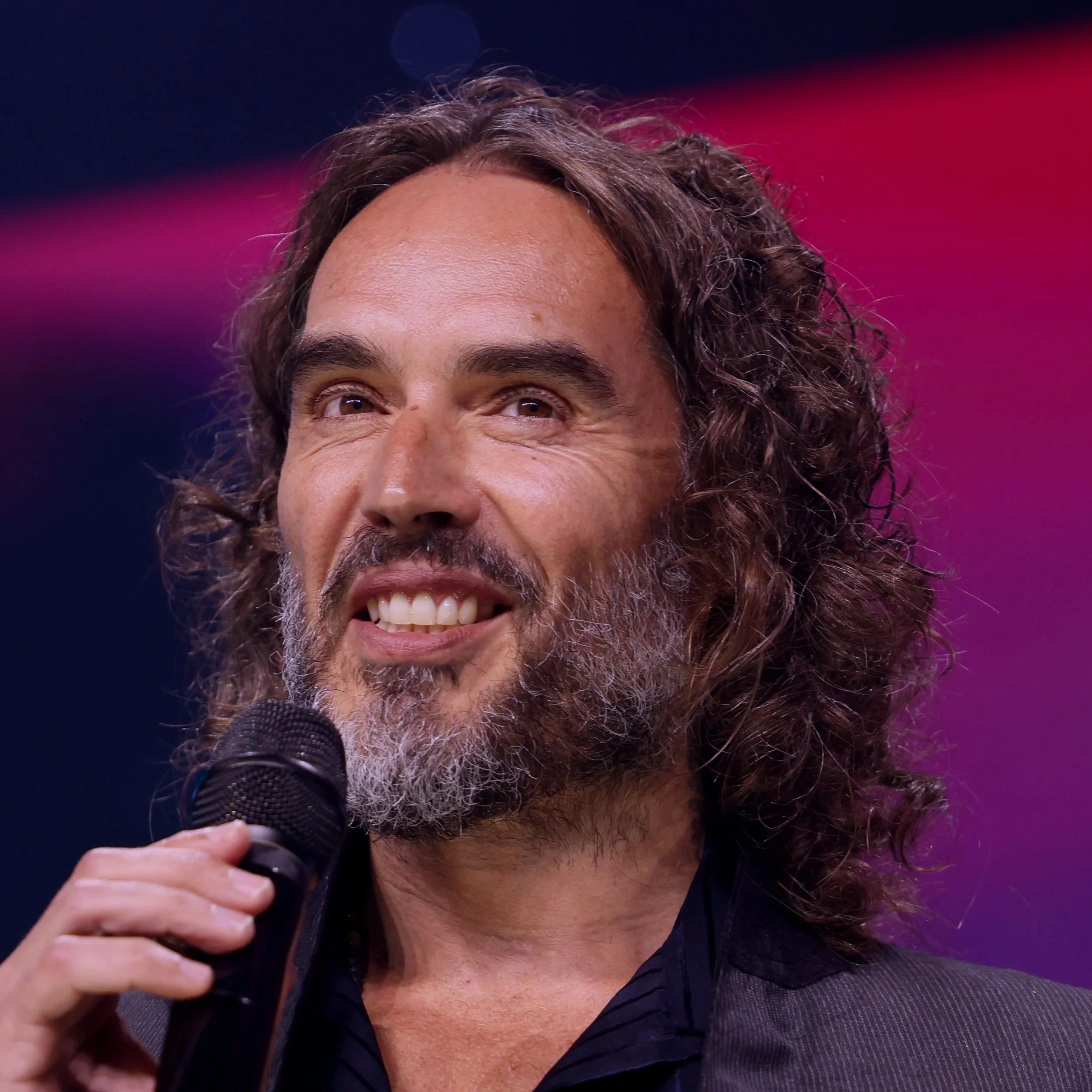
This isn’t flawless theology or airtight apologetics (Brand is a new Christian, still wrestling, still learning—he says as much). It’s testimony: messy, vivid, funny, profound. It re-mystifies Christ. It treats the supernatural with appropriate awe—“through a glass darkly,” as Saint Paul says—while grounding it in everyday surrender, community, and service. In an age of grim nihilism, curated despair, and self-deification, Brand’s book dares to proclaim that life can be hard, the world can feel ruled by dark powers, and yet beauty, forgiveness, and new creation break through. Hope is radical. Love wins because it already has on the cross.
By the end, you’re left energized, not exhausted—ready to pick up the Bible, pray honestly, inventory your own life, and step into whatever “Day One” looks like for you. Whether it takes seven literal days, seven years, or an instant of grace, Brand’s message is clear: you’re not joining a religion so much as coming home to the One who loves you beyond merit, beyond failure, beyond the world’s hollow offers.
If you’re weary of our popular culture or hungry for something real amid the noise, this book could change your life. It won’t do the work for you—only Christ can—but it lights the path with humor, honesty, and hard-won hope. Russell Brand, the bad boy British provocateur, has found the Shepherd. And he’s joyfully, imperfectly, inviting the rest of us to follow.
Read the book. Then read the Bible. Then watch what happens when you say, with Brand, “Lord, if You’re real, help me put aside my preconceptions… I cannot do this alone anymore.”
The most effective thing that one can do is to face their own dark side. See how the suffering it has caused them affects and has affected those around them. Own it. Share it, what and how they have leave learned from this encounter. Realize, as a Navajo elder shared, they don't create even the air they breathe. This opens a door of surrender and trust in a now obvious Higher Power they long to be part of and already are. Loving. Clear. Aware. Joyful. Creative. Innocent. The emanation of Russell Brand now, seeking and speaking Jesus. Thank you for writing this book, Russell Brand. I pray any stone thrower reads you.
the book looks great i can relate . After finding a way to slow, & reverse BV/FTD/ALS dx, and not had a drink since Sept 8, 1989 - I am sure i can relate, even to the current situation. We are all cary a Cross, and the world's reflection is harsh, but when we turn to the LIGHT for our identity, We Shine and allow others to shine too. Thanks so much, Bobbie for promote of Russel B. book - Love Kelli McGowan