


In a rapidly changing time during which the First Amendment is frequently invoked but rarely understood, Stuart N. Brotman’s lucid, non-partisan book, Free Expression Under Fire: Defending Free Speech and Free Press Across the Political Spectrum. (Skyhorse, 2026), is a must read.
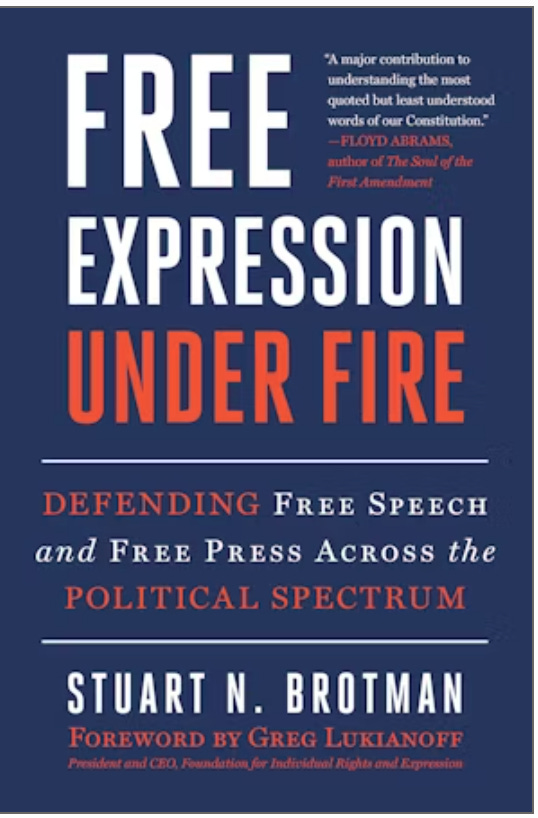
The book does far more than catalog threats to speech and press freedoms: It reframes them as symptoms of a deeper cultural erosion that’s endangering America, the democratic experiment, as it barrels toward its 250th anniversary.
Brotman, the first Digital Media Laureate at The Media Institute, is one of our country’s leading experts on today’s free speech landscape. He’s taught at Harvard, Tufts and elsewhere, and has contributed to landmark Supreme Court cases. In Free Expression Under Fire he translates complex legal doctrine into prose that is at once accessible and profound.

But for Brotman, legal victories alone are insufficient: Sustaining liberty requires rebuilding a durable culture of free expression—one that prizes open debate, dissent, and rigorous reporting. In an era of cancel culture, this is perhaps the book’s most timely contribution, with chapters on navigating free speech on college campuses, on the Internet, and in legacy and new forms of journalism.
What elevates Brotman’s analysis is his consistent even-handedness. He draws examples from across the ideological spectrum: conservative speakers shouted down on progressive campuses; progressive journalists facing retaliatory investigations; and tech platforms caught in the crossfire of competing demands for both more and less moderation.

Brotman also connects historical lessons to present challenges. He revisits the Pentagon Papers, not as dusty history but as a living precedent that illuminates today’s battles over classified information leaks. He writes about campus speech policies that often backfire spectacularly, breeding resentment and intellectual conformity rather than genuine inclusion. Social media giants, meanwhile, navigate an impossible thicket of legal ambiguity, public pressure, and commercial incentives—decisions that Brotman dissects with the clarity of someone who has been in the ring, who has advised on these very dilemmas.
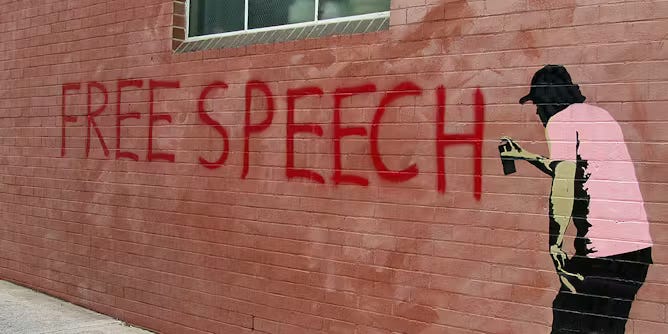
Brotman acknowledges that power and violence have long overshadowed speech, but he refuses to surrender to cynicism, instead recruiting “free expression warriors” across political divides to defend the things that make self-government possible. And Brotman notes: Defending speech for those we disagree with is not weakness but the ultimate test of democratic maturity.
Critics may quibble that Brotman underplays certain contemporary flashpoints or that his optimism about cultural renewal feels aspirational at a time of deepening polarization. Yet such objections miss the book’s larger purpose. It is not a policy blueprint for any single faction but a mirror held up to the nation, urging reflection at a pivotal historical moment. By refusing to score cheap partisan points, Brotman models the very ethos he seeks to restore: rigorous argument pursued in good faith.
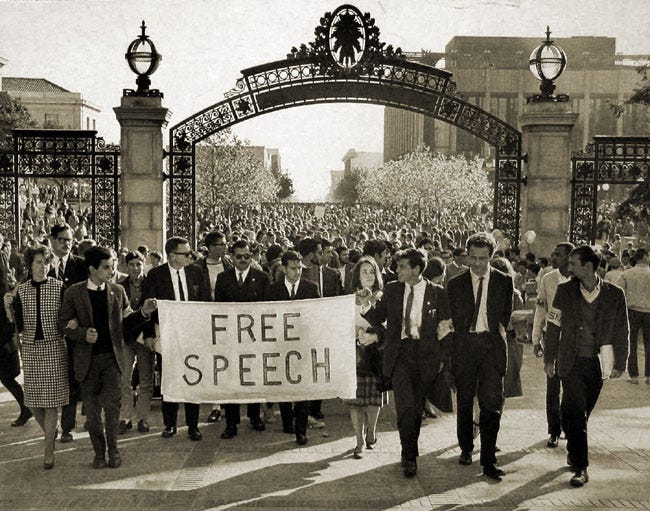
Free Expression Under Fire should be read by every college student facing speech codes and social pressures, every journalist confronting institutional or governmental scrutiny, every policymaker tempted to regulate platforms “for the greater good,” and every citizen—left, right, or center—who senses that something vital in our public square is slipping away.
The book belongs in classrooms, newsrooms, boardrooms, and living rooms alike. In a fractured republic, Free Expression Under Fire does more than warn: it ignites a unifying call to arms. Protect the words that sustain our democracy, or watch the republic that depends on them fade into silence.
Free Expression Under Fire: Defending Free Speech and Free Press Across the Political Spectrum, by Stuart N. Brotman with an introduction by Greg Lukianoff, president of the Foundation for Individual Rights and Expression, is available in paperback and as an audiobook.
I cannot wait to read this book.
How do you, "rebuild free speech"? Exercise it!
"What is freedom of expression? Without the freedom to offend, it ceases to exist."
-Salman Rushdie