


Drs. Robert and Jill Malone’s Homesteading for Health: One Farm Family’s Guide to Food, Land, and Self-Sufficiency, is both a practical field manual and a quietly radical act of hope.
The couple – both scientists, physicians, and lifelong farmers – have produced a wonderfully useful book that is part memoir, part how-to guide, and part clear-eyed examination of how American food and farming systems have drifted away from any respect for consumers’ health.
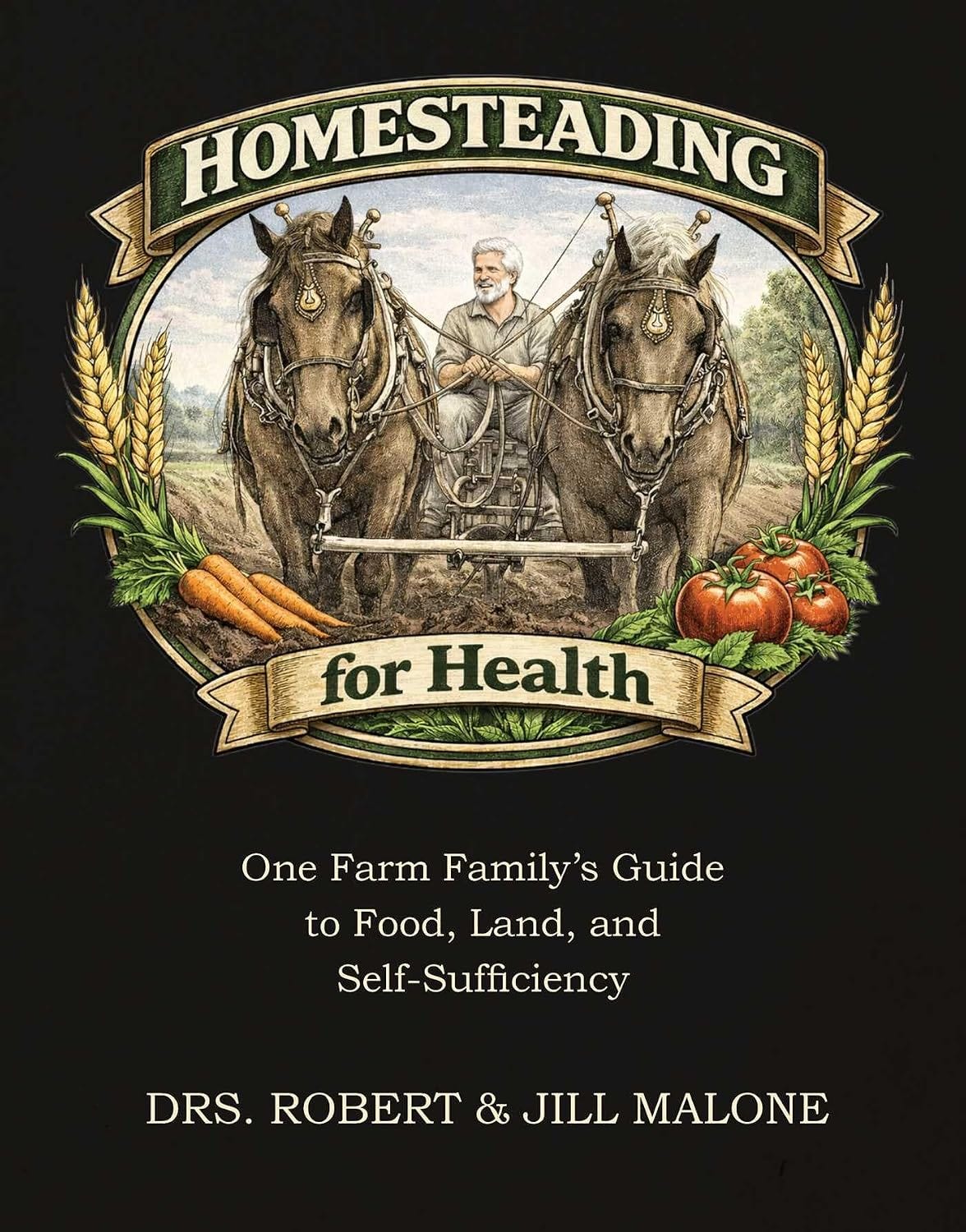
What holds the three strands together is a conviction tested across six farms and four decades: that genuine well-being begins not in a clinic or pharmacy but in living soil, purposeful work, and the daily habits of people who take responsibility for what they grow and eat.
The Malones write with the authority of people who have actually done the hard things. They describe arriving on a worn-out Virginia property with no well, no power, no septic system, and twelve draft horses that needed fencing immediately.
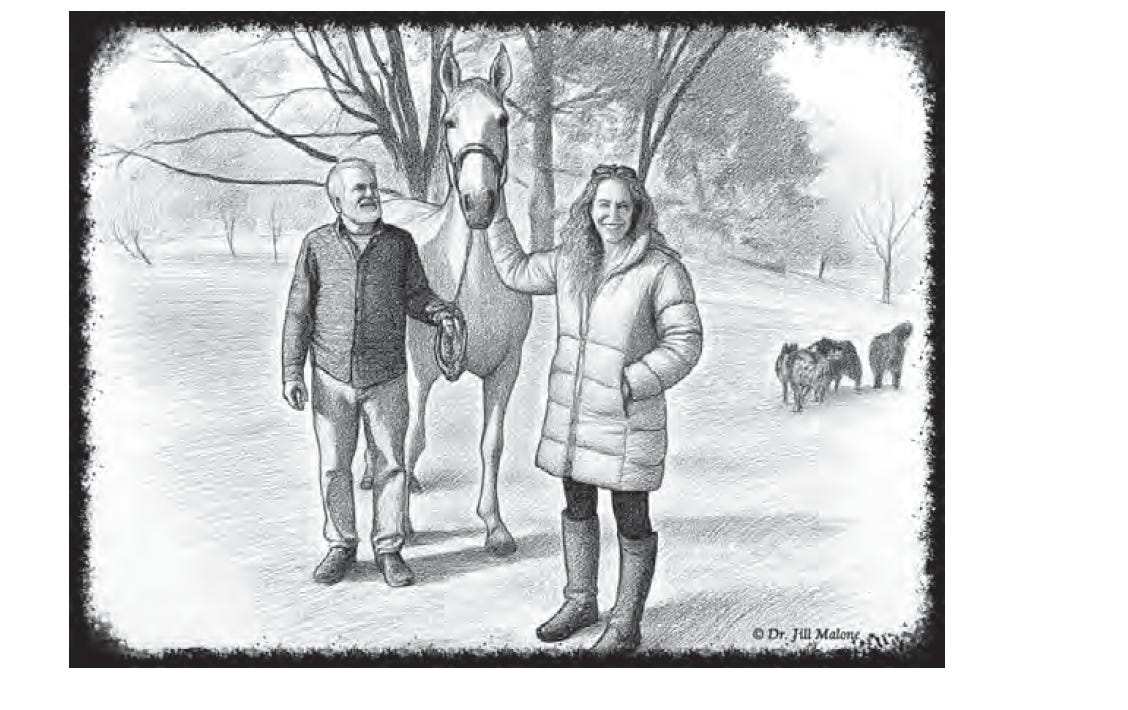
They lived for a time in a battered 400-square-foot office trailer purchased on Craigslist, bathing outdoors and using a porta-potty while they rebuilt. Earlier, on a Maryland farm whose house had once hosted motorcycle-gang parties, they leveled a sloping bedroom floor with bricks and contended with blacksnakes and a spring box.
Such stories are not romanticized. The authors refuse to soften failures or gild rewards. The result is a narrative that feels genuine and makes their eventual successes—living soil where there had been compacted red clay, a sixty-tree orchard, mini Jersey cattle, a thriving chicken flock—all the more persuasive.
The book is filled with practical knowledge distilled from years living on the land.
Part II functions as a generous, experience-based primer. Readers learn why habit stacking and simple organizational systems (including an enthusiastic defense of mason jars) matter on a working homestead; how to select crops by climate zone, manage pests without reflexive chemical dependence, save seed, and extend the season; why raised beds and attention to aesthetics can make intensive gardening sustainable; and how to begin with laying hens while avoiding the complications of roosters.
The chapters on livestock are particularly useful for readers new to homesteading. The Malones walk through the relative merits and demands of sheep, goats, dairy cattle, grass-fed beef, pigs, turkeys, horses, and guardian dogs. Their treatment of living soil—cover crops, compost, reduced tillage, the quiet work of earthworms and mycorrhizal networks—is scientifically grounded and accessible. They argue, convincingly, that regenerative practices are less a fashionable innovation than a return to methods that older farmers and Amish communities never fully abandoned.
The scientific and policy sections in Part III give the personal and practical material larger stakes. The authors examine the metabolic consequences of ultra-processed diets, the inflammatory nature of modern obesity, the nutrient declines documented in USDA data over decades, and the persistent residues of widely used herbicides.
In their book, the authors also discuss raw milk with unusual balance—acknowledging both documented risks and observational evidence of potential benefits, while describing their own carefully managed consumption.
The book’s tone remains measured: structural problems in agricultural policy and food systems are real, yet the authors refuse despair.
Their prescription is incremental and empowering. Eat differently. Grow something. Source more deliberately. Reduce unnecessary chemical exposure at home. Invest in the next generation’s relationship to land and food.
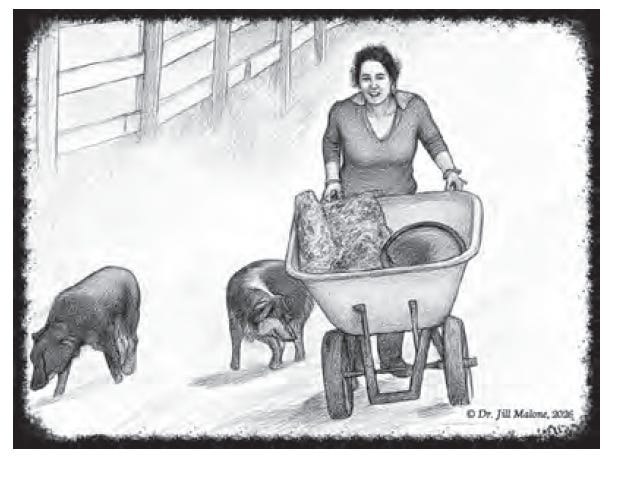
Homesteading, in their telling, is not a destination for total self-sufficiency but a map toward greater agency.
The book’s greatest strength is its refusal to create false binaries. One need not abandon modern life or move to forty-five acres to begin. A balcony tomato plant, a small raised bed, a few hens, or simply cooking from whole ingredients already shifts the relationship between you and your plate.
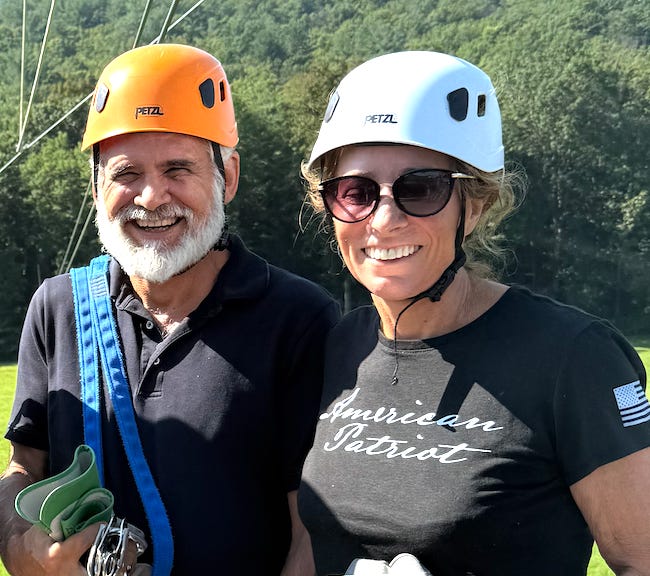
The Malones themselves maintained demanding scientific and clinical careers while building farms. They write as people who have lost equity, started over, and still believe the work is worth doing. That combination of realism and conviction is rare and valuable and heartening.
Homesteading for Health is ultimately a book about stewardship—of soil, of animals, of family health, and of a measure of personal freedom. It reminds readers that the most radical act available to many of us may be the quiet, repetitive one of putting seeds in the ground, turning compost, collecting eggs, and feeding ourselves from land we have helped restore.
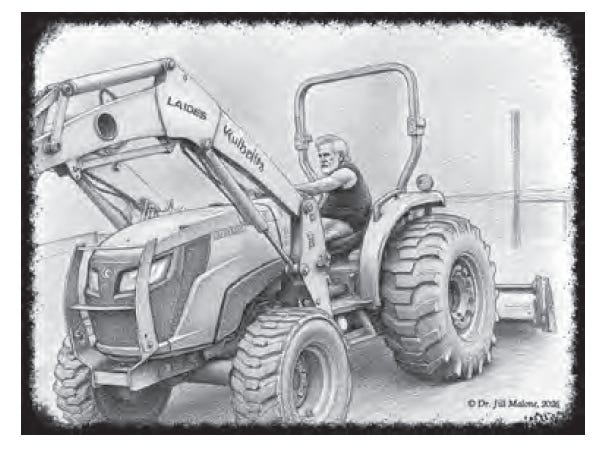
At a time when too many Americans seek quick answers and instant gratification, the Malones offer something refreshingly tangible: the possibility that health and resilience can still be cultivated, one season at a time, by ordinary people with the courage to get dirt under their nails.
[Homesteading for Health was published by MAHA Books, an imprint of Skyhorse Publishing, on August 4, 2026. It’s available on Amazon, here.]
Shop our merch store to support the MAHA Report and the MAHA movement.
All proceeds go to supporting the cause.
Thank you for this well covered review of the Malone's latest book. I've subscribed to their substack and otherwise followed them since the Rogan interview. I've found them dedicated and true to course. Their successes and tribulations are real. Their travels and participations have been to our/the world's benefit. The trials and tribulations of developing their homesteads are real. One appreciates that their income is suffient for help, as needed. Their books well contribute to readers funds of knowledge. i have this book and am appreciating and benefiting from its insights. So glad to avail of this beneficial read!
I respect what The Malone’s are doing - leading, educating, and living a life that exemplifies family, farming, and science. The book looks fantastic!