


By Gary Null, PhD, Special to The MAHA Report
I walk a great deal in cities—New York, Los Angeles, San Francisco. And over the years, I have watched the number of homeless people grow into the thousands. Tents beneath overpasses. Bodies curled in doorways. Faces hardened by exhaustion and invisibility.
Most people walk past quickly. Some avert their eyes. Others explain—silently or aloud—why they cannot stop. I’m late. I don’t want to get involved. I don’t know what to do. It’s not safe. It won’t help.
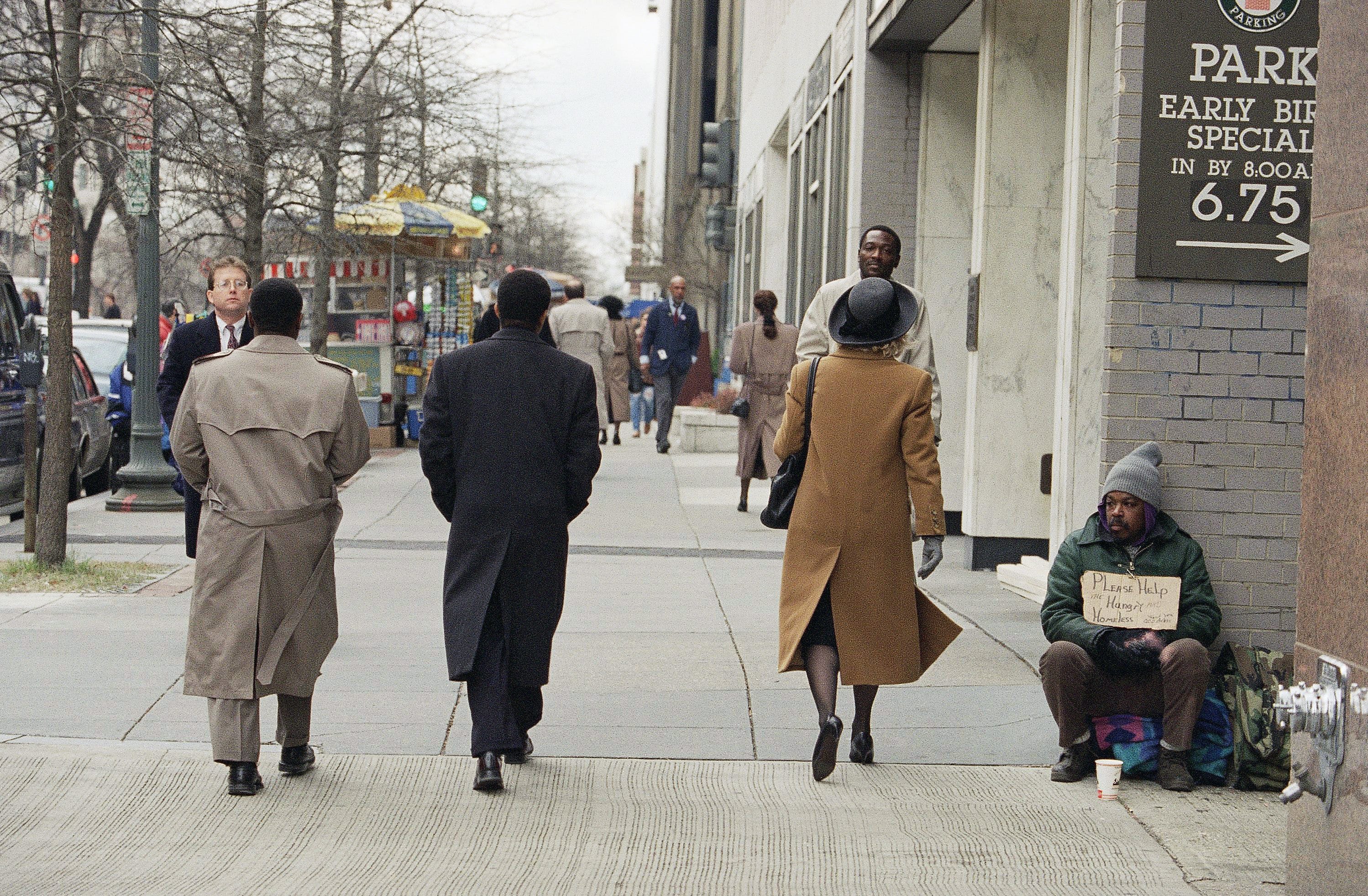
I stop. Not because I have answers, but because I believe that the first act of love is presence. To bear witness. To recognize another human being as real.
One evening, after leaving Lincoln Center with friends, we walked up Broadway. It was February—cold, sharp, unforgiving. At the corner of 71st Street and Broadway, I saw a man huddled in a doorway, curled into himself in a fetal position. No coat. No protection from the cold. Just breath and will.
I asked my friends if we could pause for a moment. They didn’t like that. It interrupted the flow of an otherwise pleasant evening. But I stopped anyway.
I knelt down and said, “Hi. I’m Gary. What’s your name?”
“Jimmy,” he said.
“How long have you been out here?”
“Three or four days.”
“Where’s your coat?”
“Some guys stole it yesterday.”
I asked why he chose this spot. He explained—quietly, practically—that being near a hotel made him safer. If something happened, someone might call the police. On side streets, people disappear.
I listened.
Then I said, “This is your lucky day. You weren’t born on the street, and we’re not going to let you die on it.”
He looked at me like someone who hadn’t heard language like that in a very long time.
I asked what he needed most. He didn’t ask for money. He didn’t ask for much at all.
“Maybe a sandwich.”
I turned to my friends and said, “We all have coats. This man has none. We have extras at home. Who’d like to give one?”
No one moved.
One friend offered his gloves.
I gave Jimmy my coat.
My friends walked on ahead. That was the last evening I spent with them. I don’t need friends who are present only when life is comfortable. I want friends who show up when it matters.

We took Jimmy to eat. I told him he could order anything he wanted. He was modest, hesitant—unaccustomed to choice. I encouraged him to eat well. We ordered wild salmon, a real meal, something nourishing. I brought him back to my office and told him to take his time.
Then I went to my manager and asked for a free meal card—breakfast, lunch, dinner—for a month. I handed it to Jimmy. His hands trembled.
We walked to a department store and bought him the warmest down coat they had. Then we crossed the street to a modest hotel—a single-room occupancy place. Clean. Safe. Warm.
I paid for thirty days.
He asked, “Why are you doing all this? No one gives me anything. Why me?”
I said, “You don’t have to accept it. You can give it back if you want. But what I’m offering isn’t charity—it’s recognition. You’re a human being. You deserve a chance.”
I told him I didn’t need to know his story to know he was suffering. And if I had the resources to help, then helping was not optional. That night may have cost me a few hundred dollars.
It was insignificant.
What mattered was possibility.
I told him about four men on 83rd Street who work together collecting salvageable materials—repairing, reselling, sharing income so they can afford a room, a shower, a meal, dignity. They hadn’t given up.
A physician who survived the concentration camps once wrote that those who endured believed they still had something to live for. Those who lost that belief fell into despair—and often died.
Hope is not abstract. It is physiological.
A month later, an envelope was waiting for me.
Inside was a note.
“Gary, you have no idea how that kindness saved me. I was drowning in self-loathing. I wanted to disappear.”
There was money enclosed. For the coat. The hotel. The food. The gloves.
He had paid it all back.
He was working again. He had his own apartment.
Yes—it was just one person.
But that is how love works. It doesn’t wait to fix everything. It moves where it can. And when it does, it restores something larger than one life—it restores belief.
If every person who had enough offered a little—time, attention, compassion—we would not have homelessness as we know it. We would have far less despair, far less addiction, far fewer people disappearing into the cracks.
I’ve seen animals sacrifice for one another. I’ve seen courage, gentleness, loyalty, joy.
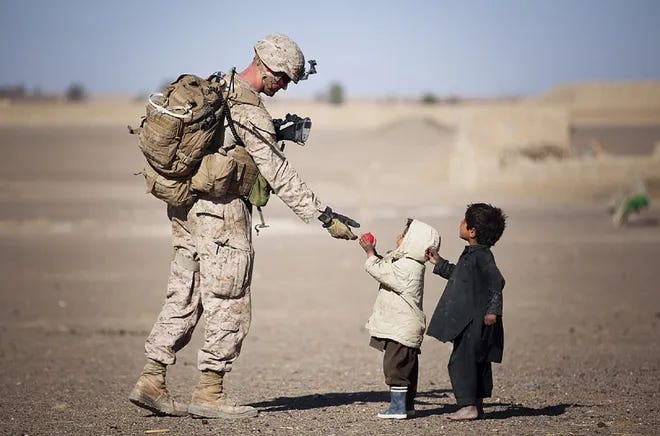
Love holds everything together.
It heals.
It prevents.
It gives meaning.
Love is the language beneath all language. And when we learn to listen again—to animals, to one another, to our own conscience—we remember that it was never complicated.
We just forgot.
Yes—it is only one person. But it is one person who has felt what happens when love for humanity is expressed not as sentiment, but as example. And that is how all meaningful change begins. Not through slogans or policies alone, but through lived demonstration.
Now imagine something quietly radical. Imagine if every American who had a roof over their head, food on the table, and some measure of stability chose—just once in a while—to extend kindness beyond their immediate circle. Not out of guilt. Not out of obligation. But out of recognition.
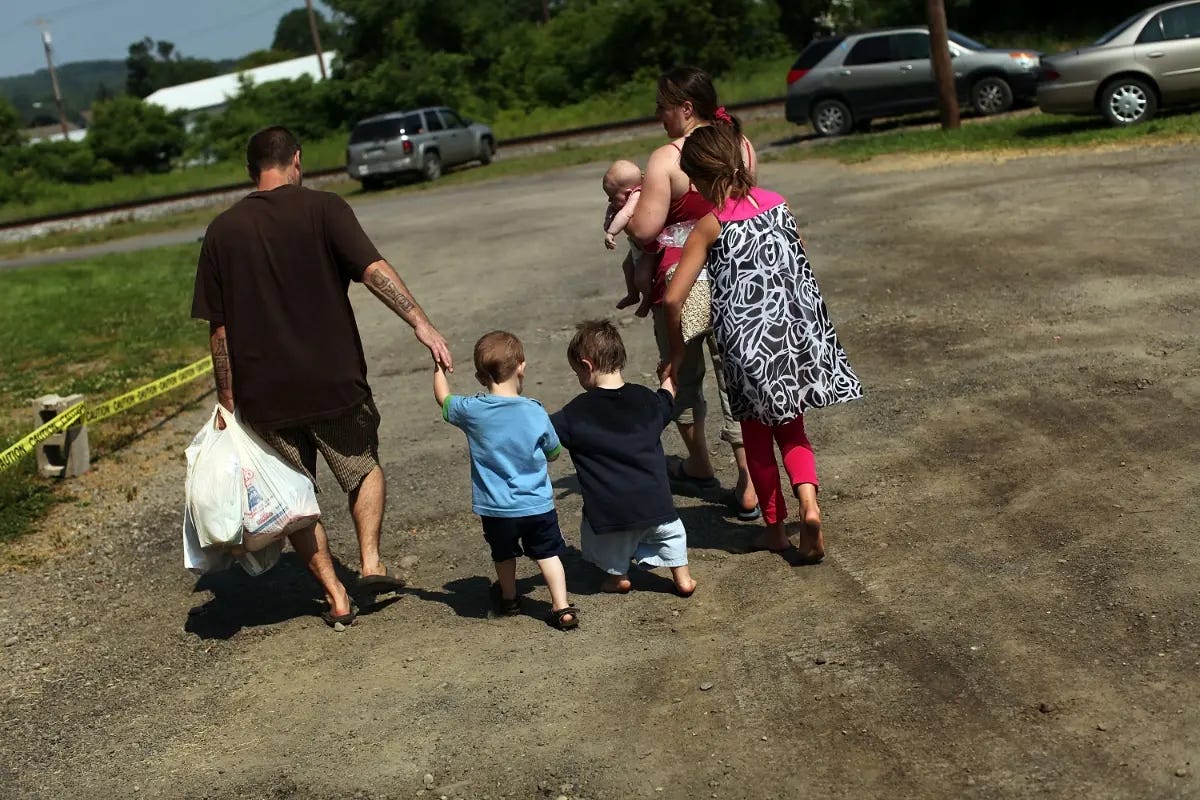
If that happened, homelessness as we know it would not exist. Despair would diminish. Depression would loosen its grip. Drug use, suicide, addiction—so often symptoms of isolation and hopelessness—would lose much of their fuel. Not because we fixed people, but because we remembered them.
Love thrives on presence. On honesty. On vulnerability.
And vulnerability, in a culture that worships invulnerability, feels dangerous. To be vulnerable is to risk pain. Yet pain is not pathology—it is evidence of openness. Love asks us, again and again, to remain open. It says, Be seen. Even here. Even now.
Those who have learned this lesson carry a particular gentleness. A humility born not of weakness, but of understanding. They know how fragile life is. In their presence, others feel safe enough to lower their armor. That safety is love made visible.
Not everything that calls itself love deserves the name. Possessiveness, jealousy, manipulation—these are counterfeits. They wear the mask of affection but are rooted in fear. Love does not deceive. It does not dominate. It does not wound in order to control.
When trust is broken, the heart recoils instinctively. Betrayal can fracture our sense of safety and shatter the illusion that love protects us from suffering. And yet, paradoxically, heartbreak becomes a teacher. It shows us where we placed our worth outside ourselves, where we confused another’s attention for our own inner source of value.
Love does not abandon us in those moments. It calls us back. It whispers, You are whole already. Stop asking to be completed.
The absence of love is visible far beyond personal relationships. It shows up in our institutions, in politics, in economics. A society that prizes wealth over compassion, efficiency over dignity, success over decency cannot sustain its soul.
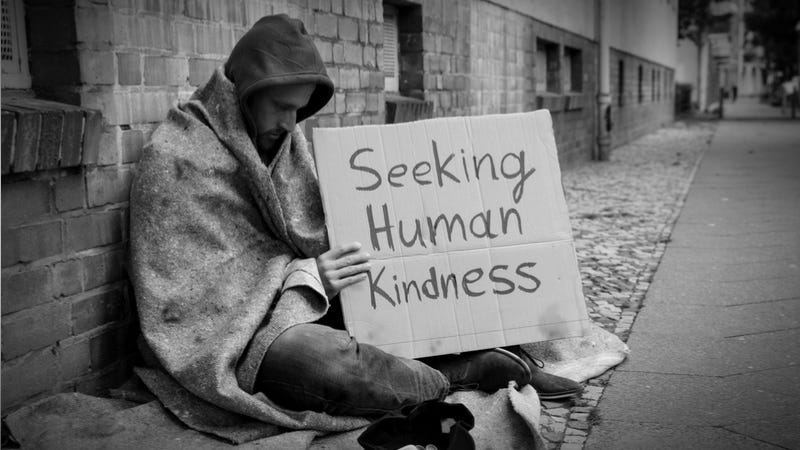
Children go hungry not because food is scarce, but because love is absent from the systems that distribute it. Wars are waged not because peace is impossible, but because leaders remain trapped in the illusion of us versus them. Love recognizes no such division. It knows no borders. It does not exclude anyone from the table of life.
If compassion guided policy, peace would arise as naturally as breath. Love is not weakness. It is the only strength that endures—the courage to see oneself in another, to choose understanding over dominance.
Sometimes love must dismantle what is false before it can reveal what is true. Tears are part of that dismantling. They cleanse the nervous system of stored grief. Science confirms what intuition has always known: emotional tears contain stress hormones. Crying is not weakness—it is release.
For generations, men especially have been taught to hide tenderness behind anger. They were told vulnerability is unmanly, that emotion is dangerous. But a man who cannot cry is half alive. The human body was designed for the full range of feeling—laughter, sorrow, compassion, awe. To suppress any of it is to starve the soul.
A person who can laugh deeply, weep freely, forgive easily—that person is healthy, regardless of diagnosis.
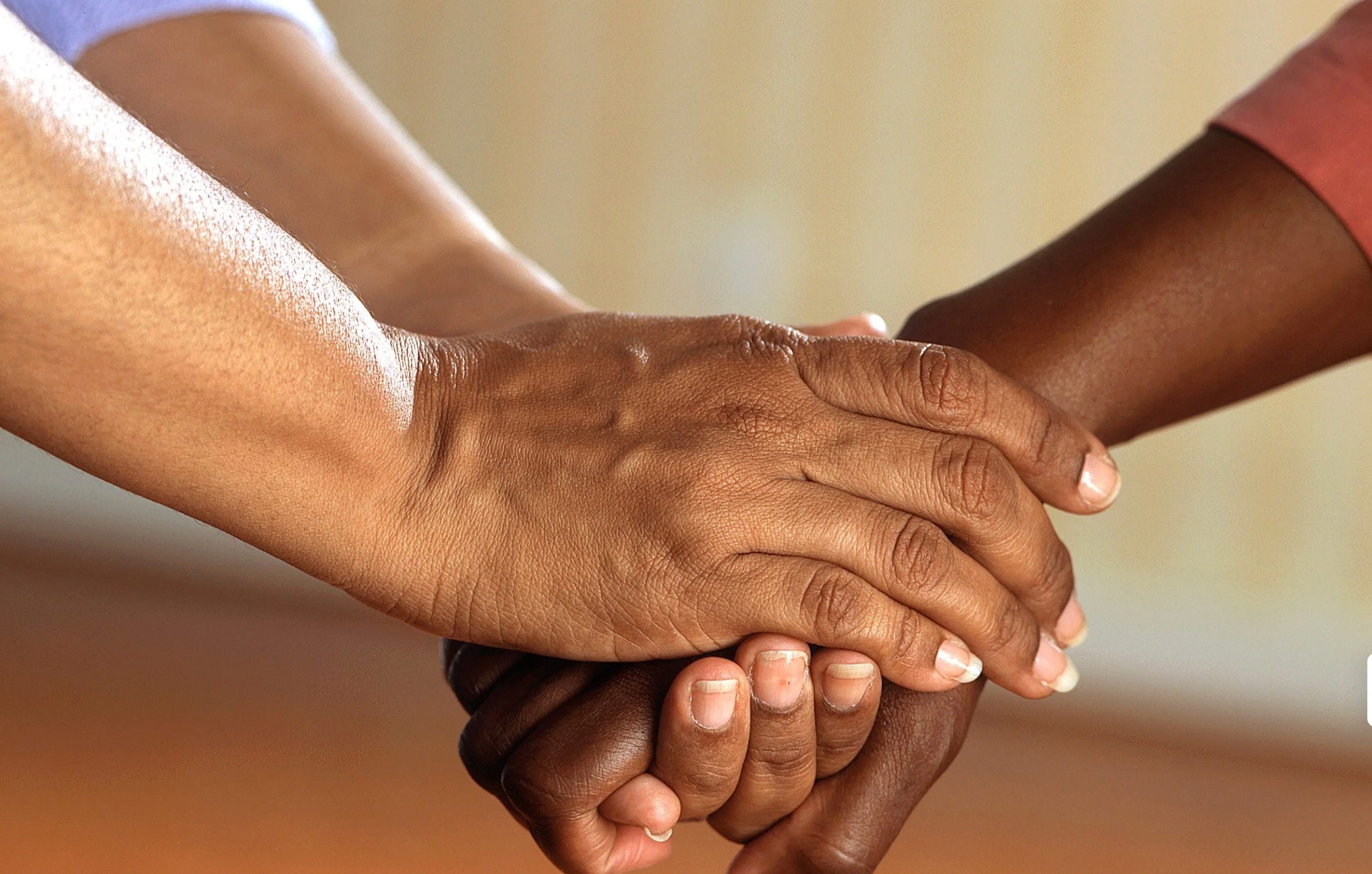
Love is both spiritual and physiological, and at times the two meet in ways we are only beginning to understand. A scientist once observed that cells thrive in a nourishing environment and wither under stress. Humans are no different. The chemistry of love—oxytocin, serotonin, dopamine—signals safety, growth, repair. Fear tells the body to defend, to contract, to survive.
Our perceptions shape our biology. When we see the world through love, our cells receive that message. When we see through fear, they receive that as well. Every thought becomes a pulse in the bloodstream. Every belief leaves a signature in the body.
Acts of kindness are not sentimental gestures; they are biological events. Neuroscience has shown that compassion stimulates the growth of new neural pathways and strengthens the circuits of empathy. Each act of care literally rewires the brain toward wholeness. Even the smallest expressions—a smile, a gentle word, the willingness to listen without interruption—send ripples outward. They calm nervous systems, restore trust, and contribute to the healing of the collective body.
Life rewards coherence. Cooperation, not competition, is nature’s preferred design. Cells cooperate to form tissues. Organs cooperate to sustain a body. Ecosystems cooperate to maintain balance. When cooperation breaks down, systems collapse. When it is restored, life flourishes.
Love is not confined to the personal or emotional realm. It is a cosmic principle—the organizing intelligence of the universe itself. From the smallest cell to the largest galaxy, every living system depends upon harmony. When harmony is disrupted, disorder follows. To live in love is to participate consciously in the order of things, to align one’s inner life with the deeper architecture of reality.

The great teachers across cultures and centuries have always known this. “Love your enemy.” “Have compassion for all beings.” “Do unto others as you would have them do unto you.” Different words, same recognition: there is no other. The division between “me” and “you,” “us” and “them,” is a construction of the mind. The heart does not recognize it.
When we act from love, we align ourselves with the creative force of the cosmos. To harm another is to harm ourselves, whether we feel it immediately or not. To forgive another is not an act of moral superiority; it is an act of liberation. What we extend outward becomes the environment we live within. What we send out, we become.
Can love die? It can be obscured. It can be smothered beneath fear, distorted by trauma, buried beneath conditioning. But it cannot die. Love is life force itself. And life force does not disappear—it transforms.
Even when the body fails, the energy that animated it does not vanish. Our cells cooperate in astonishing harmony every moment of our lives. Trillions of them communicate, repair, adapt, and sustain us without conscious effort. This cooperation is love written into biology. It is evidence that unity is not an aspiration—it is our natural state.
When we forget this, we suffer. When we believe we are isolated, separate, alone, the body contracts, the mind hardens, the heart closes. But when we remember—when we feel our connection again—healing begins. Not because something new has been added, but because something essential has been restored.
The journey of love, then, is not discovery. It is remembrance. We are not learning something foreign; we are remembering what we have always been. Beneath every layer of conditioning, beneath every fear and defense, love remains intact.

Love is the essence of sanity in a world that has forgotten itself. It is the foundation of peace, the antidote to fear, the ground of genuine freedom. To live in love is to live awake—to recognize connection everywhere, to act with kindness not as virtue but as truth, to honor the life that breathes through all things.
When love moves through thought, it becomes wisdom.
When love moves through action, it becomes justice.
When love moves through being, it becomes peace.
And in the quiet space beyond striving—beyond identity, beyond achievement, beyond fear—love simply is. The pulse beneath every heartbeat. The breath within every breath. The single song the universe has never stopped singing.
When we listen for it, we remember who we are.
Gary Null, PhD, is an internationally renowned expert on health and nutrition. He has authored more than 70 best-selling books and directed over 100 critically acclaimed, feature-length documentary films focused on natural health, self-empowerment, and environmental awareness. He hosts The Gary Null Show weekdays from noon–1 p.m. EST on PRN.Live. Learn more at garynull.com.

Much appreciated message that can easily slip through the cracks of our busy lives but is never completely forgotten. Without love, life has no purpose. With love, all things are possible ❤️
"For God didn't give us a spirit of fear, but of power, of love and of a sound mind."
2 Timothy 1:7
Your kind gesture was all that was needed to turn Jimmy's life around to one of dignity and purpose.
Yes, one person at a time can create miracles.