


From the outside, Nebraska seems like exactly the kind of place where the MAHA movement would be taking root. It is one of the nation’s most agriculture-dependent states, where farmers and rural families live closest to the questions now driving a national conversation about pesticides, contaminated water, soil health, corporate consolidation, and the future of America’s food supply.
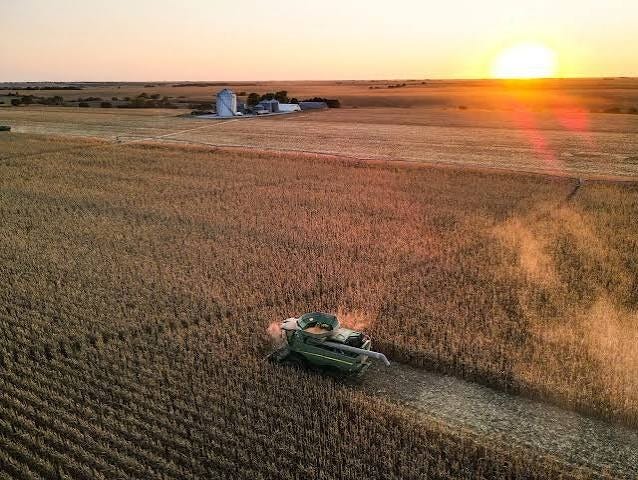
Just across the Missouri River in Iowa, those concerns have found an unusually outspoken political champion. Republican gubernatorial nominee Zach Lahn has publicly questioned glyphosate safety, opposed efforts to shield pesticide manufacturers from certain lawsuits, and pushed regenerative agriculture and agricultural diversification into the political conversation. His willingness to challenge powerful agricultural interests has made him something of an anomaly in Midwest politics.
Nebraska is looking for its political champion. Despite serious concerns about nitrate-contaminated groundwater, soil health, and the long-term sustainability of the state’s agricultural system, regenerative agriculture, the state lacks a Zach Lahn. Politicians on both sides talk about supporting farmers, but far fewer are willing to question the policies, markets, and industry influence that have helped lock farmers into a system built around a handful of commodity crops and heavy dependence on agricultural inputs.
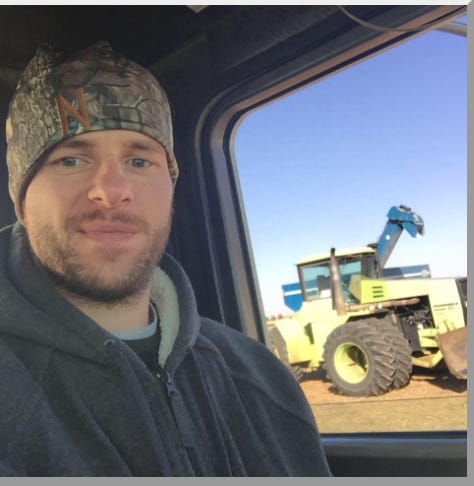
To learn more, I spoke with Graham Christensen, a fifth-generation Nebraska farmer who has spent years trying to untangle many of these same questions from inside the system. Christensen and his brother Max manage their family’s farm near Oakland, Nebraska, where they have gradually incorporated cover crops, no-till, greater crop diversity, and other regenerative practices while working to reduce fertilizer and chemical inputs. He also co-founded RegeNErate Nebraska and has worked in agricultural policy, giving him an unusual view of the problem from both the farm field and the statehouse.
What made Christensen particularly compelling to me was that he did not offer an easy villain. He understands why farmers adopted the system they did, why many are now questioning it, and why changing course is so much harder than simply telling them to stop spraying chemicals.
“It’s super complex because it’s layered over decades and generations and different events,” Christensen told me.
He explained why Nebraska’s lack of a Zach Lahn is about more than political courage. It’s also about markets, land ownership, crop insurance, the Farm Bill, processing infrastructure, industry consolidation, and the financial risk farmers take when they try to do something different.
How Nebraska Got Here
The rise in industrial agriculture means more than large corporations simply purchasing Nebraska farms. USDA data tell a more complicated story. In the 2022 Census of Agriculture, 41,410 of Nebraska’s 44,479 farms, about 93 percent, were more than half-owned by one producer’s household or extended family.
The consolidation Christensen describes is different: family farmers increasingly operate inside a highly consolidated agricultural system.
He watched that transition happen in his own family.
Christensen remembers his grandfather’s generation, and then his father’s, approaching farming with the belief that everyone was working toward the same goal: producing a reliable, abundant food supply.
New seed technology, fertilizers, and herbicides promised higher yields and greater efficiency, and farmers trusted the companies and agricultural institutions bringing those products to them.
Over time, those tools became embedded in farming economics. Only later did Christensen and his brother begin asking harder questions about fertilizer, chemicals, and water contamination. Those conversations were not always easy around the kitchen table. His father passed away several years ago, but Graham remembers the sensitivity that surfaced when he and Max began questioning practices their parents had adopted in good faith.
“I just always really tried to have them understand that...it’s not the farmer’s fault,” Christensen told me.
Farmers did not wake up one morning and decide they wanted degraded soil, contaminated water, or dependence on chemical inputs. Most adopted practices the agricultural system told them were modern, efficient, and responsible.
Now many farmers are feeling pressure from several directions at once. Consumers are asking harder questions about how food is grown, while farmers themselves are watching friends, neighbors, and family members face cancer and other serious illnesses and beginning to wonder what role decades of chemical exposure may have played.
The challenge is figuring out how to change farming practices without putting the farm itself at risk, especially when meaningful political support to help farmers make that transition is scarce.
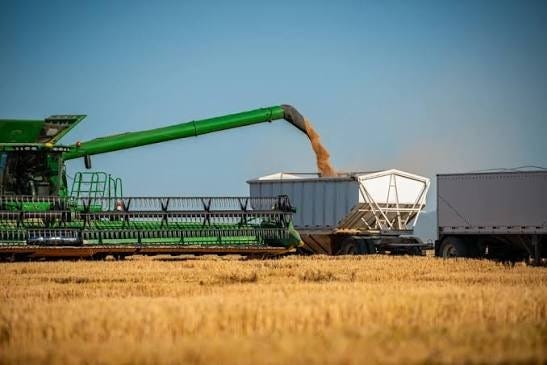
Family Farms Inside an Industrial System
Family farmers may still control most of Nebraska’s acreage, but they buy seed, fertilizer, and chemicals from consolidated industries, sell into commodity markets built around a relatively narrow group of crops, and may rent land rather than own it.
Christensen believes those forces have gradually narrowed what farmers can realistically grow.
Federal farm policy plays a significant role. Christensen argues that decades of commodity programs and subsidies have tilted the economics toward a limited group of crops, making them easier to finance, insure, and sell than other crops. Current USDA programs still provide price and revenue protection for crops such as corn, soybeans, and wheat through programs such as Agriculture Risk Coverage and Price Loss Coverage.
“We’ve really kind of been funneled in through those farm programs into only being able to grow a few specialized things here,” he said.
Christensen does not believe that the government farm safety net should stop supporting farmers, but would like to see policy shift towards helping farmers diversify what they grow and support the transition towards regenerative agriculture. He regularly hears from farmers who believe in soil health but rent much of the ground they farm. Adding a cover crop or experimenting with a different rotation means taking on additional cost and risk, sometimes on land they may not control long enough to see the benefit.
“I really believe in the soil health thing,” Christensen said farmers will tell him, before asking, “How can you scale that?” or explaining, “I rent all the land. I don’t own the land.”
The Christensen brothers have approached their own transition incrementally, identifying problems each year and changing what they can.
“We had to just cut it out a little bit here and a little bit there until we had a cleaner system and the soil’s starting to come back,” Christensen said.
Other farmers are interested, Christensen told me, but “they don’t know the first way of how to get there from here, and they’re stuck in this other system.”
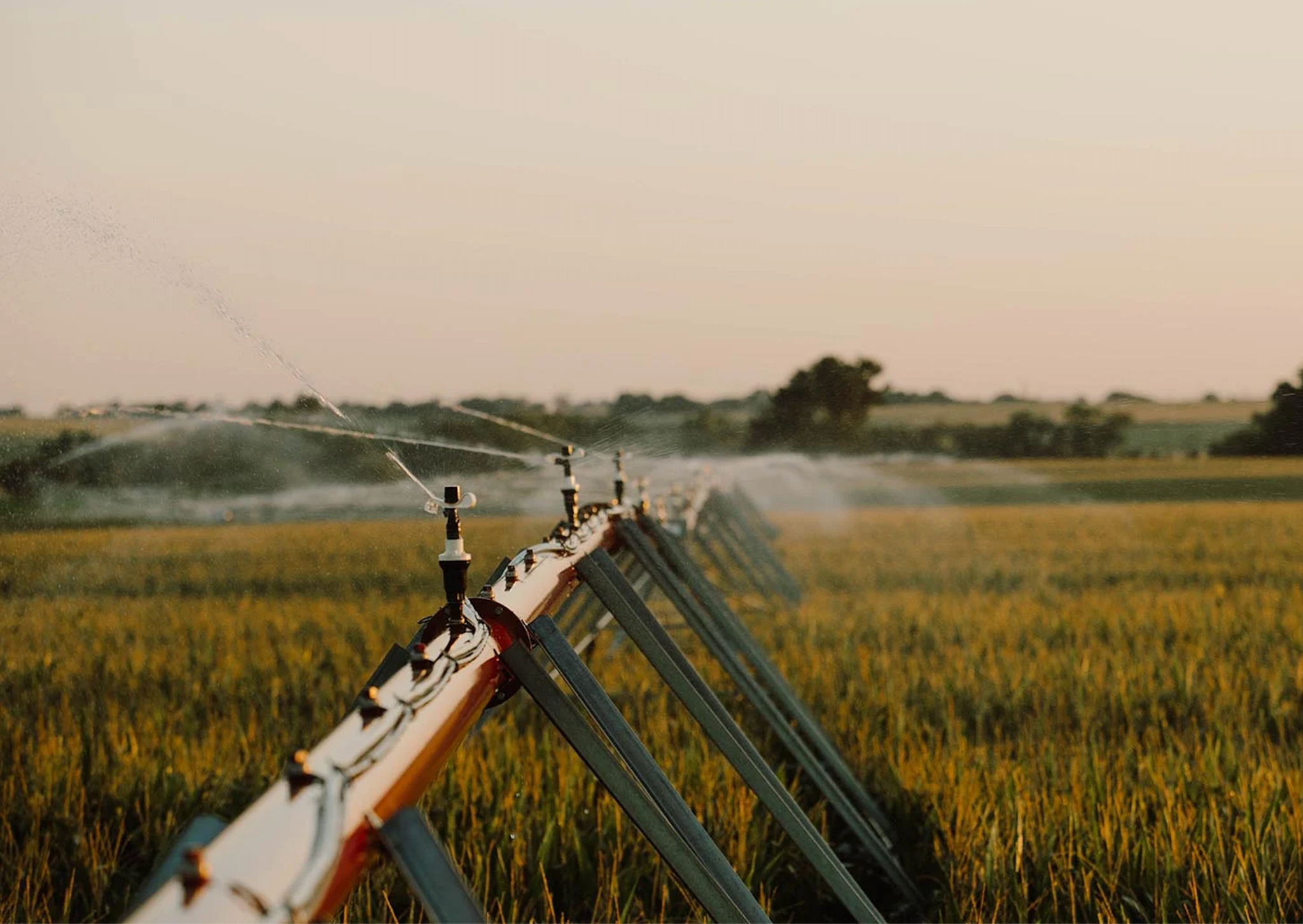
The Journey to Farming Differently
Christensen is equally candid that regenerative farming is not a straight path to chemical-free perfection.
After trying to grow non-GMO food-grade soybeans without herbicides, severe weed pressure forced the brothers to return some acreage to glyphosate-tolerant soybeans while they figured out another approach.
They didn’t give up and tried again on a 160-acre field; they grew a roughly three-foot cover crop, planted food-grade non-GMO soybeans directly into it, and used one glyphosate application to terminate the cover crop before the soybeans emerged. Four robotic weed cutters then moved through the field rather than relying on another herbicide application.
“No spray actually ever touched the soybean,” Christensen said.
The approach did not eliminate glyphosate, but it reduced how much the brothers needed it. “We’re just trying to . . . be more creative,” he said. That distinction matters. Moving toward regenerative agriculture is rarely all-or-nothing. Sometimes progress begins by finding ways to use less while building a system that can eventually function differently.
Where Are Nebraska’s Political Champions?
Nebraska does have politicians and political organizations talking about soil health, cover crops, conservation, local processing, and family farms, but they are missing a prominent political figure who has made reducing pesticide dependence, confronting the role of chemical companies, and restructuring farm policy around supporting regenerative agriculture a defining public issue the way Zach Lahn has in Iowa.
Christensen says that lack of political leadership has been one of the most frustrating parts of his work.
“We’ve just had a huge challenge with leadership, really in either party, being able to want to get engaged or be a champion,” he said.
After hosting a bipartisan group of state senators at his farm, Christensen said he was encouraged by their discussions around Nebraska’s water problems. Still, he believes meaningful reform requires lawmakers willing to connect water quality, soil health, farm economics and chemical dependence rather than addressing each in isolation.
“We’re looking for champions,” Christensen said. “We just haven’t had those people yet.”
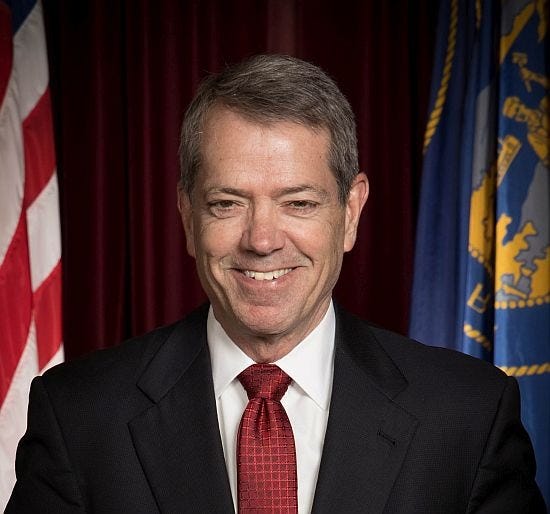
Nebraska is not ignoring agricultural environmental problems. Gov. Jim Pillen’s Water Quality and Quantity Task Force has focused on nitrate contamination, water sustainability, and agricultural practices, and in March recommended a series of actions to improve water quality. Pillen has emphasized addressing the problem through “innovation and education, not more regulation.”
But pesticide reduction has been far less prominent in the political conversation, and that is key when the stated goal is healthier soil.
Healthy soil is a living ecosystem filled with bacteria, fungi, and other organisms that cycle nutrients and support plant health. Rodale Institute’s long-running research has found improvements in soil health under organic systems, while research it has summarized suggests pesticide use can alter microbial communities and interfere with biological processes, including nitrogen fixation.
That makes it difficult to have a serious conversation about rebuilding soil health without also talking about the chemicals being applied to that soil.
Working Together
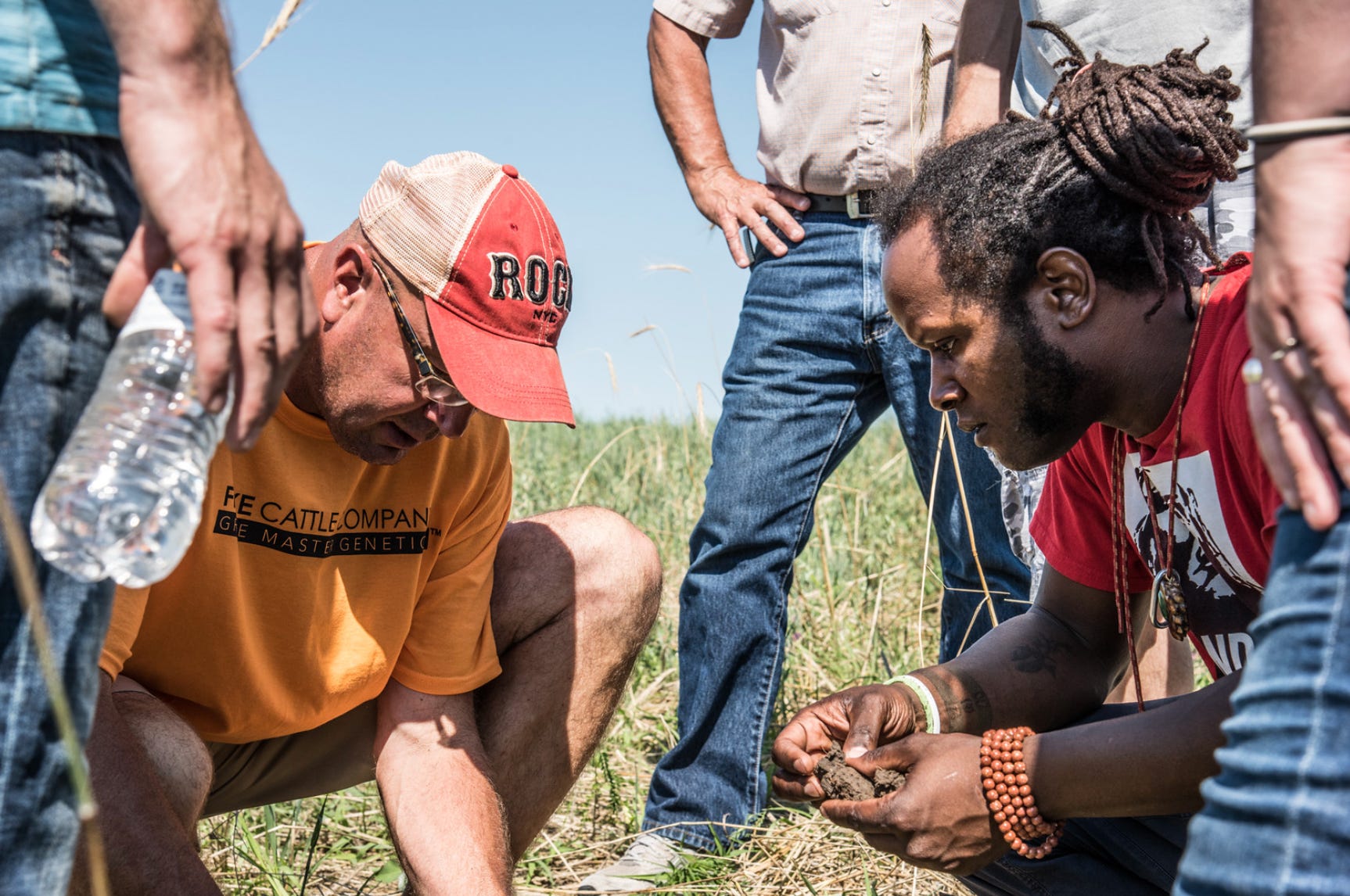
When I asked Christensen what would need to change for regenerative agriculture to become something closer to the norm, he offered a practical list: broaden government support for crops beyond a handful of commodities, connect crop insurance more closely to conservation, invest in mid-sized processing facilities, help young farmers access land, rebuild regional food markets and enforce antitrust laws more aggressively.
Christensen is optimistic for the future as he engages with the young people RegeNErate Nebraska works with in rural towns, cities, schools and tribal communities. “They light up,” he said. “They get into the conversations, start asking questions, and then they want to know how they can get involved.”
America’s agricultural system, in Nebraska and across the country, did not arrive where it is overnight, and farmers cannot rebuild it quickly or alone. For decades, government policy, universities, agricultural companies, processors, lenders, and farmers aligned around a model designed to maximize production and efficiency. That alignment was powerful enough to transform American agriculture into what it is today.
Now we have the opportunity to align around something different.
Real change happens when farmers, consumers, and politicians work together to build healthier soil, healthier communities, and a food system worthy of the next generation.

Seems like a no brainer that less chemicals on the fields would help make the water cleaner. I was raised in rural NE in the 90s and still live next to corn fields - and thankfully my family has always had clean water, whether by distillation (that my dad who was an engineer installed in our home himself) or R.O. But I still have conversations with my friends & family about how their tap water is bad for them to drink! It’s mind boggling! Our state sits on top of the largest aquifer - and our water is poison.
I'm very pleased with the push by MAHA to get back to regenerative farming! It's a slow process but worth it. I buy our foods from regenerative farmers and encourage others to do so as well.