


“The attention economy has essentially captured our children, and it’s not surprising. It’s engineered to do so.”
So said Debra Sheldon during the MAHA Institute’s Summit on Screen & Social Media Harms: Reclaiming Childhood, held October 21, 2026, at the Willard Hotel in Washington, D.C.
Citing research on the effects of screen use, Sheldon, the Institute’s vice president, described how early exposure to digital media can begin before a child’s first birthday, with toddlers spending an average of two hours a day on screens and preteens and teenagers averaging four or more hours.

Sheldon discussed research linking screen use to attention and behavioral difficulties, sleep problems, anxiety, depression, and low self-esteem, with nearly half of teenagers reporting experiences with cyberbullying
Children have only one childhood. Yet much of it now is devoured and co-opted by a screen, while parents and teachers give in to technology designed to addict children.
“We really should be angry when a healthy childhood comes second to making money,” said Dr. Stephanie Haridopolos of the Office of the Surgeon General.
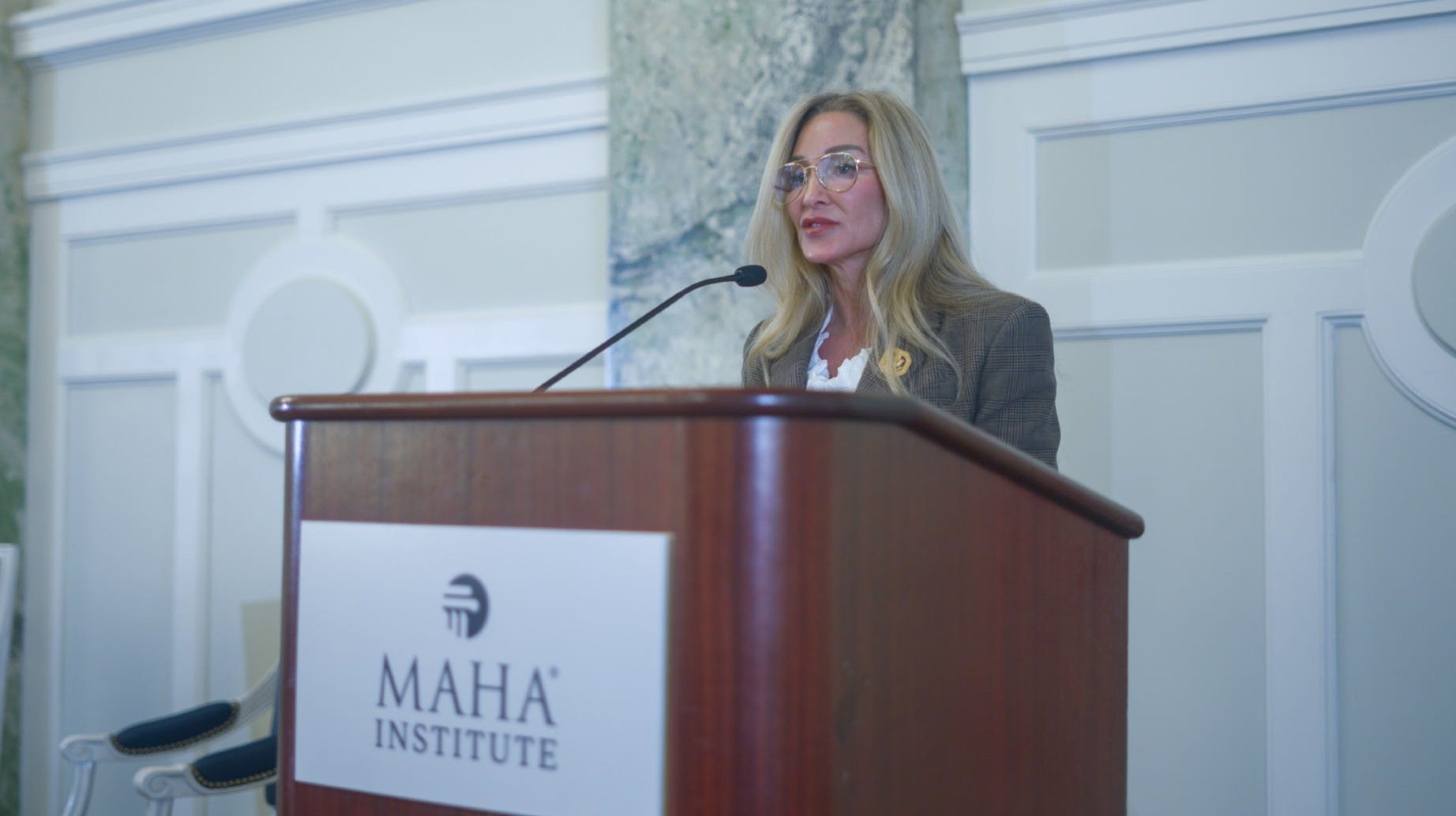
Haridopolos, a family physician and mother of three, described research linking heavy screen use with concerns about sleep, physical activity, vision, academic performance and mental health. She compared Big Tech to Big Tobacco.
London’s Law

Following the tragic suicide of Charay Gad’s 12-year-old daughter, London, an investigation uncovered online searches that lead London to self-harm and suicidal content. London’s death also raised questions about broader mental health treatments, and Gad says she cannot prove any single factor caused her death. But she believes social media platforms are failing to protect vulnerable children. “A child’s vulnerability should never be someone’s business model,” she told the MAHA Institute summit.
Citing CDC figures, Gad noted that 481 children ages 10 to 14 died by suicide in the reported period. “The statistics stop at 481. Our grief does not.” Through London’s Law and Unscripted Minds, she is fighting for greater transparency, stronger safeguards, and accountability, so other families don’t have to live with the same loss.
Policy Panel: From Phone-Free Schools to Tech Company Accountability
Tennessee State Rep. Michele Reneau sponsored legislation requiring public school districts and charter schools serving kindergarten through fifth grade to adopt policies governing students’ use of digital devices, with the goal to minimize unnecessary screen time while preserving effective instruction. The measure, signed into law as Public Chapter 808, took effect July 1, 2026.
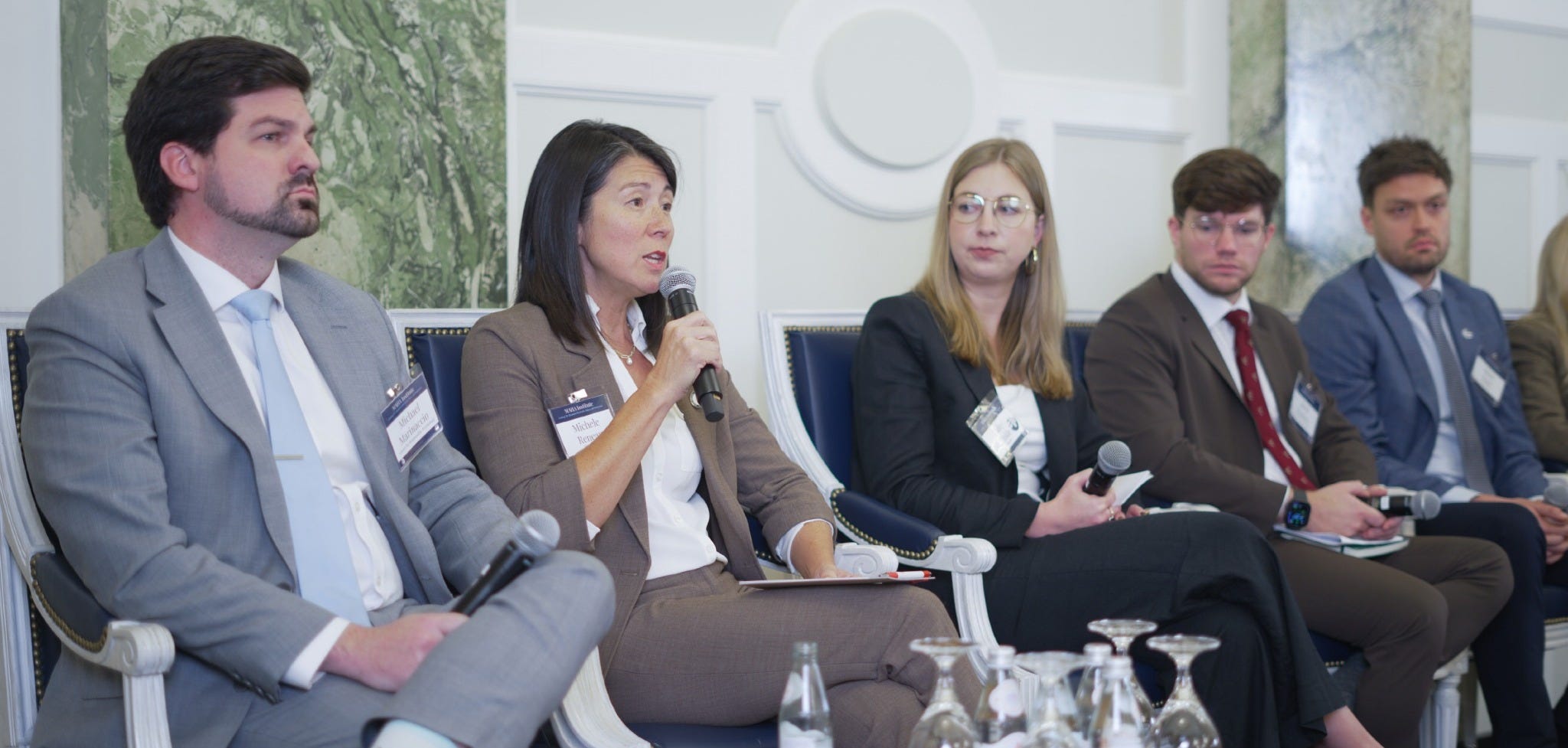
Haley Hinkle, policy counsel at Fairplay, highlighted the growing momentum behind phone-free schools, saying, “So we’ve got about 24 states, plus the District of Columbia, that are now officially bell to bell phone-free schools required at the state level.”
Jason Frost, co-founder and CEO of Wired Human, raised the concept of duty of care: the principle that technology companies have a responsibility to take reasonable steps to protect children from foreseeable harm associated with their products. Responsibility does not rest exclusively on parents to monitor screen time, set restrictions, or intervene after something goes wrong. Companies have a duty to consider how their platforms are designed, what risks they expose young users to, and what safeguards are needed to protect them.
Doctors raise concerns about physical health
Dr. Sandra Cremers, an ophthalmologist specializing in eye-surface disease, warned that prolonged screen use can damage eye health. She described how the brain’s reward response to screens can suppress blinking as children become absorbed in what they’re watching or scrolling past. Fewer blinks mean less frequent spreading of tears across the eye, which can leave the surface dry and irritated. Cremers also raised concerns about damage to the meibomian glands, which produce the oils that keep tears from evaporating too quickly, and that prolonged screen use contributes to chronic eye health issues. She urged families to take the physical effects of screen use seriously and make time away from devices a regular habit.
Dr. Wilson Compton, deputy director of the National Institute on Drug Abuse, explained how social media engages the same brain systems involved in substance use. A “like” triggers the brain’s reward system, making you feel good and encouraging you to repeat the behavior. Social media algorithms learn what grabs your attention and show you more of it, strengthening these reward loops in the brain.
He urged parents and clinicians to ask themselves whether screen use interferes with sleep, school or relationships, and whether young people struggle to control their screen use.
“Smart Schools”: a false promise
The debate extends into classrooms, where schools have spent billions on educational tech.

Casey Sacks of the U.S. Department of Education compared educational technology to food. Some tools can support learning, much like nutritious food supports a child’s growth. Others are designed to keep kids clicking and coming back for more, offering the digital equivalent of junk food. She warned that some products amount to “candy in a broccoli wrapper,” appearing educational while prioritizing engagement over learning.
Sacks said the goal should be to choose technology based on whether it helps children become stronger learners, rather than how much technology they use. “My measure of success for education technology is not how much technology is actually in Emma’s life,” Sacks said, referring to a hypothetical 10-year-old student. “It’s whether the technology we give her helps her become a stronger learner who grows up to be a more capable and fully human adult.”
For Brian Scannell, an English and history teacher, the effects of screens are seen in students’ struggles with reading and sustained attention. He said reading requires children to imagine entire worlds, an ability he believes is declining as digital entertainment fills more of their time.
“We’re in a crisis of imagination,” Scannell said.
The solution, he says, is to surround children with the arts.
Dr. Brad Kershner, a former Waldorf School administrator, said his school has prohibited cell phones for five years. He called phone-free schools “a low bar.”
Parents have been told the implementation of educational technologies were necessary so that children gained tech literacy to prepare for the workforce and make learning easier. But Kershner rejected this argument.
“What we need to do is prepare children to be intelligent and thoughtful and able to have relationships and conversation and think and read and write,” he said.
The Tech Exit
Clare Morell, author of Tech Exit, sang an encouraging message: you can raise screen-free children. Her book provides practical guidance for families who want to opt out but don’t know where to start.
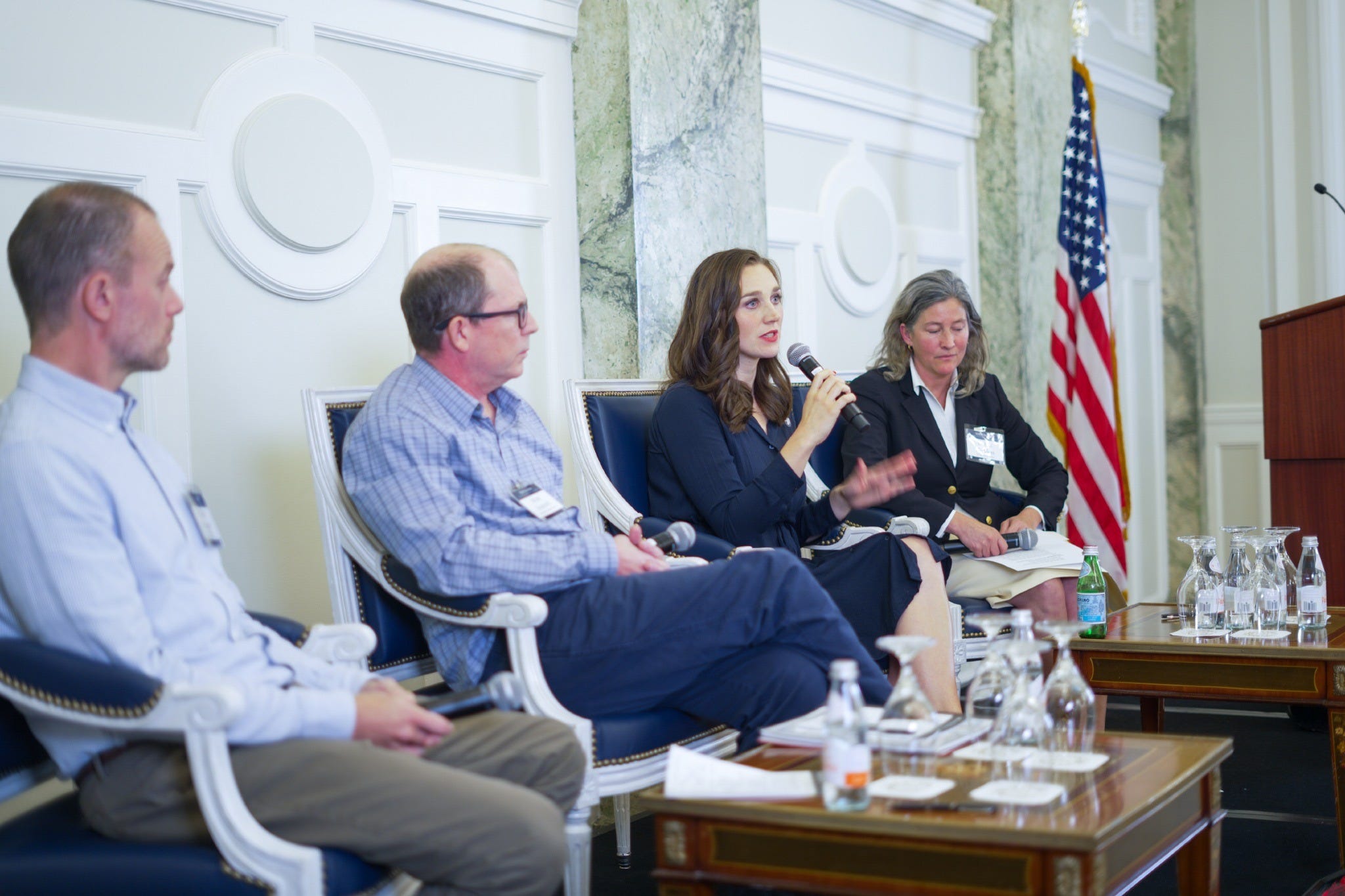
She advocates for screen-free homes, with room for intentional exceptions like family movie nights, and believes parents must model the habits they want their children to develop. If teenagers need a way to stay in touch, she recommends simple phones without internet access. Removing devices is the first half of the answer. The other half is that children need traditional, grounded activities that build purpose and connection.
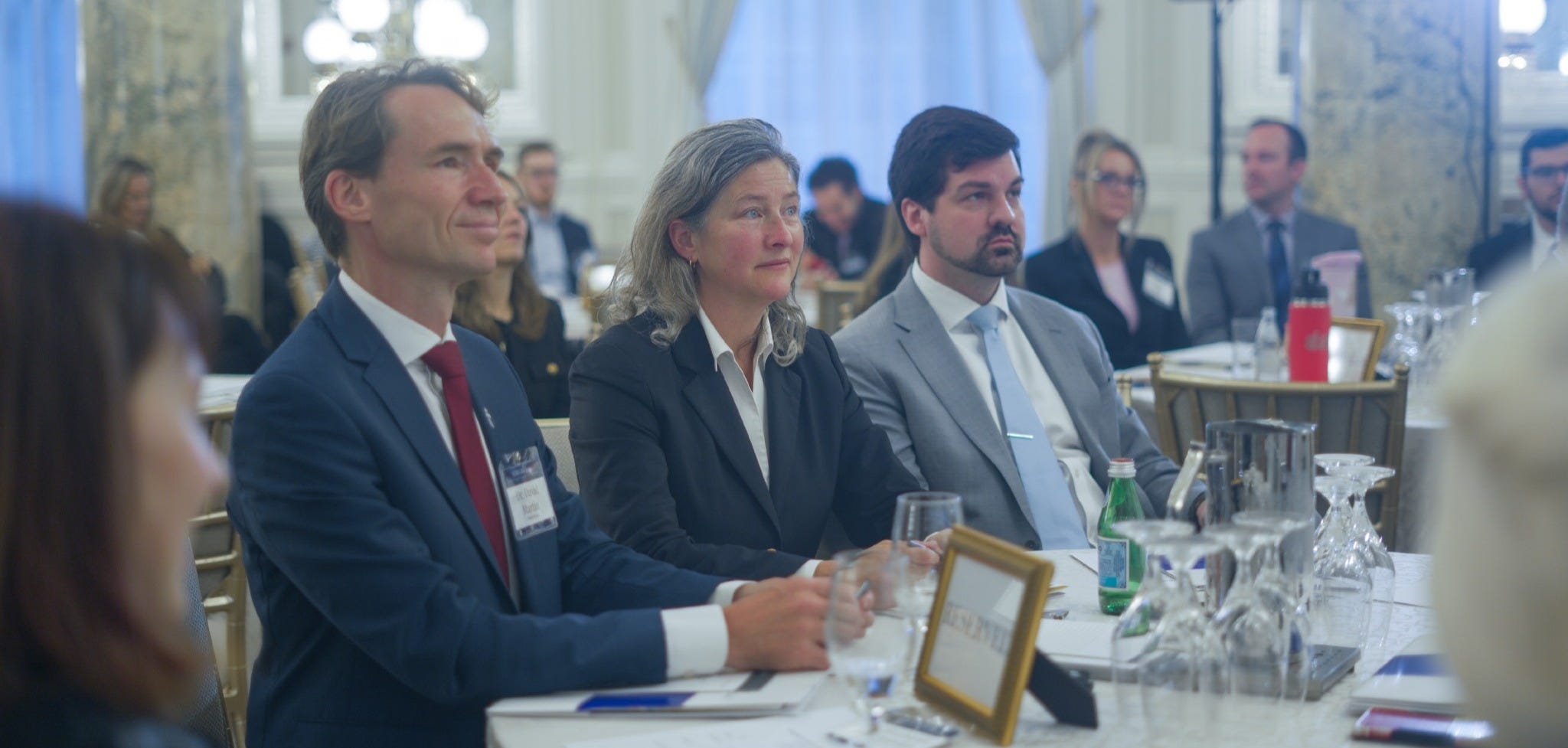
Dr. David Martin, a pediatric endocrinologist and researcher in integrative medicine, presented scientific research from 1,500 families.
After parents reported positive changes when they removed television from their homes for a month, Martin, who came to the roundtable from his native Germany, helped develop a “media fasting” program that encouraged families to replace screen time with shared daily activities. The program used a calendar with a new activity for families to complete together each day.
Martin argued that children need movement, nature, physical touch and genuine human connection to develop. Screens can never fulfill the depth of real-world experiences that children need to thrive. “Those 12 senses are cared for in Waldorf education, and they are ignored by our screens,” he said.
The summit closed with MAHA Institute’s Sheldon urging parents to work together rather than face the pressure alone. Changing household habits is difficult when screens are woven into school, friendships and daily routines. Schools and communities can help make different choices more practical.
For parents considering a change, Morell offered a straightforward starting point: take a break from interactive screens, find a few families willing to join you, and make room for activities children can enjoy together in real life.
