


Over the Mother’s Day weekend, the Trump administration unveiled a new maternal health and fertility initiative, signaling one of the most significant federal shifts toward family-centered health policy in years.
At the center of the announcement was the launch of Moms.gov, a new federal website designed to support women with information on pregnancy, nutrition, breastfeeding, mental health, fertility resources, and more.

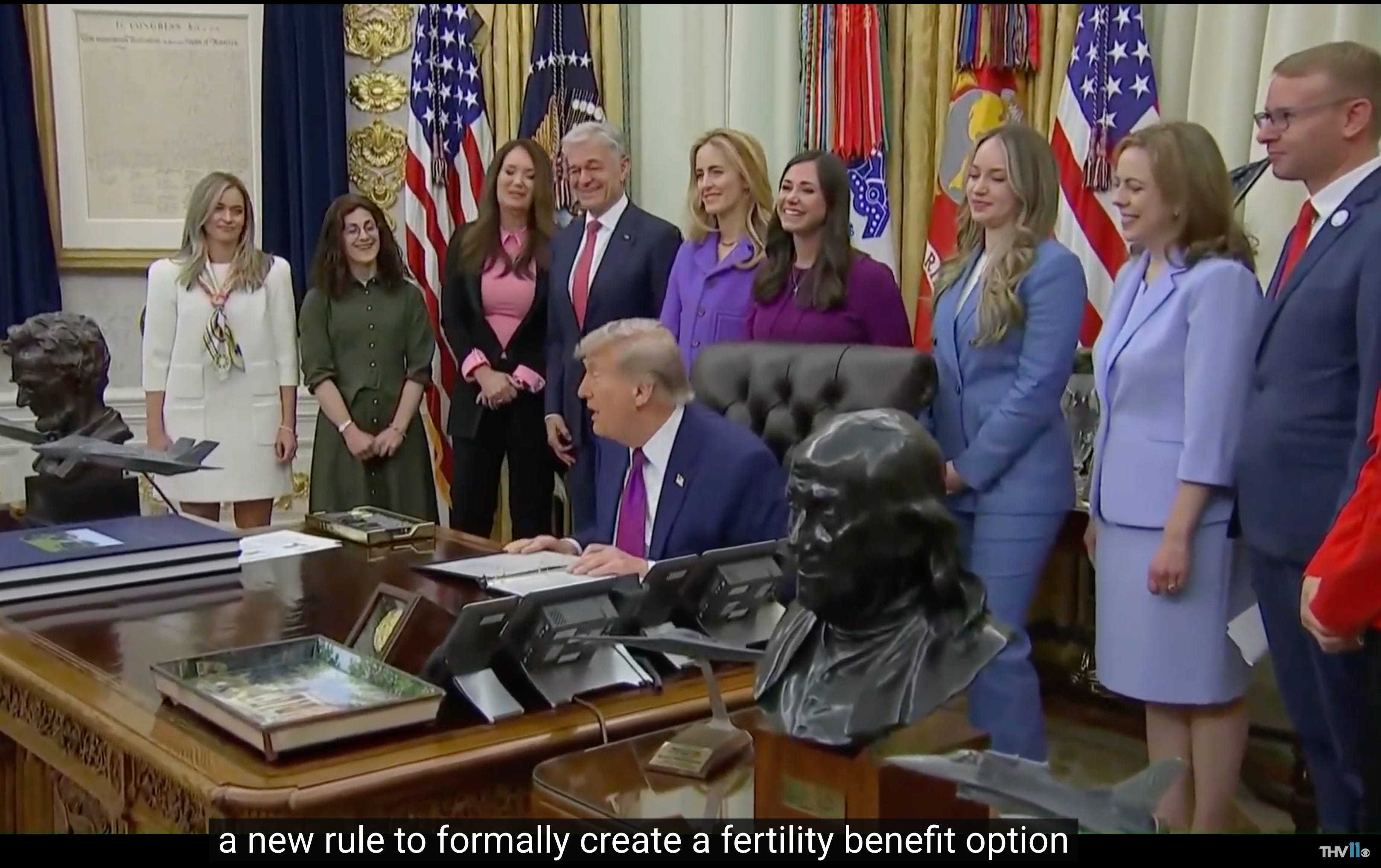
On Monday, the administration added to its weekend announcement. During the White House Maternal Healthcare Event, hosted by President Donald Trump alongside HHS Secretary Robert F. Kennedy Jr., CMS Administrator Dr. Mehmet Oz, and senior administration officials, the president unveiled a proposed rule to expand access to fertility benefits, including IVF, through employer-sponsored insurance plans.
“We’re taking historic action to help American families have healthy babies, healthy mothers, and a healthy future,” the president said.
Together, the announcements reflect a broader MAHA strategy that increasingly views maternal health, fertility, nutrition, metabolic health, and chronic disease prevention as inseparable.
A New Federal Focus on Maternal Health
For decades, maternal health conversations in the United States have focused primarily on labor and delivery. But federal officials are now framing maternal health much more broadly, emphasizing the health of women before conception, during pregnancy, and throughout the postpartum period.
In an official release on Sunday, Mother’s Day, HHS Secretary Kennedy states, “This Mother’s Day, the Trump Administration is strengthening its commitment to America’s families by equipping mothers and fathers with the resources and information they need to build healthy, prosperous lives.”
He continues, “Moms.gov delivers critical tools and support to help parents foster healthy pregnancies, strengthen young families, and create brighter futures for their children. This is how you Make America Healthy Again.”
The administration says the goal is to create a single, easy-to-navigate federal resource for women and families.

Why This Matters for Women
At Monday’s White House Maternal Healthcare Event, administration officials emphasized that maternal health begins long before the baby is born and is shaped by the overall health of women before conception.
“On Mother’s Day, we recognize that the health of mothers and the health of women are deeply connected,” said Deputy Assistant Secretary for Women’s Health, Dorothy Fink, MD. “Through our Perinatal Improvement Collaborative, we have reduced maternal mortality by 41.5%. We remain committed to supporting women’s health throughout motherhood and at every stage of life.”
The message marked a notable shift away from viewing pregnancy as a short-term medical event and toward a broader understanding of women’s health.“For decades, we have treated pregnancy as an isolated medical event instead of looking at the overall health of women before conception, during pregnancy, and after birth,” Kennedy said during Monday’s event.
“The chronic disease epidemic is directly connected to the fertility crisis we are now seeing across America,” he continued, adding that, “We need to start addressing the root causes affecting maternal and infant health, including nutrition, metabolic health, environmental exposures, and chronic stress.”
For millions of American women, the message resonates and adds to a growing national conversation about the reality that women’s health does not begin at pregnancy or end after childbirth. The health of each generation of women helps shape the health trajectory of the next, influencing fertility, pregnancy outcomes, childhood development, and long-term health for generations to come.
The Biggest Policy Announcement: Fertility Benefits Expansion
“American families are the foundation of our country, and we’re going to support them like never before.” – President Trump
The administration announced a proposed Labor Department rule that would create a new insurance category for fertility benefits, similar to how dental and vision insurance currently operate.
Under the proposal, employers could voluntarily offer stand-alone fertility coverage without triggering certain Affordable Care Act insurance requirements that can increase costs for businesses.
Administration officials argue that reducing regulatory barriers could encourage more employers to offer fertility benefits to workers.
The proposed fertility coverage could include:
Infertility diagnosis
Infertility treatment
IVF-related services
Reproductive health conditions tied to fertility
The administration said lifetime fertility benefits would be capped at $120,000 per participant or family, with inflation adjustments beginning in 2029.
For many American families, this could be highly significant. A single IVF cycle can cost tens of thousands of dollars once medications and procedures are included, and many couples require multiple cycles.
Importantly, however, the proposal does not mandate fertility coverage nationwide.
What Still Needs to Happen
For women hoping for immediate changes to their insurance coverage, unfortunately, it is more complicated than that.
The proposal must still move through the federal rulemaking process before any changes can take effect.
Once finalized, employers would still need to voluntarily offer fertility benefits, and insurance companies would need to create new plans and set pricing structures.
Still, the proposal marks an important first step toward expanding national conversations around fertility care, maternal health, and family support. For many women and families who have struggled to afford fertility treatments or felt overlooked within the healthcare system, the announcement signals growing federal recognition that reproductive health, maternal health, and long-term family well-being deserve greater attention and investment.
A Brighter Future for American Families
The launch of Moms.gov and the proposed expansion of fertility benefits signal a broader shift in how the Trump administration, HHS, and CMS approach women’s health. The emerging vision is one that treats maternal health not as a short-term medical event, but as a foundational driver of the nation’s long-term health and that of future generations.
Rather than focusing primarily on treatment after complications arise, the administration is now emphasizing earlier support for women before pregnancy, stronger family infrastructure, improved access to fertility care, and a renewed focus on the underlying health factors that shape maternal and infant outcomes.
The broader goal is not simply healthier pregnancies, but healthier mothers, healthier children, and ultimately a stronger future for American families.
The policies announced over the last two days will not transform maternal health overnight. But they represent a meaningful step forward in advancing federal priorities to build systems that support women’s health across the lifespan while helping create healthier future generations.

There is no US "fertility crisis," per se. There have been, however, decades long declines in birth rates, using the standard metric of live-births per 100K. These trends, closely followed for years by researchers from multiple disciplines. are attributed to multiple overlapping economic, social, cultural, and technological changes.The main factors include:
Later marriage and childbearing; People increasingly marry and have children at older ages due to education, careers, housing costs, and changing social norms. Delaying first births reduces total lifetime births on average.
Declining infant and child mortality; Historically, high birth rates partly compensated for high child mortality. As survival rates improved, desired family size fell.
Economic pressures; Housing, childcare, healthcare, and education costs have risen substantially relative to wages for many households. Economic insecurity, especially after events like the 2008 financial crisis and the pandemic, is associated with lower birth rates.
Women’s education and workforce participation; Higher female educational attainment and career opportunities correlate with lower birth rates in most developed countries, partly because of opportunity costs and delayed family formation.
Reduced unintended pregnancies; Teen pregnancy and unintended birth rates have dropped significantly over recent decades.
Wider access to contraception and legal abortion gave people greater ability to control whether and when they have children.
Cultural and lifestyle shifts; Individualism, secularization, changing attitudes toward marriage, and greater acceptance of child-free lifestyles reduced social pressure to have larger families.
Changing male economic stability; Some researchers argue that stagnant wages and declining labor-force participation among less-educated men reduced marriage rates and family formation.
Urbanization; In urban and suburban economies, children are generally a financial cost rather than labor contributors, unlike in agrarian societies.
The US decline fits a wider pattern seen across most industrialized societies, including Europe and East Asia, though the US fertility rate historically remained somewhat higher than many peers.
This is fantastic! MAHA 🇺🇸
Structural support for the nuclear family.