


A new generation of artificial intelligence-controlled laser weeders is giving American farmers something they have not had in decades—a way to fight weeds without blanketing farm fields in toxic herbicides.
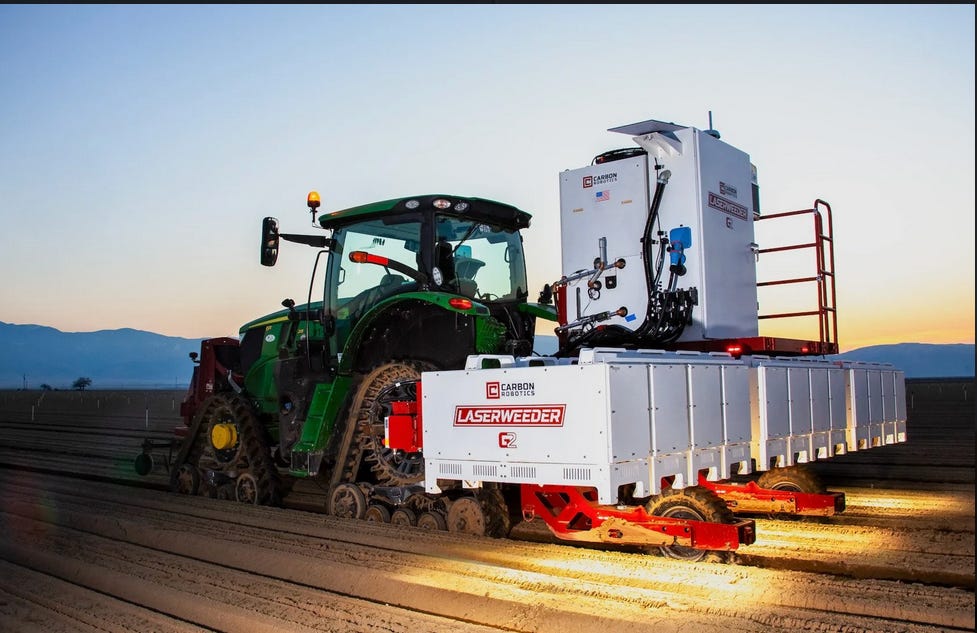
It may sound like science fiction, but the technology is already here. Carbon Robotics has developed massive robot farm machines that roll through fields of crops, using AI and high-resolution cameras to pinpoint weeds and destroy them with high-powered lasers, leaving surrounding plants and soil undisturbed.
For too long, farmers have been told there was only one practical way to control weeds on large commercial operations, and that is to spray toxic chemicals. Herbicides have become deeply embedded into the economics of modern farming because they make large-scale crop production cheaper, faster, and easier to manage. They have reduced labor demands and made it possible to cover vast acreage with fewer workers and more predictable results.
As HHS Secretary Robert F. Kennedy Jr. explained in a recent Joe Rogan Experience podcast, early herbicide weed control used to mean workers walking through rows with backpack sprayers, targeting weeds individually. But “Roundup Ready” crops changed everything. One airplane could saturate an entire landscape with glyphosate, and kill everything except the GMO crops, completing in minutes what took crews of workers days. While this method was efficient and profitable, it also locked American farming into dependence on chemical weed killers.

That dependence has come at an enormous price. Chemicals do not stay confined to weeds and crop rows. They move through the environment, the food system, and the human body, capable of causing neurologic damage, cancer, endocrine disruption, reproductive harm, and broader chronic disease. Americans encounter herbicides on farms, in parks, at golf courses, playgrounds, roadsides, and other public spaces.
“We’ve got to get off this stuff,” Kennedy said to Rogan. “We’ve got to give these farmers an off-ramp so that they can get off it.here are all kinds of new exciting technologies that give us a light at the end of the tunnel to transition.” But Kennedy also pointed out that moving too abruptly could mean “crashing the food system.”
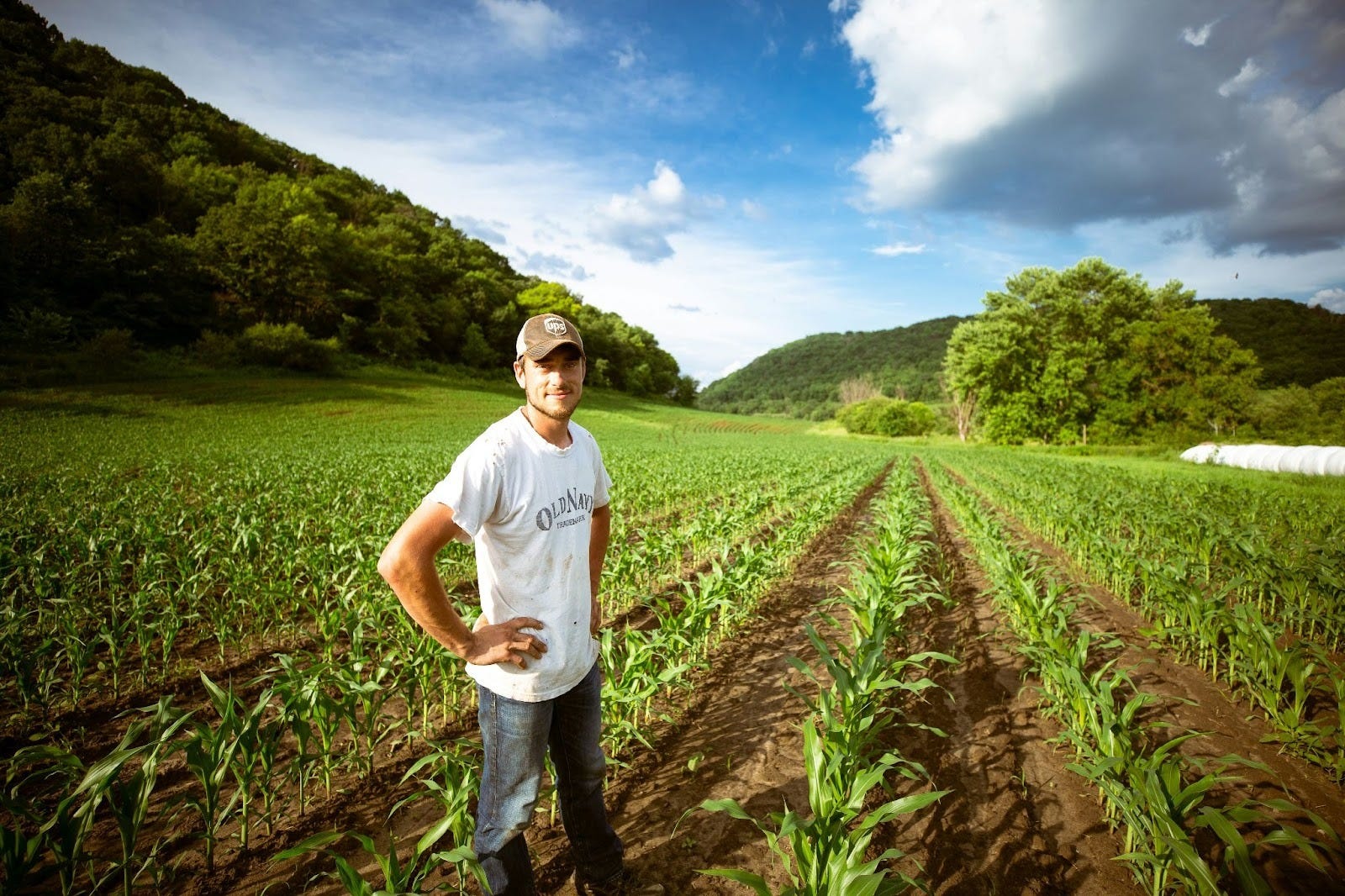
Such framing gets to the heart of the problem. Farmers have been trapped in a system built around toxic herbicides not because they embrace it, but because for decades it was the only economically viable model for large-scale crop production.
But that chemical model is not sustainable. As weeds adapt and resistance spreads, farmers are pushed into more spraying, higher volumes, and more complicated and toxic combinations just to hold the line. What was once sold as efficient and modern has become a treadmill of rising costs, resistance, exposure, and harm to human health.
Now, for the first time in decades, farmers have a viable alternative. Paul Mikesell, founder and CEO of Carbon Robotics, says the company’s laser weeders can work with “millimeter-level accuracy,” allowing them to “annihilate just the weeds even if they are very close to the crop plants,” while leaving the crop, surrounding soil, and nearby root systems intact.
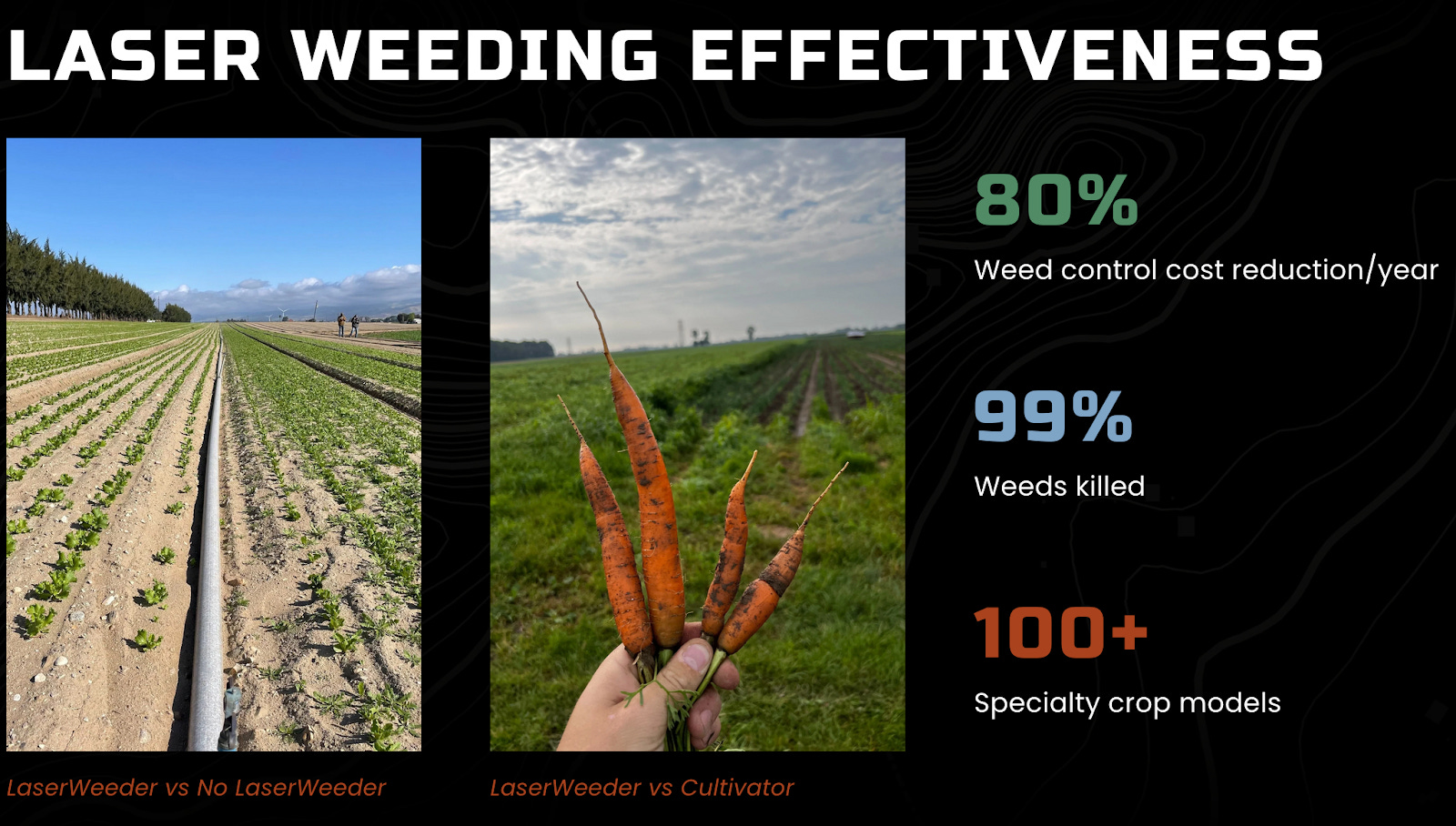
He also referenced a University of Wisconsin field study showing a 30% increase in productivity, and that the growing season for some crops can be shortened by three weeks, allowing farmers to recoup their machine investment in just nine months.
The economics are what make this especially compelling. Kennedy highlighted one South Texas onion producer farming 8,000 acres, paying $1,500 an acre for pesticides and manual labor, compared with $300 an acre using the laser system. Savings like that make the strongest case for change.

Still, farmers cannot be expected to just abandon herbicides. They need something that works in the field, protects yields, reduces labor pressure, and makes economic sense. Laser weeders offer exactly that: a realistic off-ramp away from chemical dependence.
They may not replace every herbicide overnight, but no farmer should have to choose between toxic chemical dependence and economic survival.

That is what makes the laser weeder more than a neat farming innovation. It is a MAHA solution to protect human health, strengthen farming resilience, and begin moving American agriculture away from the chemical trap toward a cleaner food system.
A workable alternative is already proving itself in the field, with the technology now in use by more than 100 growers worldwide. It is also helping cut costs, reduce labor pressure, and eliminate the need for herbicides and mechanical cultivation.
Secretary Kennedy has said that in order to wean America off glyphosate-based herbicides we must play the long game. Knowing that laser weeders are on the horizon –as, possibly, part of an off-ramp strategy – makes the wait easier for all of us committed to a future without toxic herbicides.

This sounds great! I asked Alexa about the cost of such a system. A 6 m system cost $1 million plus a $60,000 annual subscription fee. Hopefully the cost will come down in my lifetime. You stated the growing season can be decreased for some crops, which crops? Growing seasons are dependent on temperature, moisture, and daylight. You also state that machinery cost can be recouped within nine months. Have you looked at the price farm equipment lately?
Maybe they could replace the large amount of pesticides in America's "organic" farming.