


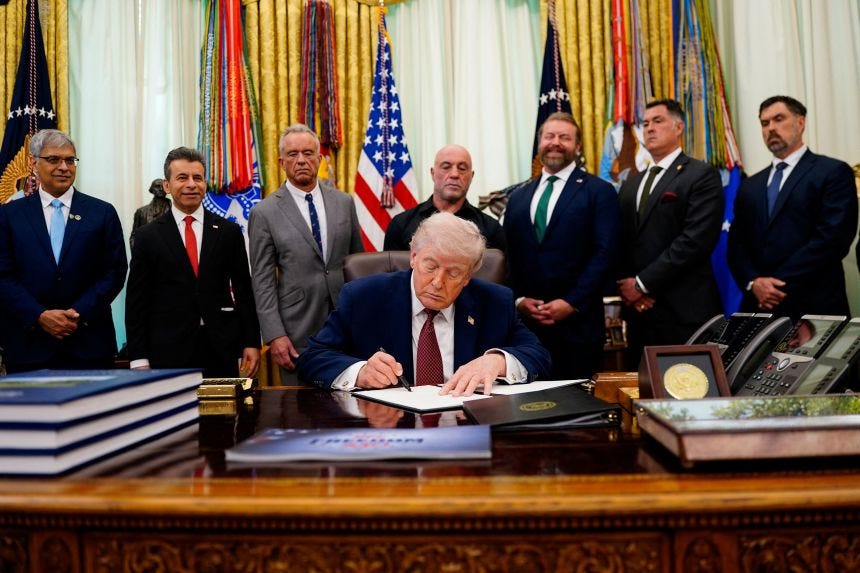
When President Donald Trump signed an executive order on April 18 to accelerate research on the use of psychedelic drugs to treat serious mental illness, he was joined not only by HHS Secretary Robert Kennedy Jr., NIH Director Jay Bhattacharya and podcaster Joe Rogan, but also by several veterans who say they have benefited from such treatments.
Over the last two weeks, The MAHA Report has reached out to some of these veterans, and to two organizations – Americans for Ibogaine (AFI) and Veterans Exploring Treatment Solutions (VETS) – both of which advocate for use of psychedelics to treat post-traumatic stress disorder and other serious ailments, to learn about how it works, and find out whether it’s really helping people.
Trump’s executive order, signed at the April 18 event in the Oval Office, allocates $50 million in federal funds for the Department of Health and Human Services to partner with states to develop programs to advance psychedelic drugs for serious mental illness.
Ibogaine and other psychedelics are now in clinical trials, and the Attorney General is directed, in Trump’s executive order, to review and quickly reschedule any of the drugs that are approved by the FDA – essentially legalizing them, for specific uses.
“Researchers at Johns Hopkins, Stanford, and Harvard and other leading institutions have reported meaningful and in some cases extraordinary clinical improvements,” Health and Human Services Secretary Robert F. Kennedy Jr. said at the White House on April 18. “If these results continue, these therapies could offer longer lasting relief, not just symptom management, and reduce [the] economic burden of mental illness, which costs this country hundreds of billions of dollars every year.”
For veterans still suffering from PTSD and other conditions, the help could not come too soon.
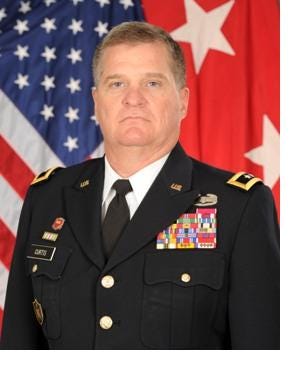
Glenn Curtis, a retired major general in the Louisiana National Guard, said that upon returning from a deployment to Iraq in 2005, his life was not the same.
“I could go to sleep, but during the night I would wake up and relive some of the things that happened when I was in Iraq,” he said in a phone interview. “If I went into a restaurant or [was] in a public setting, I was always scanning, watching, you know, so someone didn’t come up behind me.”
Curtis also said he experienced “trust issues” and “harsh headaches,” noting he tried to treat the headaches with over-the-counter pain relievers and found himself eating “Advils like they were candy.”
He declined to describe in any detail what he experienced in Iraq, saying only: “It was a mad place over there. You didn’t have to go very far to find trouble you didn’t want to be in.”

Curtis was diagnosed with two traumatic brain injuries and developed PTSD. He said he believes these problems were exacerbated by being in New Orleans during Hurricane Katrina, both when the storm made landfall and for months afterwards, as part of his duties with the Louisiana National Guard.
“What came out of that was, you know, probably more PTSD,” he said.
In 2025 Curtis traveled to an ibogaine clinic in Tijuana, Mexico, with his son, who had suffered a non-combat-related Traumatic Brain Injury (TBI).
The course of treatment was not easy.
“Physically, it’s demanding,” said Curtis of the ibogaine. “Your body is just under stress...I was terribly sick...In my head it literally sounded like a construction dome.”
The treatment with ibogaine was followed by treatment with something called 5-MeO-DMT, which was shorter in duration and reported to be far more pleasant.
“I don’t know what heaven looks like, but if it’s anything like what I experienced, you’re really going to want to go there,” said Curtis.
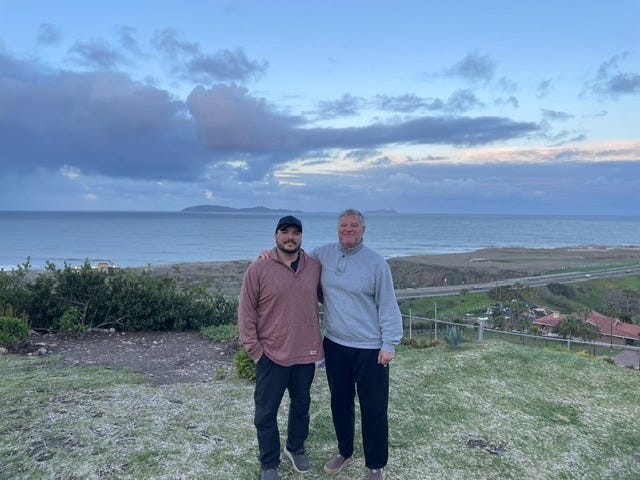
“It’s such a drastic change,” he said of life after the treatment in Mexico. “It’s like flipping a light switch on and going from dark to light. I don’t have headaches or any concerns anymore from the TBIs [or] PTSD. All the memories are still there; they just don’t affect me like they used to.”
Curtis is now an ambassador with AFI, helping to educate others about the benefits of ibogaine treatment for veterans suffering from serious mental health issues.
John Clifton, MD, the director of research and education for the group Veterans Exploring Treatment Solutions, said in an interview that many veterans are let down by standard clinical treatments and prescription psychopharmaceuticals.
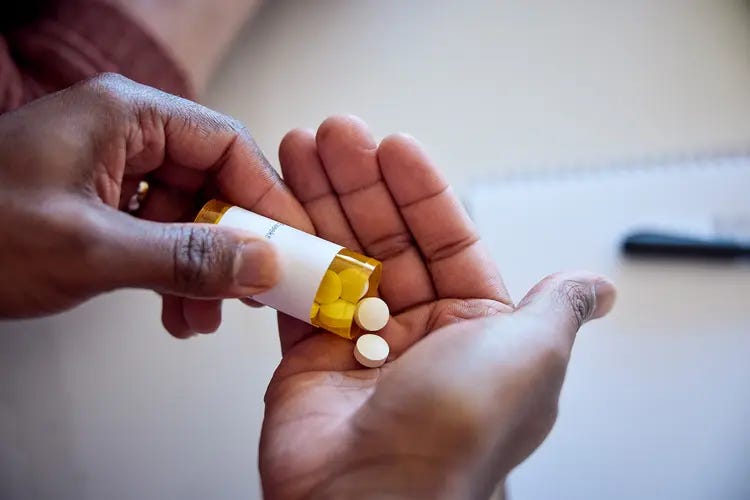
SSRIs and SNRIs, he said, tend not to work for many people and may leave them still feeling miserable or suffering from serious side effects. The proof of this is in the number of veterans who take their lives – more than 6,000 every year, according to the Department of Veterans Affairs.
“The suicide statistics do not lie,” said Clifton.

Desperate to find something that really works, an increasing number of veterans are turning to psychedelic treatment options such as ayahuasca, psilocybin, 5-MeO-DMT, and ibogaine, which are derived from plants, mushrooms, and, in the case of 5-MeO-DMT, a substance produced by certain toads.
Scientific investigations suggest psychedelics act, by varying degrees, through the same neurotransmitter systems as common antidepressants while also yielding anti-inflammatory and neuroprotective results. .

Ibogaine, for example, works through multiple mechanisms, said Stanford University School of Medicine professor Maheen Mausoof Adamson, adding it does “a lot of work with serotonin and it does change the way serotonin uptake happens.”
One observational study on which she worked, Adamson said, also showed “reduced brain age in traumatic brain injury patients [treated with ibogaine].” Usually, she said, the brains of TBI patients appear older than they are, but the brain age of patients who underwent ibogaine treatment appeared younger.
Adamson said research also shows ibogaine is non-addictive and a single treatment can yield results lasting roughly one year.
Although she warned against taking such findings out of context, Adamson said “at the same time, it is hope.”
Research on these drugs has long been impeded in the United States by government regulation and lack of funding while their use, even for medicinal purposes, is prohibited by law. The drugs, however, are available at clinics in several foreign countries, including Mexico.

William “Trey” Warren, PhD, a former Navy pilot who now works as a professor of political science at Lindenwood University and serves as an AFI ambassador, went to Mexico in 2025 for ibogaine treatment after years of living with PTSD stemming from the stress of doing four combat deployments and the cumulative effects of numerous minor TBIs (mTBIs) he believes he suffered as a routine part of flying military aircraft.
Warren said he experienced problems with alcohol abuse as well.
“I was drinking anywhere from 10-12 alcoholic drinks per day just to cope,” he said. “I was a functioning alcoholic, basically for years.”
Over time, Warren said, his neurocognitive problems grew worse. “I’d get confused at an intersection...” he recalled. “I got lost driving to the grocery store once.”
Following his PTSD diagnosis, Warren said he spent more than two years taking SSRIs and other prescription drugs, which he noted came with side effects, including thoughts of suicide. Warren said he experienced one period of suicidality while on the drugs and a second while being taken off of them too quickly.
Later, Warren said he saw a therapist trained in psychedelic-assisted psychotherapy and tried ayahuasca and psilocybin treatments, noting he felt they worked better than SSRIs, but that he started experiencing issues with depression and anxiety again after stopping therapy for a period. Upon returning to therapy, Warren said his therapist recommended he go to Mexico for ibogaine treatment.
“After the treatment, it’s really like starting over again like a five-year-old child,” he said. “You’re really looking at the world with this blank slate.”
Warren said he stopped drinking and is trying to live a healthier life. He said psychedelics, including ibogaine, are not a “magic bullet” and that he believes he may need occasional “tune-ups.”
“But,” Warren said, “I’m able to live again.”
Protocols at ibogaine clinics are relatively similar. Patients speak with a counselor, take ibogaine in pill form on their second day there, smoke 5-MeO-DMT on the fourth, and then receive additional counseling afterwards.
Patient experiences while on ibogaine and 5-MeO-DMT vary, although ibogaine is generally considered more challenging.
“Ibogaine, as far as psychedelics go, it’s the most strenuous of them because the psychedelic period is the longest,” said Warren.
Elias Kfoury, a former Navy medic who retired in 2016, also made the decision to seek ibogaine treatment in Mexico as part of a group from VETS after preparing to end his life in 2021 on December 27, his birthday.
Kfoury told The MAHA Report that over the course of his service, he had multiple deployments and numerous injuries. After retiring, Kfoury said he focused on getting through surgeries and rehab for orthopedic injuries, but also experienced headaches, hypervigilance, anxiety, and a sense of hopelessness.
“I was so lost...” said Kfoury. “A connection that I felt really early on as a child with nature and God and everyone else and everything else was completely gone and just replaced with so much anger.”
The ibogaine treatment was difficult.
“It was like a menagerie of the most gruesome war injuries you would ever see,” said Kfoury, although when recounting his experience he tended to focus on more positive aspects like relief from his injuries and headaches and how ibogaine helped him process his emotions.
“I started to see how I was affecting my wife and kids,” Kfoury said. “I was sitting across from an angel that showed me. It was my life review.”
Describing his 5-MeO-DMT treatment that followed, Kfoury said: “I felt like I had a face-to-face conversation with God.”
Despite having the occasional headache and having had to undergo a second ibogaine treatment for a recurrence of physical pain from his injuries, Kfoury said he is currently feeling pretty good and finds fulfillment in his work coaching people seeking psychedelic treatment.
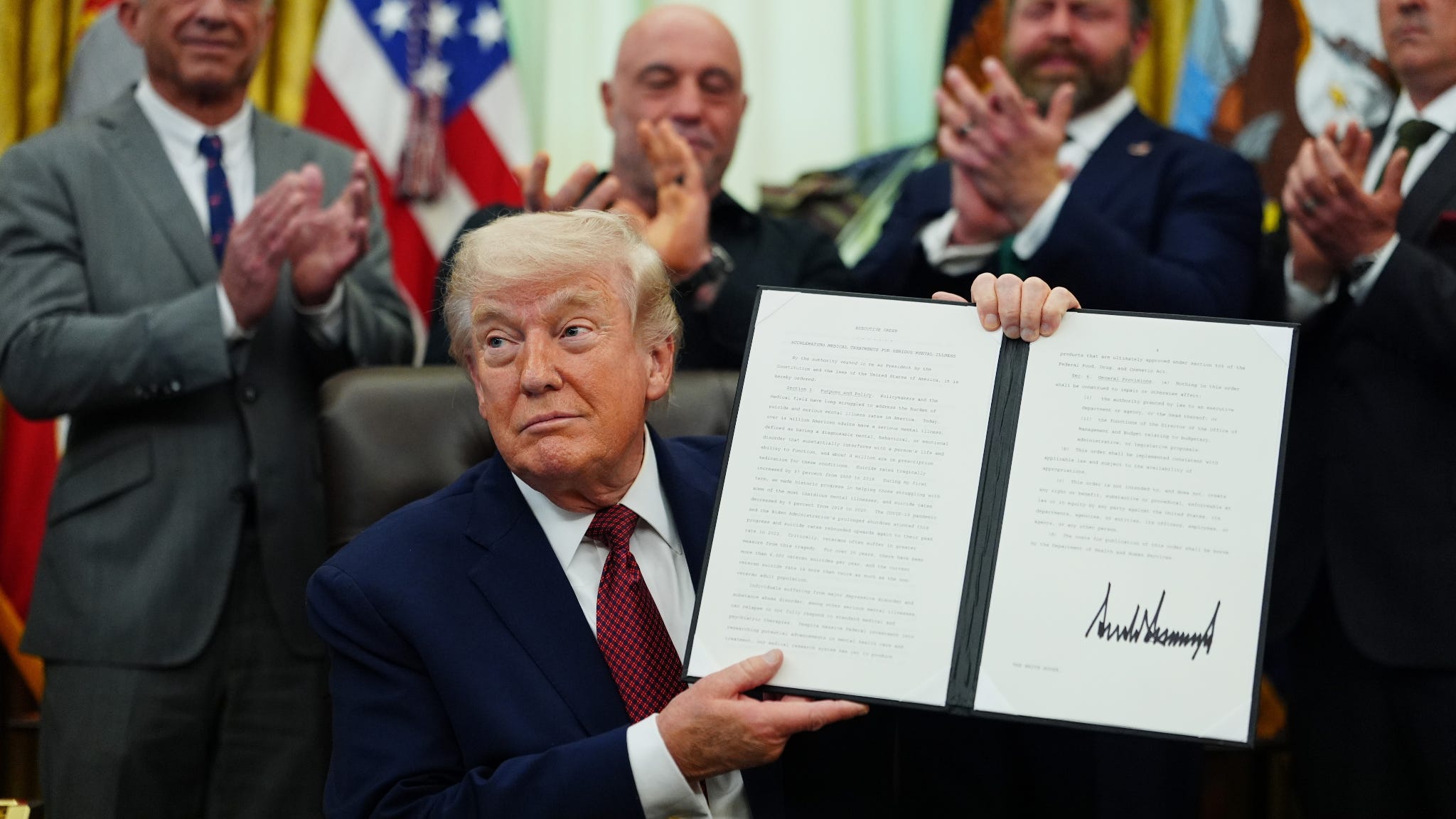
As with Curtis and Warren, such a result suggests that President Trump’s recent Executive Order has tremendous potential. Access to Ibogaine and other psychedelics, for the first time in the U.S., could become a game changer for tens of thousands of vets still quietly suffering – following tours overseas, defending their country.
Related stories:
BREAKING NEWS: President Trump Signs Executive Order Authorizing FDA to Fast-Track Psychedelics to Treat Mental Illness

On Saturday morning, President Trump signed an Executive Order (EO) to, as he said, “accelerate access to new medical research and treatments based on psychedelic drugs.”

Wow. So happy to hear we are trying new things to help more people who need help.
This science will save lives. Thank you for helping us patients. Pain changes every patients brains if you never goes away...24-7 pain changed my brain now 34 years of Intractable pain. It's time someone is listening..... to fix millions of Americans brains with real science. President Trump is listening to us Americans in need. Patients need saved. His people like RFKJr is helping change the game. Thank you all. Pain Patient Zero