

“This first year has demonstrated what is possible. But systemic change requires vigilance. Chronic disease is reversible. Transparency is achievable. And trust can be restored.”
– Robert F. Kennedy Jr., HHS Secretary
“We are witnessing the most consequential shift in federal health policy in our lifetime.”
— Tony Lyons, President, MAHA Action
By Catherine Ebeling, Contributor, The MAHA Report
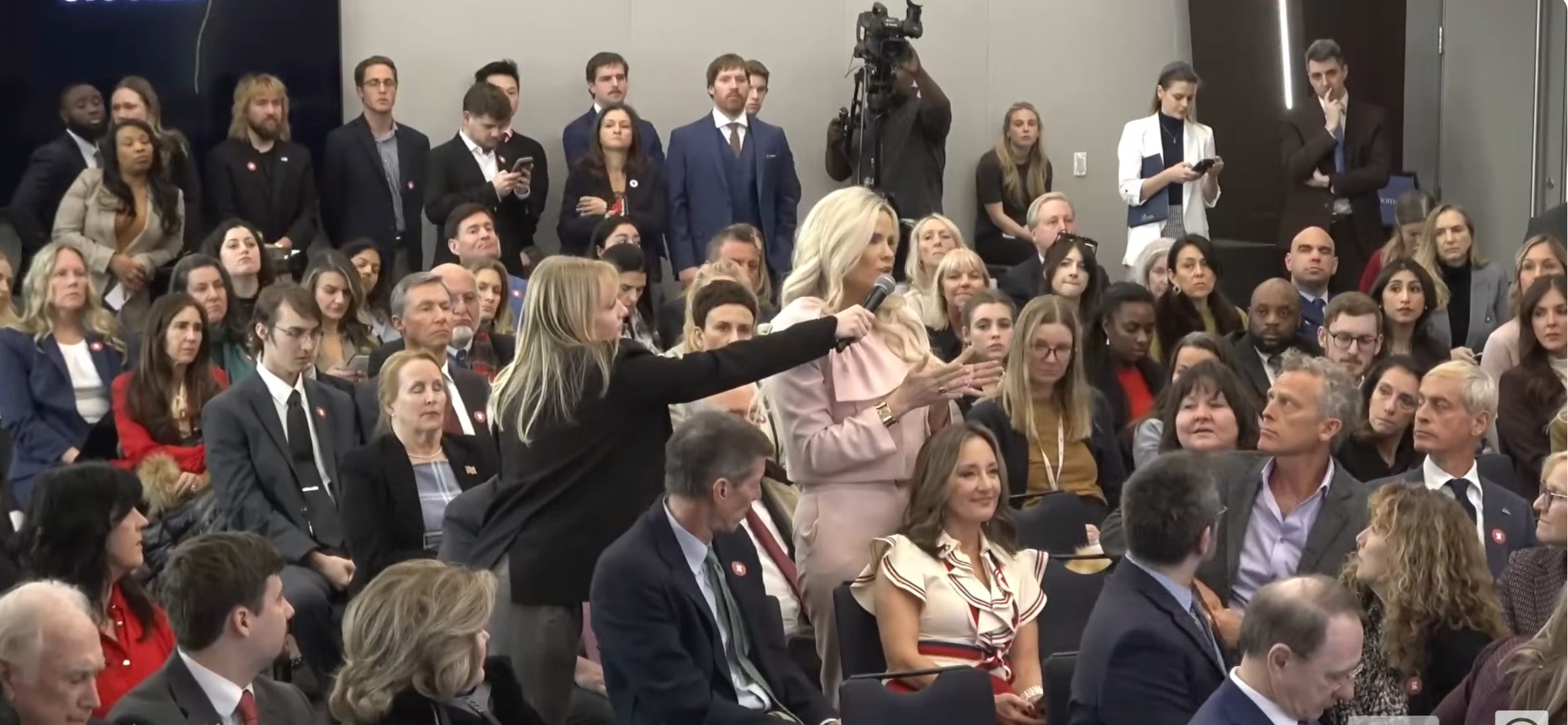
On February 9, leaders from across the Make America Healthy Again (MAHA) movement gathered at The Heritage Foundation in Washington, D.C. to mark one year of sweeping federal health reform under HHS Secretary Robert F. Kennedy Jr.
It was a celebration of a year of remarkable successes but also a rallying cry to keep moving forward with the MAHA agenda, to keep fighting for better healthcare policies and outcomes for Americans still suffering from what Kennedy calls a chronic disease epidemic. (You can watch the entire event, here)
The forum brought together Kennedy; Tony Lyons, president of MAHA Action and Kennedy’s long-time book publisher; Kim Mack Rosenberg, general counsel for Children’s Health Defense; Hannah Anderson of Healthy America Policy; and Jay W. Richards, Vice President for Social and Domestic Policy at The Heritage Foundation.
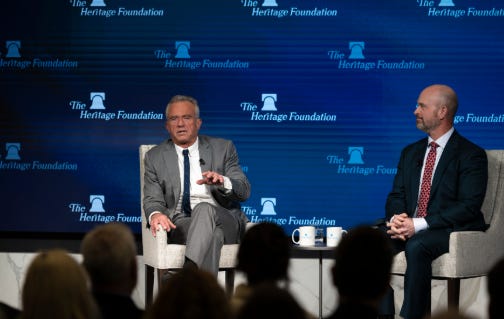
The panel reflected on what supporters describe as the most consequential year of public health reform. The tone was forward-looking, but the message was unmistakable: a healthcare system built around pharmaceutical management rather than prevention is finally being questioned at the highest levels.
Panelists described the past year as the most consequential period of modern public health reform, restoring healthy food and prevention as the foundation of healthcare.
A Reset at HHS
During the panel, Lyons celebrated the moment.
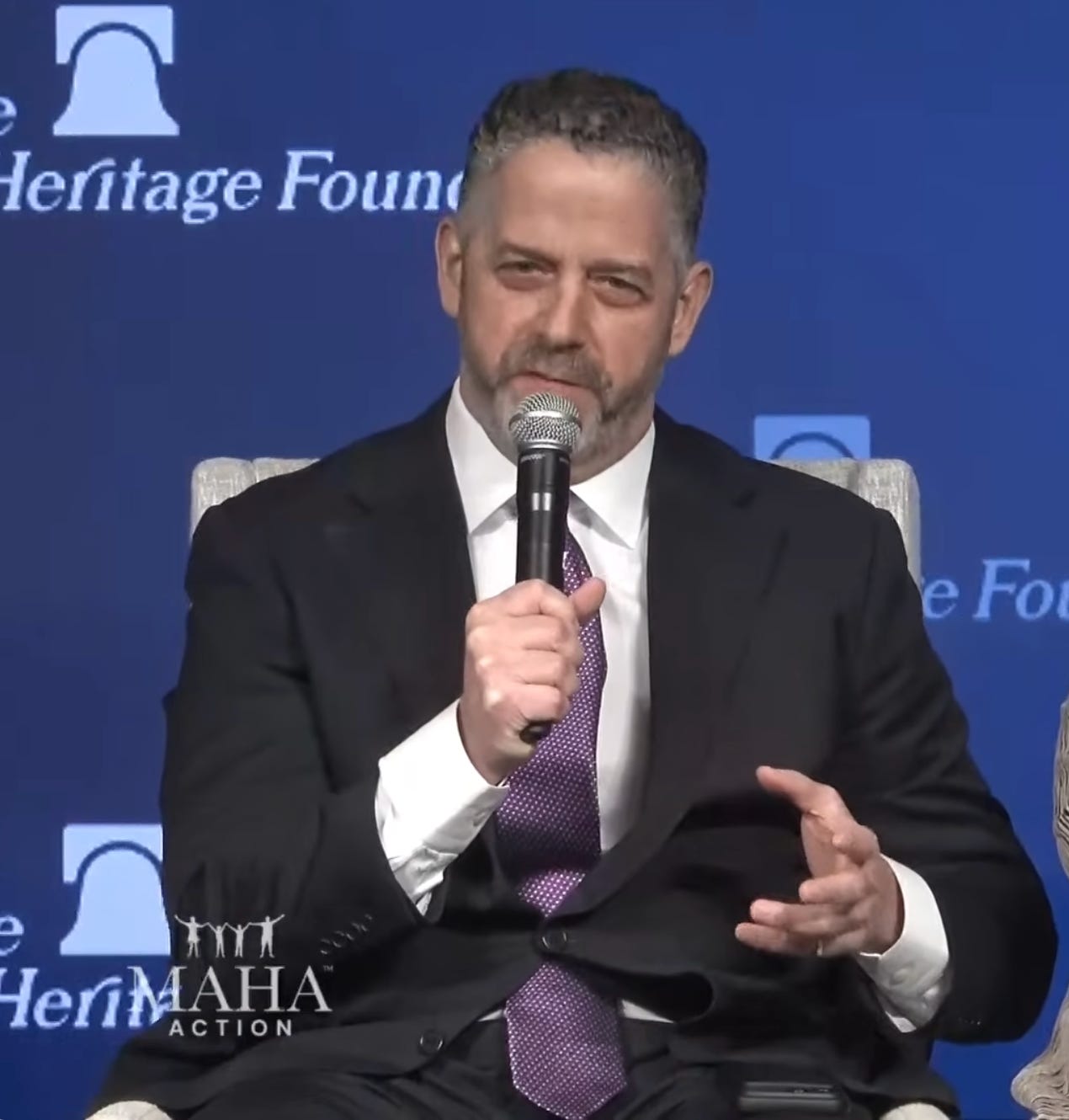
“For decades, chronic disease rates climbed while institutions insisted the system was working,” he said. “That illusion has collapsed.”
He described a structural shift at HHS focused on reversing childhood chronic disease, restoring transparency, and advancing “health sovereignty.”
Kennedy echoed that urgency, noting that the status quo has produced a generation of chronically ill children. Today, more than 40% of American children are overweight or obese, autism rates have risen to roughly 1 in 31, and childhood metabolic disorders once seen only in adults are increasingly common.
“We cannot continue normalizing rising rates of autism, autoimmune disorders, obesity, and metabolic disease,” Kennedy said. “These outcomes are not inevitable. They are the result of policy decisions, and policy decisions can be changed.”
“This is about returning to science that serves the public,” he added. “Prevention must become the foundation of American healthcare.”
Rewriting the Dietary Guidelines: EAT. REAL. FOOD.
That recalibration begins with food.
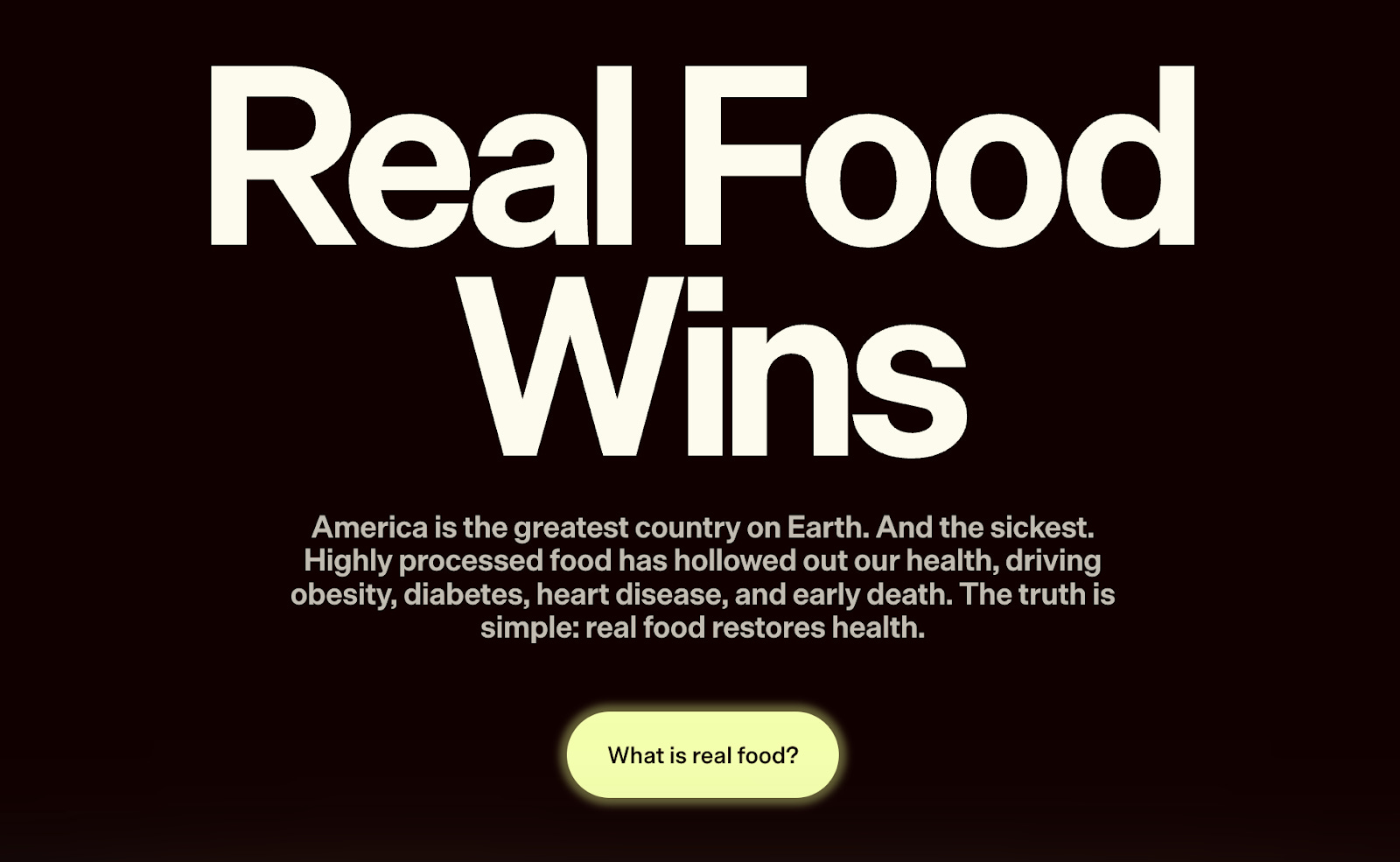
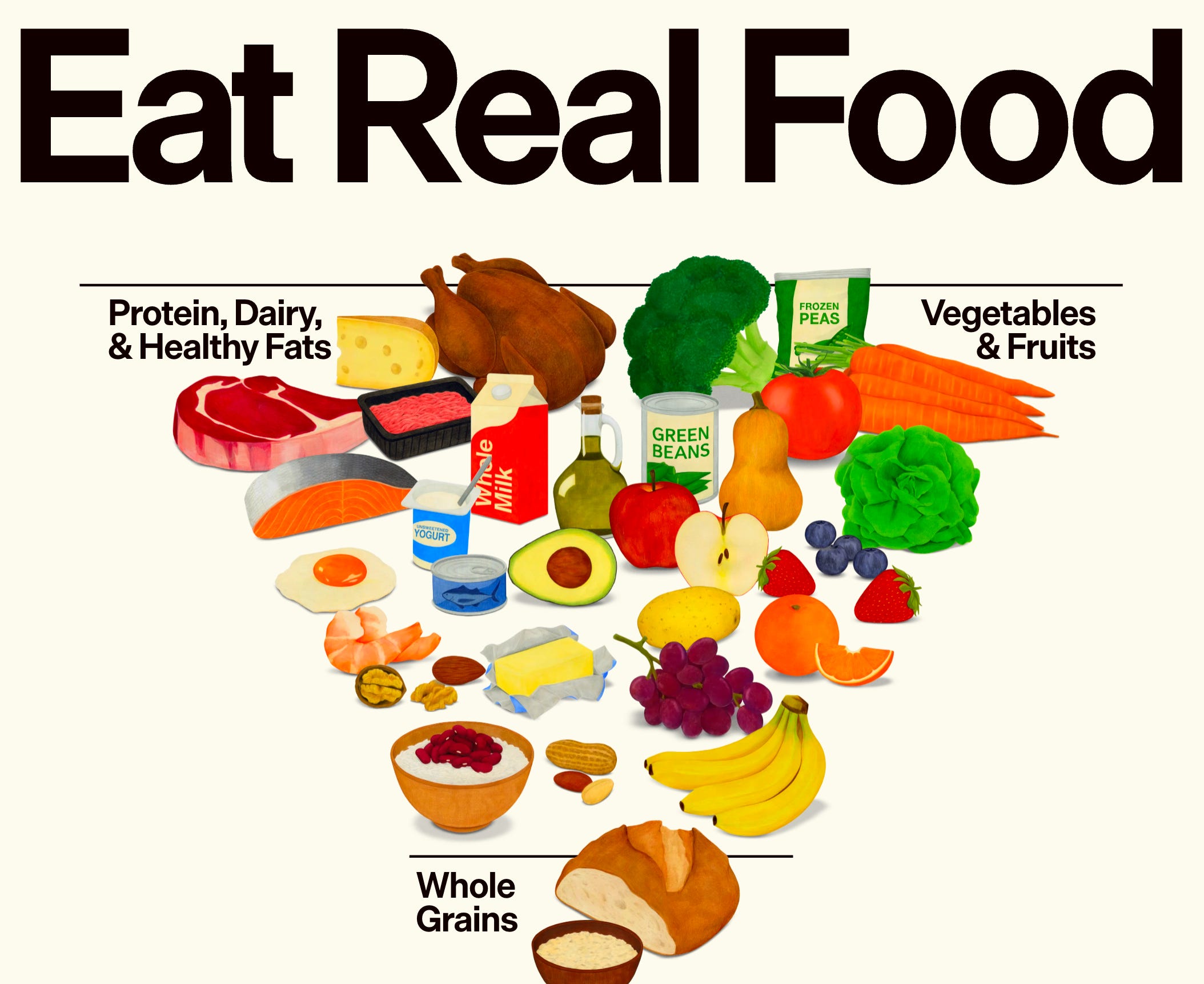
For decades, nutrition was treated as secondary to pharmaceutical management. Under Kennedy’s direction, that hierarchy is being reversed. Reforming the Dietary Guidelines is now central to confronting chronic disease at its root.
After decades of entrenched low-fat doctrine rooted in contested cholesterol research, HHS is revisiting the foundation of America’s war on saturated fat. Research that shaped federal dietary guidance was later criticized for selective methodology, and historical records show that sugar industry–funded scientists helped steer early heart-disease messaging away from sugar and toward fat.
“We are dismantling a 50-year war on saturated fat built on incomplete and biased science,” Kennedy said. “It’s time to realign policy with biological reality.”
The revised guidelines are already reshaping federal nutrition standards. Whole milk is back in school lunches. The FDA’s GRAS framework is under review. And food chains are eliminating petroleum-based synthetic dyes while the FDA has fast-tracked naturally derived alternatives.
The message was repeated throughout the Heritage Foundation gathering: EAT. REAL. FOOD.
That message has moved beyond policy circles. In one of the most talked-about Super Bowl commercials of the year, Mike Tyson delivered the same rallying cry. As Adweek reported, the spot “drove conversation throughout the weekend,” signaling that what was once dismissed as fringe has entered mainstream culture.
“You cannot medicate your way out of metabolic collapse,” Lyons said. “Prevention starts with food.”
Confronting the Childhood Chronic Disease Epidemic
Nutrition reform, panelists emphasized, is only part of a broader effort to address the dramatic rise in chronic illness among American children.
Rates of obesity, insulin resistance, autoimmune disorders, and other metabolic conditions have climbed steadily for decades. Kennedy pointed out that these trends should never have been accepted as normal.
“We cannot normalize this level of chronic disease in our children,” he said.
Under Kennedy’s leadership, HHS has redirected research toward environmental exposures, metabolic dysfunction, and the cumulative impact of ultra-processed foods and chemical additives. Federal guidance shaping school nutrition and early-life health policy is being reassessed through a prevention-first lens.
Autism Research and Vaccine Policy Reform
Reassessing childhood vaccine policy and expanding autism research were core tenets of Kennedy’s platform long before he took office.
During Monday’s panel, Kennedy called for transparent inquiry into all potential factors contributing to rising autism rates, including environmental exposures and vaccine safety. Already, federal research is expanding to examine potential drivers of autism and other neurodevelopmental conditions using what Kennedy has described as “gold-standard, unbiased science.”
“We are going to follow the science wherever it leads,” he said.
HHS has initiated a review of childhood vaccine recommendations and advisory processes.
“Parents deserve full information,” Kennedy said. “Medical decisions must be informed, not automatic.”
Transparency, Drug Pricing, and Structural Reform
Another hallmark of the first year has been expanded transparency across HHS, the FDA, and the CDC.
Kennedy outlined efforts to increase public access to safety data, limit conflicts of interest on advisory panels, restrict federal support for gain-of-function research, and end the use of fetal tissue in federally funded research. “Science must be transparent and accountable,” he said.
He also emphasized expanded patient autonomy, noting that Americans now have strengthened rights to access and control their own medical records. “Every American should be the CEO of their own health,” Kennedy said.
The forum highlighted negotiations underway with major pharmaceutical companies, aimed at lowering drug prices and increasing parity with international markets.
“For years, Americans paid more than anyone else in the world for the same medications,” Lyons said. “That imbalance is finally being challenged.”
The Work Ahead
For MAHA leaders and supporters, the message was clear: significant progress has been made, but this first year is only the foundation. They believe the American people deserve a long-term recalibration of health policy, grounded in prevention, transparency, scientific integrity, and individual sovereignty.
“This first year has demonstrated what is possible,” Kennedy said. “But systemic change requires vigilance. Chronic disease is reversible. Transparency is achievable. And trust can be restored.”
The work continues.
Thank you Secretary Kennedy for your progress in reforming our corporate captured government to represent citizens more each day you are in office. Working on your presidential campaign was very fulfilling for this optimist and I look forward to you seeing you finish the mission of defending our children. Hopefully this is the last year of tv advertising and corrupting corporate news by the pharmaceutical industry.
I would like my real grains, potatos & corn products not to include glyphosate or folic acid.