


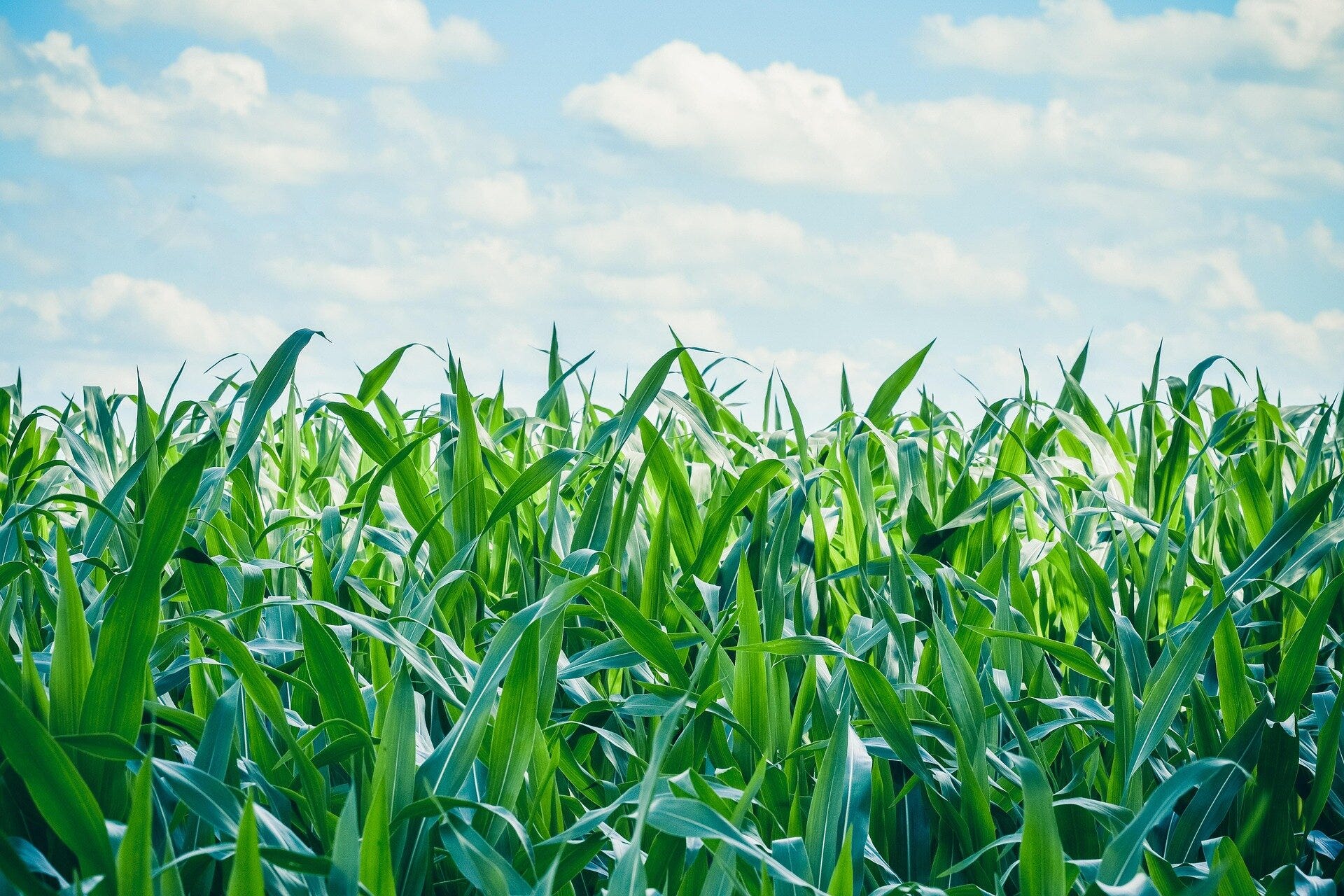
A farmer planting corn today can buy something that sounds almost tailor-made for regenerative agriculture: living bacteria that colonize plant roots, pull nitrogen from the atmosphere, and deliver it directly to the crop.
There’s one detail most farmers and consumers would probably never guess from that description: The bacteria have been genetically edited.

Pivot Bio, a California agricultural biotechnology company founded in 2011, sells PROVEN 40, a microbial product containing altered strains of bacteria Klebsiella variicola and Kosakonia sacchari. The company says the technology can reliably replace up to 40 pounds of synthetic nitrogen fertilizer per acre, potentially reducing one of agriculture’s largest sources of greenhouse-gas emissions and water pollution.
And Pivot Bio is not alone. Bayer has publicly identified genome-edited microorganisms as part of its agricultural biotechnology strategy; it previously backed Joyn Bio, a synthetic-biology venture that was focused on engineering nitrogen-fixing microbes before it became part of Ginkgo Bioworks.
Equally important, Pivot Bio’s technology is no longer limited to corn. The company now markets microbial nitrogen products for wheat, sorghum, and other small grains, and has introduced a gene-edited microbial product for cotton.
This isn’t about one company or one product; it’s about an emerging category of agricultural technology that could be used across millions of acres, and whether the science, regulation, and long-term ecological research are keeping pace
The biology is real
Pivot Bio did not invent nitrogen fixation. Bacteria have been converting nitrogen from the air into forms that help plants grow for millions of years.

Under normal conditions, when plenty of usable nitrogen is already present in the soil, bacteria tend to convert less nitrogen because it uses a lot of energy. Pivot Bio’s innovation uses gene editing to weaken or remove the bacteria’s natural tendency to slow down or stop fixing nitrogen when enough is present.
A 2024 peer-reviewed study found that Pivot Bio’s current strains transferred biologically fixed nitrogen into corn plants. Scientists used a tracking method to measure that the bacteria added about 19 pounds of nitrogen per acre by the time the corn plants began to grow tassels.
But the study also deserves context. Many of its authors were Pivot Bio employees, the company owns patents covering the organisms, and 29 small-plot trials were conducted through research organizations hired by Pivot Bio. The authors did appropriately disclose those conflicts.
Industry-funded science is not automatically bad science. But claims affecting millions of acres deserve independent replication.
And that is where the picture becomes less impressive.
What happens in real fields?

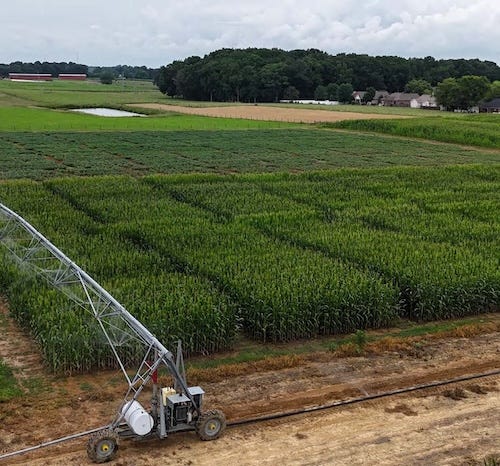
A University of Illinois study found evidence of nitrogen fixation and stronger early growth, but by harvest the advantage had largely faded; average grain yield increased just 1.2 percent. Wisconsin researchers testing PROVEN 40 at five locations likewise found no significant improvement in yield or reduction in the crop’s nitrogen requirement.
Nebraska on-farm trials showed a similar pattern. In one 2024 experiment, adding PROVEN 40 produced essentially the same yields as conventional nitrogen alone across several fertilizer rates.
This doesn’t necessarily mean the bacteria aren’t working, but it may indicate that their ability to fix nitrogen doesn’t translate into a reliable reduction in fertilizer use or a meaningful yield increase—an important distinction when farmers are asked to pay for another agricultural input.
What does “gene-edited” mean
Pivot Bio’s bacteria are not genetically modified in the traditional sense of taking a gene from one species and inserting it into another. Instead, the company edits genes already present within the bacteria.
This distinction ultimately determines whether a federal regulator reviews the organism at all.

USDA’s Animal and Plant Health Inspection Service regulates genetically engineered organisms primarily when they pose, or may pose, a plant-pest risk. USDA has said that a genome-edited microbe that is not a plant pest is unlikely to become one and does not contain certain foreign plant-pest DNA. For this reason, Pivot Bio’s gene-edited bacteria fall outside of the USDA’s biotechnology regulations.
EPA does regulate some engineered microorganisms under the Toxic Substances Control Act, including biofertilizers. But its biotechnology rules define a “new” microorganism largely as one created by combining genetic material from different genera. Microbes altered only with genetic material from the same genus generally are not considered “new” under those rules and therefore do not trigger the same premanufacture notification and review.

EPA also regulates microbial pesticides, but that framework applies when a microorganism is intended to control a pest. A nitrogen-fixing fertilizer product is being sold for plant nutrition, not pest control, so that pesticide pathway is not the obvious regulatory fit either.
In other words, Pivot Bio’s microbes currently fall between regulatory categories: USDA’s biotechnology authority focuses on plant-pest risk, EPA’s biotechnology review is triggered by certain kinds of genetic changes, and pesticide rules apply to products intended to kill or control pests.
That does not mean the products are illegal or that regulators have identified a safety problem. But it also does not mean a federal agency has conducted a comprehensive review of what many farmers and American families might reasonably want to know: What happens when these living, gene-edited organisms are repeatedly released onto agricultural land, year after year?
How long do they remain in the soil? Do they alter surrounding microbial communities? Can they move beyond the treated crop? Could they persist on harvested grain or plant material?
Then comes the question many Americans might ask: What happens next?
Corn and other crops do not stay where they are grown. They become livestock feed, food ingredients, and eventually part of what people eat. Very little publicly available independent research examines whether viable gene-edited bacteria persist through harvest, storage, or processing, or whether animals or people might ultimately be exposed through food or feed.
To be clear, there is no current evidence that such exposure is causing harm—or even that meaningful exposure is occurring.
The striking part is how little publicly available independent research appears to answer the question.
“Outside a particular federal regulatory pathway” is not the same thing as “thoroughly studied and shown to pose no long-term concerns for farms, animals, or people.”
For a technology designed to release living, gene-edited organisms into agricultural ecosystems, that leaves a surprisingly important gap between what is permitted and what we actually know.
A different kind of regenerative agriculture?
Regenerative agriculture has traditionally started with the question: How do we rebuild the farm so it needs fewer outside inputs in the first place?
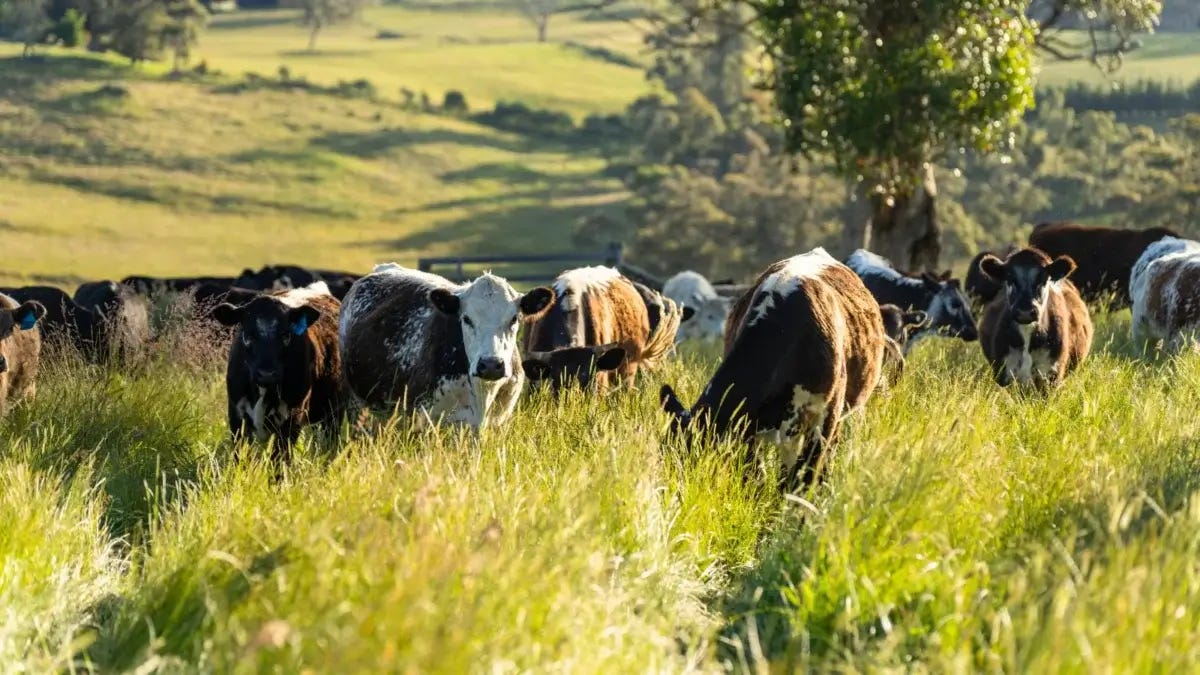
Cover crops. Legumes. Diverse rotations. Livestock. Living roots. Healthy soil microbial communities.
The late soil microbiologist Elaine Ingham spent decades studying what became known as the soil food web, the interconnected community of bacteria, fungi, protozoa, nematodes, plants, and other organisms that cycle nutrients through healthy soil. Her work emphasized that soil biology functions as a community. Plants feed microbes by releasing food and chemical messages from their roots; bacteria and fungi take up or help mobilize nutrients, and then protozoa, nematodes, and other predators consume those microbes and release excess nutrients back into the soil in plant-available forms. The system depends on relationships, not a single organism acting alone.
Regenerative agriculture, at its best, is not simply conventional agriculture with a different input substituted into the same system. It is about restoring relationships within the soil so the farm itself becomes more resilient and less dependent on what arrives in a bag, jug, or truck.
And this is where it would be wise to slow down, not because gene editing is inherently dangerous, and not because we fear innovation, but because agriculture has seen this pattern before.
A new technology arrives with enormous promise. Farmers are encouraged to adopt it. Public programs may even help pay for it. Then, years later, we start asking questions that we should have asked at the beginning.
Farmers should not have to discover unintended consequences after a technology has already become embedded in their fields. Parents should not have to wonder what happens next after crops enter the food supply. And taxpayers should not be asked to subsidize a technology before independent researchers have had the time and access necessary to understand both its benefits and its limitations.
The burden of proof should not fall on the public to demonstrate that a new technology is harmful.
When a company introduces living, gene-edited organisms into an agricultural ecosystem, the burden should be on that company and the surrounding regulatory system to show, openly, independently, and over time, that the technology works as advertised and that we understand where those organisms go next.
This is not opposition to science, but rather a demand for more of it.
Regenerative agriculture asks us to see a farm not as a collection of isolated parts, but as a living system in which soil, microbes, plants, animals, water and people are connected.
Before we decide that the answer to agriculture’s nitrogen problem is a gene-edited microbe, we should be willing to ask a much bigger question:
What happens to the whole living system when we put it there?
Now is the time to ask these important questions before the answer is already widespread across America’s fields.
Shop our merch store to support the MAHA Report and the MAHA movement.
All proceeds go to supporting the cause.

They genetically modify the bacteria so they can patent it and sell it. Otherwise, you cant patent a natural microbe. Find some smart people to find out what these microbes are and find a work around. Otherwise, turn all farms into regenerative farms, and let nature do its job. I highly suggest a documentary called Biggest Little Farm. They turned baron, dead soil into a garden of Eden.
Sarcasm: Of course this has been thoroughly tested for several years, so what could possibly go wrong??