

By John E. Harrison, Special to The MAHA Report
[First published in The Baltimore Sun, on September 1, 2026 at 9:00 A.M, here. Republished by permission of the author.]
Last week, a patient arrived at a rural Kentucky clinic with complex kidney disease and heart failure. He needed a nephrologist and a cardiologist, two specialists for whom rural Kentucky patients wait 107 days, on average, to see, and who would likely never coordinate with each other. Instead, a board-certified nephrologist and cardiologist reviewed his records, conferred and returned a joint treatment plan to his primary care doctor, the physician who knows him, to execute in his own trusted clinic. Within just eight hours, not 107 days. The patient’s only job? Sit back while three sets of trained eyes worked his case.
The time saved was not just convenient. It meant treatment started before his kidney disease and heart failure could compound, before the pain deepened, before a hospital admission.

That isn’t a miracle. It’s “Moneyball.” Not the movie, the method. Twenty years after Michael Lewis wrote the book and Brad Pitt played Billy Beane, Moneyball stopped being a title and became a common noun. Headlines now promise the Moneyball of education, finance, manufacturing, even dating apps. The formula is always the same: using innovative analytics to find value in the data that the market has mispriced and buy it at a fraction of its cost.
The original version came from Beane’s 2002 Oakland Athletics, who won 103 games on a $44 million payroll, exactly as many as the $126 million Yankees, by paying for what actually produced wins, the unglamorous walk, instead of what looked impressive, the flashy hit. Oakland paid $427,000 per win. New York paid $1.2 million.
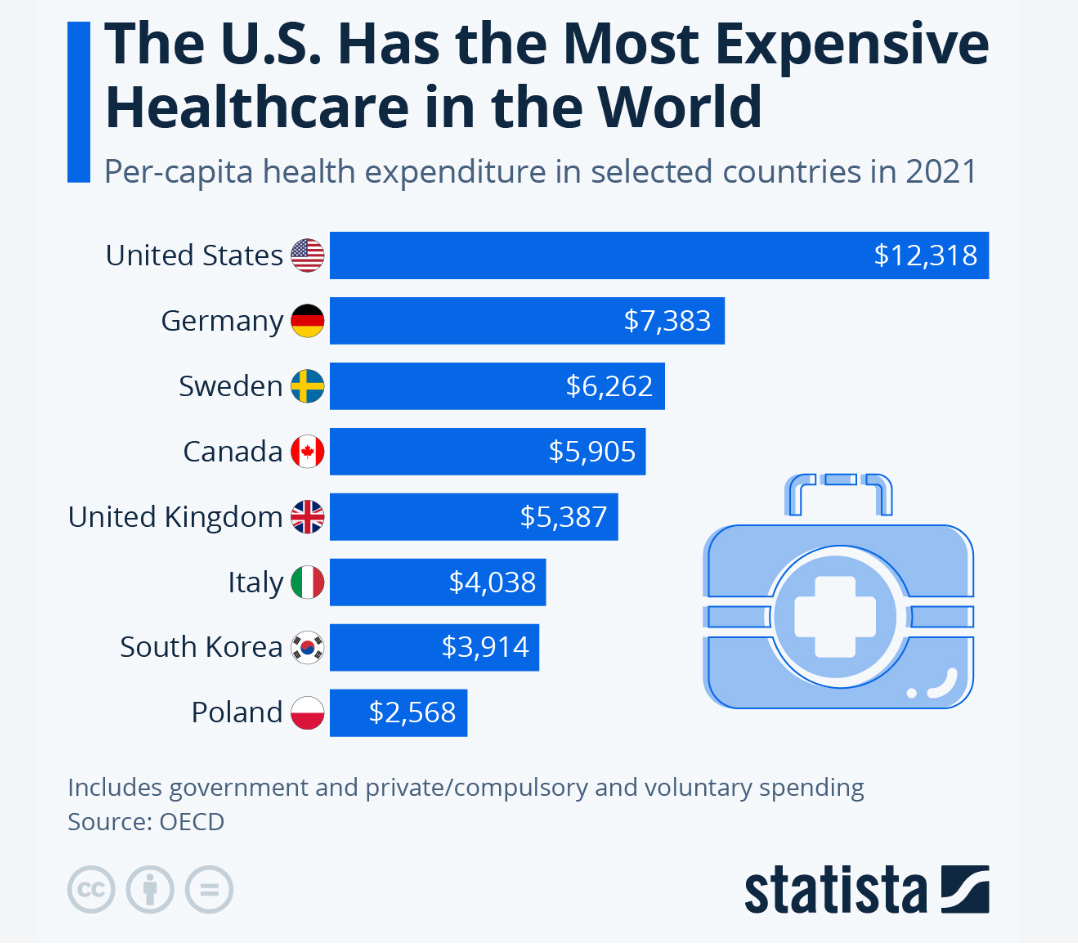
American medicine spends like the Yankees when it’s really the A’s, and the arbitrage is staring us in the face. Every industry has since run this trade except the one where mispricing costs lives: healthcare. Medical specialists such as cardiologists, endocrinologists and pediatricians are valuable, expensive assets that are extremely difficult to find in rural areas, and playing the wrong position on our roster.
The Department of Veterans Affairs proved it. In 2012, facing dwindling resources, it stopped stationing specialists downstream for patients to travel to and moved their expertise upstream, into the initial visit: Primary care physicians consult the specialist electronically and treat the patient themselves under direct specialist guidance. Patients needed the specialist’s expertise, not their presence.
For the patient, that’s a different world: Instead of a two-month wait and a day off work, your doctor asks, “Mind if I consult our endocrinologist on your treatment plan?” and the treatment starts that day.
At the VA, specialist-driven time to treatment fell from months to days and cut costs by up to 40%. The VA didn’t buy more specialists. It repositioned the ones it had, from cleanup crew to first responders.

So why hasn’t everyone followed? Structure. The VA is one system with one payer, one medical record and top-down directives. The rest of American medicine is thousands of autonomous clinics on different records and different payers, with no one empowered to give the order.
The evidence travels fine. The incentives don’t. Early commercial attempts to bottle the VA’s result fell short because they scaled the software but skipped the main ingredient: a specialist the primary care provider knows and trusts, accountable for the answer.
Our Kentucky patient’s eight-hour time to treatment proves the method works in the decentralized world too.
The stakes are enormous. A rural patient with two chronic conditions, diabetes and hypertension, say, carries thousands of dollars a year in avoidable downstream costs: the ER visits, hospitalizations and complications that pile up while disease goes unmanaged.

The wait is also measured in lives: Rural Americans die from preventable causes at far higher rates than city dwellers, and the CDC names limited specialist access as a key reason. A single avoidable admission runs $10,000 to $15,000. The expertise that prevents it costs less than a nice dinner. We pay retail for what’s available wholesale and get slower care for the markup.
Washington is about to spend $50 billion trying to fix rural health care. The Rural Health Transformation Program (RHTP) is the largest rural health investment in a generation, and before states spend it building more of the old system, they should ask whether America’s scarce specialists are playing the right position. I have read the state plans. They’re good, but few address the biggest problem we all share: lack of specialist access and coordination with primary care.
When the VA reviewed incoming referrals, its specialists determined 60% didn’t require an in-person visit; the PCP could handle it with direct specialist guidance. Not a survey. Not an inference. Their own triage decisions. The RHTP is the opportunity to change the strategy and use what the VA has already proven. Put the specialist on the front lines with the PCP. That’s the walk that wins the game.

The epilogue of “Moneyball” is that the rebels won. The Red Sox took the 2004 World Series using Oakland’s playbook, and within a decade the analysts the scouts once laughed at ran every front office in baseball. The same ending is coming to specialty care. All that remains is deciding who moves first, and how many hundred-day waits, missed workdays, preventable hospitalizations and preventable deaths stack up in rural America, at a cost of billions a year, while the old guard argues.
Our patient didn’t wait 107 days, twice. He waited eight hours, once. Rural medicine has its $50 billion Moneyball moment. It needs its Billy Beane.
John E. Harrison is founder and CEO of Gazuntite, a specialist eConsult platform serving community health clinics.
Shop our merch store to support the MAHA Report and the MAHA movement.
All proceeds go to supporting the cause.
Sorry, But I am confused. Are you looking to a government program to solve this?
This sounds like a good idea. Even in cities, specialists can be difficult to get into and it often adds another unnecessary layer to get to the care.
I think in addition to this, we do have to look at the pay structure. We can’t have the same companies financially tied to insurance companies, hospitals/healthcare systems AND pharmaceuticals. It has to be broken up somehow. They are purposely driving up costs for profits.