

By Catherine Ebeling, RN, MSN, Contributor, The MAHA Report
[As the Department of Health and Human Services prepares to release new dietary guidelines, our contributor, Catherine Ebeling, reflects on America’s twisted history with food.]
In October 1941, just six weeks before the United States entered World War II, a quiet revolution was underway with U.S. Army recruits. This was not a revolution of soldiers and weapons, but of diet and nutrition.
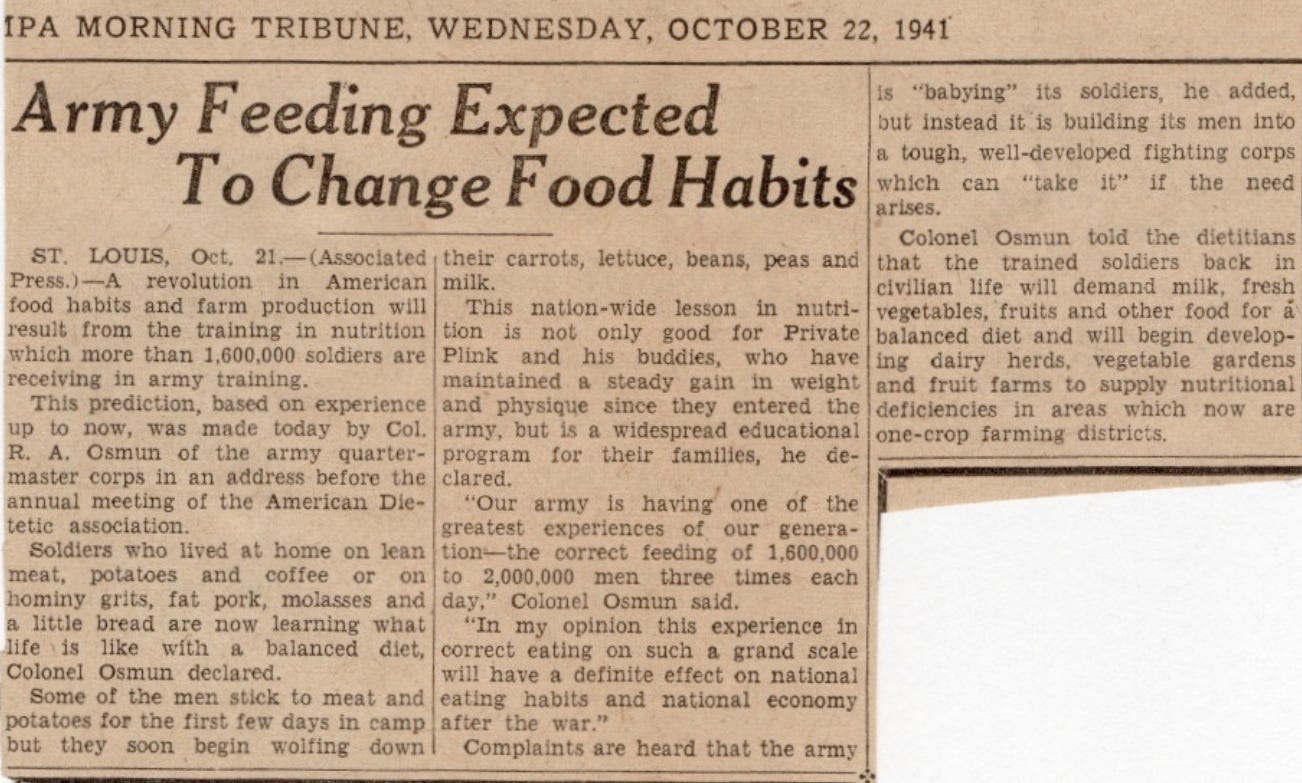
According to an article from the Tampa Morning Tribune, dated October 22, 1941, the U.S. Army implemented a sweeping new dietary program aimed at improving the health, strength, and resilience of its 1.6 million recruits.
(Tampa Morning Tribune)
This initiative was a response to large numbers of draftees rejected due to health issues and poor physical fitness, linked to malnutrition during the Great Depression. Gone were the days of lean meat, potatoes, and coffee, or worse—grits, fatback, molasses, and bread. Fresh vegetables, whole milk, fruits, beans, and meat replaced those foods.
This shift, led by the Army Quartermaster Corps, was based on one simple observation: when young men were fed nutrient-dense food, they grew stronger, healthier, and more physically capable. At boot camp, soldiers were wolfing down “meat, carrots, lettuce, beans, peas and milk,” said Col. R.A. Osmun of the Army Quartermaster Corps. in a 1941 address before the annual meeting of the American Dietetic Association (ADA).
Osmun predicted that this “experience in correct eating on such a grand scale” would have a lasting effect, not just on the soldiers, but on their families and the American food culture as a whole. “Trained soldiers back in civilian life will demand milk, fresh vegetables, fruits and other food for a balanced diet,” he told the ADA, predicting a ripple effect that could reshape farm production and national health.
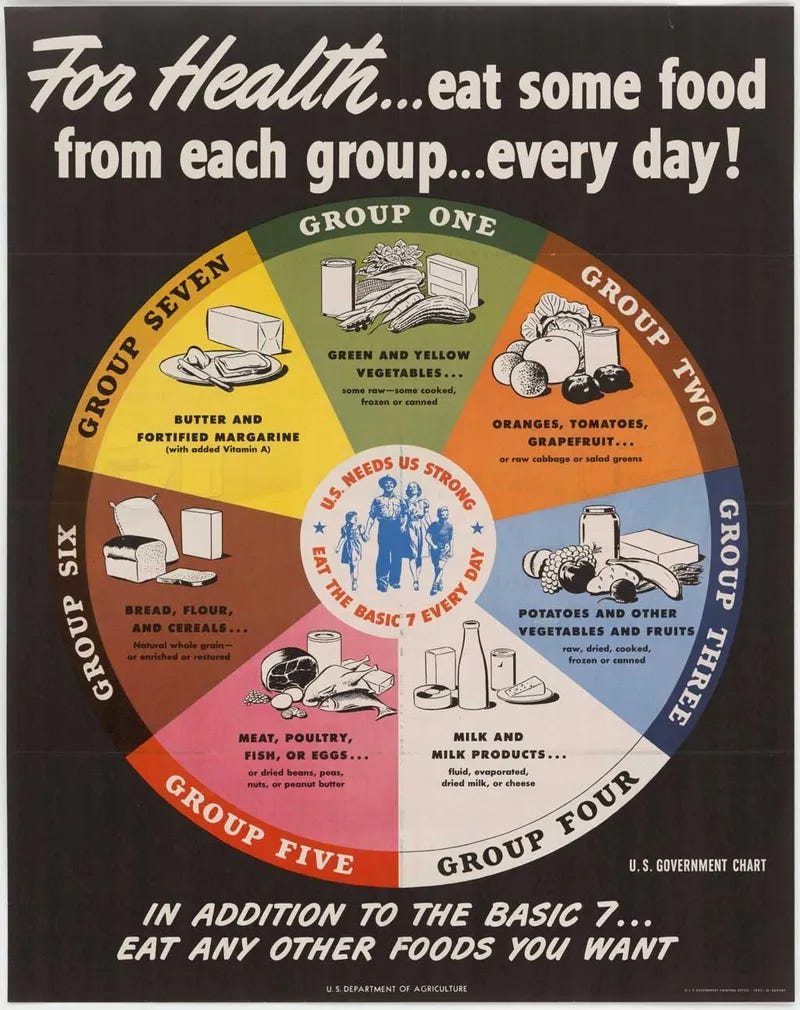
This bold experiment happened before the U.S. Dietary Guidelines existed, and before corporate food interests began influencing national nutrition policy. In 1941, the idea of feeding Americans fresh, whole foods was just plain common sense.
(USDA/Public Domain)
A Forgotten Lesson
While the 1941 Army nutrition program was successful in raising the health and nutrition of its soldiers, those lessons were pushed aside in the decades that followed. By 1980, when the first official U.S. Dietary Guidelines came out, the narrative had shifted. Saturated fat was labeled the enemy. Butter, meat, and eggs were avoided in favor of refined carbohydrates, vegetable oils, and low-fat dairy.
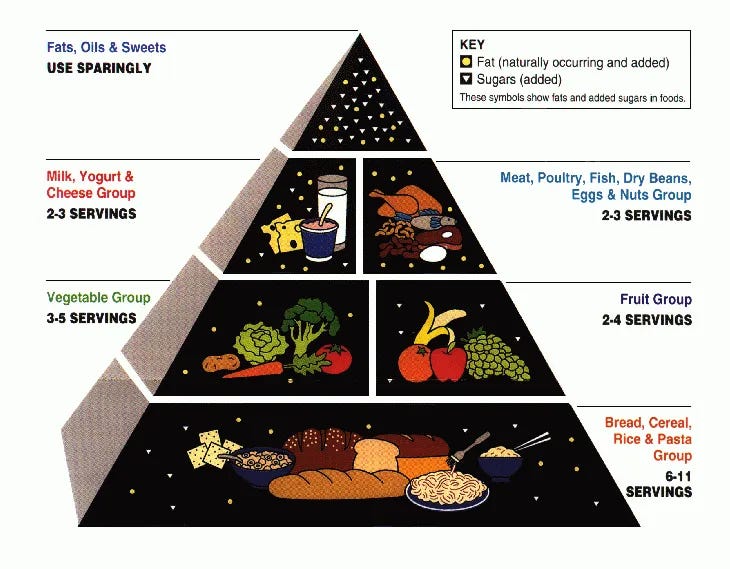
This marked the beginning of a dramatic zigzag in national dietary policy. Between 1980 and 2000, Americans were told to eat 8-10 servings of grains, avoid saturated fat and cholesterol, count fat grams, and embrace ‘low fat’ processed foods. A government-backed food pyramid reinforced this message, placing bread, cereal, rice, and pasta as the foundation of the food pyramid.
(USDA/public domain)
Unfortunately, this era also saw a surge in obesity, type 2 diabetes, and metabolic disease. The nutritional wisdom of the 1941 Army mess hall had been replaced by guidelines shaped by corporate food lobbying instead of clear science.
Guidelines That Zig-Zagged
Over the decades, U.S. dietary guidance has followed a confusing and contradictory path:
1941: Army promotes real food: meat, fresh vegetables, fruits, whole dairy—fuel for strength and resilience.
1950s–1970s: Saturated fat and cholesterol wrongly blamed for heart disease; avoid butter, eggs, and meat.
1980s–2000s – Low-fat, high-carb dogma dominates, processed foods promoted; obesity, diabetes and chronic disease rates spike.
2015–2020 – Dietary cholesterol officially exonerated while saturated fat is still vilified, and processed seed oils dominate, despite scientific evidence.
2026 – New guidelines are expected any day. Will they finally reflect real nutrition science and steer away from corporate food interests?
Big Food’s Grip Tightens
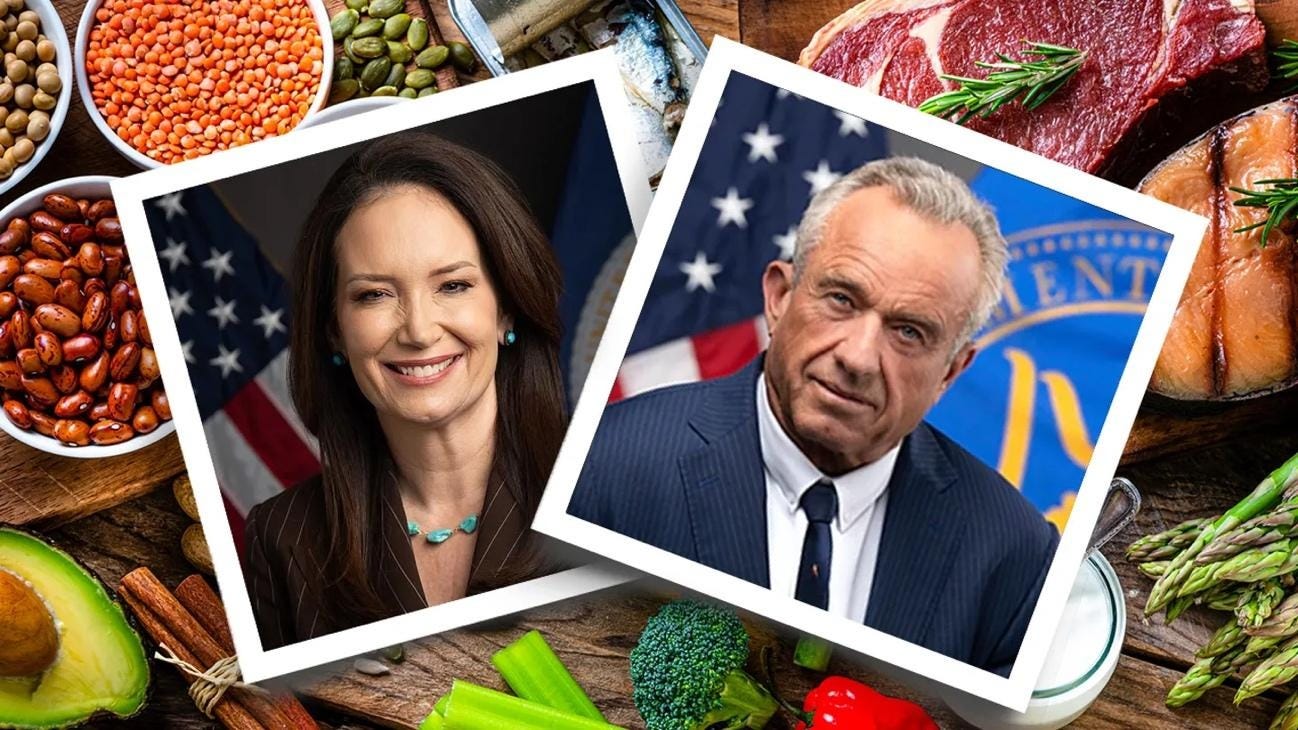
Unlike the Army’s straightforward approach to nutrition, modern dietary policy has become increasingly corporatized and politicized. That trend is finally changing. Under the leadership of HHS Secretary Robert F. Kennedy Jr., new regulatory actions have targeted food dyes, industrial additives, and chemical-laced ultra-processed foods. This is a meaningful shift that puts public health and food transparency ahead of corporate profits.
While regulatory cleanup is underway, some people are calling for a complete overhaul of the Dietary Guidelines system. They’re also hoping for policy rooted in nutrient density and health outcomes that real food provides.
The Army soldiers of 1941 would find it strange to see that organic greens and whole milk are now considered ‘health’ foods, while shelf-stable snacks and sugar-laden cereals fill grocery carts, billed as “heart healthy” or “low fat.”
Is a Turning Point Ahead?
The new U.S. Dietary Guidelines represent a fresh chance at real health. Pro-health groups like MAHA Action (of which The MAHA Report is a part); nutrition advocates; independent scientists; and concerned healthcare professionals are calling for guidance rooted in real food quality and nutritional density, not corporate politics.
We’ve zig-zagged long enough.
The path to health is not paved with subsidies, slogans, or synthetic food. It’s built on simple, powerful principles: fresh food, real nutrients, and a clear understanding that what we eat affects everything from our strength and stamina to our overall health as a nation.
Let’s hope the new dietary guidelines get us back on track.
Thanks for that historical perspective!
Good piece!