

By Catherine Ebeling and John Klar, The MAHA Report
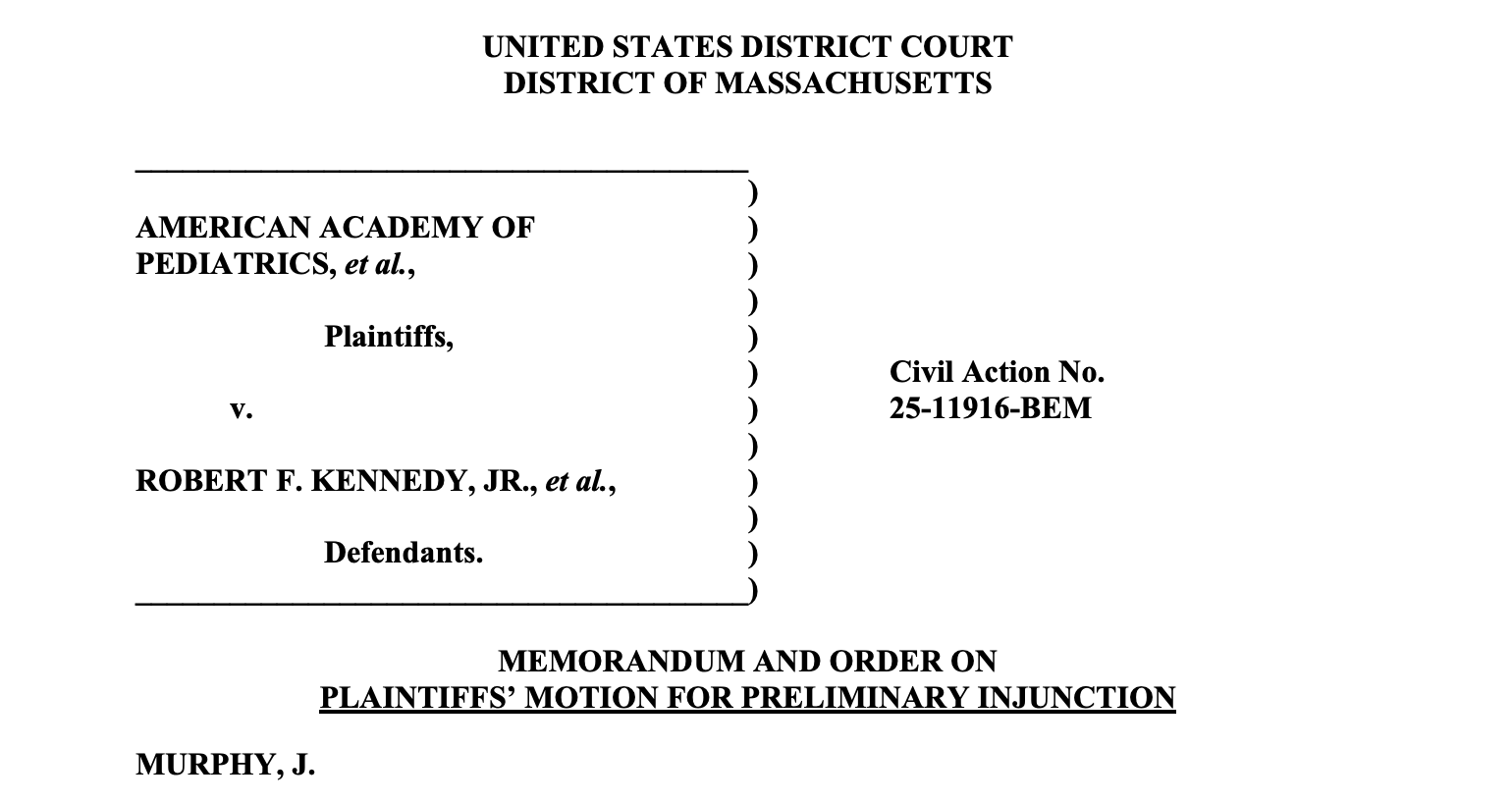
On March 16, a federal judge temporarily halted sweeping changes to the U.S. childhood vaccine schedule, putting Health and Human Services Secretary Robert F. Kennedy Jr.’s vaccine reform efforts on pause and setting off a new phase in an already heated national debate.

To many, the ruling appears to be influenced by pro-vaccine ideology, couched in strained legal contortions that defy legal precedent and logic. Critics allege that federal Judge Brian Murphy, whose rulings against the Trump administration regarding immigration enforcement have been repeatedly overturned, is just at it again, replacing HHS Secretary Robert F. Kennedy Jr.’s administrative authority with his own opinion. As Rick Jaffe, Esq., of Children’s Health Defense explains, Judge Murphy effectively shut down any comprehensive review of vaccine safety or recommendations of vaccines, indefinitely.
The court’s decision raises a fundamental question: who should have the authority to shape public health policy in America? A federal judge or, as is typically done, an outside advisory committee of science experts? Judge Murphy objected to HHS Secretary Kennedy’s dismissal of ACIP committee members for conflicts of interest, and dismissed Kennedy’s conflict-free selections for not being pro-vaccine. That’s pretty ideological!
As Americans call for greater transparency and accountability in health decision-making that affects every family with children, Judge Murphy’s legal construction offers them the opposite. Secretary Kennedy has often warned that U.S. regulatory agencies are “captured” by corporate interests. They appear to have captured some judges as well.
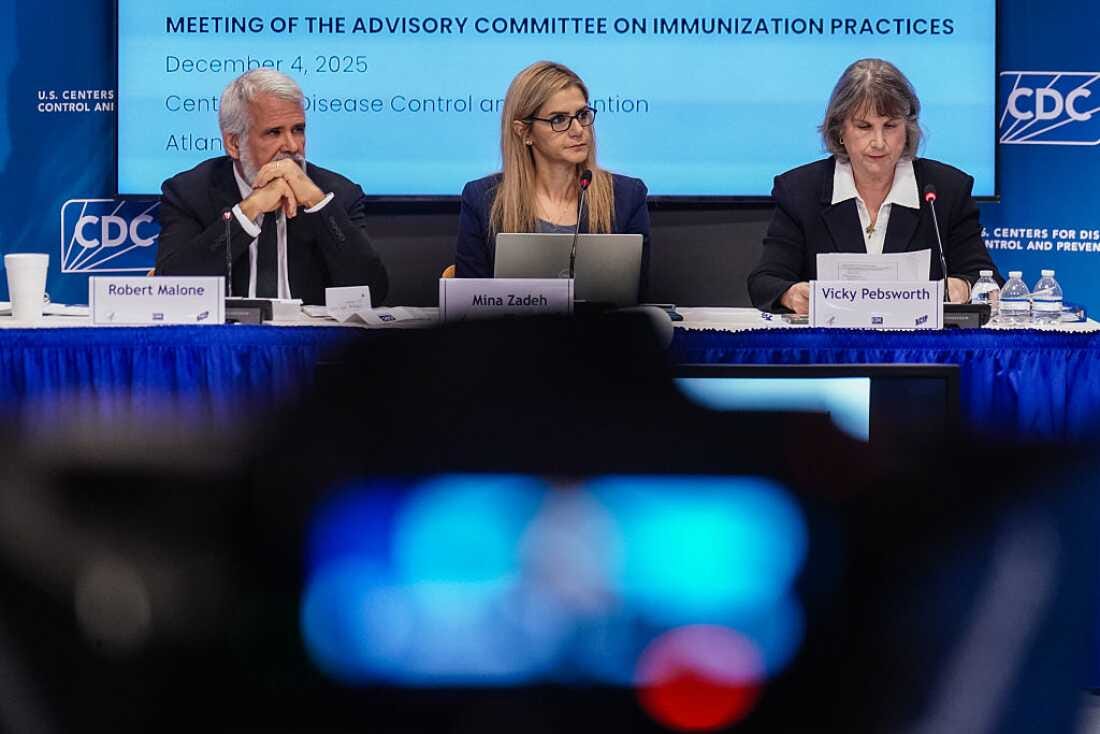
In Massachusetts, at least, the question of who determines vaccine policy was answered when Judge Murphy sided with major medical groups that claimed the recent vaccine changes were not based on science. Murphy issued a preliminary injunction blocking key elements of HHS’s vaccine recommendations and preventing the outside Advisory Committee on Immunization Practices (ACIP) from holding its next scheduled meeting.
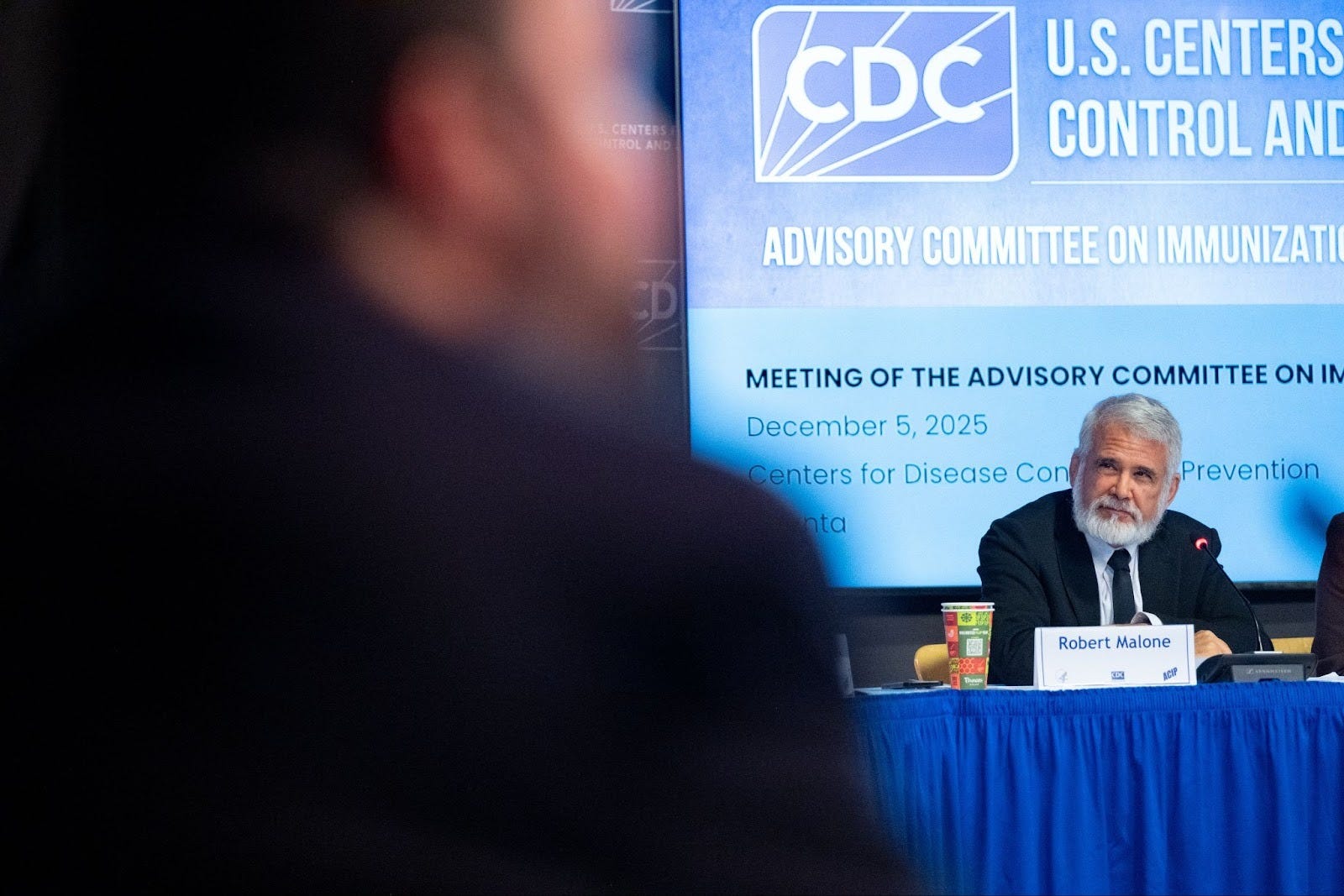
A week after Murphy’s decision, ACIP’s vice chair, Dr. Robert Malone, resigned, telling The New York Times, “Hundreds of hours of uncompensated labor, incredible hate from many quarters, hostile press, internal bickering, weaponized leaking, sabotage.” He added. “I have better things to do.”
It’s not difficult to understand why Dr. Malone would be frustrated. The ACIP, an expert panel of physicians, epidemiologists, and public health specialists, is empowered by the government to make vaccine recommendations; a federal court judge is not.
In this case, however, a federal judge found a way to side-step the ACIP, concluding that HHS likely violated the Federal Advisory Committee Act (FACA) in appointing the newly restructured ACIP, citing concerns about balance and independence. Supporters of Secretary Kennedy argue that this interpretation is unusually broad.
Kennedy has said the previous ACIP system had long been shaped by entrenched outside influence, and his allies contend that FACA was intended to prevent conflicts of interest and regulatory capture, not to exclude newly appointed experts who align with an administration’s reform agenda. Because ACIP appointments have historically followed a similar process, critics say the ruling reflects an unusually politicized interpretation of that precedent.
For Kennedy supporters, that creates a Catch-22: leave the existing system in place and critics say the same institutional interests remain in control; try to reform it, and the reform itself is challenged as procedurally illegitimate. Members are required to disclose potential conflicts of interest, but the panel has historically operated within the conventional public health framework, which emphasizes population-wide vaccination strategies over individualized decision-making. As a result, the court paused both the updated vaccine schedule and actions taken by a newly restructured advisory committee while the case moves forward.
The Boston decision is not final, but the ruling is meant to preserve the status quo until broader legal questions are resolved. Still, its impact is immediate. For most Americans, vaccine policy feels distant—something decided by experts behind closed doors rather than reflecting the voices and decisions of the people it affects.
In reality, these recommendations shape everyday medical care, influencing which vaccines are routinely offered to children, what insurance plans are required to cover, and what doctors recommend in clinical practice.

Programs like Vaccines for Children, which provides no-cost vaccines to millions of kids, are directly tied to these federal recommendations. When the schedule changes, or is blocked, it has real-world consequences for access, cost, and care decisions. The CDC has indicated that some vaccines moved from the routine schedule may still remain available through shared clinical decision-making and existing federal coverage pathways.
The legal arguments in this case are complex, but the broader divide is easier to understand.
At its core, the dispute centers on whether federal health agencies followed the required process for changing vaccine recommendations, including the role of the ACIP.
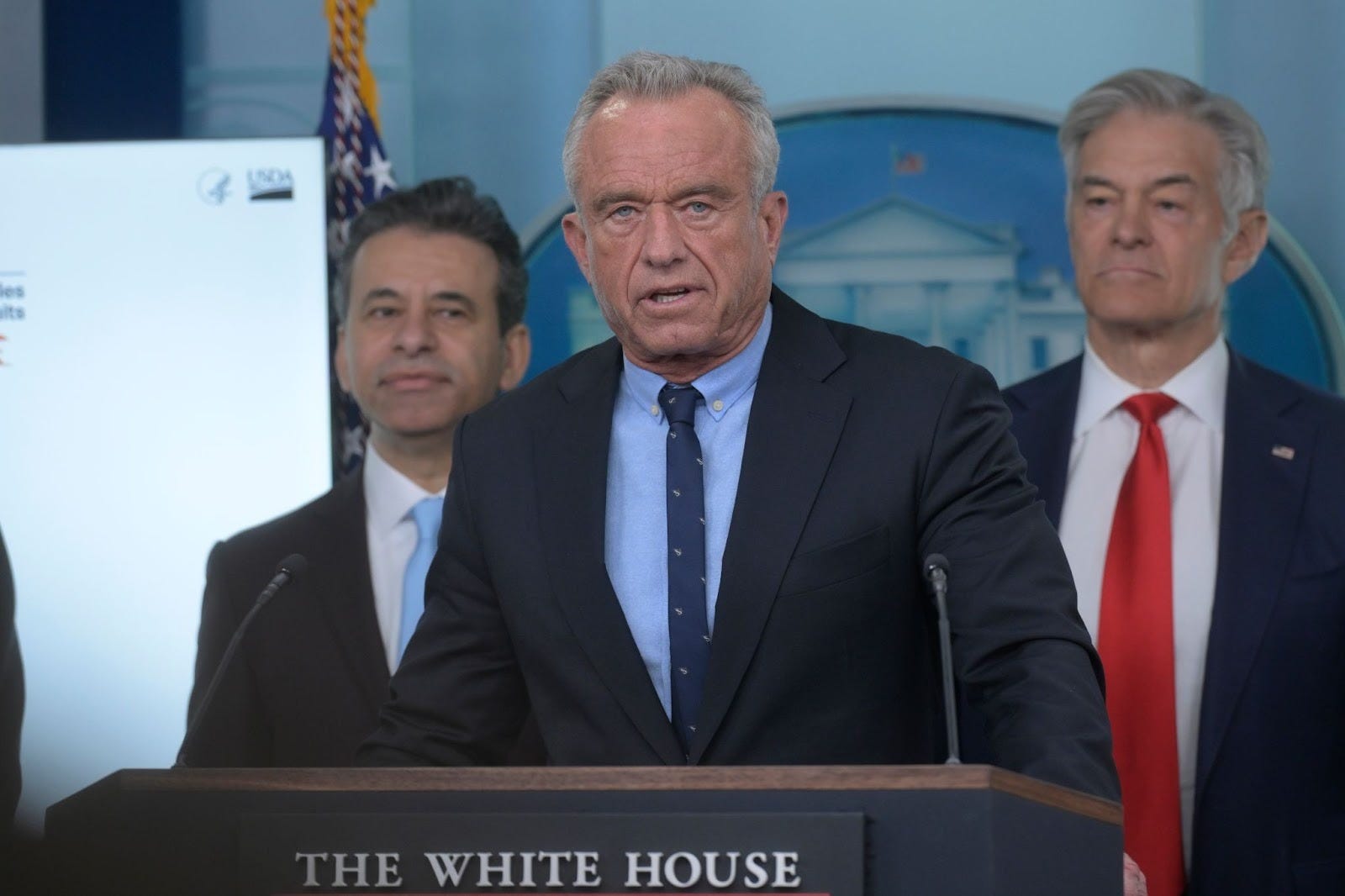
Secretary Kennedy and HHS say they are trying to address long-standing concerns around transparency, conflicts of interest, and whether current vaccine recommendations fully reflect the needs and realities of today’s families. Supporters argue that reform is needed to restore public trust and allow more flexibility in medical decision-making.
Some supporters of his approach argue that the existing framework has become too rigid and that reform is needed to restore public trust, reinforce informed consent, and allow more individual flexibility in medical decision-making.
At the same time, the MAHA movement argues that medical decisions ultimately belong with individuals and families, and not institutions or courts.
This is not just a policy disagreement, but a deeper conflict over how medical decisions should be made. Even if you’re entirely pro-vaccines, supporting Murphy’s decision means you support the notion that a district judge can shut down all policy in the federal government related to vaccines. In other words, if there’s an Ebola outbreak next week and you want a vaccine, you need to go through the federal judge to get a vaccine rather than the government.
It’s not surprising that trust in public health institutions has declined in recent years, particularly after COVID-19, while demand for transparency, credible research, and accountability has grown. At the same time, more Americans are asking to have a greater voice in their own medical decisions, and in decisions affecting their children. This case sits directly at the intersection of those concerns.

Both Children’s Health Defense (whose previous motion to intervene in the case was dismissed by Murphy) and the Federal Department of Health and Human Services announced plans to appeal the decision. Appeals must be filed within 30 days of the judge’s March 16 ruling, and will be heard by the U.S. Court of Appeals for the First Circuit. CHD has already submitted its appeal to intervene and to overturn the judge’s ruling.
Depending on how that court rules, the dispute could quickly move to the U.S. Supreme Court, where larger questions about federal authority and public health policy may be decided. Many legal observers predict Murphy will rack up another reversal.
This pause may be temporary. But the broader debate is not. Regardless of how the courts ultimately rule, this moment has brought into sharper focus a deeper issue: who controls public health policy, and whether our citizens should have greater autonomy in their health decisions. At its core, this is about health sovereignty.
Key Takeaways:
– A federal district court judge has voided HHS Secretary Kennedy’s previous decisions regarding vaccine recommendations and appointment of a fresh Advisory Committee on Immunization Practices (ACIP).
– The ruling is likely to be appealed to the First Circuit Court of Appeals, where Judge Murphy’s lengthy opinion will be challenged as partisan.
The judicial supremacists have no constitutional right to interfere in or supersede or cancel or change anything RFK, Jr. is doing with regard to making vaccines safe for children and adults. As usual, the judiciary needs to mind its own business, whatever that still is!!
So now a judge knows better than the medical professionals???